

 Image 1 of 1
Details
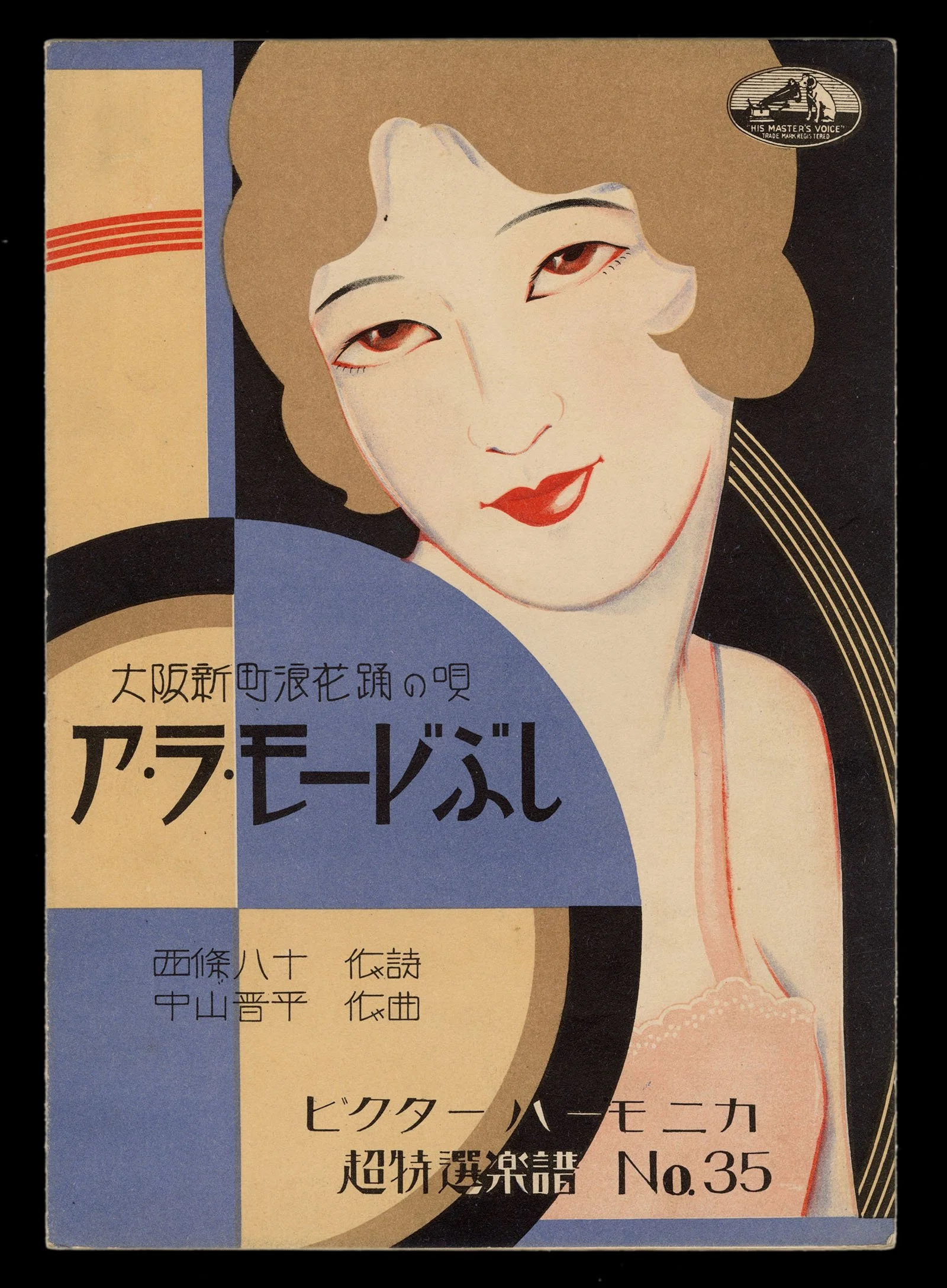
This elegant cover presents a quintessential image of the modern girl rendered through the streamlined visual language of Art Deco. The woman's carefully waved hair, sharply defined eyes, and crimson lips emerge from a composition of geometric forms that balance sophistication with immediacy. The interplay of blue, cream, and black creates a sense of metropolitan refinement, while the boldly integrated typography reflects the influence of contemporary advertising and magazine design.
The phrase "A La Mode" immediately signals the fascination with Western fashion and cosmopolitan taste that swept through Japanese cities during the late Taishō and early Shōwa periods. Associated with Osaka's lively entertainment districts, the song evokes a world of cafés, dance halls, and commercial amusements. The cover transforms the moga into a symbol of modern aspiration, embodying the new social freedoms and consumer identities emerging within urban Japan.
Connoisseur's Note
Victor Records played a central role in shaping Japan's modern music industry, and covers such as this reveal how effectively the company merged popular music with contemporary graphic design. The image functions as both advertisement and cultural statement, presenting the fashionable urban woman as an emblem of the modern age. Such imagery helped define the visual identity of popular music during the interwar years.
Japan's extraordinarily high rate of music literacy made sheet music one of the most widely distributed forms of visual culture in the country. Songs, fashions, and social ideals circulated together through publications such as this, allowing cover designs to exert a profound influence on public taste. Today these works remain invaluable documents of the aspirations, pleasures, and identities that characterized modern urban life.