

Exhibitions featuring the
finest in Japanese prints.
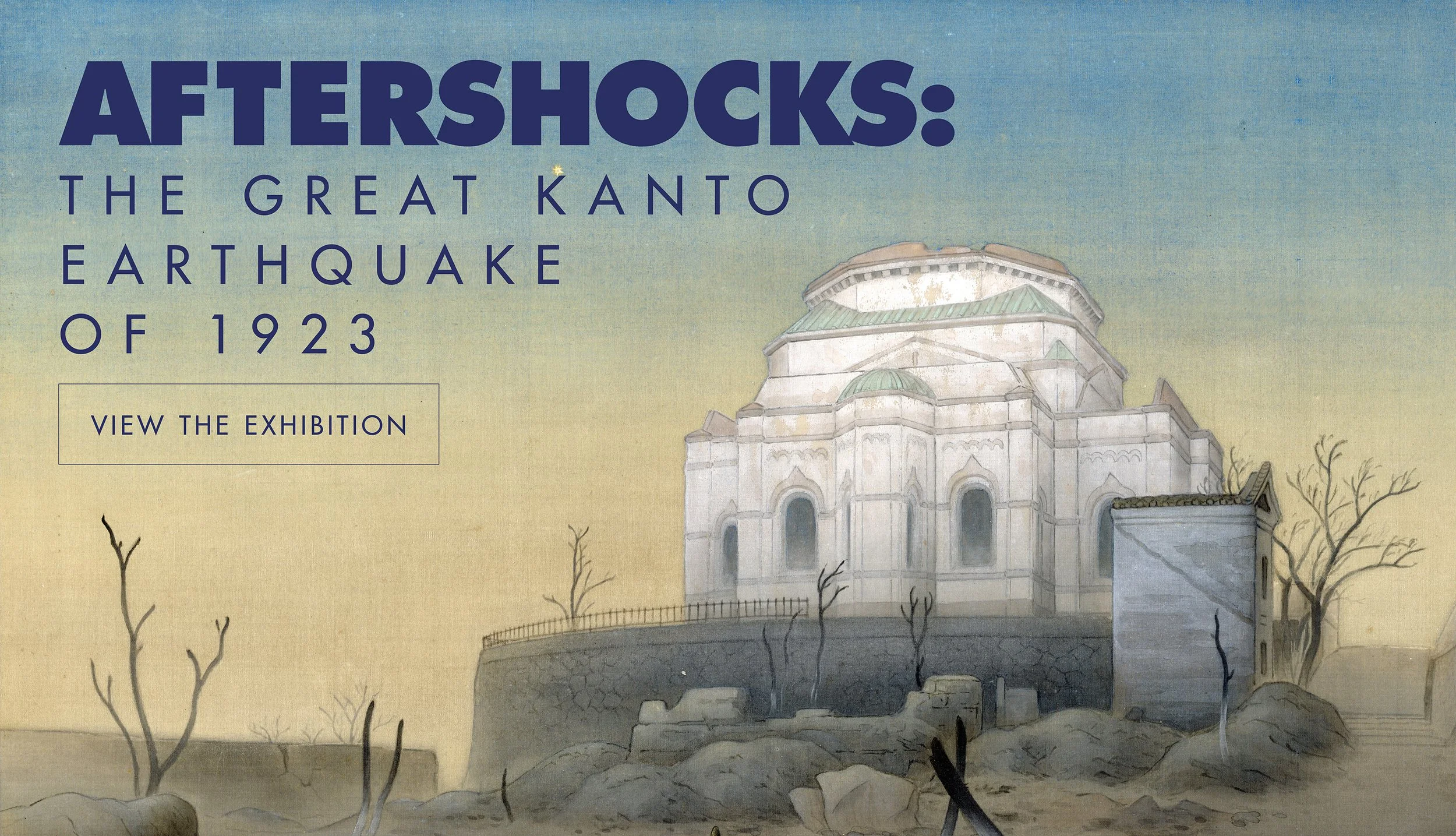
AFTERSHOCKS: THE GREAT KANTO EARTHQUAKE OF 1923
The Great Kantō Earthquake profoundly affected Japanese art and literature, inspiring works that confronted loss, resilience, and rebirth in the disaster’s aftermath. Artists and documentarians captured both the devastation and the transformation of a society confronting the destruction and reconstruction of its modern capital. This exhibition traces that artistic and documentary response through original photographs and postcards, books and ephemera, woodblock prints, and a Nihonga-style kakemono painting.
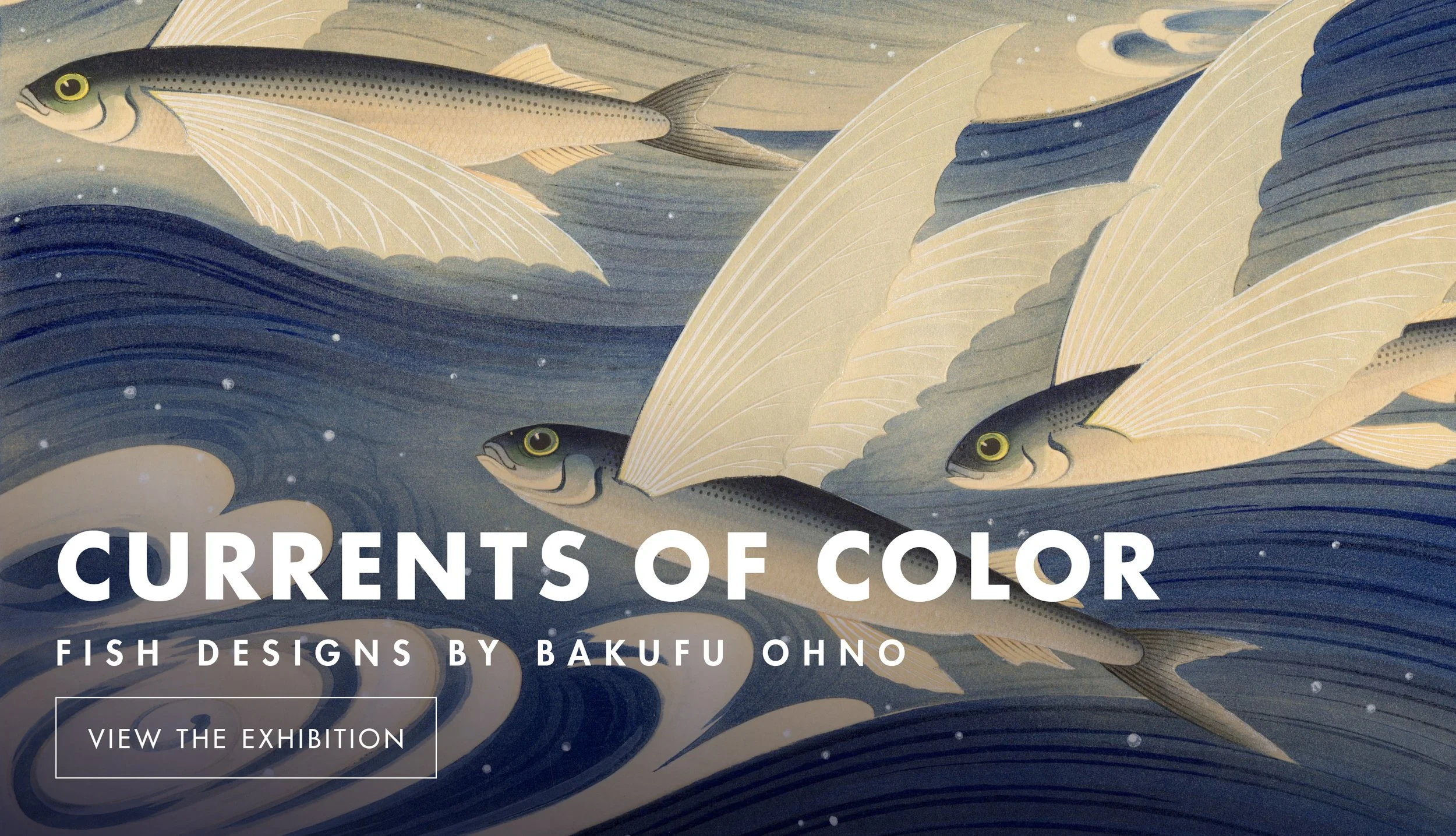
CURRENTS OF COLOR: FISH DESIGNS BY BAKUFU OHNO
The exhibition highlights the sophisticated craftsmanship that distinguished the finest Japanese prints of the period. Brilliant pigments, subtle bokashi gradations, metallic inks, and delicate embossing create images of exceptional depth, luminosity, and tactile richness. Through the collaborative efforts of artist, carver, and printer, Ohno elevated natural specimens into works of visual splendor, capturing both the physical beauty and symbolic significance of fish within Japanese culture. Long associated with prosperity, perseverance, abundance, and regional identity, these subjects reflect Japan's enduring connection to its seas, rivers, and lakes.
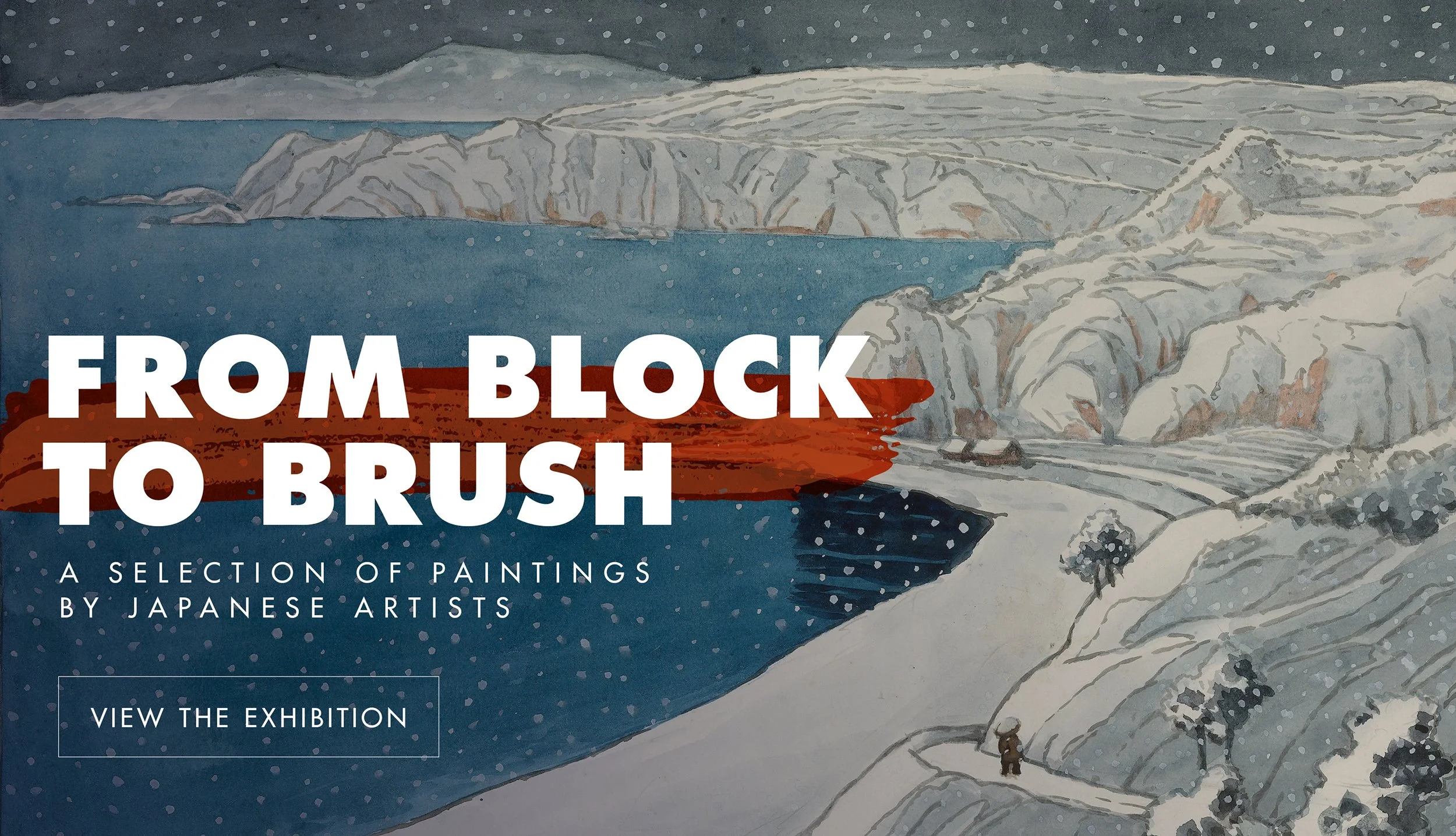
FROM BLOCK TO BRUSH: A SELECTION OF PAINTINGS BY JAPANESE ARTISTS
This collection brings together oil paintings and drawings by Japanese artists, many better known for their print work, exploring the dynamic intersection of Western and Japanese traditions. Embracing the realism, perspective, and modeling of Yōga (Western style painting) while retaining distinctly Japanese sensibilities, these artists helped forge new directions in modern Japanese art.
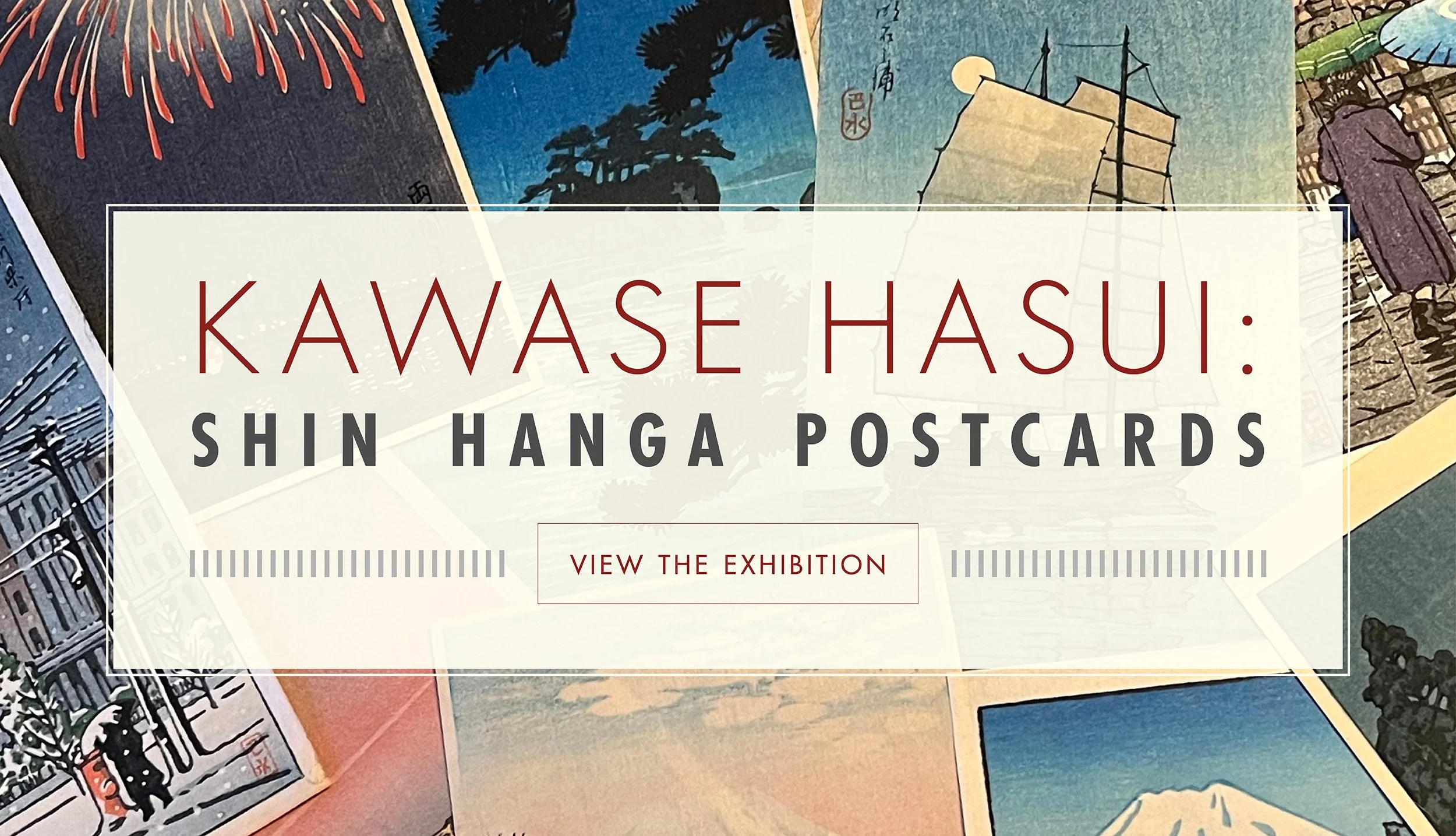
KAWASE HASUI:
SHIN HANGA POSTCARDS
Emerging in the late nineteenth century, the Japanese postcard evolved from a popular means of communication and commemoration into a distinctive artistic medium embraced by artists and collectors alike. This offering brings together nearly one hundred postcard prints by Kawase Hasui, providing a remarkably broad survey of the artist’s work within this intimate and highly collectible format.

GO FIGURE: THE HUMAN FORM EXPLORED IN JAPANESE ART
The human form has provided Japanese artists with an inexhaustible subject for exploring beauty, desire, character, movement, and the supernatural. Spanning centuries of paintings, sculpture, and woodblock prints, this exhibition traces the figure from the elegant conventions of ukiyo-e through shin hanga, sōsaku hanga, and contemporary experimentation. At once portrait, actor, apparition, and abstraction, the body continually changes while remaining unmistakably human. Across generations, artists return to the figure for the simplest of reasons: there is always something new to discover.
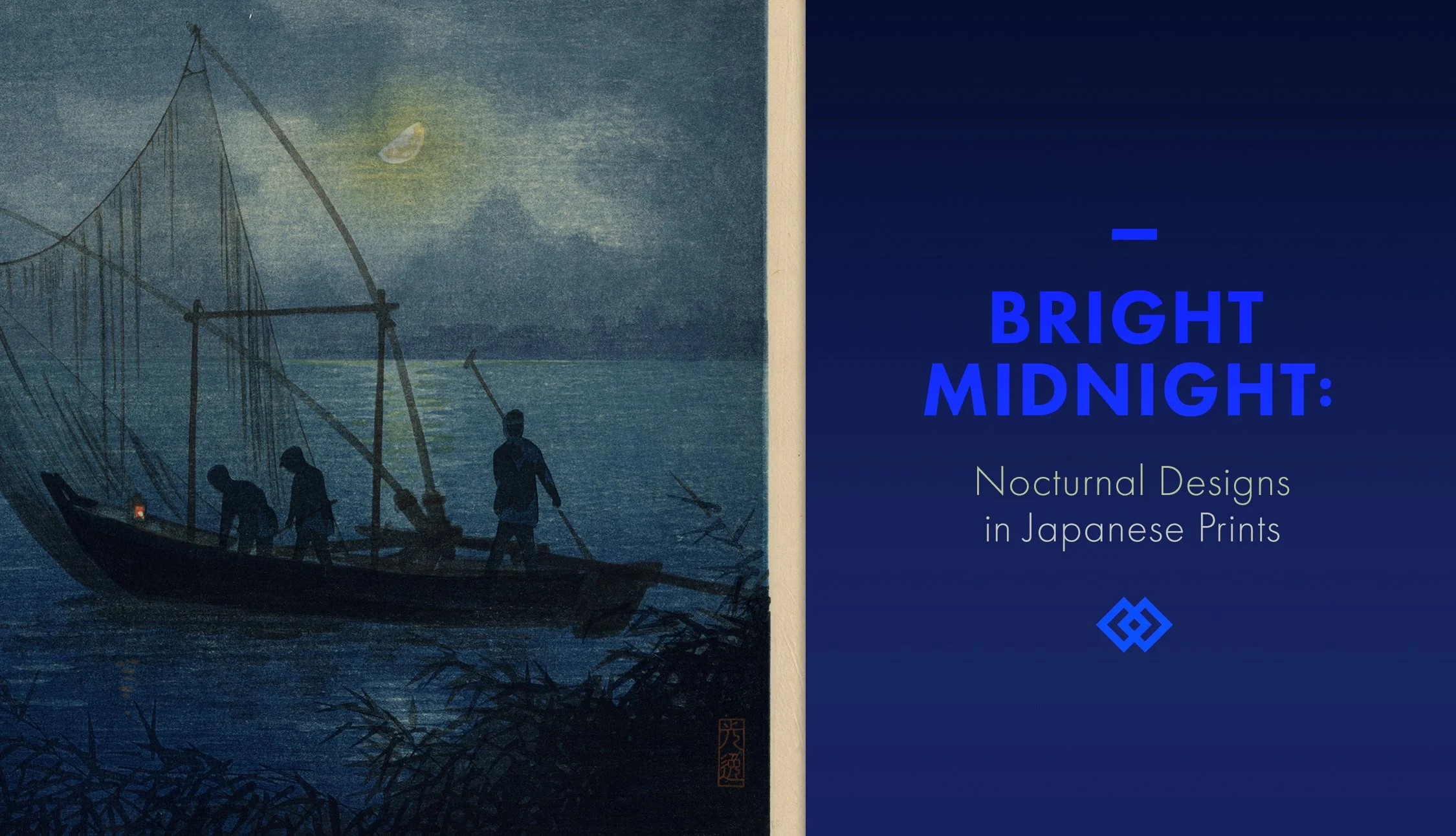
BRIGHT MIDNIGHT: NOCTURNAL DESIGNS IN JAPANESE PRINTS
Night transforms the familiar world, and Japanese printmakers have long been masters of its mystery. Spanning Ukiyo-e, Shin Hanga, Sōsaku Hanga, and contemporary printmaking, this exhibition explores the evocative interplay of darkness, color, and illumination. Moonlight, lanterns, falling snow, rain-darkened streets, and shimmering reflections reveal a world in which darkness is never simply black. Here, it is precisely at night that light becomes most brilliant and color most mysterious.
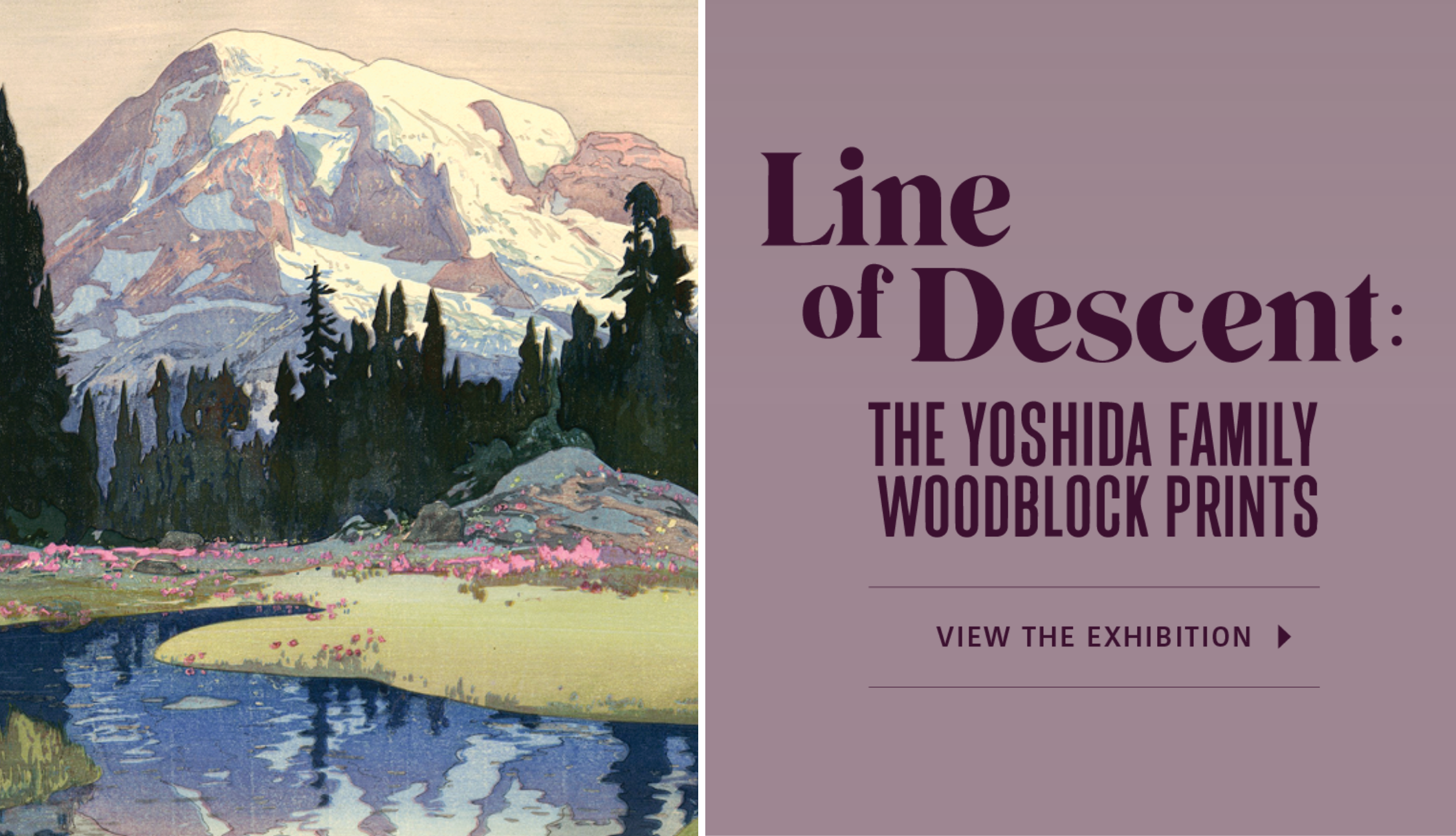
LINE OF DESCENT:
THE YOSHIDA FAMILY WOODBLOCK PRINTS
Perhaps no family in Japanese art history has made a greater impact on prints than the Yoshida family. Spanning multiple generations and encompassing a diversity of artistic styles, this family produced some of the most iconic designs of the 20th century, leaving an enduring legacy of technical mastery and uncompromising artistic vision. This exhibition traces the remarkable artistic legacy of the Yoshida family, whose successive generations helped shape the course of modern Japanese printmaking.
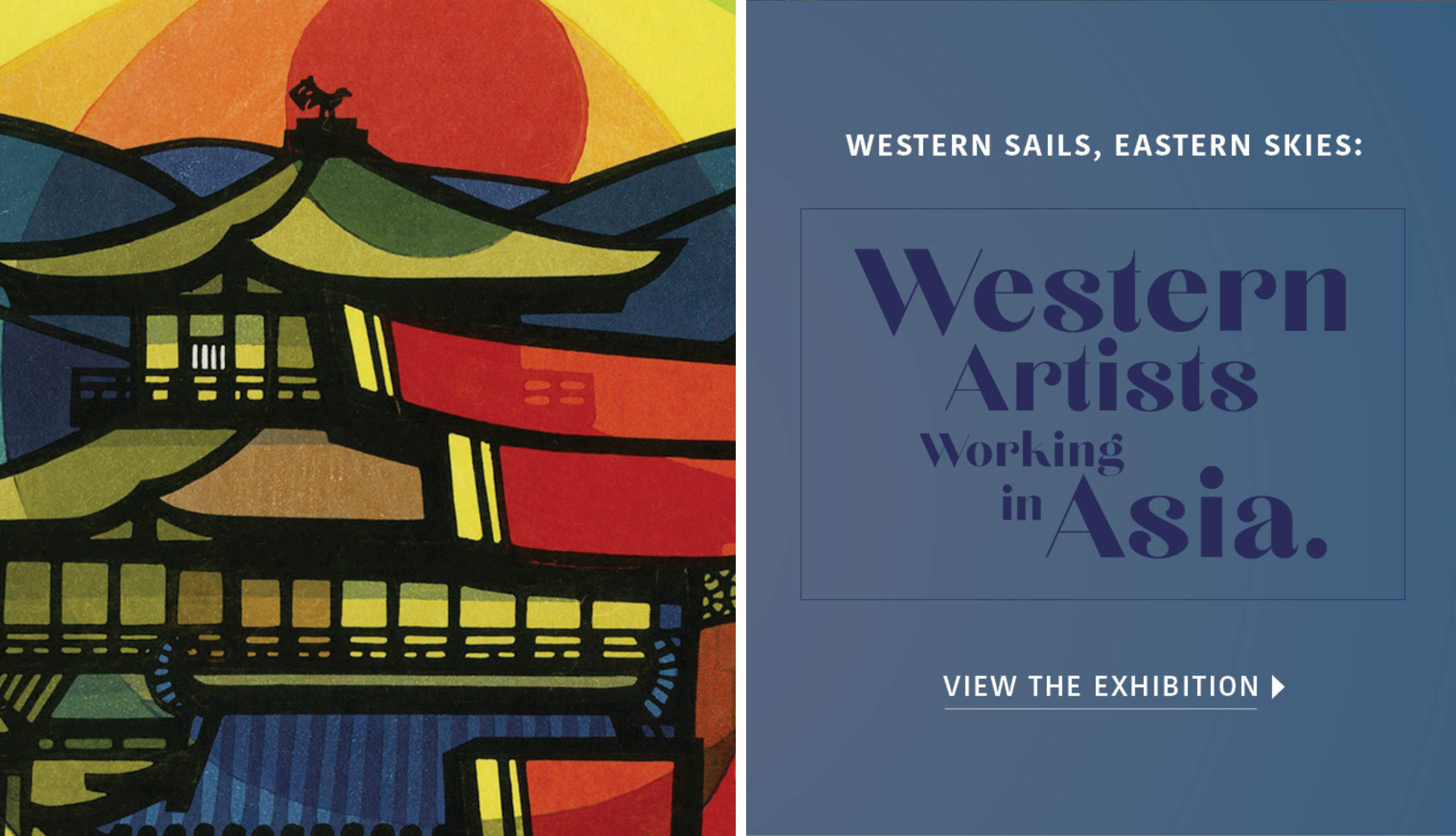
WESTERN SAILS, EASTERN SKIES: WESTERN ARTISTS WORKING IN ASIA
This exhibition explores more than a century of artistic exchange between Western artists and the visual traditions of Japan and Asia. From the formative years of shin hanga to later generations of printmakers and painters, these artists absorbed, reinterpreted, and extended Asian aesthetics through distinctly individual visions. Their works reveal influence not as a one-way passage between East and West, but as a continuous current of ideas crossing oceans, changing hands, and returning transformed.