

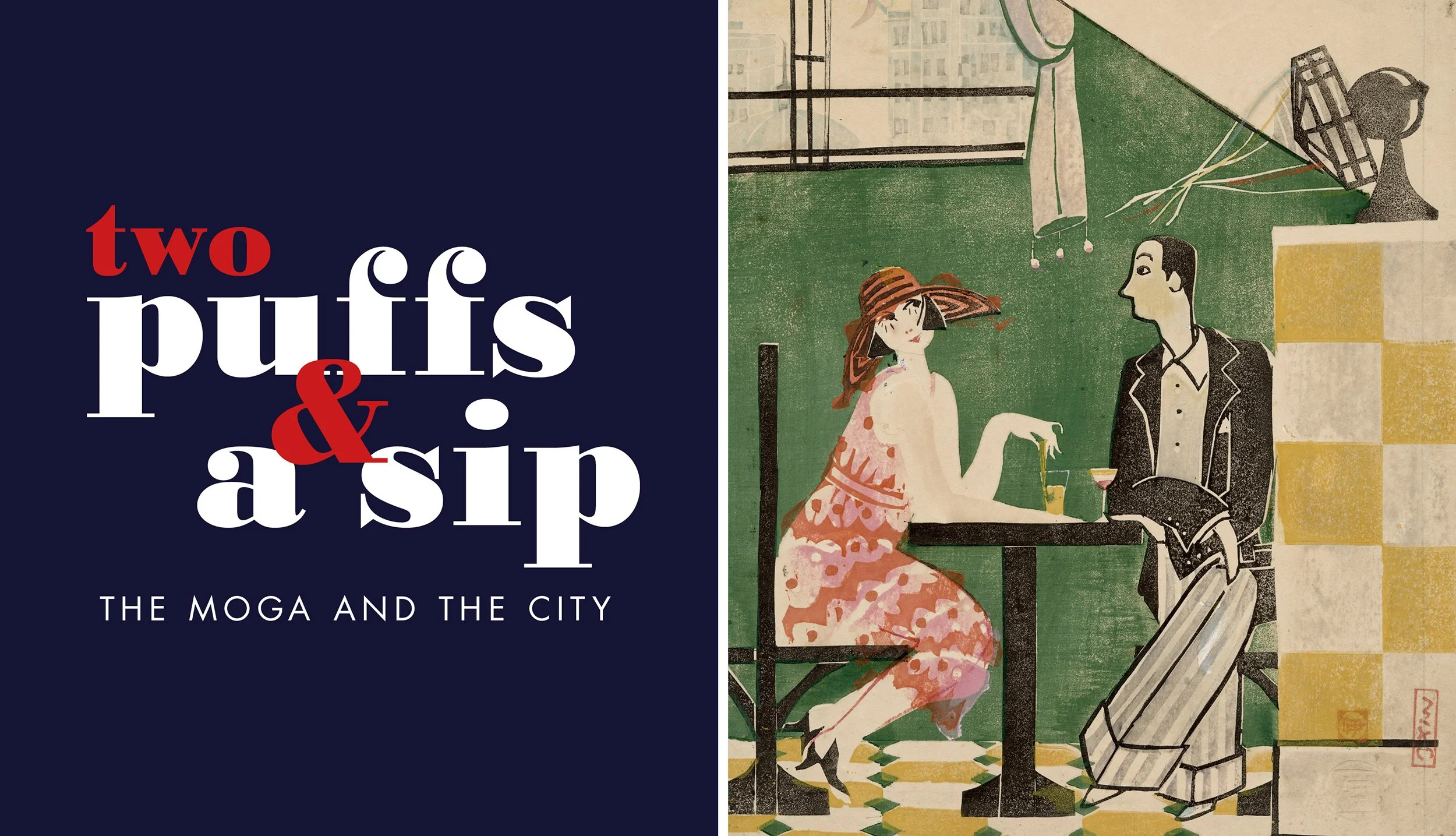
TWO PUFFS AND A SIP
The Moga and the City
In the restless decades of the Taishō and early Shōwa periods, Japan witnessed the emergence of new urban identities that both fascinated and unsettled contemporary society. Among these figures were the moga (modern girl) and mobo (modern boy), youthful archetypes shaped by cosmopolitan taste, consumer culture, and a loosening of traditional social constraints. The moga, with her bobbed hair, Western dress, and cultivated air of independence, became a particularly potent symbol—at once celebrated and scrutinized. Together, these figures embodied a generational shift toward individual expression and leisure, nurtured by cafés, dance halls, and department stores that redefined the rhythms of daily life.
This transformation unfolded against the dramatic backdrop of the Great Kantō Earthquake of 1923, after which Tokyo rose anew from devastation. The reconstructed capital became a modern metropolis of electrified streets, neon signage, and expanding commercial districts. In this reimagined urban landscape, modernity was not merely infrastructural but experiential—absorbed through fashion, media, and spectacle. The city itself became a stage upon which new identities could be performed, and the moga, navigating its boulevards and interiors, stood at the forefront of this cultural reawakening.
At the same time, the Japanese government and broader social institutions actively promoted images of progress and refinement, positioning both the modern woman and her male counterpart as visible indices of national advancement. While the moga’s body—clothed in the latest fashions and poised in moments of leisure—became an emblem of sophistication and cultural fluency, the mobo likewise embodied a new masculinity shaped by urbanity, consumption, and style. Parallel to these evolving identities was the transformation of Tokyo itself, whose rebuilt avenues, cafés, theaters, and department stores formed a dynamic visual language of modern life. The city’s newly composed landscapes—at once ordered and electric—appear throughout the works in this exhibition, framing these figures within a metropolis that was both their stage and their creation.
As the largest exhibition of its kind ever presented online, Two Puffs and a Sip: The Moga and the City brings together an exceptional range of material, including important woodblock prints in both Shin Hanga and rarely seen Sosaku Hanga, as well as paintings, and works of ephemera such as sheet music, posters, and postcards, offering a richly textured view of a society in the midst of imagining itself anew.
MOGA & MOBO THE CITY POSTERS POSTCARDS SHEET MUSIC
MOGA & MOBO
UKIYO-E-REFERENCES
___LZSettings_N4IgFgyglgXgpiAXAOwK4Bt0BoQDN0D2AhgC4AiUATkmpjnMkQEbpwAyRMAnkrkegGc4OfugCiANwYkBvfkJxQScALYCAksgBKBAO5IALDhLNWJAMIF0qFclmIATMdNwSAcVQll1RwAYcKgRMUKyW1rb2AIwBQSFwHl5wPg4ArDiERAAmAIKYAPKUAApEAOZIJJSowiAZmcUlcNDwSJG+-iACBJQkEDYqRJRc6spqSCDIBAC0nd0gOAJgehBgA3AAQp4kBHZjE8urcyBMm9saAMbbuVAlyCrSY2fSSYfHXqfqF8hNCIgd-ZgvE52D7bMJdMYsIhnADWgLewM+EBIXFYYwEAEdUKtJkwuplniJMplzKQACqlczoIgCIT2cbbBA4C6YOBnEhQbakrgABx+kQAzEyrKw2RzkABVSjoMZECREEIuSbcyhQZAyQ7skio36FLTqABypIgGp5cH1RDuY2VBEyqDZshwqCE+psTCSmh0+kQFSqOF0lCI3OGqgEAHUlGA2KrYYg+IJqiYWK4IK52cgSvYfdVAsFWCmvKqM+VKtUnY04DSxSSzmAfnGFCBmSL2dt1JkxgA2By4TIpAAcRA7KVwDlZff5vjgUIcRAA7AYiId8QJrsgZZ4CCUVe2cLWsklSXAAB4kMYAHiIAAJGHcALwAHRAqGhUC4BDgj4AfGeAPREb9gAY35MJ+4oANLqAAmnkkxiJMWhiAAYmICH6uYYgQL+IG-oBn4asePSwD8IB3JkUA2Ic3KlI0RFIA4faKP0DTZAIvJslopAcmMkSHMyNjIOGmQkGAhgOO0JSbM8iAGO06BQAIJDqExNHNIgE7pPJinKVcNx3GqYysLgp7zHJy6FEknqGMYBE6bc9y-IZxkdIsuikko2pZvMLmkmArqMCExa+s5ehiEejyUNyp6xvI1QLHoWhTpkACyXTsNGcjxl5eiFCqjwZQ21q2myACKqBQDCABqUBwLoYiMEm7bRZlwW6MUCkFOK3IXCohaSNIdKoF1BA9emhx3CYmSkEQhQECuLZrr8bqELokyfMo+k4MqUD9IMSWuFkU27AyhxCJ8k27ftk0mEdyCMngITeEgoAmGUKAYNgjakHAJRdDwb10J9yg-YMbb2AA2iAHZEEQvh9rgcApAYTCwwAnPyBhwB2yOZGcs5QiAAC6AC+IgbuYlAENygXVHJJRgCQuJHvl2ZQEecDEts61RZ5RyEDCbZjLgZy47g44pPRKOzjjs59v2s6+BqAZ2LgXSjIgoAUyY81PSAMA63K1g-O0qDIEoYz4mURMkx0Zz8D8oBM+rIAG1ULRtI6ptRSAACkIDW39oAu3y7tPp7Yy+1bOCU1CSgB87-Cu4grTG2HvwR1HuC4EIUUO-rCdGx7Zu-NyTP+3nhtICnRcgCXfvW101yqjrjuB-nSApFXXvpyAcdB+3nfh3X8zQjVzfl4nA+-Bbfs4L3beIJPIDT1b1tEKb-TzeDBOOkIEDFRAOUEEef31tUlBTugax89CAuLdfkz8rjcD8ijvgOPykRMKkz8GO-KM8UTIAA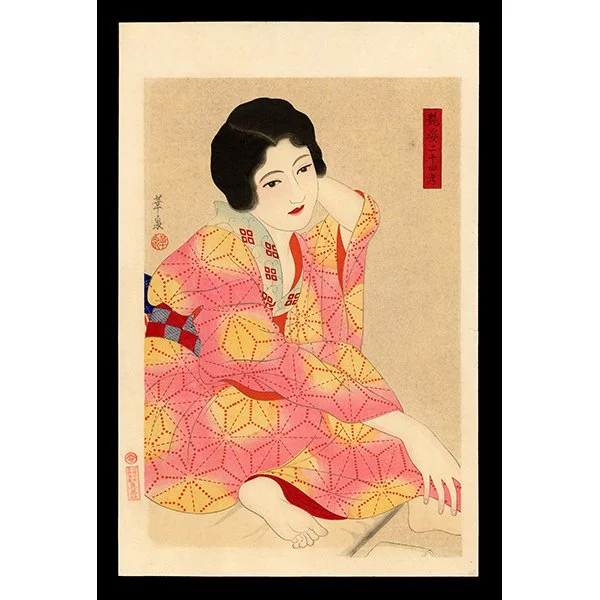
Pink Kimono
Ohira Kasen (1900-1983)
SERIES: Twenty-Four Figures of Charming Women
MEDIUM: Woodblock Print
DATE: c. 1931
DIMENSIONS: 17 3/8 x 11 3/8 inches
CONDITION: Excellent; no problems to note
NOTE: Mica background; metallic pigments
$3,500.00
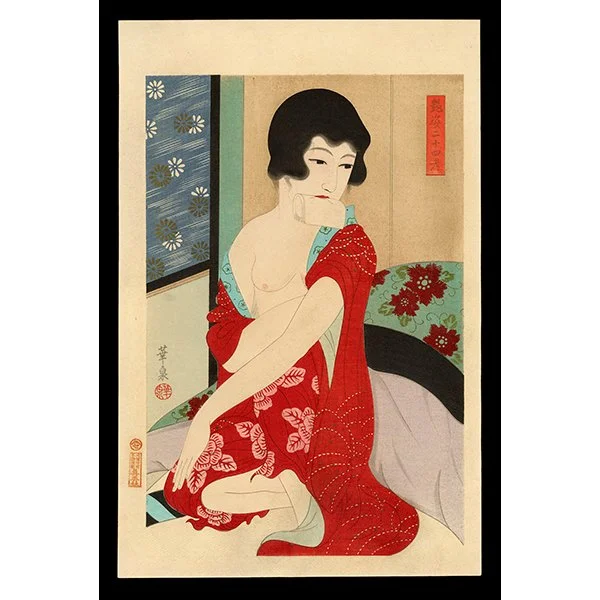
Tissues (Kaishi)
Ohira Kasen (1900-1983)
SERIES: Twenty-Four Figures of Charming Women
MEDIUM: Woodblock Print
DATE: 1931
DIMENSIONS: 17 x 11 3/8 inches
CONDITION: Excellent; no problems to note
NOTE: Mica background and metallic pigments
LITERATURE: Light in Darkness, pl. 70
$3,000.00
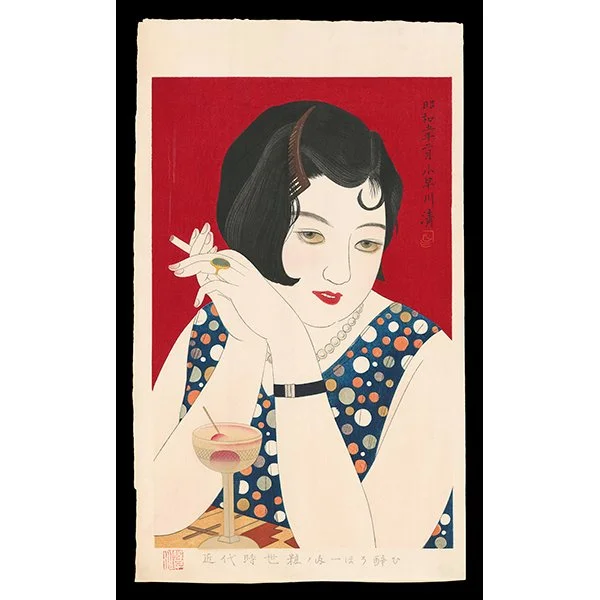
Tipsy
Kobayakawa Kiyoshi (1899–1948)
MEDIUM: Woodblock print
DATE: 1930
DIMENSIONS: 20 ½ x 12 inches
CONDITION: Exceedingly fine state of preservation; no problems to note
NOTE: Silver and gold metallic pigments; unnumbered impression, printer’s proof
LITERATURE: The Female Image, pl. 189
SOLD
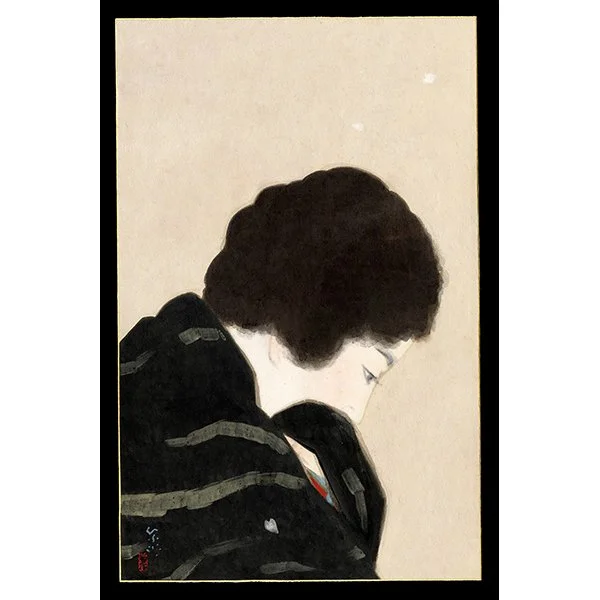
Moga in Black Kimono
Shimei Terashima (1892-1975)
MEDIUM: Sumi and pigment on paper
DATE: 1925-1930
DIMENSIONS: 18 ¼ x 11 ½ inches
CONDITION: Excellent, no problems to note
NOTE: Silver mica background with white gofun; mounted on presentation board with gold edges
$4,500.00 <RESERVED>
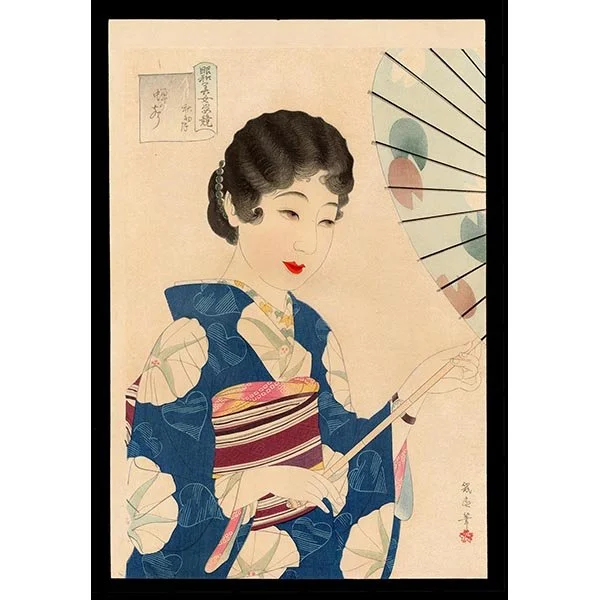
Akosomezuki, Semi no Koe (July—Chorus of Cicadas)
Ikuharu Watanabe (1895-1975)
SERIES: A competition of Showa beauties
MEDIUM: Woodblock Print
DATE: 1927
DIMENSIONS: 16 x 11 inches
CONDITION: Exceedingly fine state of preservation with pristine mica background
NOTE: Silver mica background
LITERATURE: The Female Image, pl. 252
$3,000.00
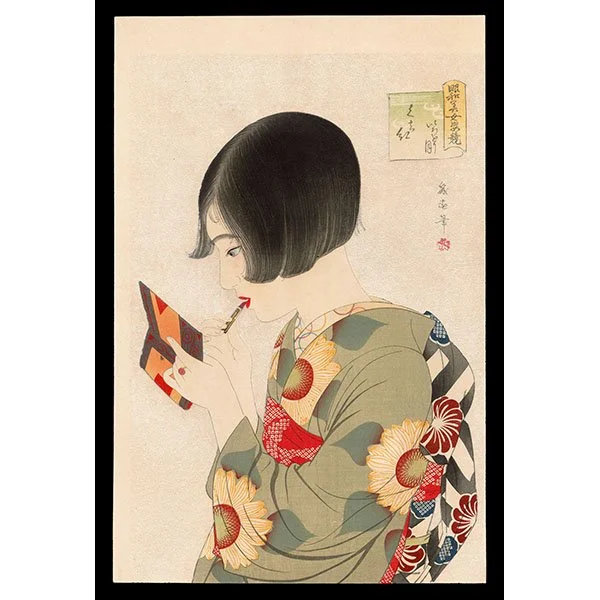
Kuchibeni (November - Rouge)
Ikuharu Watanabe (1895–1975)
SERIES: A Competition of Showa Beauties
MEDIUM: Woodblock print
DATE: 1927
DIMENSIONS: 16 x 11 inches
CONDITION: Exceedingly fine state of preservation with pristine mica background
NOTE: Silver mica background
LITERATURE: The Female Image, pl. 254
$4,500.00
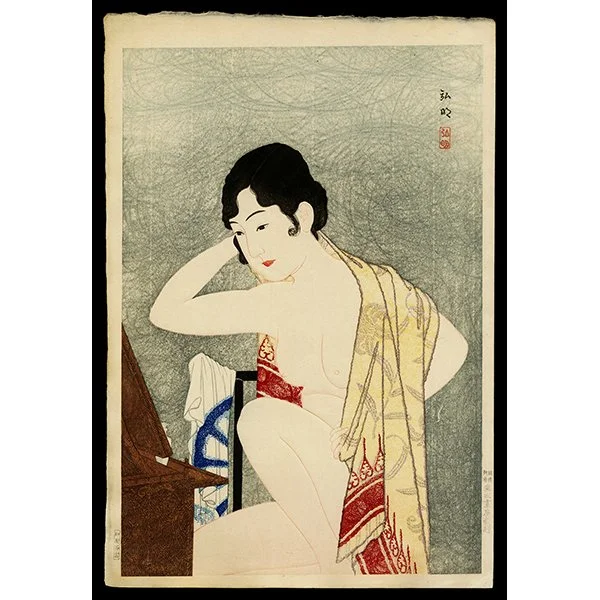
Make-up Before the Mirror
Takahashi Shotei (Hiroaki) (1871-1945)
MEDIUM: Woodblock print
DATE: c. 1927
DIMENSIONS: 16 1/4 x 11 1/8 inches
CONDITION: Excellent; no problems to note
SOLD
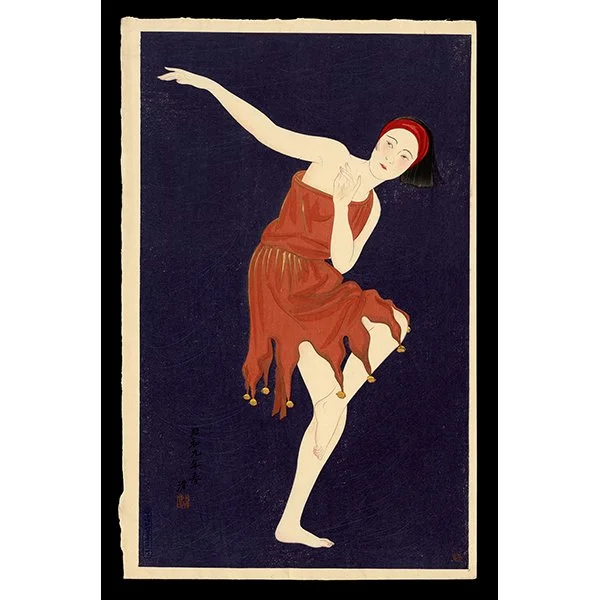
Western Style Dancing
Kobayakawa Kiyoshi (1899–1948)
MEDIUM: Woodblock print
DATE: 1934
EDITION:
DIMENSIONS: 17 1/8 x 10 ¾ inches
CONDITION: Excellent; no problems to note
NOTE: Watanabe D-type seal at lower left, first state
LITERATURE: The Female Image, pl. 200
Price Upon Request
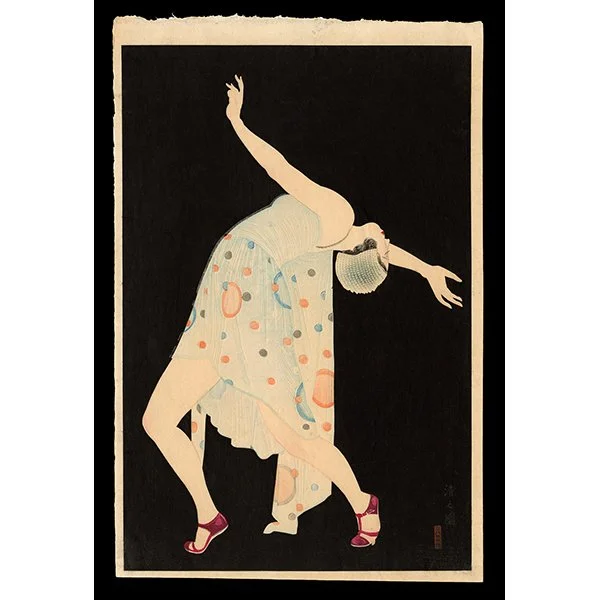
Dancer
Kobayakawa Kiyoshi (1899–1948)
MEDIUM: Woodblock print
DATE: 1932
DIMENSIONS: 17 1/8 x 11 ¼ inches
CONDITION: Excellent; no problems to note
NOTE: Rare early trial impression with silver mica to dress back matte background and additional artist seal at lower right—all absent on regular editioned design
Price Upon Request
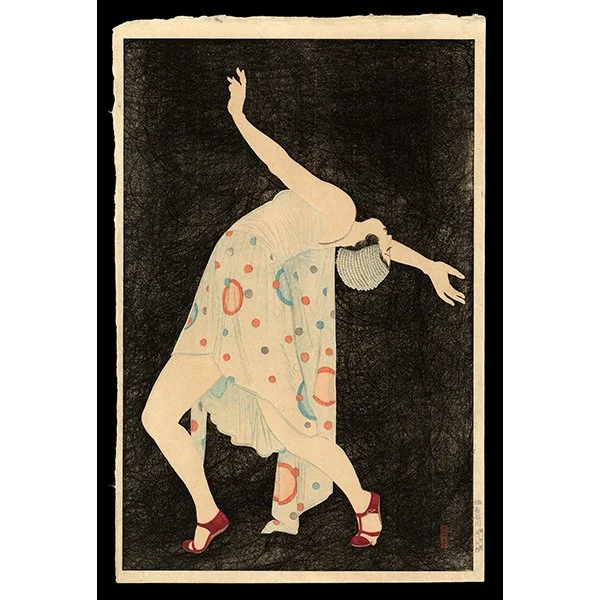
Dancer
Kobayakawa Kiyoshi (1899–1948)
MEDIUM: Woodblock print
DATE: 1932
DIMENSIONS: 17 1/8 x 11 ¼ inches
CONDITION: Excellent; no problems to note
NOTE: Rare early trial impression with silver mica to dress back matte background and additional artist seal at lower right—all absent on regular editioned design
SOLD
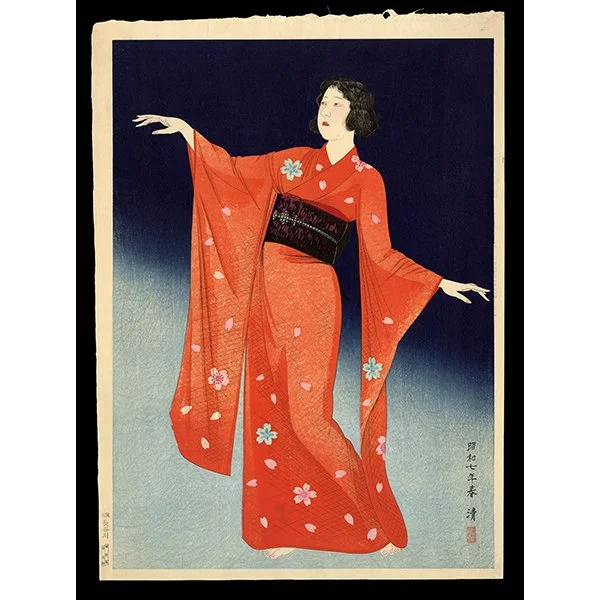
Odori
Kobayakawa Kiyoshi (1899–1948)
MEDIUM: Woodblock print
DATE: 1932
EDITION: 33/100
DIMENSIONS: 17 ¾ x 12 ¾ inches
CONDITION: Excellent; no problems to note
NOTE: Silver Mica Background; limited edition numeration on reverse
LITERATURE: The Female Image, pl. 196
$20,000.00
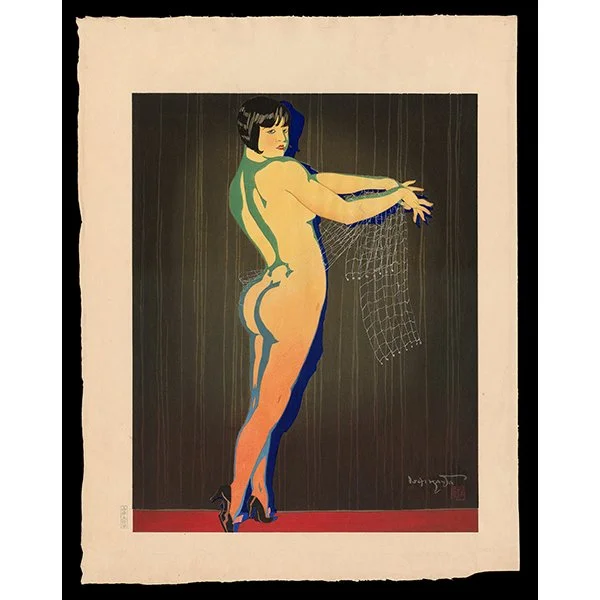
Dance
Ishikawa Toraji (1875–1964)
SERIES: Ten Types of Female Nudes
MEDIUM: Woodblock print
DATE: 1935
DIMENSIONS: 19 ¼ x14 ¾ inches
CONDITION: Excellent; no problems to note
NOTE: First state; silver mica highlights
LITERATURE: The Female Image, pl. 171
SOLD
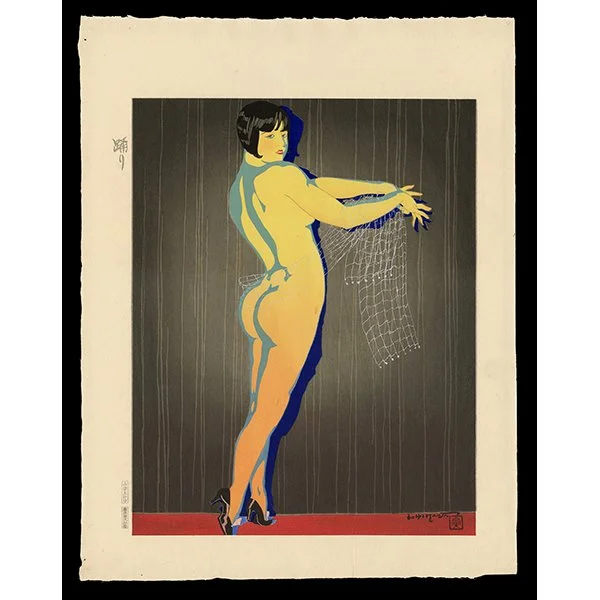
Dance
Ishikawa Toraji (1875–1964)
SERIES: Ten Types of Female Nudes
MEDIUM: Woodblock print
DATE: 1935
DIMENSIONS: 19 ¼ x14 ¾ inches
CONDITION: Excellent; no problems to note
NOTE: Early second state; silver mica highlights
LITERATURE: The Female Image, pl. 171
$3,500.00
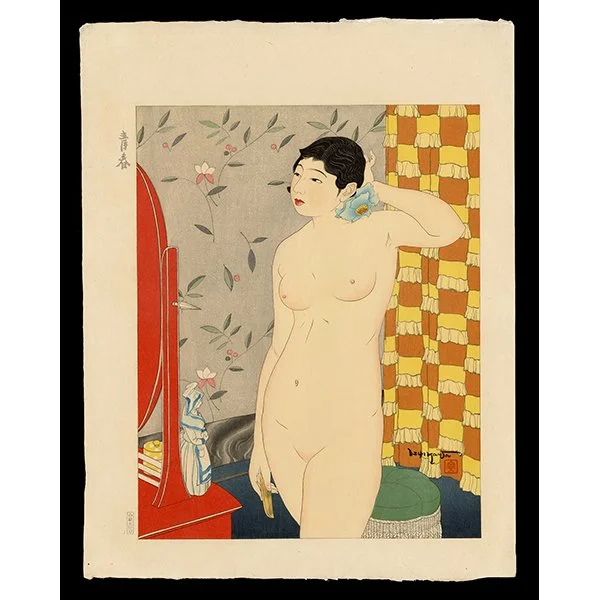
Youth
Ishikawa Toraji (1875–1964)
SERIES: Ten Types of Female Nudes
MEDIUM: Woodblock print
DATE: 1934
DIMENSIONS: 19 ¼ x14 ¾ inches
CONDITION: Excellent; no problems to note
LITERATURE: The Female Image, pl. 242
NOTE: First state; accompanied with a keyblock proof; silver mica background
$3,000.00
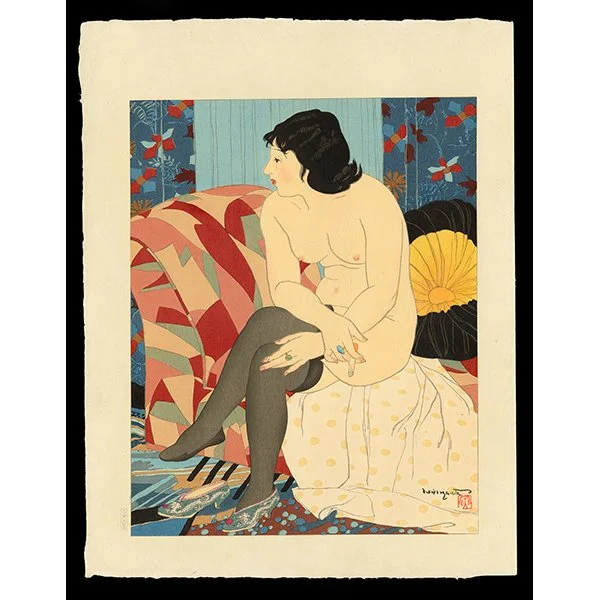
Relaxing
Ishikawa Toraji (1875–1964)
SERIES: Ten Types of Female Nudes
MEDIUM: Woodblock print
DATE: 1934
DIMENSIONS: 19 ¼ x14 ¾ inches
CONDITION: Excellent; no problems to note
LITERATURE: The Female Image, pl. 243
NOTE: First state; accompanied with a keyblock proof
SOLD
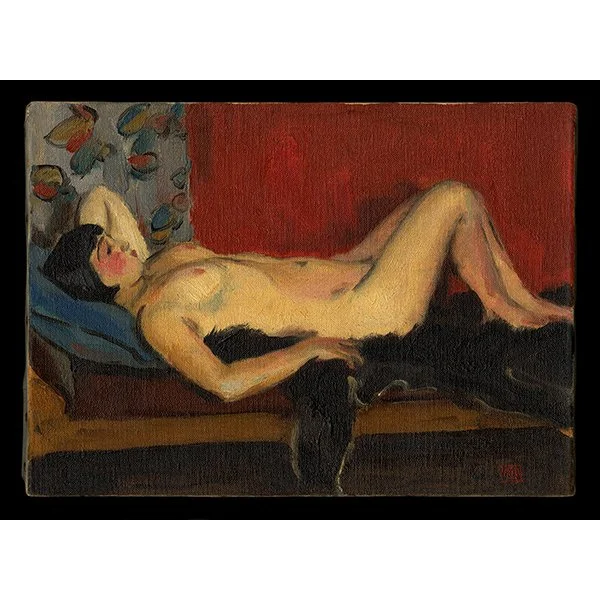
Moga Reclining
Ishikawa Toraji (1875–1964)
MEDIUM: Oil on canvas
DATE: c. 1930
DIMENSIONS: 9 ½ x 13 inches
CONDITION: Excellent, no problems to note
NOTE: Rare original work by Toraji
SOLD
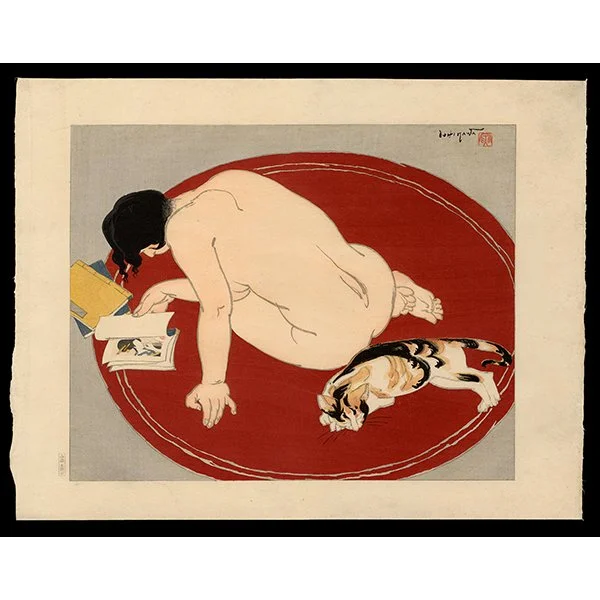
Bored
Ishikawa Toraji (1875–1964)
SERIES: Ten Types of Female Nudes
MEDIUM: Woodblock print
DATE: 1935
DIMENSIONS: 15 x 19 inches
CONDITION: Excellent; faint soiling to margins and on the reverse
LITERATURE: The Female Image, pl. 244
NOTE: First state; silver mica background
$2,000.00
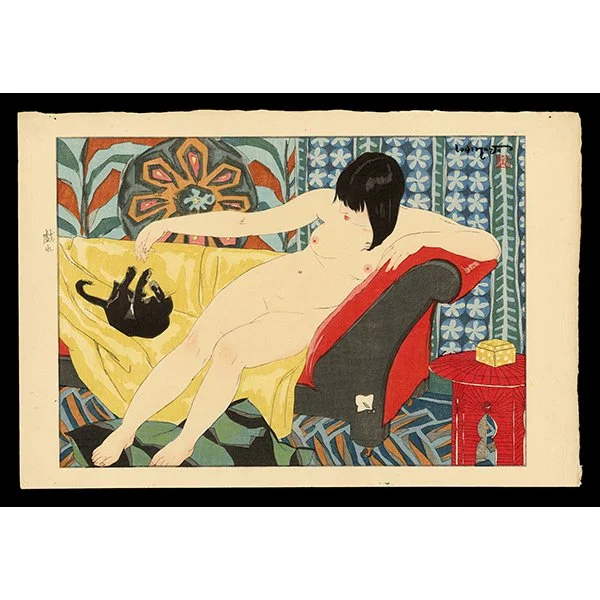
Playing
Ishikawa Toraji (1875–1964)
SERIES: Ten Types of Female Nudes
MEDIUM: Woodblock print
DATE: 1936
DIMENSIONS: 10 ½ x 15 ¾ inches
CONDITION: Excellent, no problems to note
LITERATURE: The Female Image, pl. 245
NOTE: First state
SOLD
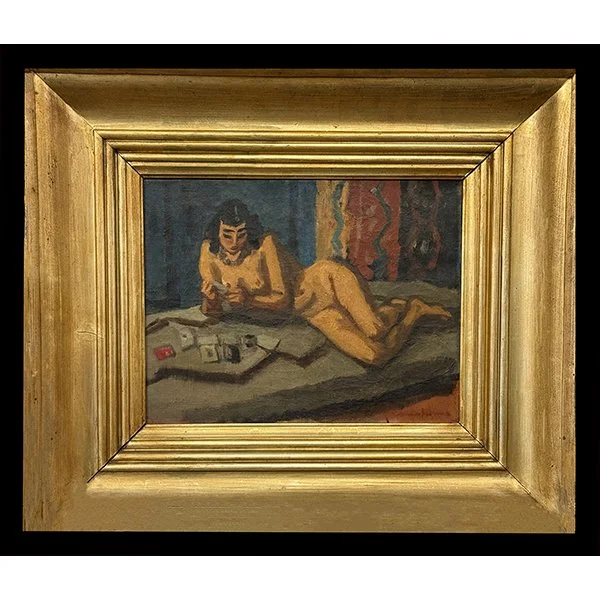
Reclining Nude
Riichirō Kawashima (1886–1971)
MEDIUM: Oil on Canvas
DATE: c. 1930
DIMENSIONS: 10 × 13 inches (image)
CONDITION: Excellent, no problems to note
NOTE: In original gilt wooden frame
$3,500.00

Woman Listening to a Record
Sotaro Yasui (1888-1955)
SERIES: Twenty-Four Figures of Charming Women
MEDIUM: Woodblock Print
DATE: c. 1931
DIMENSIONS: 17 3/8 x 11 3/8 inches
CONDITION: Excellent; no problems to note
$2,500.00 <RESERVED>
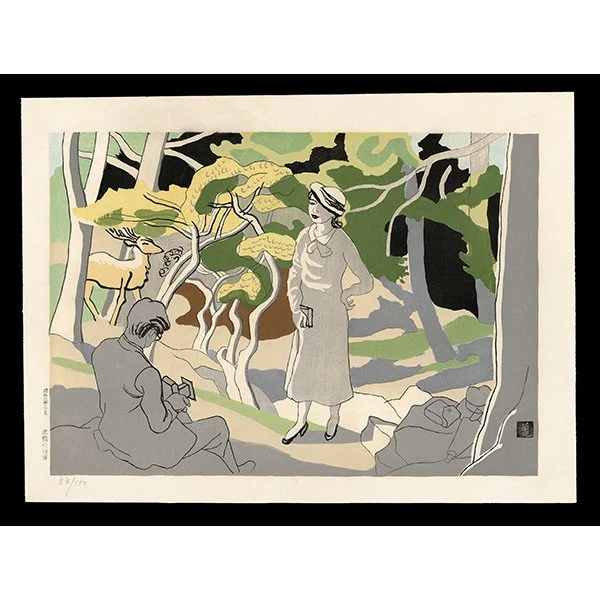
Early Summer
Sotaro Yasui (1888-1955)
MEDIUM: Woodblock Print
DATE: 1933
EDITION: 53/100
DIMENSIONS: 13 x 17 ¾ inches
CONDITION: Excellent; no problems to note
$2,500.00 <RESERVED>
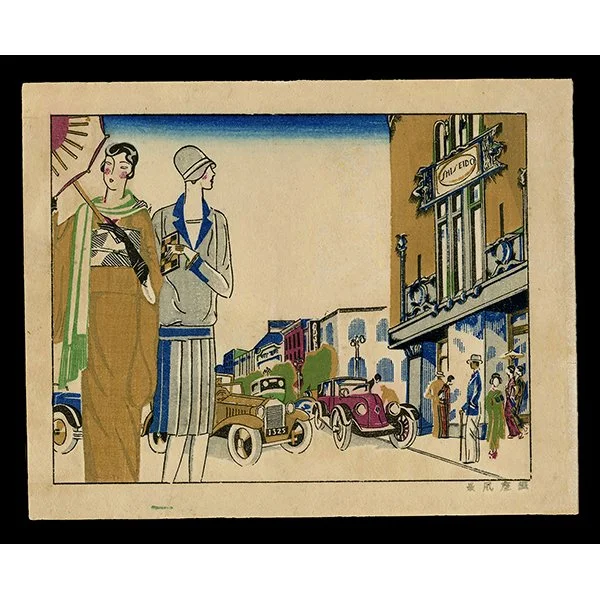
Ginza Scene
Kanenori Suwa (1897–1932)
MEDIUM: Woodblock print
DATE: 1927
DIMENSIONS: 4 ½ × 5 ½ inches
CONDITION: Excellent, faint centerfold
NOTE: Ad for Shiseido included as pamphlet in Lady’s Handbook
SOLD
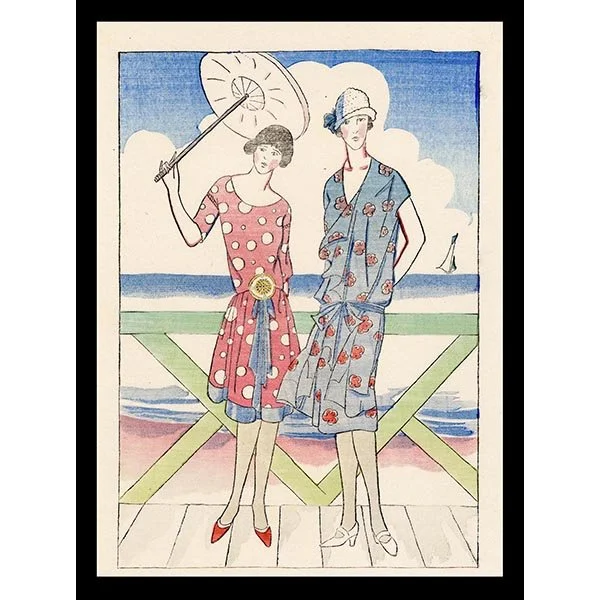
Two Women on Boardwalk
Takehisa Yumeji (1884–1934)
MEDIUM: Woodblock print
DATE: c. 1930
DIMENSIONS: 11 3/8 x 8 ½ inches
CONDITION: Excellent, no problems to note
SOLD
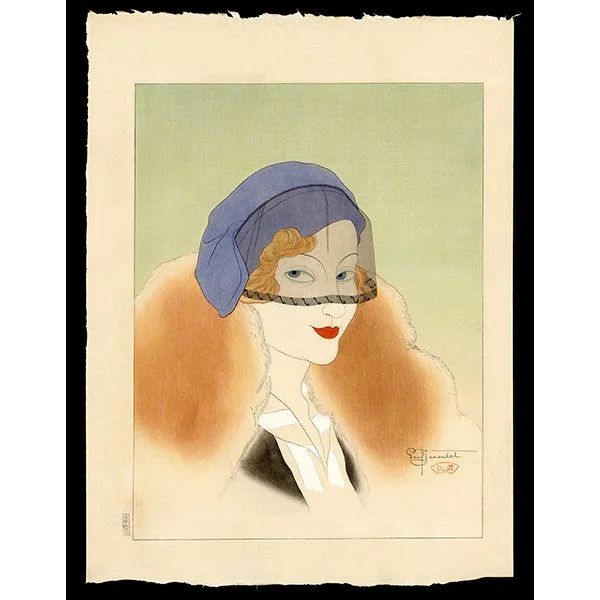
Une Parisienne
Paul Jacoulet (1896–1960)
MEDIUM: Woodblock print
DATE: 1934
EDITION: Kanji edition, numbered /150 on reverse
DIMENSIONS: 19 x 14 inches
CONDITION: Exceedingly fine state of preservation with pristine vivid colors
NOTE: Accompanied with rarely seen tissue paper cover baring tittle
LITERATURE: Miles, pl. 6
$25,000.00
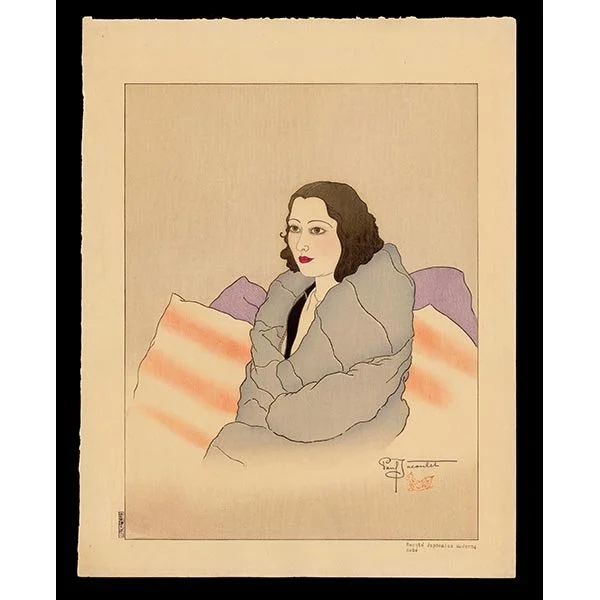
Beaute Japonaise Moderne (Kobe)
Paul Jacoulet (1896–1960)
MEDIUM: Woodblock print
DATE: 1935
EDITION: Kanji edition, numbered 19/150 on reverse
DIMENSIONS: 19 x 14 inches
CONDITION: Exceedingly fine state of preservation with pristine vivid colors
LITERATURE: Miles, pg. 95
SOLD
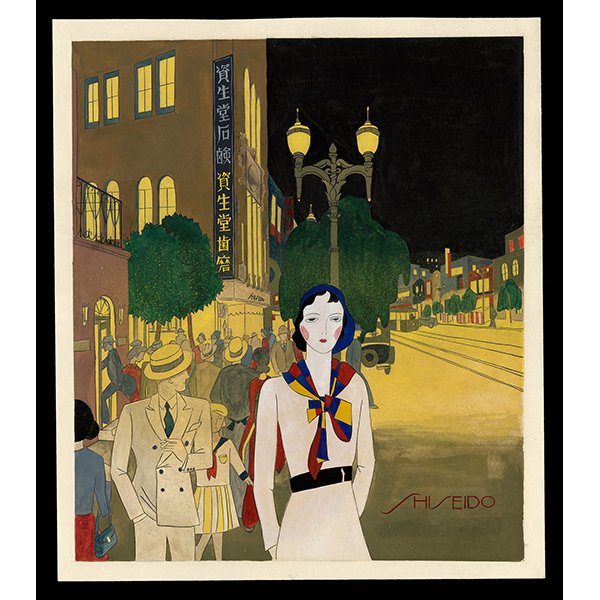
Ginza at Night
Ayao Yamana (1897–1980)
MEDIUM: Watercolor and pigment on paper
DATE: c. 1928–1930
DIMENSIONS: 17 1/4 x 14 7/8 inches
Condition: Excellent; no problems to note
NOTE: Unique preparatory watercolor for Shiseido promotional woodblock printed fan
SOLD
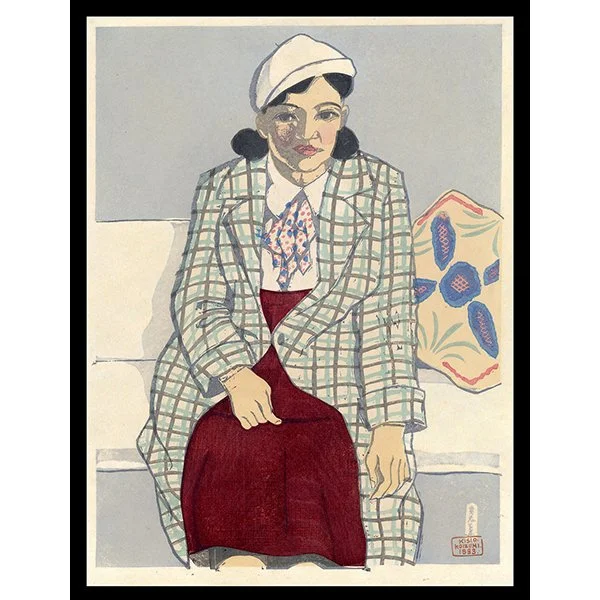
Seated Woman
Kishio Koizumi (1893-1945)
MEDIUM: Woodblock print
DATE: 1933
DIMENSIONS: 16 x 12 inches
CONDITION: Excellent, no problems to note
SOLD
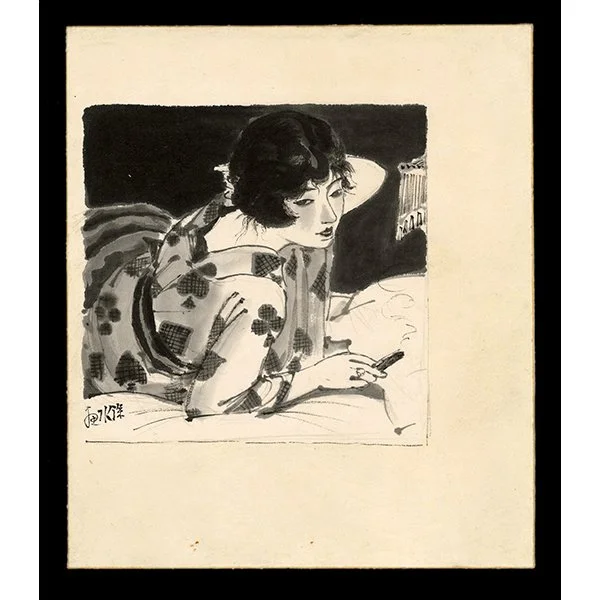
Untitled (Woman Reclining with Cigarette)
Ito Shinsui (1898–1972)
MEDIUM: Ink on paper
DATE: c. 1930
DIMENSIONS: 8 ¼ x 7 1/8 inches
CONDITION: Excellent; no problems to note
NOTE: Gold leaf to edges of paper; accompanied with certificate of Authenticity by Bijutsu Club of Tokyo
$3,500.00 <RESERVED>
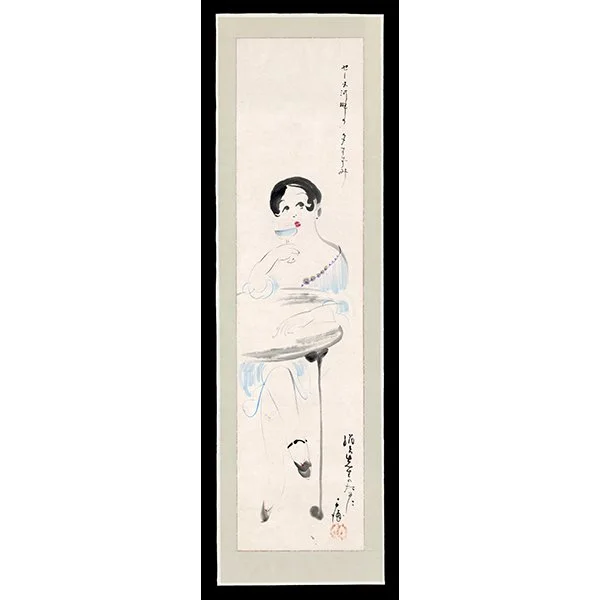
Enjoying the Cool Evening Breeze
Chiura Obata (1885–1975)
MEDIUM: Sumi and pigment on paper
DATE: c. 1930
DIMENSIONS: 55 1/2 x 13 3/4 inches
CONDITION: Excellent, no problems to note
NOTE: Rare original work of an unusual subject by Obata
SOLD
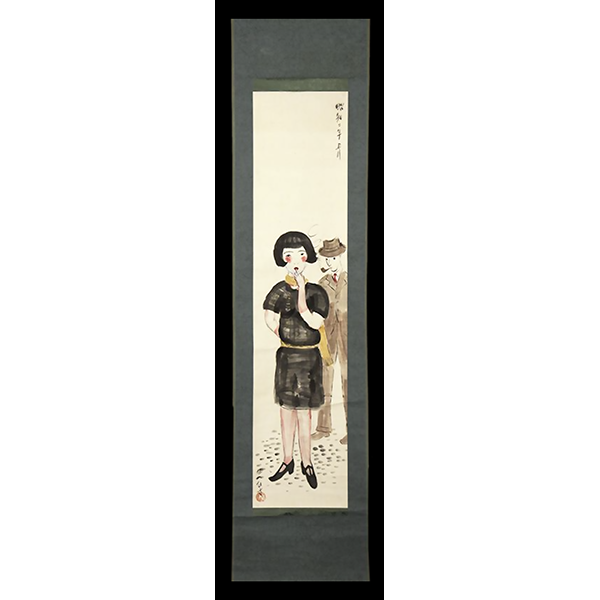
Moga and Mobo
Takahisa Kato (act. 20th century)
MEDIUM: Pigment on paper mounted as a hanging scroll
DATE: 1927
DIMENSIONS: 76 ¾ x11 ¾ inches (entire scroll with mount)
CONDITION: Excellent; no problems to note;
NOTE: Corrections made by artist are present throughout composition
SOLD
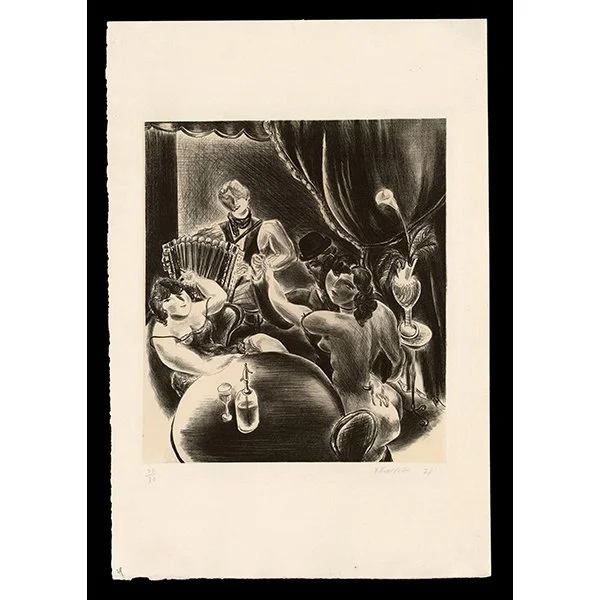
Dancers
Yasuo Kuniyoshi (1889–1953)
MEDIUM: Lithograph with chine appliqué
DATE: 1928
DIMENSIONS: 19 5/8 × 12 7/8 inches
CONDITION: Excellent; no problems to note
NOTE: Numbered 26/30; signed by the artist in pencil at lower right
LITERATURE: Yasuo Kuniyoshi: The Complete Graphic Work, pl. L-29
$6,000.00 <RESERVED>
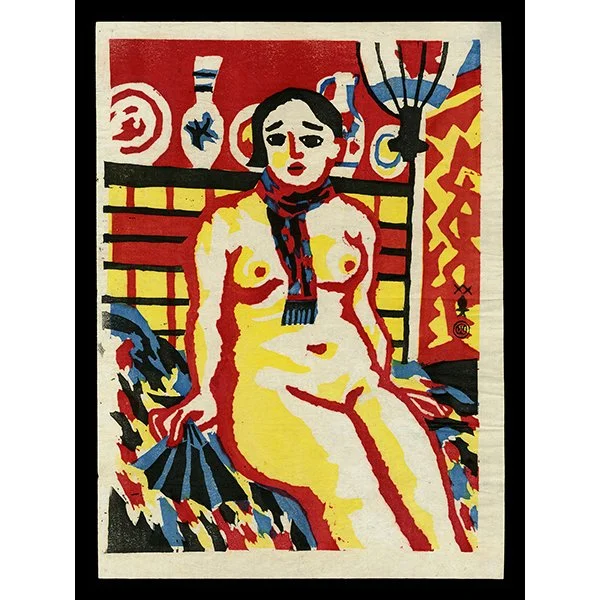
Nude Wearing Scarf
Hide Kawanishi (1888-1955)
MEDIUM: Woodblock Print
DATE: 1933
DIMENSIONS: 15 1/4 x 11 3/8 inches
CONDITION: Excellent; no problems to note
SOLD

Country Girl from South of France
Inosuke Hazama (1895–1977)
MEDIUM: Woodblock print
DATE: 1931
DIMENSIONS: 14 1/3 × 10 ¾ inches
CONDITION: Excellent; no problems to note
SOLD
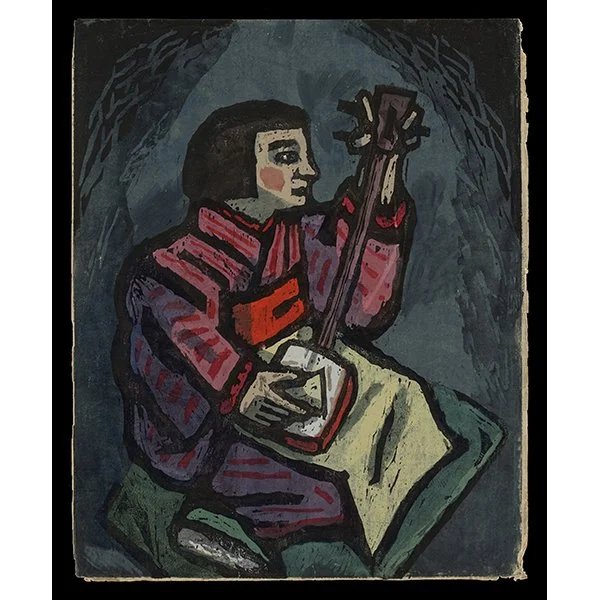
Shamisen Performance
Tadashige Ono (1909–1990)
MEDIUM: Woodblock print
DATE: 1934
DIMENSIONS: 24 ½ x 19 ½ inches
CONDITION: Excellent, no problems to note
NOTE: Rare early work
LITERATURE: Complete Prints by Tadashige Ono, pl. 175
PROVENANCE: Ono Tadashige Museum
$4,500.00
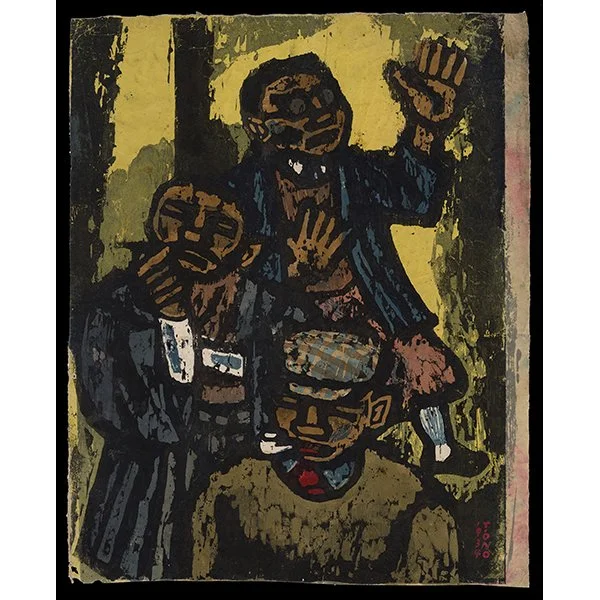
The Men Who Sell Men
Tadashige Ono (1909-1990)
MEDIUM: Woodblock print
DATE: 1930
DIMENSIONS: 24 ¼ x 18 ½ inches
CONDITION: Excellent; no problems to note
SOLD
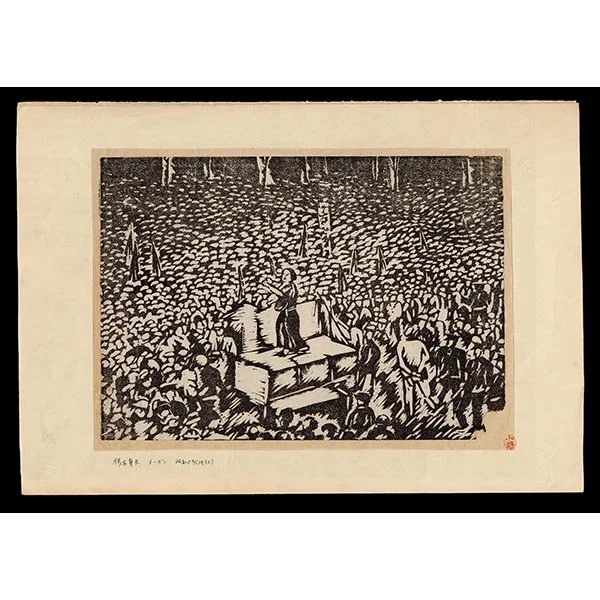
May Day
Sadao Katsuki (act. 20th century)
MEDIUM: Woodblock print
DATE: 1930
DIMENSIONS: 10 ½ x 13 ¼ inches
CONDITION: Excellent; no problems to note
SOLD
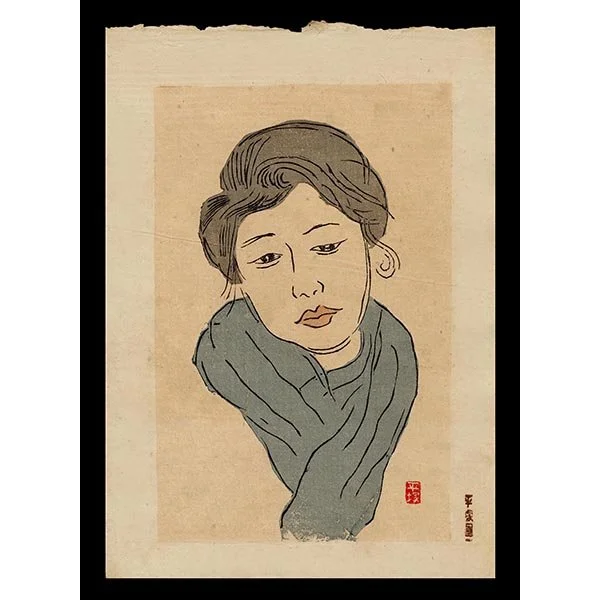
Portrait of my Wife, Teruno, 1923
Unichi Hiratsuka (1895–1997)
MEDIUM: Woodblock print
DATE: 1923
DIMENSIONS: 11 ¾ x 8 ½ inches
CONDITION: Excellent, no problems to note
NOTE: Rare early work
LITERATURE: Hiratsuka: Modern Master, pl. 5
$1,000.00
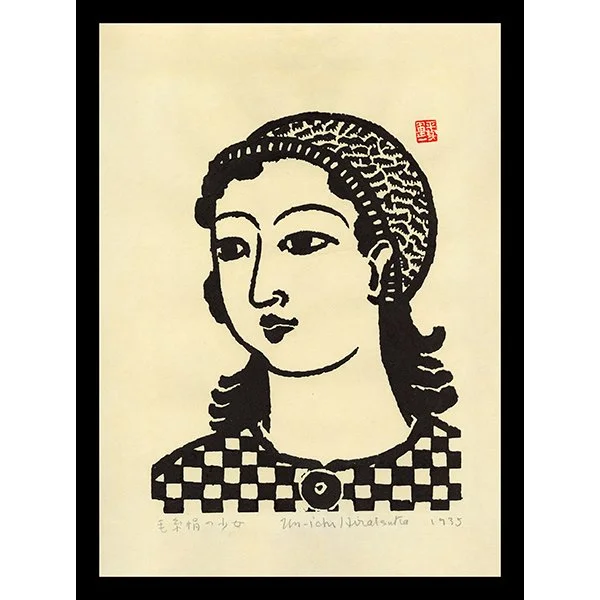
Girl in Woolen Cap
Unichi Hiratsuka (1895–1997)
MEDIUM: Woodblock print
DATE: 1935
DIMENSIONS: 12 x 9 ¾ inches
CONDITION: Excellent, no problems to note
NOTE: Rare early work
SOLD
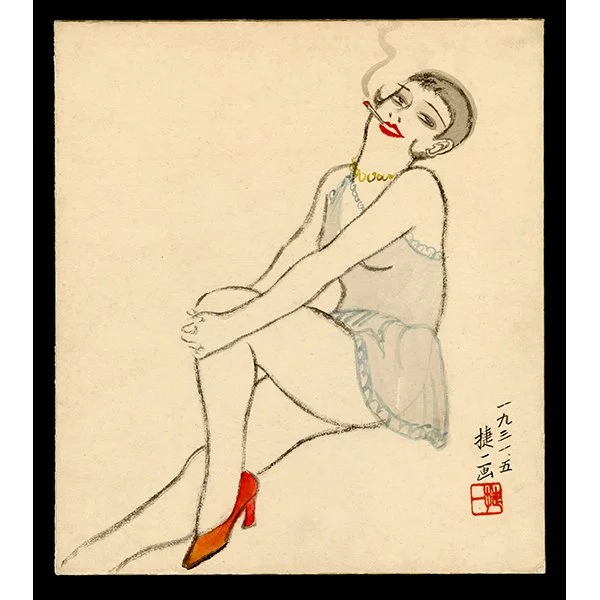
Moga Smoking
Shoichi Yagihara
MEDIUM: Ink and pigment on paper
DATE: 1931
DIMENSIONS: 10 ¾ x 9 ½ inches
CONDITION: Excellent; no problems to note
$1,200.00 <RESERVED>
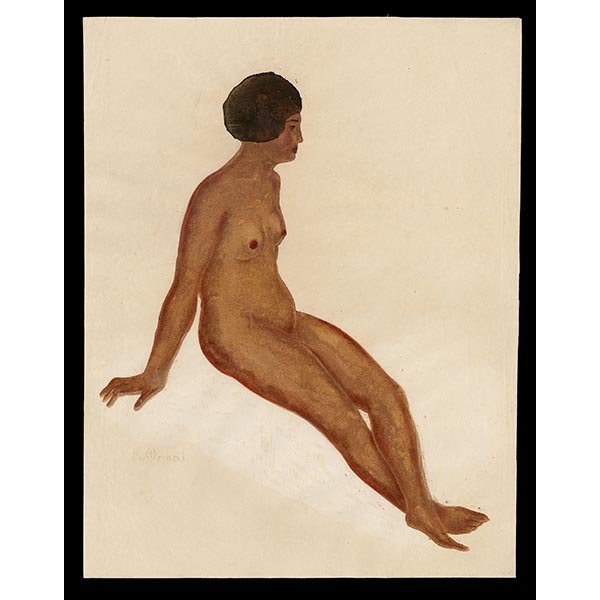
Rest
Koshiro Onchi (1891–1955)
MEDIUM: Woodblock print
DATE: 1928
DIMENSIONS: 18 1/8 × 14 1/8 inches
CONDITION: Excellent, no problems to note
LITERATURE: Prints of Onchi Koshiro, Tokyo: Keishosha, 1975, pl. 118
$20,000.00
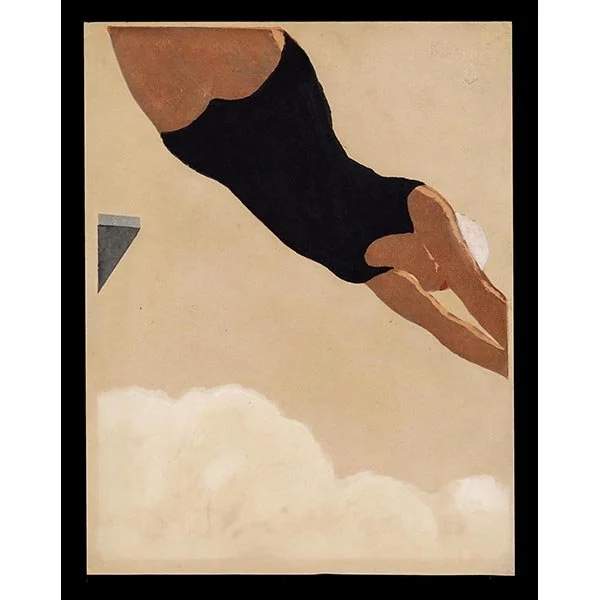
Diving
Koshiro Onchi (1891–1955)
MEDIUM: Woodblock print
DATE: 1932
DIMENSIONS: 15 ¾ x 12 ½ inches
CONDITION: Excellent, no problems to note
LITERATURE: Prints of Onchi Koshiro, Tokyo: Keishosha, 1975, no. 179.
PROVENANCE: F. Kawasaki Collection
Not For Sale
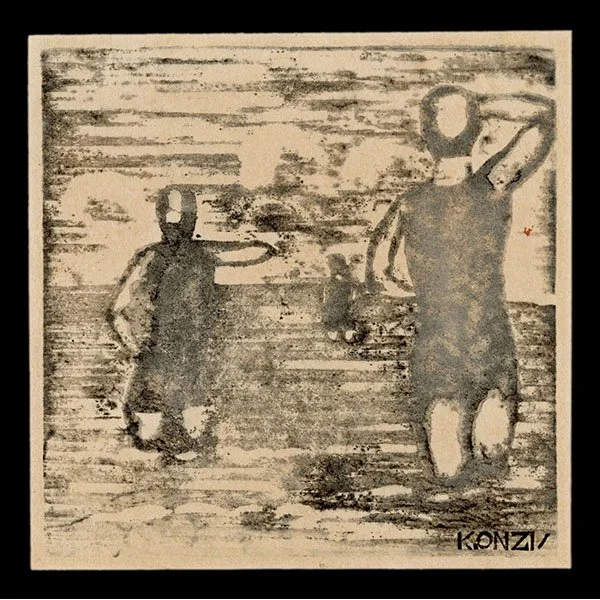
Bathers at Beach
Koshiro Onchi (1891–1955)
MEDIUM: Woodblock print
DATE: c. 1930
DIMENSIONS: 5 x 7 inches
CONDITION: Excellent, no problems to note
NOTE: Previously unrecorded; rare self-printed example with hand-written label on verso
$3,500.00<RESERVED>
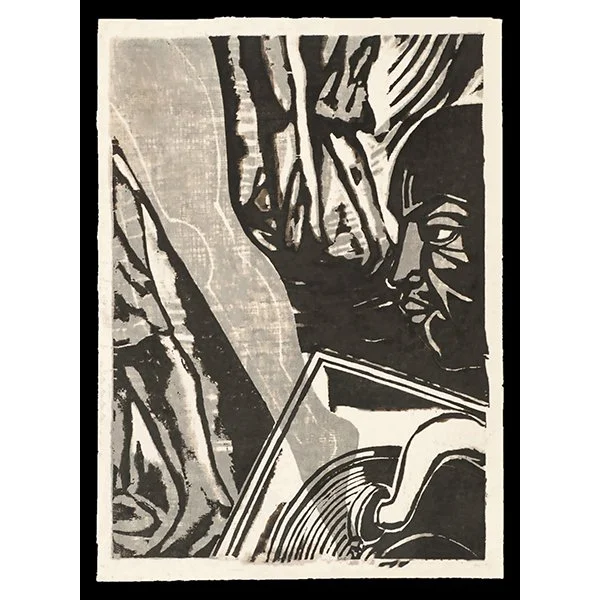
Jazz
Koshiro Onchi (1891–1955)
MEDIUM: Woodblock print
DATE: 1931
DIMENSIONS: 8 x 5 ½ inches
CONDITION: Excellent, no problems to note
NOTE: Design was produced as an illustration for Muroo Saisei’s The Blue Monkey, 1932
LITERATURE: Prints of Onchi Koshiro, Tokyo: Keishosha, 1975, no. 148
SOLD
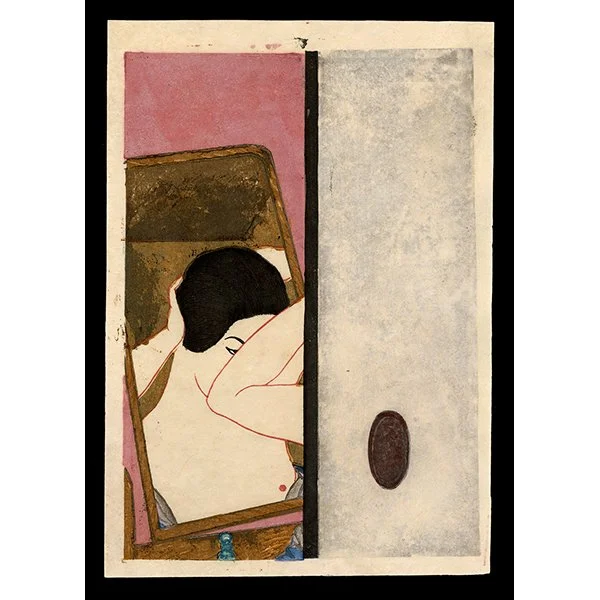
Mirror
Koshiro Onchi (1891–1955)
MEDIUM: Woodblock print
DATE: 1930
DIMENSIONS: 13 x 9 1/8 inches
CONDITION: Excellent, no problems to note
LITERATURE: Prints of Onchi Koshiro, Tokyo: Keishosha, 1975, no. 144
SOLD
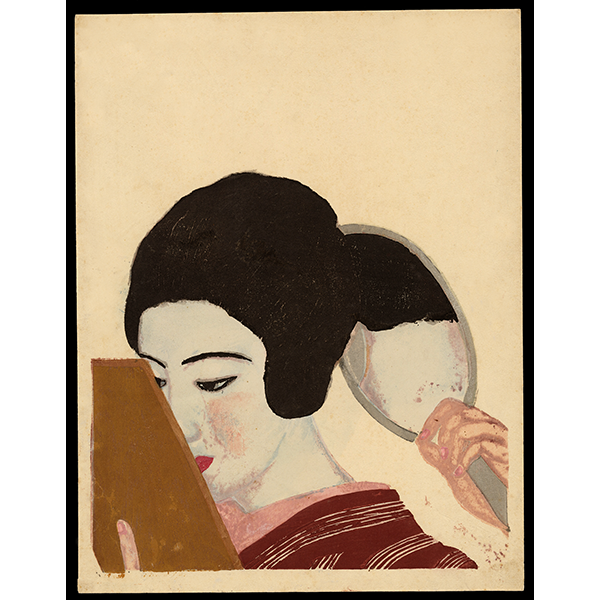
Mirror
Koshiro Onchi (1891-1955)
MEDIUM: Woodblock print
DATE: 1929
DIMENSIONS: 14 x 10 3/4 inches
CONDITION: Iron spots in paper, not affecting the design
NOTE: Silver Mica Highlights
SOLD
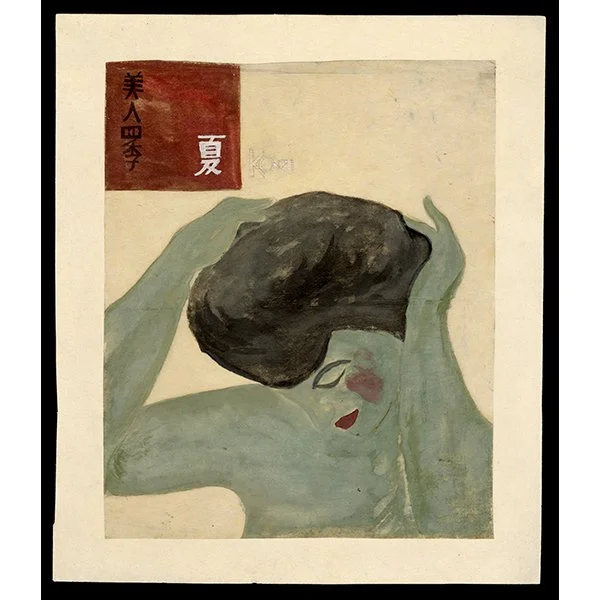
Summer—Painting
Koshiro Onchi (1891-1955)
MEDIUM: Pigment on paper
DATE: 1930
DIMENSIONS: 11 x 9 ¼ inches
CONDITION: Excellent, no problems to note
NOTE: Scarce original painting executed in preparation for the re-worked 1930 design
SOLD
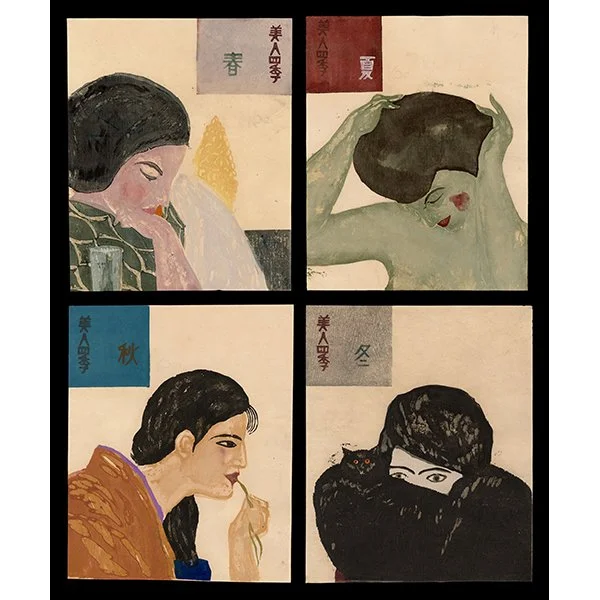
Beauties of the Four Seasons (Bijin Shiki)
Koshiro Onchi (1891-1955)
MEDIUM: Woodblock print
DATE: 1930
DIMENSIONS: 11 x 9 ¼ inches (each print)
CONDITION: Excellent, no problems to note
NOTE: Rare self-printed re-worked “Japanese” edition with the omission of French titles: with original folder indicating this set as a self-printed (Jizuri) example
SOLD
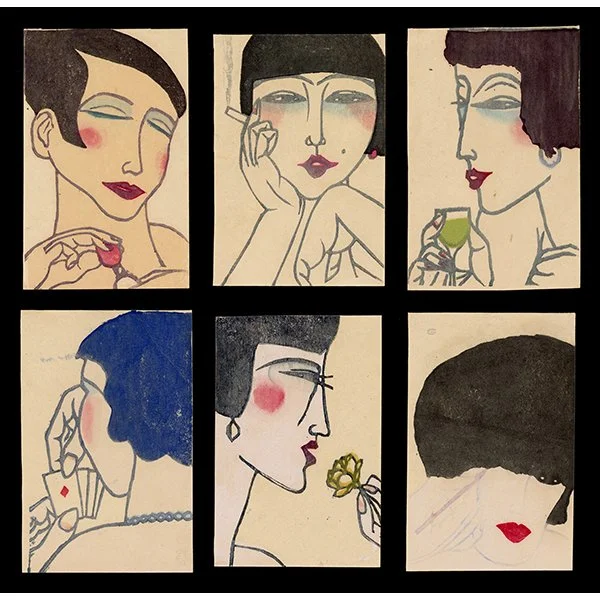
Modern Girls at Leisure
Gen Yamaguchi (1896–1976)
MEDIUM: Woodblock prints
DATE: 1929
DIMENSIONS: 6 x 4 inches each print
CONDITION: Excellent, no problems to note
NOTE: Complete set of 6 designs with original folder
$3,000.00 <RESERVED>
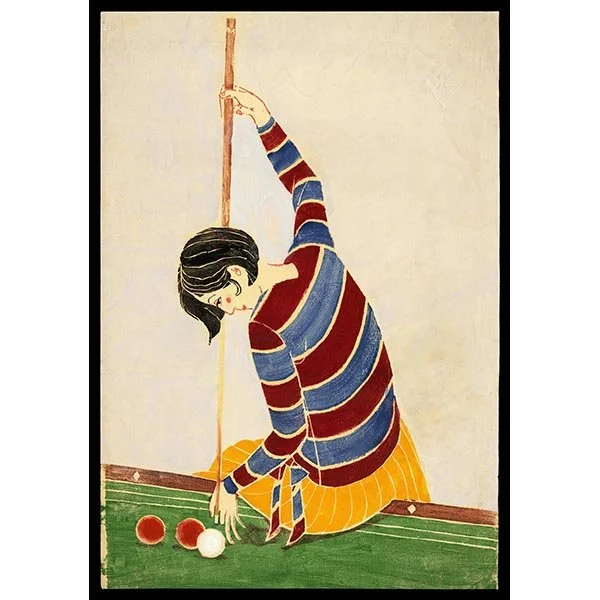
Grand-Massé
Isaku Nakagawa (1899-2000)
MEDIUM: Woodblock print
DATE: 1933
DIMENSIONS: 17 1/2 x 11 ½ inches
CONDITION: Excellent, no problems to note
NOTE: Silver mica background, printed on thick deluxe paper
Not For Sale
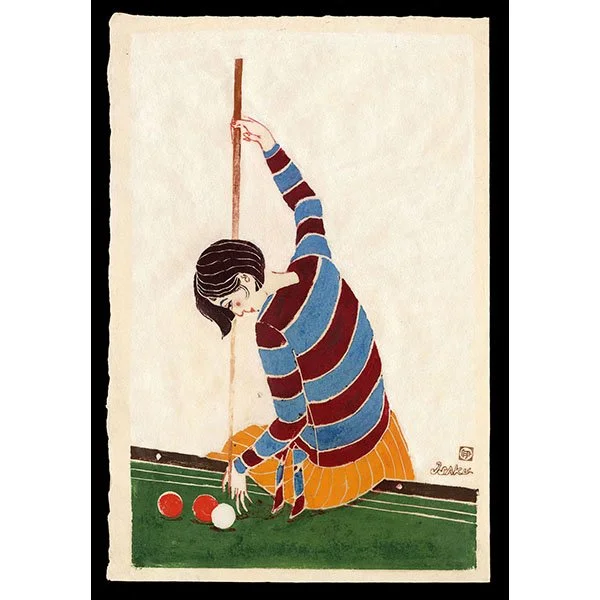
Grand-Massé
Isaku Nakagawa (1899-2000)
MEDIUM: Woodblock print
DATE: 1933
DIMENSIONS: 17 1/2 x 11 ½ inches
CONDITION: Excellent, no problems to note
NOTE: Silver mica background, variant with signature in image; executed on larger sheet of paper
SOLD
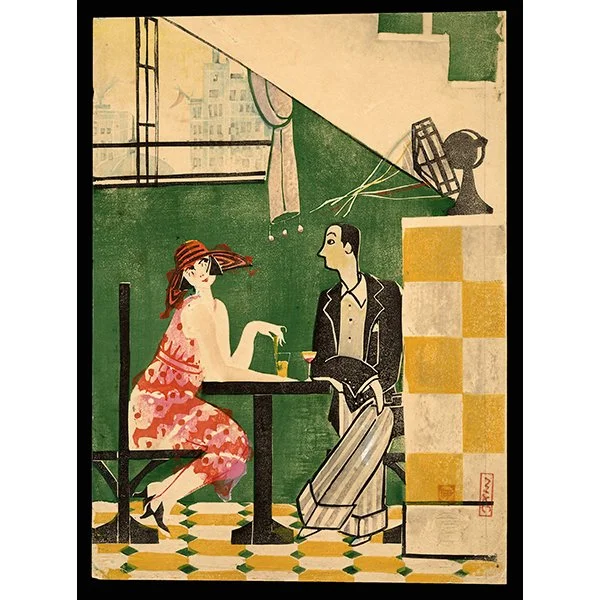
Cafe - A Cocktail Between Skyscrapers
Isaku Nakagawa (1899-2000)
MEDIUM: Woodblock print
DATE: 1933
DIMENSIONS: 16 x 11 ¾ inches
CONDITION: Excellent, no problems to note
NOTE: Rare variant with missing staircase at the top portion of design
SOLD
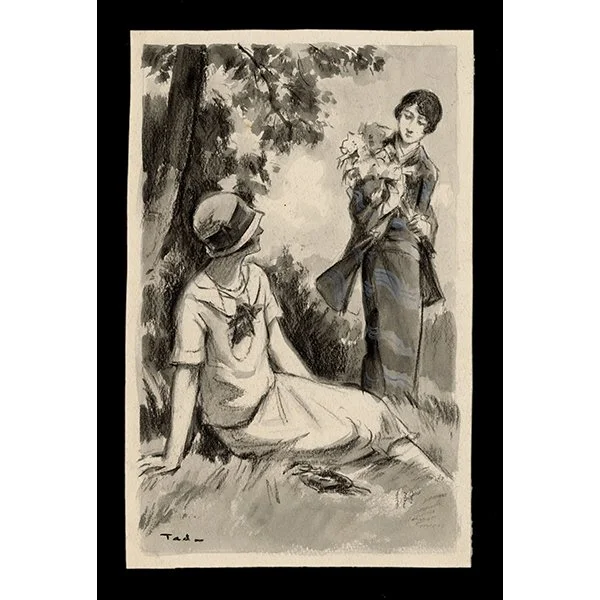
Women Beneath Trees
Unknown Japanese Artist
MEDIUM: Sumi ink on paper
DATE: c. 1925-1930
DIMENSIONS: 7 5/8 × 4 7/8 inches
CONDITION: Excellent; no problems to note
$300.00 <RESERVED>
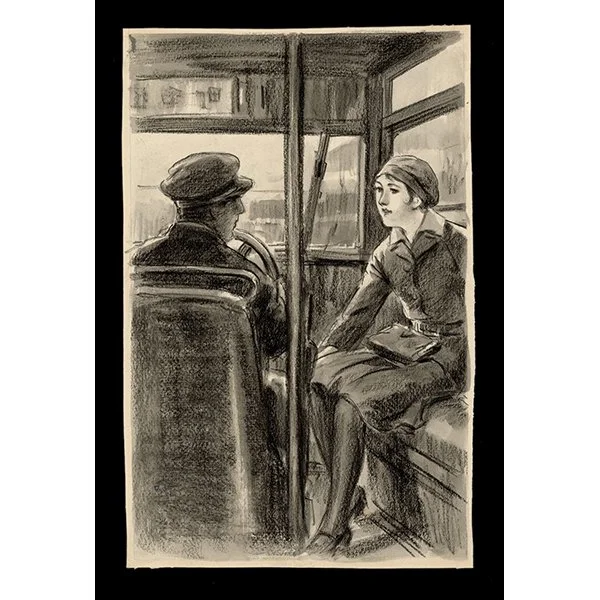
Conversation in Streetcar
Unknown Japanese Artist
MEDIUM: Charcoal and sumi on paper
DATE: c. 1925-1930
DIMENSIONS: 8 ½ x 5 ½ inches
CONDITION: Excellent; no problems to note
$300.00
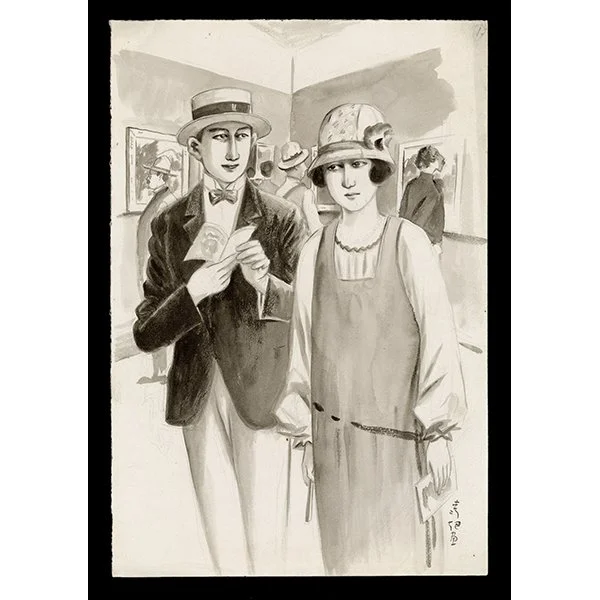
Art Exhibition
Unknown Japanese Artist
MEDIUM: Sumi ink on paper
DATE: c. 1925-1930
DIMENSIONS: 11 × 7 ½ inches
CONDITION: Excellent; no problems to note
$800.00 <RESERVED>
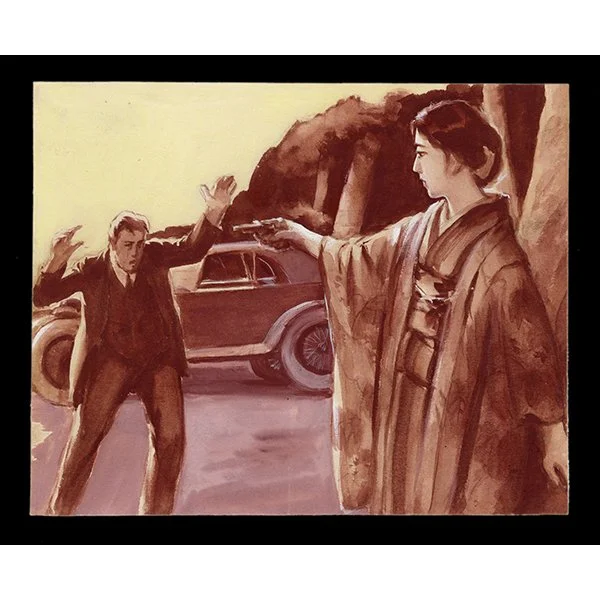
Woman and Revolver
Unknown Japanese Artist
MEDIUM: Pigment on paper
DATE: c. 1925-1930
DIMENSIONS: 5 ¼ x 6 ½ inches
CONDITION: Excellent; no problems to note
$800.00
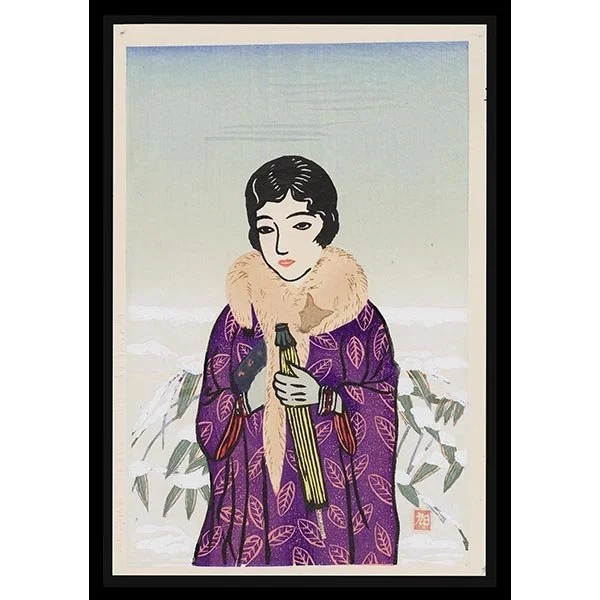
Snow
Masahide Asahi (1900–1956)
SERIES: New Edition of Modern Women’s Styles
MEDIUM: Woodblock print
DATE: 1930
DIMENSIONS: 11 5/8 x 8 ¼ inches
CONDITION: Excellent, no problems to note
NOTE: Accompanied with original presentation folder
$800.00 <RESERVED>
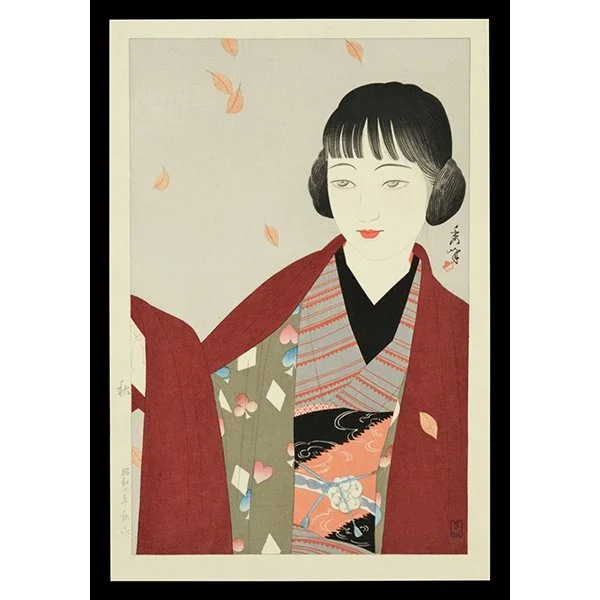
Autumn
Yamakawa Shuho (1898-1944)
SERIES: Four Images of Women
MEDIUM: Woodblock print
DATE: 1927
DIMENSIONS: 15 ¼ x 10 ¼ inches
CONDITION: Excellent; no problems to note
NOTE: Silver mica background; published by Bijutsusha; early impression with publisher seal at lower right in image
SOLD
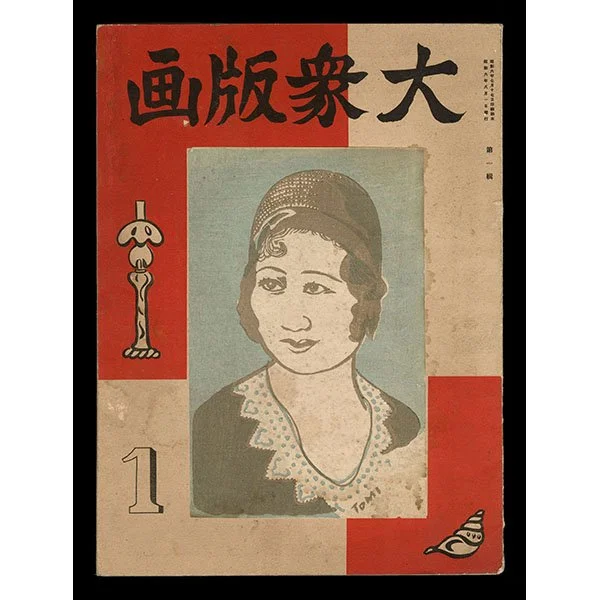
Taishu Hanga Volume 1
Assorted Artists
MEDIUM: Woodblock print
DATE: 1931
DIMENSIONS: 12 1/8 × 9 inches
CONDITION: Excellent; some minor soiling, toning, and staining
NOTE: Tomikichirō Tokuriki (1902–1999); contents include prints by Senpan, Kawanishi, Asada, T. Maeda, and others
$500.00
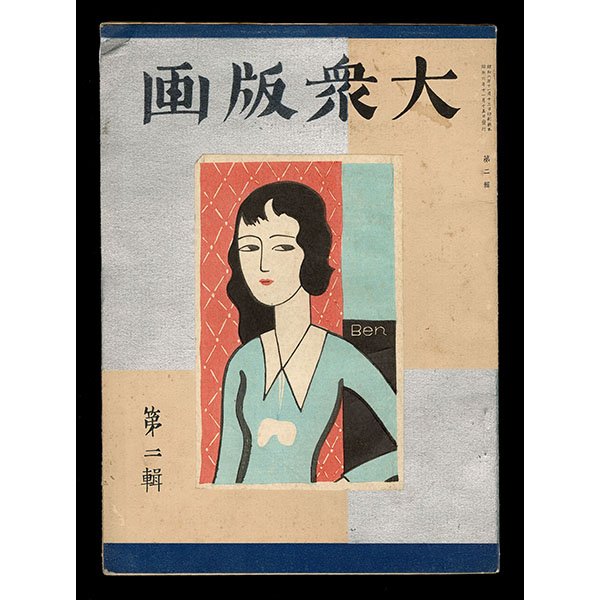
Taishu Hanga Volume 2
Assorted Artists
MEDIUM: Woodblock print
DATE: 1931
DIMENSIONS: 12 ¼ x 8 ¾ inches
CONDITION: Excellent; some minor soiling, toning, and staining; top left corner bent
NOTE: Cover design by Benji Asada (1899–1984); contents include works by Senpan, Tokuriki, Asada, Kawanishi, T. Maeda, and others; complete.
$500.00 <RESERVED>
THE CITY
UKIYO-E-REFERENCES
___LZSettings_N4IgFgyglgXgpiAXAOwK4Bt0BoQDN0D2AhgC4AiUATkmpjnMkQEbpwAyRMAnkrkegGc4OfugCiANwYkBvfkJxQScALYCAksgBKBAO5IALDhLNWJAMIF0qFclmIATMdNwSAcVQll1RwAYcKgRMUKyW1rb2AIwBQSFwHl5wPg4ArDiERAAmAIKYAPKUAApEAOZIJJSowiAZmcUlcNDwSJG+-iACBJQkEDYqRJRc6spqSCAADpRQAMZwALREAtMgOAJgehBgA3AAQp4kBHZjyASb2ysgTPuHGtOHuVAlyCrSY7PI3hdXXjfqd8hNBCIDr9TBfa52P6HMJdMYsIjTADW4J+kP+EBIXFYYwEAEdUNs5kwupkkhcsplzKQACqlczoRZCewgE7IBA4O6YODTEhQQ7UrjjIGRADMHKsrB5fOQAFVKOgxkQJEQQi45pMoB9ZMYlNjgYUtOoAHLUiAXTFCo1EF5jSYETKoHnakCoIRGmxMJKaHT6RAVKo4XSUIjjYaqAQAdSUYDYmuRiD4gmqJhYrggrl5yBK9n91UCwVY6a8muz5Uq1VdjTgAgE0qp0zAQNz4q5UsO6kyYwAbA5cJkUgAOIhdlK4Bzcgci3xwBEOIgAdgMRAupNrT0VngIJSmnZwjaySWpcAAHiQxgAeIgAAkYLwAvAAdF2IqBcAhwJ8APnPAHoiN+wAMb8mE-GUAGl1AATTyOYxDmLQxAAMTEBCjXMMQIF-EDf0Az9zRPHpYCBEAXkyKAbAucZSkaIikAcAdFH6BpsgEIUeS0Ug+TGSILk5GxkCjTISDAQwHHaEp9jJRADHadAoAEEh1CYmjmkQKd0nkxTlIeJ4Xg+MZWFwM9Vjk1dCiSH1DGMAidOeV5gUM4yOnWXRqV1Jty1WFzqTAD1GBCMsA2cvQxGPWZKHGM8E3kao1j0LQZ0yABZLp2DjOQky8vRCimWYMoUCZKHtR0SAARVQGZEQANSgOBdDERhU07aLMuC3RigUgoZXGO4VBLSRpGZVAeoIPqswuF4TEyUgiEKAha15Q44TgQhdDmf5lH0nANX6QYktcLIZuOQ52Q6blDmmvaDumkxjrZC5cBCT5EFAEwyhQDBsBAaZSDgEouh4D66G+37-sGDt7AAbRALsiCIXwB1wOAHHnXAp3necRUiAxMkyeciAATgJkUQAAXQAXxETdzCK8ZAuqOSSjAEhiWPfK8ygY84EpQ5Nqi5tLkIJEOzGXBpmmVHJxSeiCfnTIJYHQd518c1gzsXAulGF6QCKkxFuQJBQBgQ2QGVawgXaVBkCUMZSTKcnKY6H69VANntbNqoWjaHArZt4EAFIQEdwHQA94VvZda2opAQOHZwAgqOmJQQ9N-hPcQVpLajsZY-j3BcCEKLXZNsOkCzv2JjZ4OS7Ti2fez4Fxirx2ukeTUTbd0Pa6QFJy+j3OQBT0vEF7+uK9jx2BEROqO5r82y7H6O7aDnAh+7xA+9tv6g7jkAiGt-p9ah0mcEoGd0B2IXERF4EWAIJE5gMJgEVJfGuxFTJIiYAcuyYPtIlwEHIAA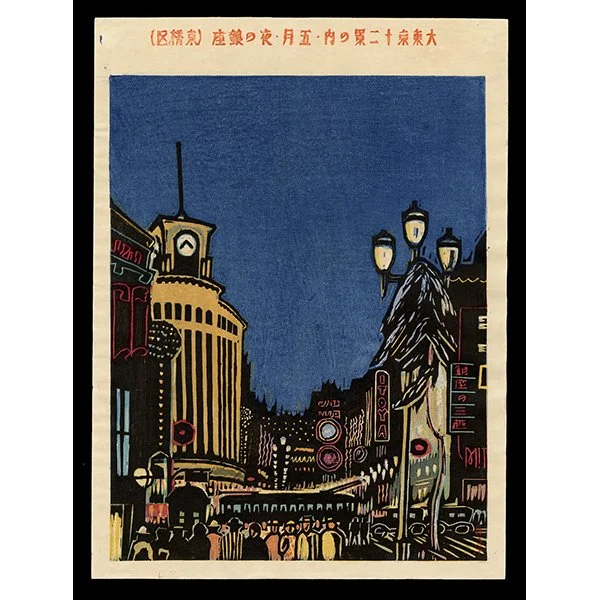
May, Night View of Ginza
Shizuo Fujimori (1891–1943)
SERIES: Twelve Views of Greater Tokyo
MEDIUM: Woodblock print
DATE: 1933
DIMENSIONS: 13 ½ x 10 1/4 inches
CONDITION: Excellent, no problems to note
SOLD
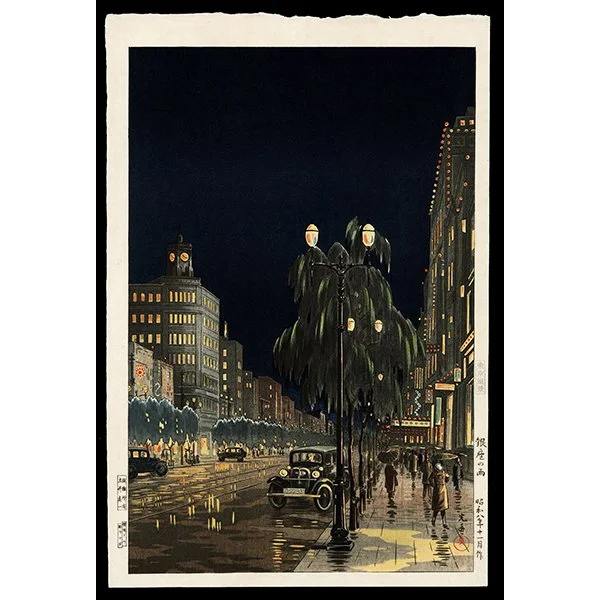
Rain in Ginza
Tsuchiya Koitsu (1870-1949)
MEDIUM: Woodblock print
DATE: 1933
DIMENSIONS: 15 ½ x 10 ½ inches
CONDITION: Excellent, no problems to note
NOTE: Published by Doi Sadaichi, first state with series cartouche
SOLD
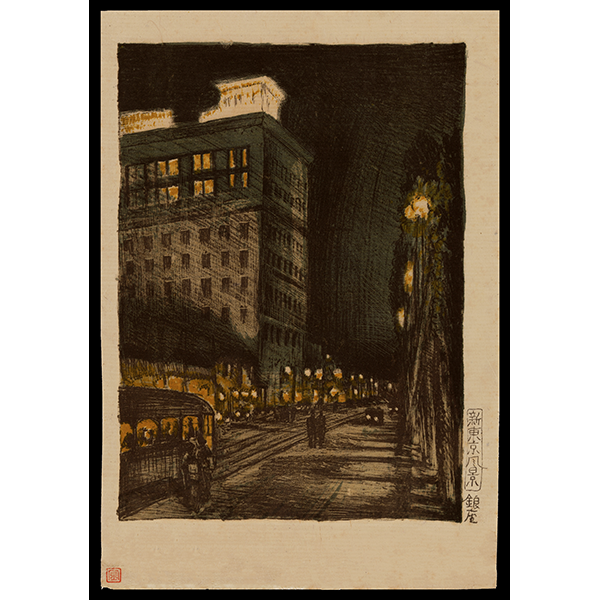
Ginza (June)
Kazuma Oda (1882-1956)
SERIES: New Tokyo Landscapes
MEDIUM: Color lithograph
DATE: 1925
DIMENSIONS: 12 3/4 x 8 ¼ inches
CONDITION: Excellent, no problems to note
LITERATURE: Machida City Museum of Graphic Arts, Kazuma Oda, pl.102
SOLD
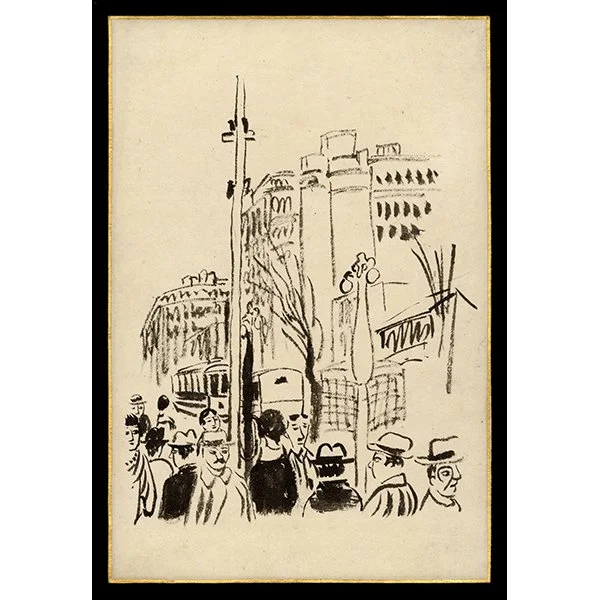
Ginza Street Scene
Ryusei Kishida (1891–1929)
MEDIUM: Ink on paper
DATE: 1925
DIMENSIONS: 9 5/8 x 6 1/2 inches
CONDITION: Excellent, no problems to note
NOTE: Mounted on presentation board with gold edges; accompanied by Ryusei Kishida Society certificate of authenticity
SOLD
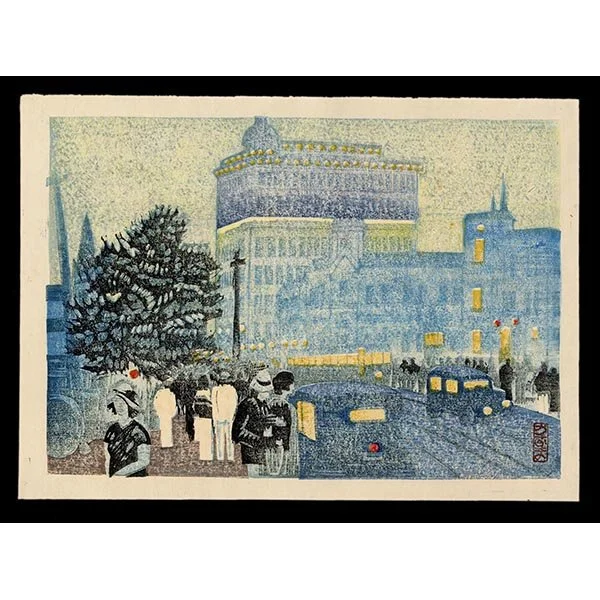
Twilight at Ginza
Kazuma Oda (1882-1956)
SERIES: Print Collection of Great Tokyo
MEDIUM: Woodblock print
DATE: 1929-30
DIMENSIONS: 9 3/8 x 12 7/8 inches
CONDITION: Excellent, no problems to note
NOTE: This impression is a rare color variant with a lighter and brighter palate
LITERATURE: Machida City Museum of Graphic Arts, Kazuma Oda, pl.102
$4,500.00 <RESERVED>
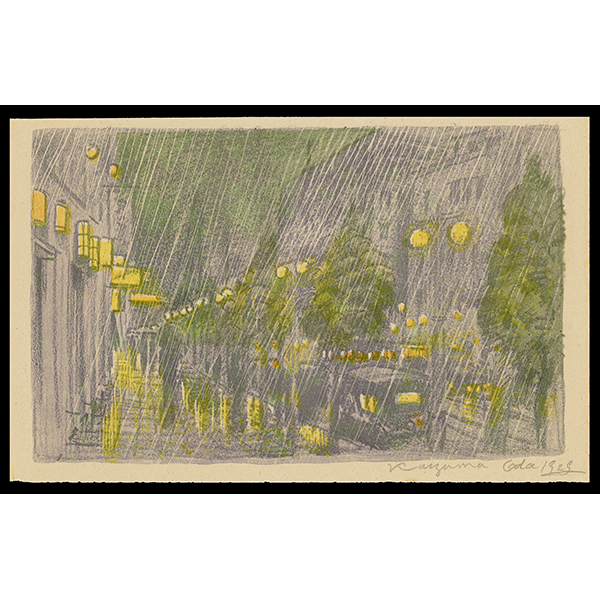
Ginza at Midnight
Kazuma Oda (1882-1956)
SERIES: Pictures of Ginza, Volume 2
MEDIUM: Color lithograph
DATE: 1929
DIMENSIONS: 9 3/8 x 12 3/4 inches
CONDITION: Excellent, no problems to note
NOTE: A rare surviving example retaining its original presentation folder, itself an important work of design from the period
LITERATURE: Machida City Museum of Graphic Arts, Kazuma Oda, pl.131
SOLD
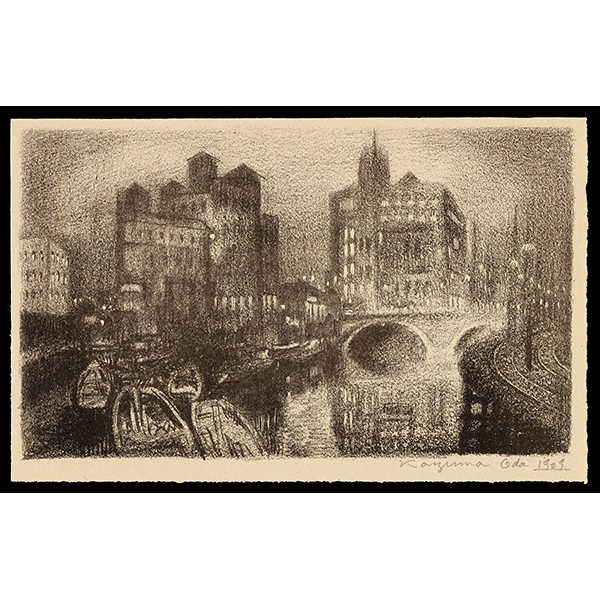
Sukiya Bridge at Night
Kazuma Oda (1882-1956)
SERIES: Pictures of Ginza, Volume 2
MEDIUM: Lithograph
DATE: 1929
DIMENSIONS: 9 3/8 x 12 3/4 inches
CONDITION: Excellent, no problems to note
NOTE: A rare surviving example retaining its original presentation folder, itself an important work of design from the period
LITERATURE: Machida City Museum of Graphic Arts, Kazuma Oda, pl.131
SOLD
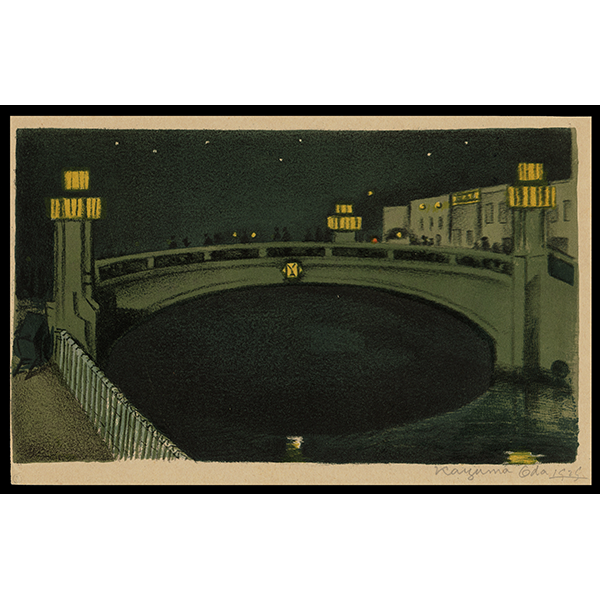
Shinbashi at Night
Kazuma Oda (1882-1956)
SERIES: Pictures of Ginza, First Series
MEDIUM: Color lithograph
EDITION: 12/20
DATE: 1929
DIMENSIONS: 9 3/8 x 12 3/4 inches
CONDITION: Excellent; light foxing to front margins and on reverse
NOTE: A rare surviving example retaining its original presentation folder, itself an important work of design from the period
LITERATURE: Machida City Museum of Graphic Arts, Kazuma Oda, pl. 127
SOLD
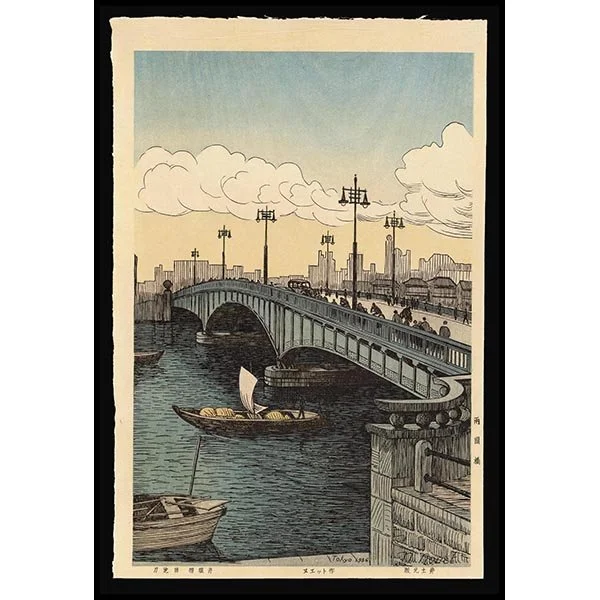
Ryogoku Bridge
Noel Nouët (1885-1969)
SERIES: Scenes of Tokyo, Twenty-four Views
MEDIUM: Woodblock print
DATE: 1936
DIMENSIONS: 15 1/2 x 10 1/2 inches
CONDITION: Excellent, no problems to note
NOTE: Published by Doi Eiichi
LITERATURE: Scenes of Tokyo, Twenty-four Views
$3,000.00
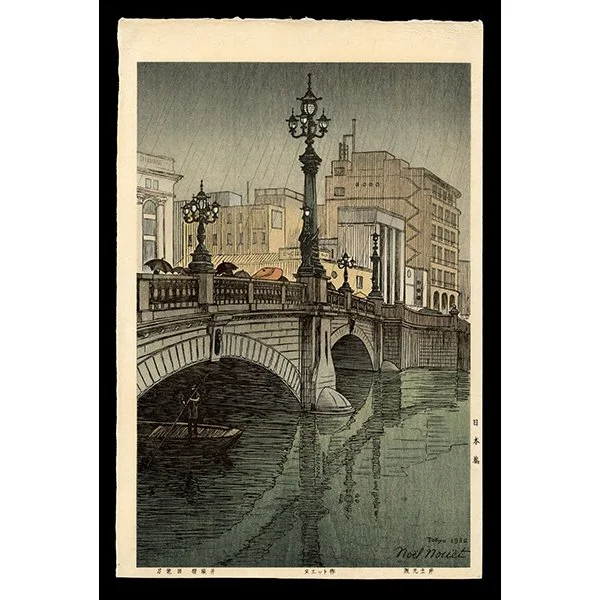
Nihonbashi
Noel Nouët (1885-1969)
SERIES: Scenes of Tokyo, Twenty-four Views
MEDIUM: Woodblock print
DATE: 1936
DIMENSIONS: 15 1/2 x 10 1/2 inches
CONDITION: Excellent, no problems to note
NOTE: Published by Doi Eiichi
LITERATURE: Scenes of Tokyo, Twenty-four Views
SOLD
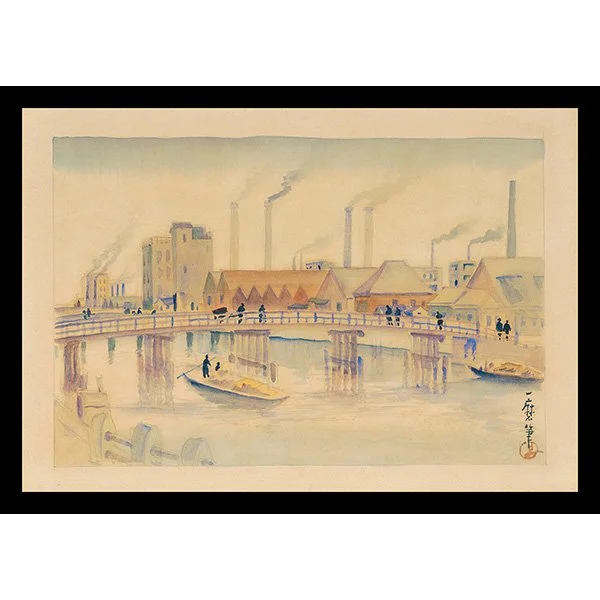
View of Yagishima
Kazuma Oda (1882-1956)
MEDIUM: Watercolor on paper
DATE: c. 1920
DIMENSIONS: 10 × 15 inches
CONDITION: Excellent, no problems to note
NOTE: Original preparatory design for the woodblock print View of Yagishima
SOLD
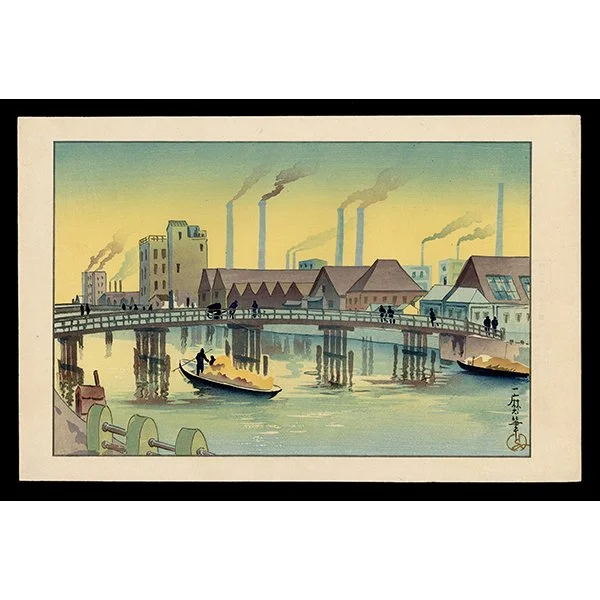
View of Yagishima
Kazuma Oda (1882-1956)
MEDIUM: Woodblock print
DATE: c.1920
DIMENSIONS: 10 3/8 × 15 7/8 inches
CONDITION: Excellent, no problems to note
NOTE: Numbered 40/100 on the reverse
$3,500.00 <RESERVED>
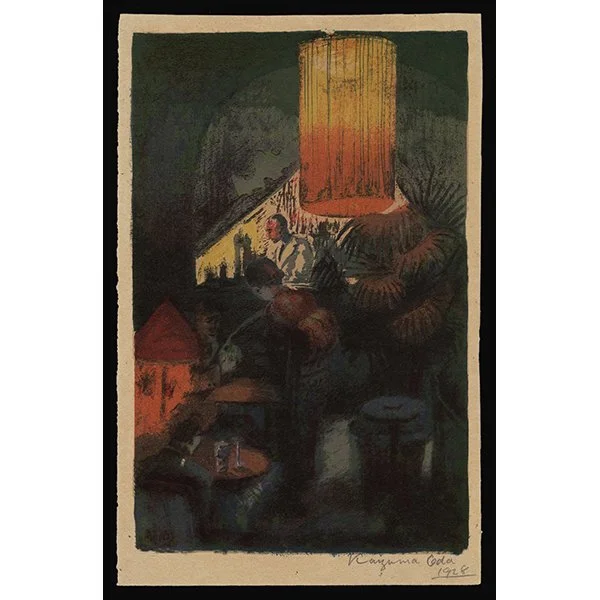
Bar Fledermaus, no. 1
Kazuma Oda (1882-1956)
MEDIUM: Color lithograph
DATE: 1928
DIMENSIONS: 9 3/8 x 12 1/8 inches
CONDITION: Excellent, no problems to note
SOLD
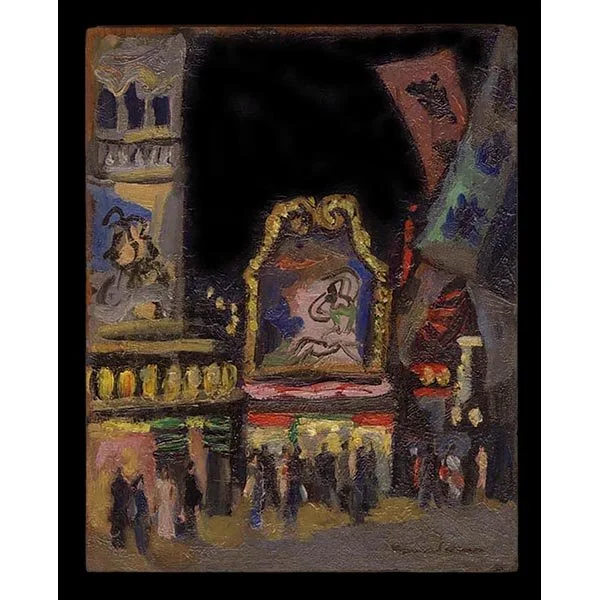
Akasaka at Night
Riichirō Kawashima (1886–1971)
MEDIUM: Oil on panel
DATE: 1935
DIMENSIONS: 10 ¾ x 8 ½ inches
CONDITION: Excellent, no problems to note
NOTE: Titled and dated on reverse
$2,500.00
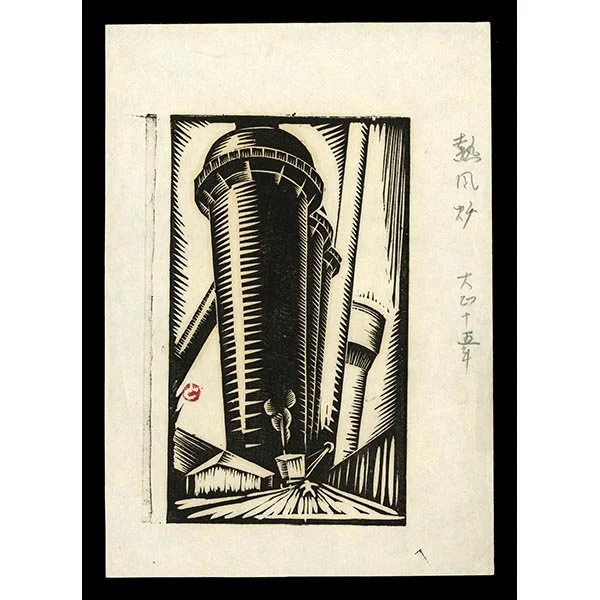
Factory Smokestack
Tomoo Inagaki (1902–1980)
MEDIUM: Woodblock print
DATE: 1926
DIMENSIONS: 10 x 8 inches
CONDITION: Excellent, light discoloration produced by oil based pigments
NOTE: An exceptionally scarce early urban composition, created during the formative years of the sōsaku hanga movement and shortly after the reconstruction of Tokyo following the Great Kantō Earthquake of 1923.
SOLD
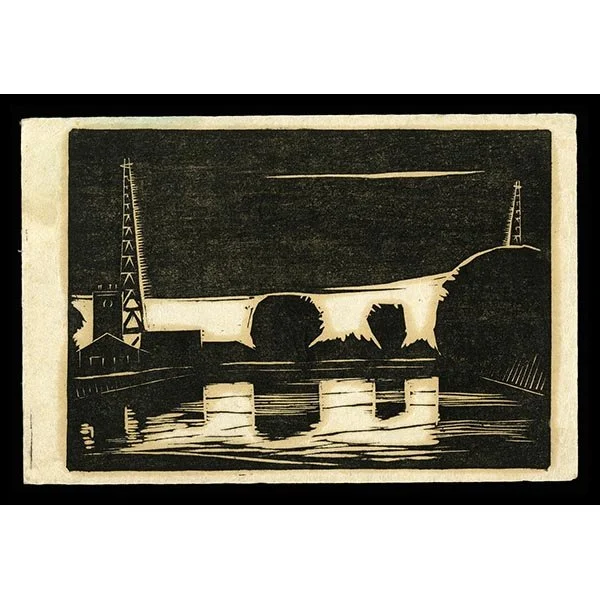
Radio Wave Towers
Tomoo Inagaki (1902–1980)
MEDIUM: Woodblock print
DATE: 1929
DIMENSIONS: 5 x 7 inches
CONDITION: Excellent, light discoloration produced by oil based pigments
NOTE: An exceptionally scarce early urban composition, created during the formative years of the sōsaku hanga movement and shortly after the reconstruction of Tokyo following the Great Kantō Earthquake of 1923.
SOLD
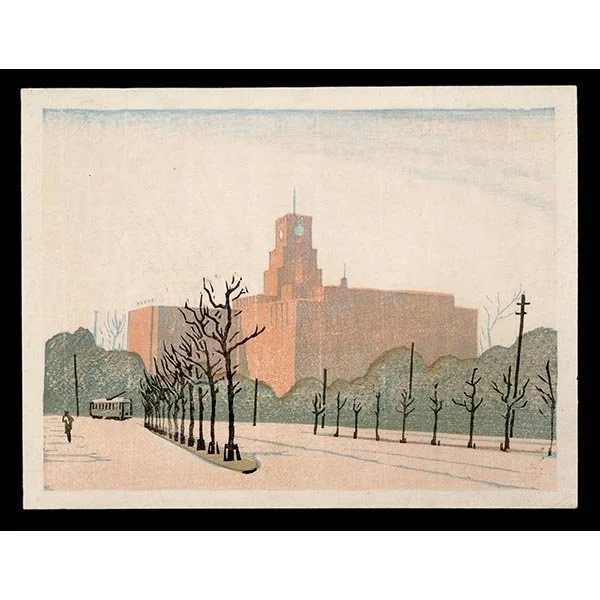
Hibiya Public Hall
Tomoo Inagaki (1902–1980)
SERIES: Twenty-Five Views of the Rebuilt Imperial Capital
MEDIUM: Woodblock print
DATE: 1930
DIMENSIONS: 8 x 10 inches
CONDITION: Excellent, no problems to note
NOTE: Rare early work
SOLD
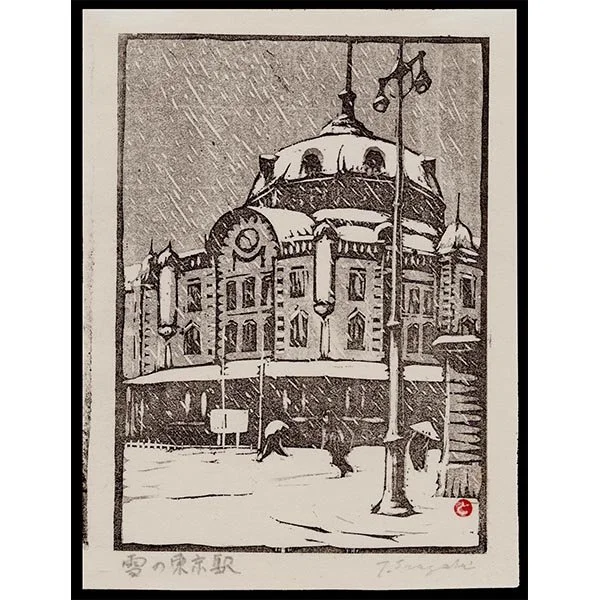
Tokyo Station in Snow
Tomoo Inagaki (1902–1980)
MEDIUM: Woodblock print
DATE: 1929
DIMENSIONS: 8 × 6 ½ inches
CONDITION: Excellent, no problems to note
NOTE: Rare early work
$950.00 <RESERVED>
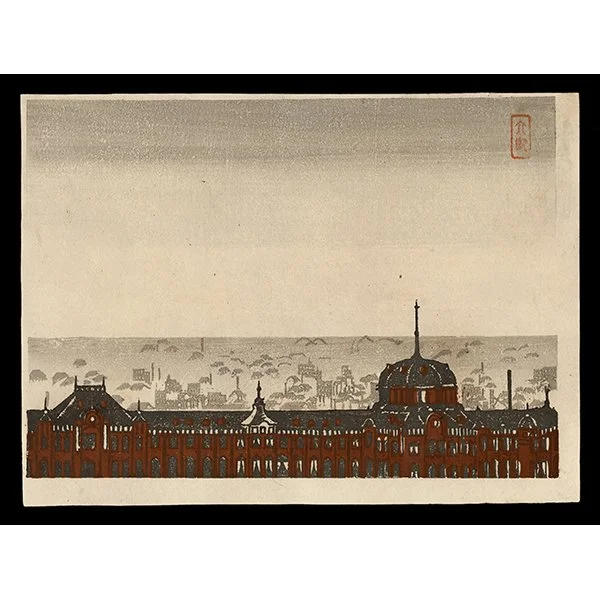
Tokyo Station
Rokuro Muto (1907-1995)
MEDIUM: Woodblock print
DATE: 1932
DIMENSIONS: 11 x 15 ½ inches
CONDITION: Excellent, no problems to note
PROVENANCE: Ono Tadashige Museum
SOLD
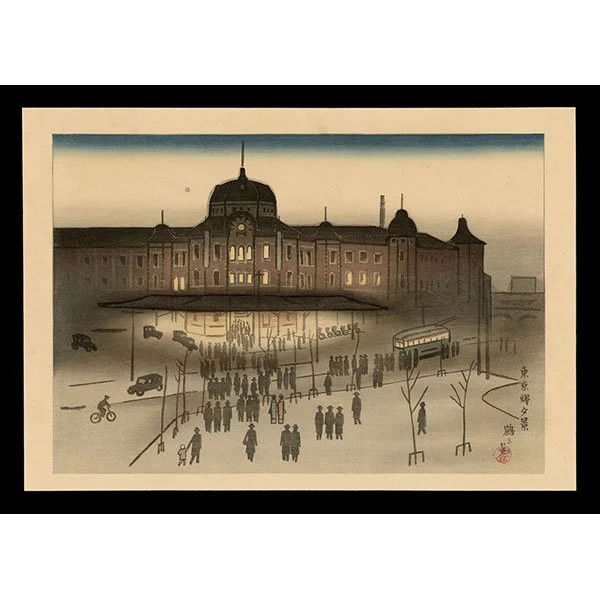
Evening View of Tokyo Station
Tsuruzo Ishii (1887–1973)
MEDIUM: Woodblock print
DATE: 1928
DIMENSIONS: 10 ½ x 15 ½ inches
CONDITION: Excellent, no problems to note
$1,200.00<RESERVED>
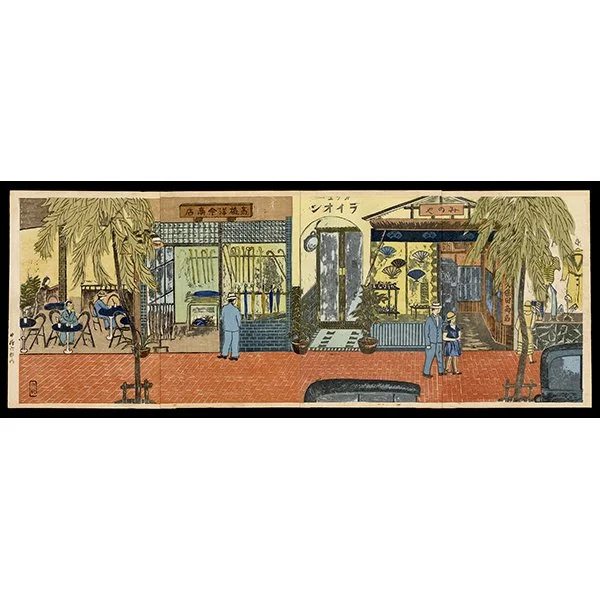
Ginza Sidewalk
Rokuro Muto (1907-1995)
MEDIUM: Woodblock print
DATE: 1932
DIMENSIONS: 15 x 38 ½ inches
CONDITION: Excellent, no problems to note
NOTE: Quadriptych, panels attached to each other
PROVENANCE: Ono Tadashige Museum
SOLD
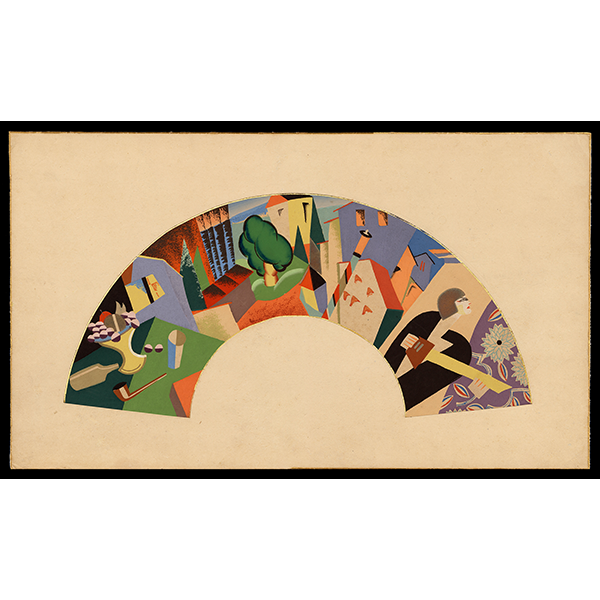
Fan
Unidentified Japanese Artist
MEDIUM: woodblock print on silk
DATE: c. 1925
DIMENSIONS: 10 ¾ x 18 3/8 inches
CONDITION: Excellent, no problems to note
NOTE: Silk design in fan shape mounted on presentation board with gold edges
$1,000.00
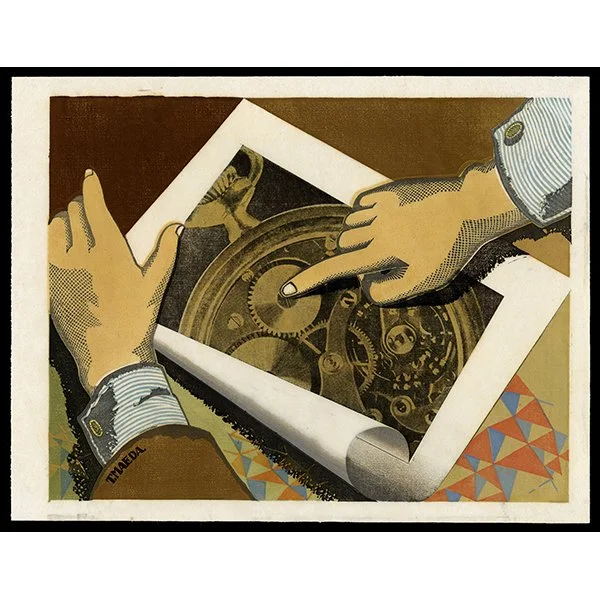
Watch
Toshiro Maeda (1904-1990)
MEDIUM: Linocut and copper-plate photoengraving
DATE: 1933
DIMENSIONS: 10 ½ x 13 ¼ inches
CONDITION: Excellent; no problems to note
SOLD

Shinobazu Pond at Night
Kawase Hasui (1883-1957)
MEDIUM: Woodblock Print
DATE: 1932
DIMENSIONS: 10 3/8 x 15 1/4 inches
PUBLISHER: Doi Sadakazu
CONDITION: No condition problems to note
LITERATURE: Kendall H. Brown, Kawase Hasui: The Complete Woodblock Prints, 2003, pl. 278
NOTE: Published by Doi Sadakazu, first state
SOLD
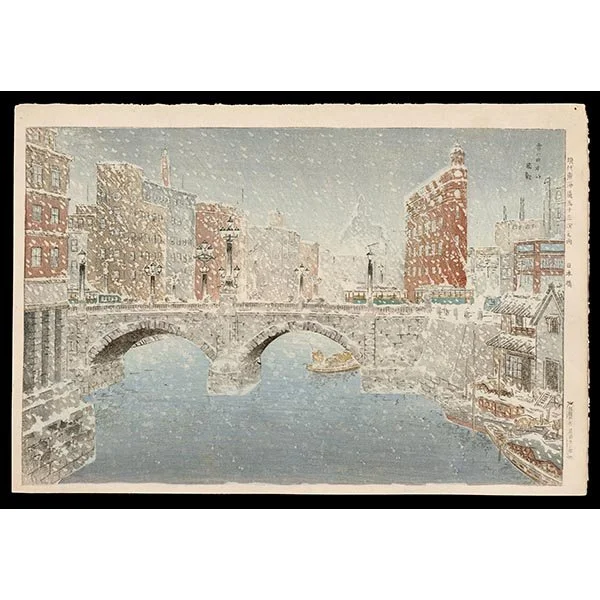
Nihonbashi Bridge in Snow
Bannai Kokan (1900–1960)
MEDIUM: Woodblock print
DATE: 1933
DIMENSIONS: 10 ¼ x 15 ¼ inches
CONDITION: Excellent, no problems to note
NOTE: Watanabe C-type seal, first state
$4,500.00 <RESERVED>
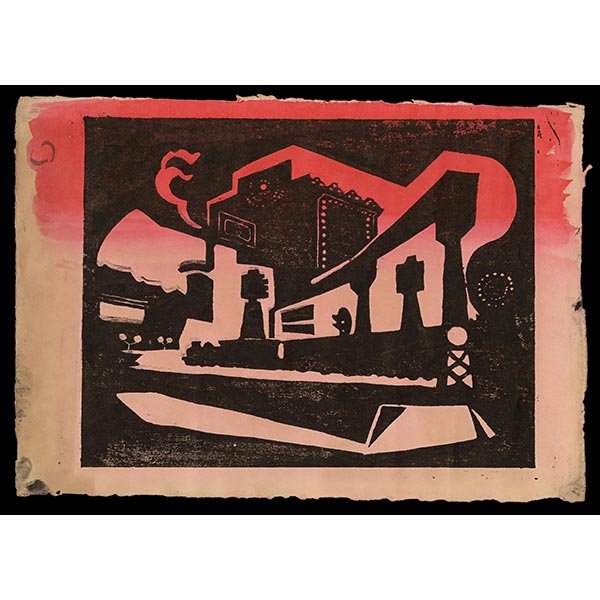
Train Station
Yasunori Taninaka (1897–1946)
MEDIUM: Woodblock print
DATE: 1933
DIMENSIONS: 5 ¾ x 7 7/8 inches
CONDITION: Excellent, no problems to note
NOTE: Scarce self-printed impression with hand applied pigment
SOLD
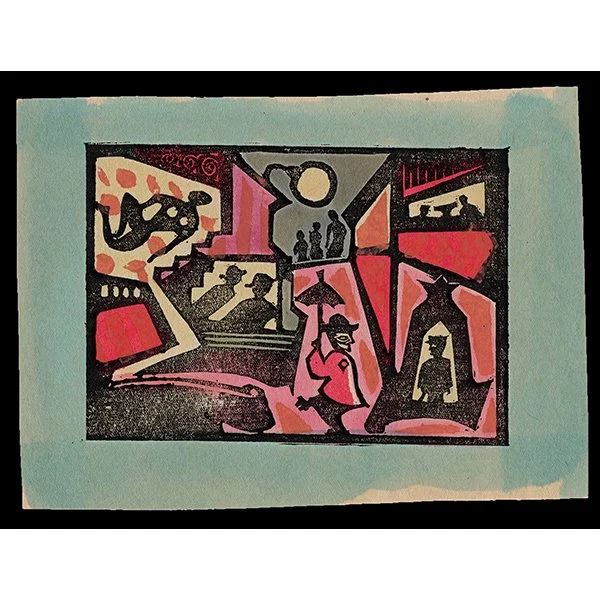
Spring Evening
Yasunori Taninaka (1897–1946)
MEDIUM: Woodblock print
DATE: 1933
DIMENSIONS: 5 ¾ x 7 7/8 inches
CONDITION: Excellent, no problems to note
NOTE: Produced for issue 35 of Sosaku Hanga magazine Shiro to Kuro in 1933
SOLD
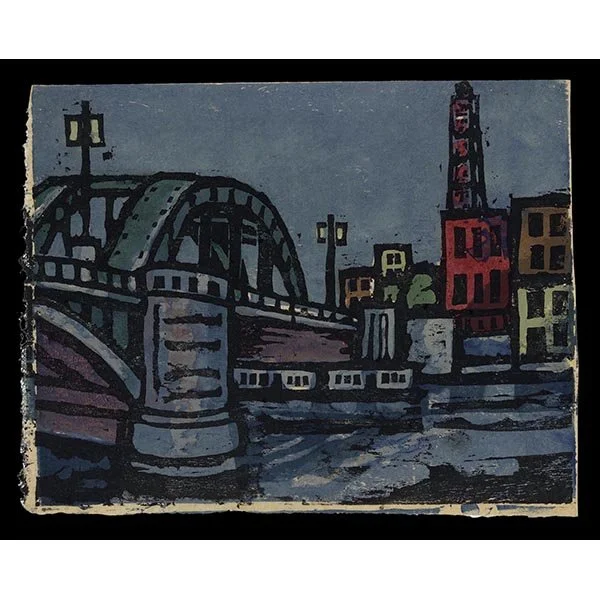
Komagata Bridge
Tadashige Ono (1909–1990)
MEDIUM: Woodblock print
DATE: 1933
DIMENSIONS: 9 ¾ x 12 inches
CONDITION: Excellent, no problems to note
NOTE: Rare early work
LITERATURE: Complete Prints by Tadashige Ono, pl. 153
PROVENANCE: Ono Tadashige Museum
SOLD
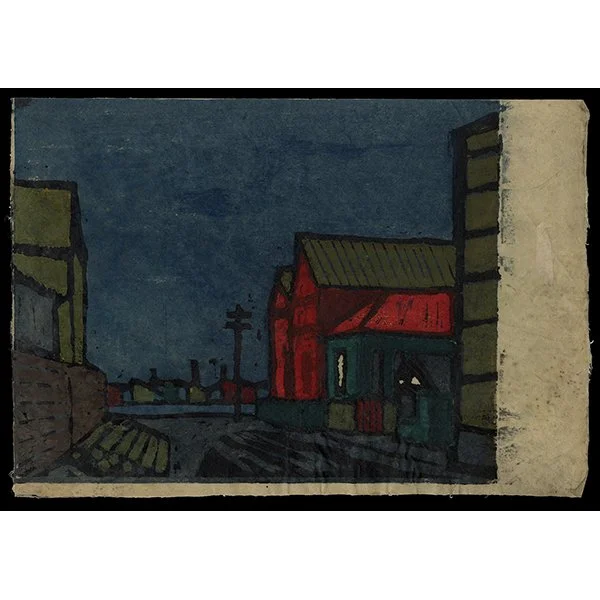
Factory District (Red Wall)
Tadashige Ono (1909–1990)
MEDIUM: Woodblock print
DATE: 1934
DIMENSIONS: 9 ¾ x 12 inches
CONDITION: Excellent, no problems to note
NOTE: Rare early work
LITERATURE: Complete Prints by Tadashige Ono, pl. 176
PROVENANCE: Ono Tadashige Museum
$1,500.00
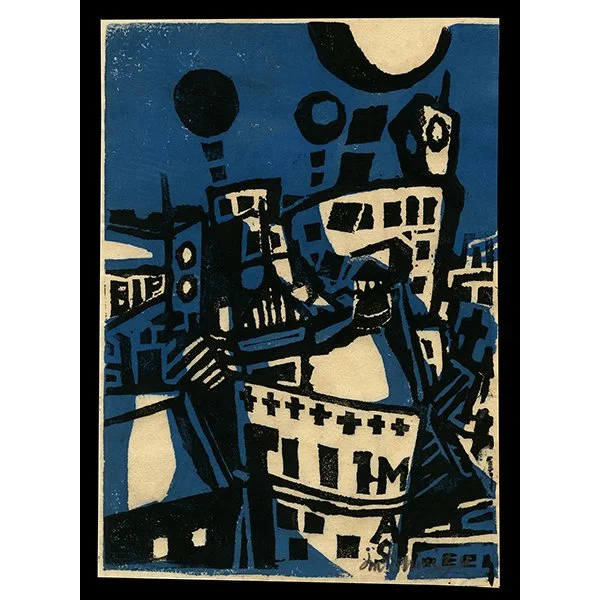
Balloon
Masahiro Shimizu (1914–?)
MEDIUM: Woodblock print
DATE: C. 1934
DIMENSIONS: 8 ¾ x 6 3/8 inches
CONDITION: Excellent, no problems to note
SOLD
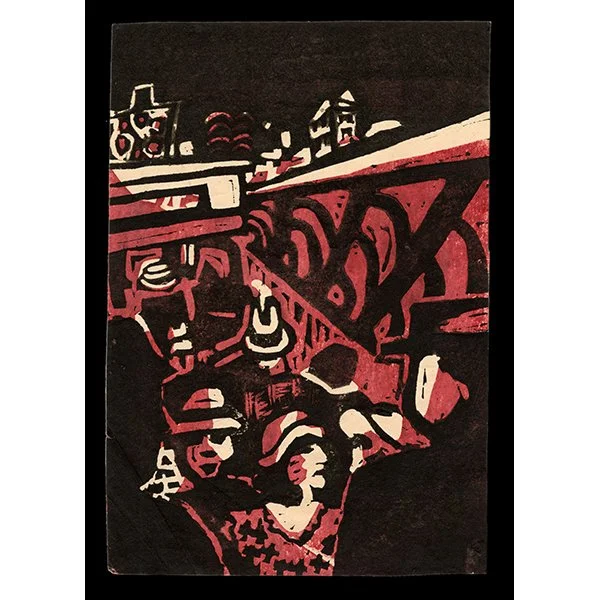
Subway Entrance
Masahiro Shimizu (1914–?)
MEDIUM: Woodblock print
DATE: C. 1930
DIMENSIONS: 8 ¾ x 6 3/8 inches
CONDITION: Excellent, no problems to note
SOLD
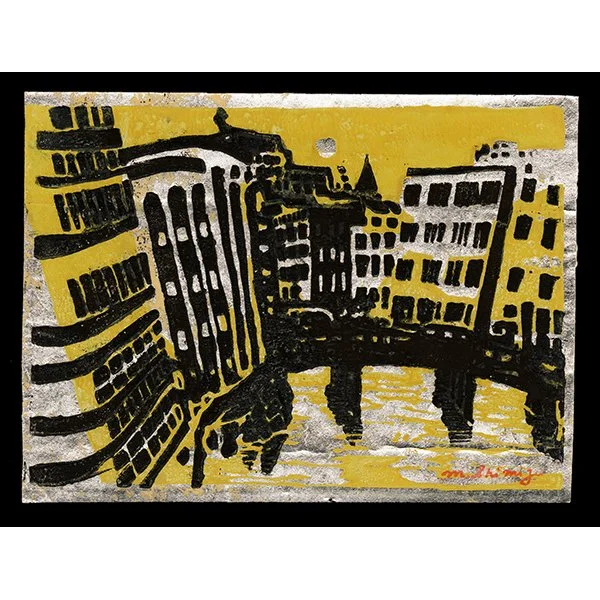
From Sukiyabashi Bridge
Masahiro Shimizu (1914–?)
MEDIUM: Woodblock print
DATE: 1934
DIMENSIONS: 7 x 10 ¼ inches
CONDITION: Excellent, no problems to note
SOLD
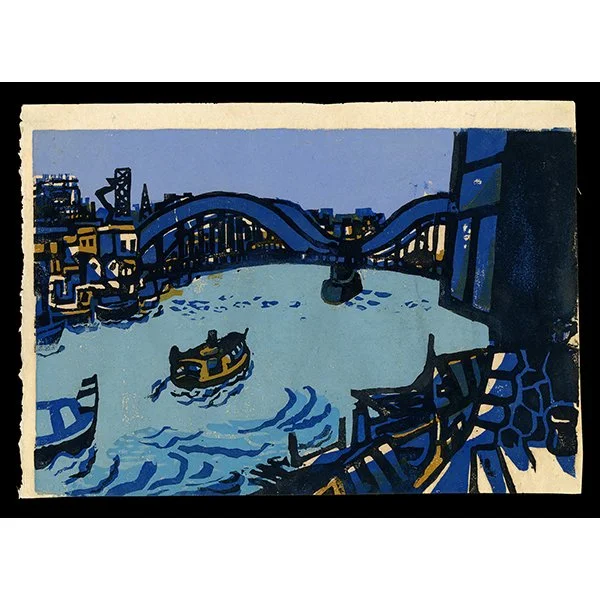
Ferry Port
Masahiro Shimizu (1914–?)
MEDIUM: Woodblock print
DATE: 1934
DIMENSIONS: 12 x 15 inches
CONDITION: Excellent, no problems to note
SOLD
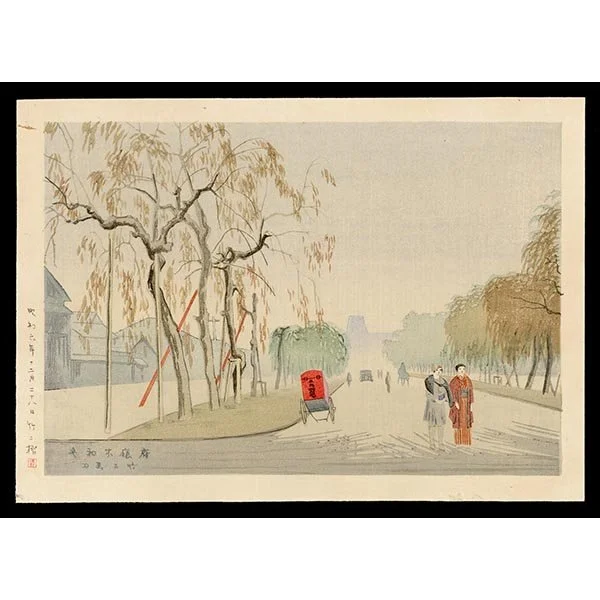
Early Winter in Front of Prefectural Office
Takeji Asano (1900–1998)
MEDIUM: Woodblock print
DATE: 1931
DIMENSIONS: 10 × 13 7/8 inches
CONDITION: Excellent; no problems to note
$1,500.00
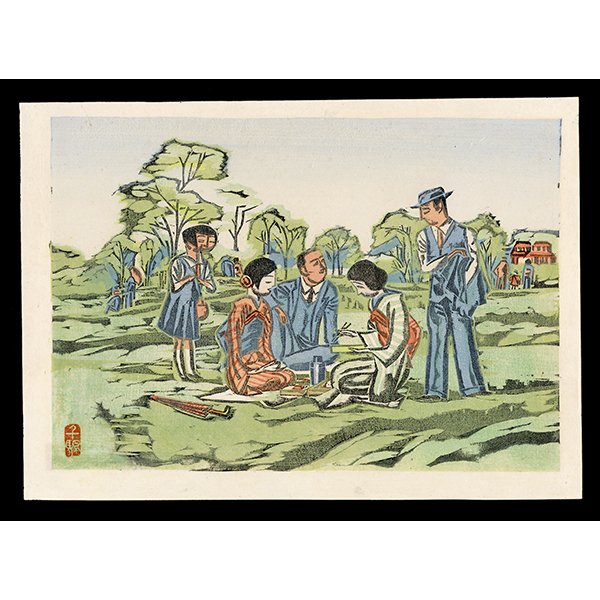
Picnic
Maekawa Senpan (1888–1960)
MEDIUM: Woodblock print
DATE: 1928
DIMENSIONS: 9 3/8 x 12 1/8 inches
CONDITION: Excellent, no problems to note
$1,200.00
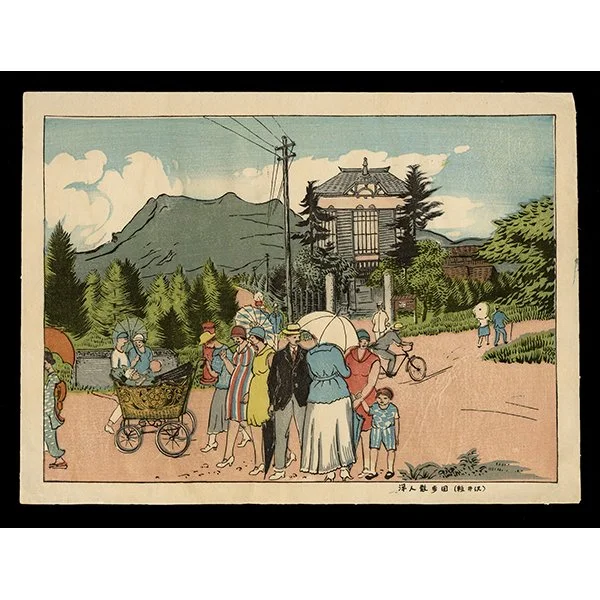
Westerners Walking
Yoshio Nakanishi (1899–1968)
MEDIUM: Woodblock print
DATE: c. 1930
DIMENSIONS: 11 ¼ x 15 inches
CONDITION: Excellent; light wrinkling to paper
$850.00
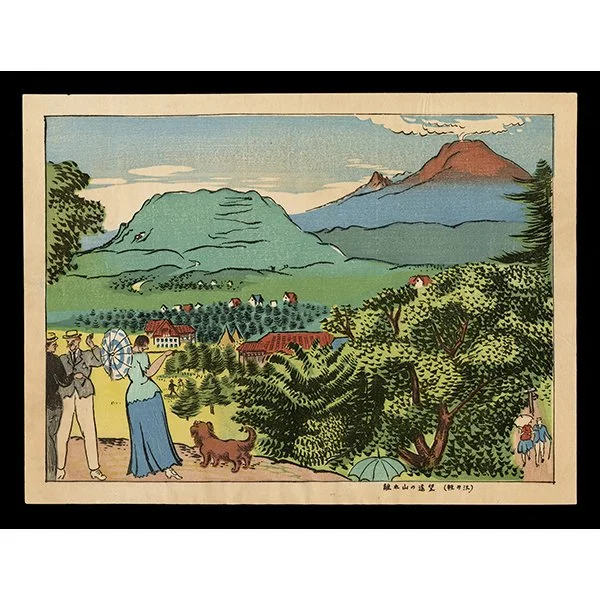
View of Mount Hanareyama from Karuizawa
Yoshio Nakanishi (1899–1968)
MEDIUM: Woodblock print
DATE: c. 1930
DIMENSIONS: 11 ¼ x 15 inches
CONDITION: Excellent; light wrinkling to paper
$850.00
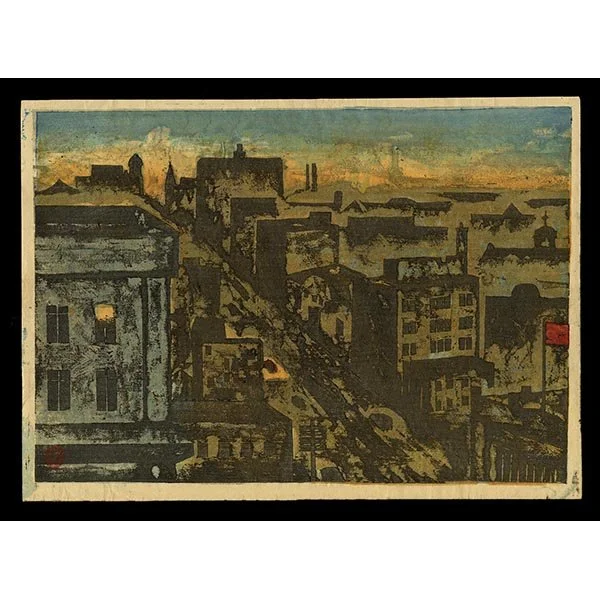
View from Surugadai
Koshiro Onchi (1891–1955)
SERIES: One-Hundred New Views of Tokyo
MEDIUM: Woodblock print
DATE: 1930
DIMENSIONS: 8 ½ x 12 ½ inches
CONDITION: Excellent, no problems to note
LITERATURE: Prints of Onchi Koshiro, Tokyo: Keishosha, 1975, no. 146
SOLD
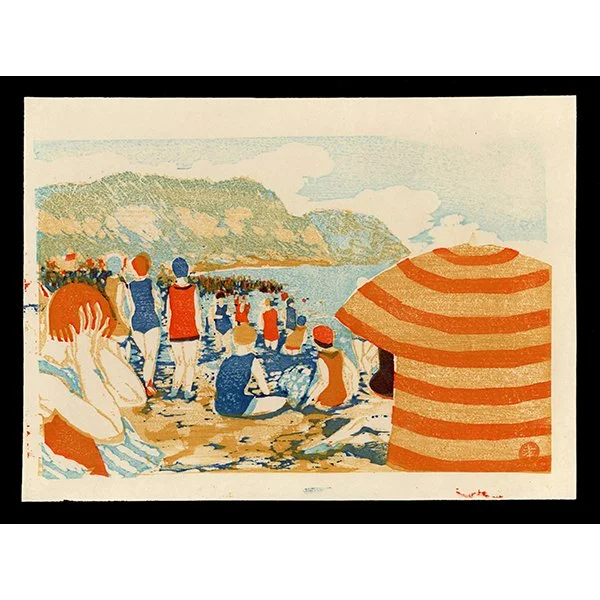
Yuigahama Beach, Kamaura
Koshiro Onchi (1891–1955)
SERIES: New 100 Scenic Views of Japan
MEDIUM: Woodblock print
DATE: 1938
DIMENSIONS: 9 x 12 ¼ inches
CONDITION: Excellent, no problems to note
$3,000.00
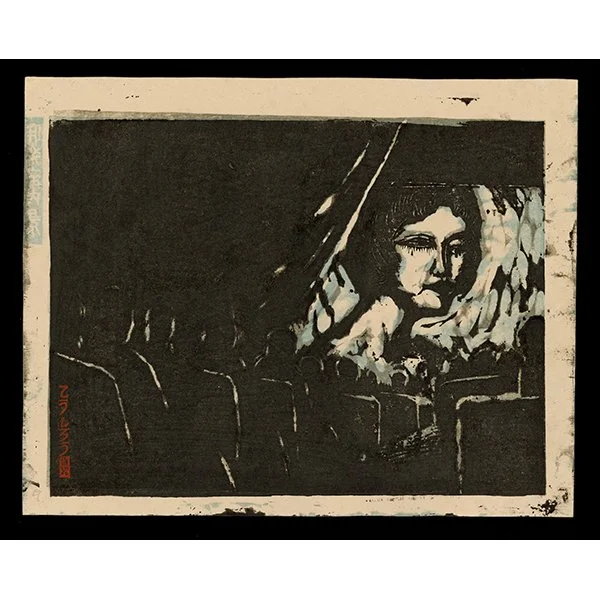
Inside the Hogaku Theater
Koshiro Onchi (1891–1955)
SERIES: One Hundred Views of New Tokyo
MEDIUM: Woodblock print
DATE: 1929
DIMENSIONS: 8 3/8 x 10 5/8 inches
CONDITION: Excellent, no problems to note
SOLD
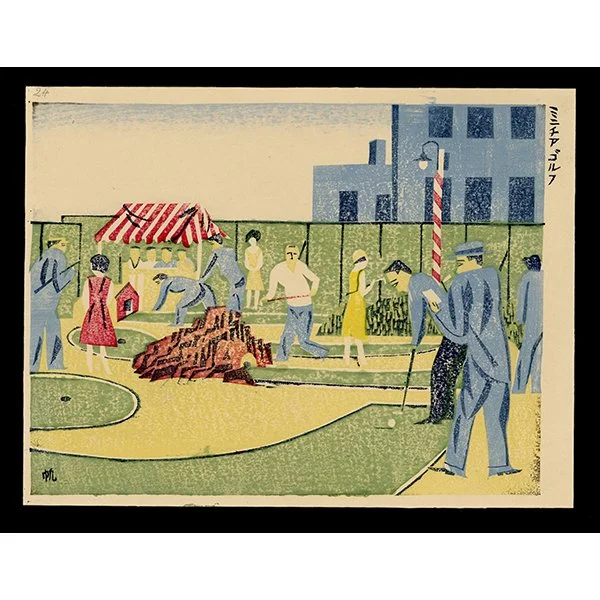
Miniature Golf
Maekawa Senpan (1888–1960)
SERIES: One Hundred Views of New Tokyo
MEDIUM: Woodblock print
DATE: 1931
DIMENSIONS: 8 3/8 x 10 5/8 inches
CONDITION: Excellent, no problems to note
SOLD
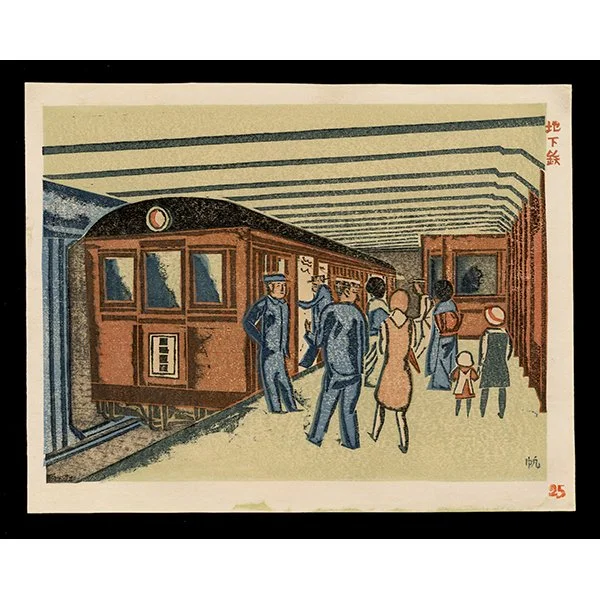
Subway
Maekawa Senpan (1888–1960)
SERIES: One Hundred Views of New Tokyo
MEDIUM: Woodblock print
DATE: 1931
DIMENSIONS: 8 3/8 x 10 5/8 inches
CONDITION: Excellent, no problems to note
$3,000.00 <RESERVED>
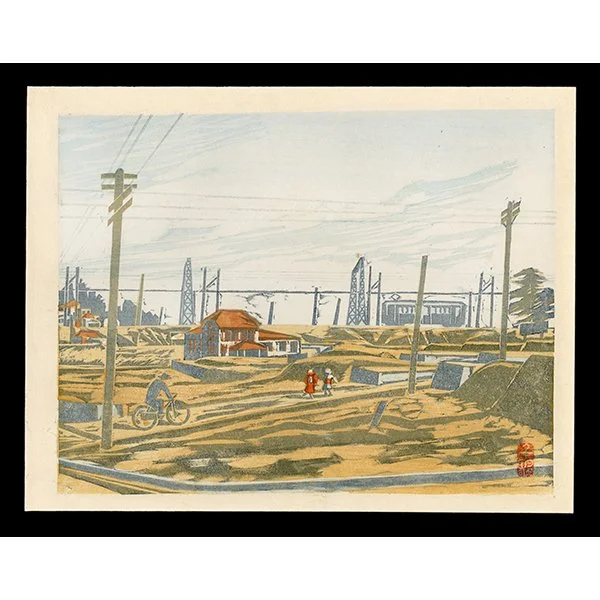
Tokyo Suburb
Maekawa Senpan (1888–1960)
MEDIUM: Woodblock print
DATE: c. 1930
DIMENSIONS: 10 1/4 x 14 5/8 inches
CONDITION: Excellent, no problems to note
SOLD
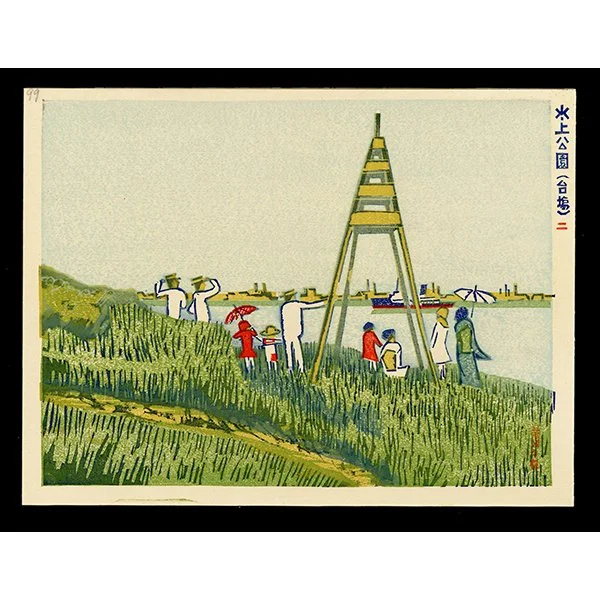
Suijo Park in Daiba
Maekawa Senpan (1888–1960)
SERIES: One Hundred Views of New Tokyo
MEDIUM: Woodblock print
DATE: 1931
DIMENSIONS: 8 3/8 x 10 5/8 inches
CONDITION: Excellent, no problems to note
SOLD
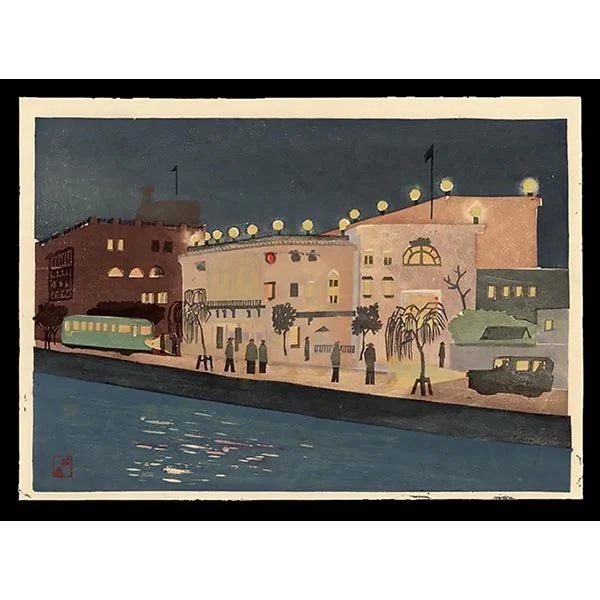
Night View of Marunouchi
Toshihiko Nomura (1904–1987)
SERIES: Print Collection of Great Tokyo
MEDIUM: Woodblock print
DATE: 1929-30
DIMENSIONS: 9 ¼ x 12 ¾ inches
CONDITION: Excellent, no problems to note
$1,500.00 <RESERVED>
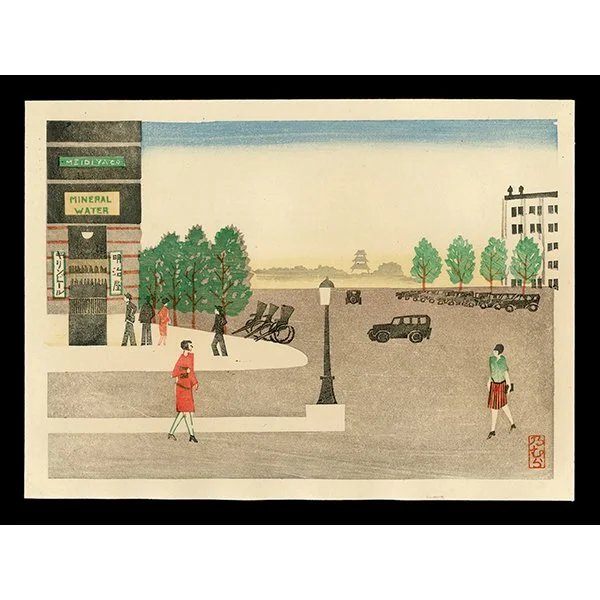
View of Marunouchi
Toshihiko Nomura (1904–1987)
SERIES: Print Collection of Great Tokyo
MEDIUM: Woodblock print
DATE: 1929-30
DIMENSIONS: 9 x 12 1/4 inches
CONDITION: Excellent, no problems to note
$1,500.00
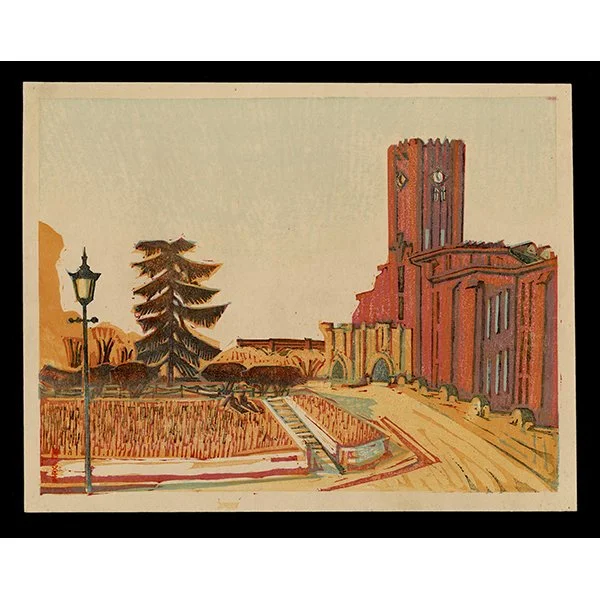
Imperial University (Waseda University) in Autumn Light
Shizuo Fujimori (1891–1943)
SERIES: Twelve Views of Greater Tokyo
MEDIUM: Woodblock print
DATE: 1934
DIMENSIONS: 10 ¼ x 13 1/2 inches
CONDITION: Excellent, no problems to note
$1,500.00

Distant view of Nikolai Cathedral
Shizuo Fujimori (1891–1943)
SERIES: One Hundred Views of New Tokyo
MEDIUM: Woodblock print
DATE: 1929
DIMENSIONS: 8 3/8 x 10 5/8 inches
CONDITION: Excellent, no problems to note
SOLD
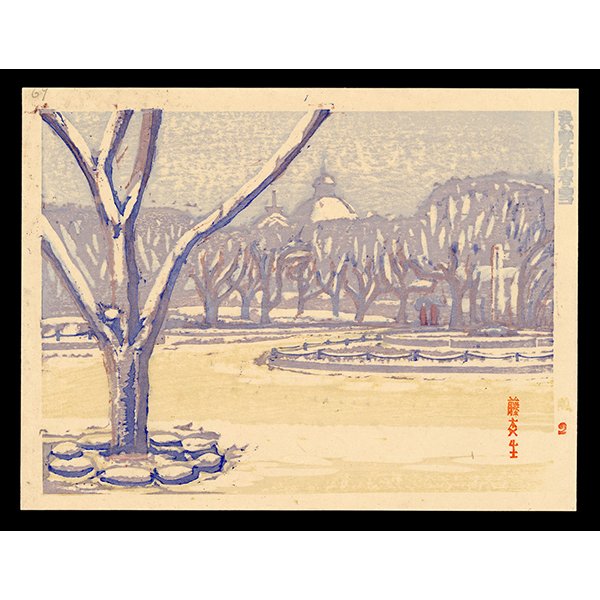
Hyokei-kan in Spring Snow
Shizuo Fujimori (1891–1943)
SERIES: One Hundred Views of New Tokyo
MEDIUM: Woodblock print
DATE: 1930
DIMENSIONS: 8 3/8 x 10 5/8 inches
CONDITION: Excellent, no problems to note
SOLD
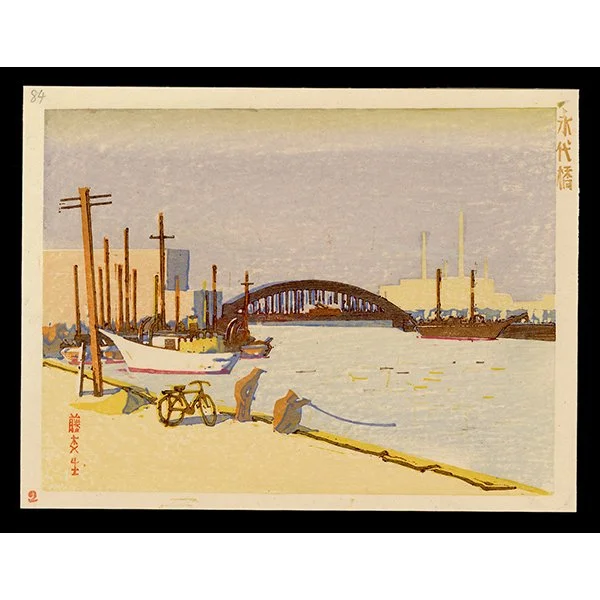
Eitai Bridge
Shizuo Fujimori (1891–1943)
SERIES: One Hundred Views of New Tokyo
MEDIUM: Woodblock print
DATE: 1930
DIMENSIONS: 8 3/8 x 10 5/8 inches
CONDITION: Excellent, no problems to note
SOLD
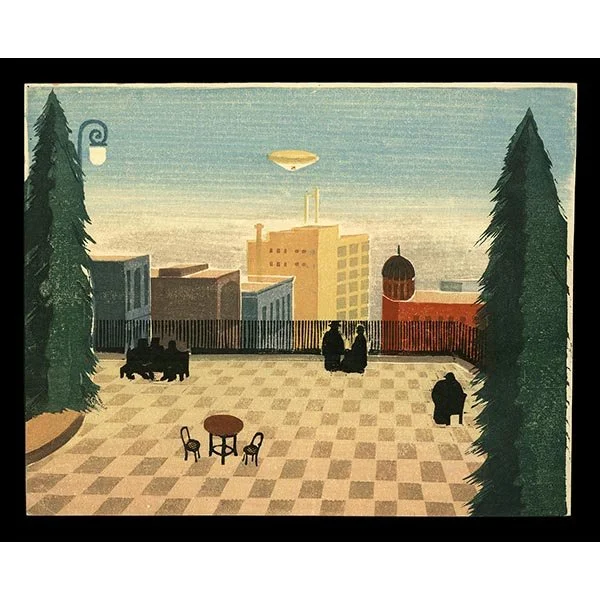
Rooftop Garden Café with Zeppelin
Unsigned—Anonymous
MEDIUM: Woodblock print
DATE: c. 1930
DIMENSIONS: 10 1/4 x 15 ½ inches
CONDITION: Excellent, no problems to note
SOLD
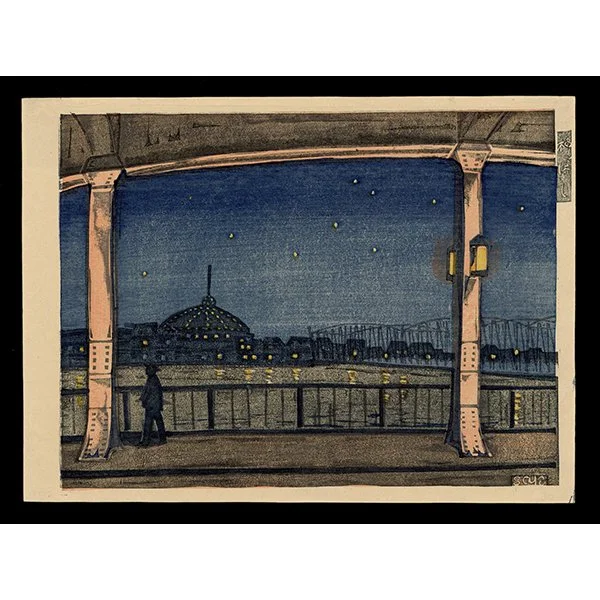
Yanagibashi Bridge
Sakuichi Fukazawa (1896–1947)
SERIES: One Hundred Views of New Tokyo
MEDIUM: Woodblock print
DATE: 1929
DIMENSIONS: 7 ¾ x 10 ½ inches
CONDITION: Excellent, paper and adhesive remnants on reverse
$2,500.00
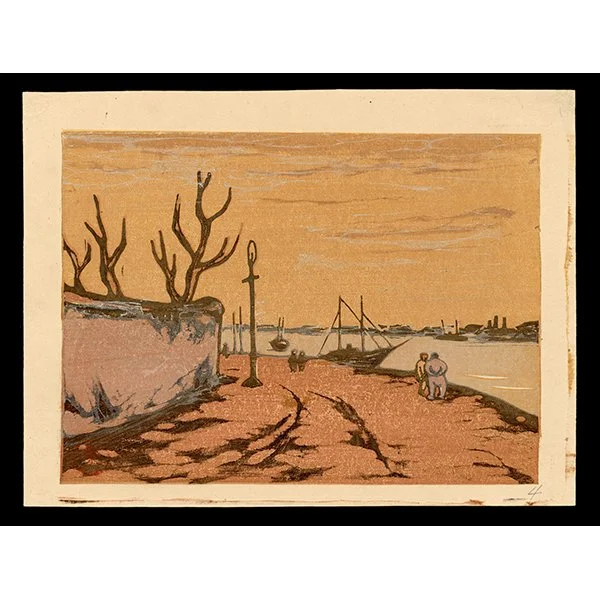
Tsukiji
Sakuichi Fukazawa (1896–1947)
SERIES: One Hundred Views of New Tokyo
MEDIUM: Woodblock print
DATE: 1929
DIMENSIONS: 7 ¾ x 10 ½ inches
CONDITION: Excellent, paper and adhesive remnants on reverse
SOLD
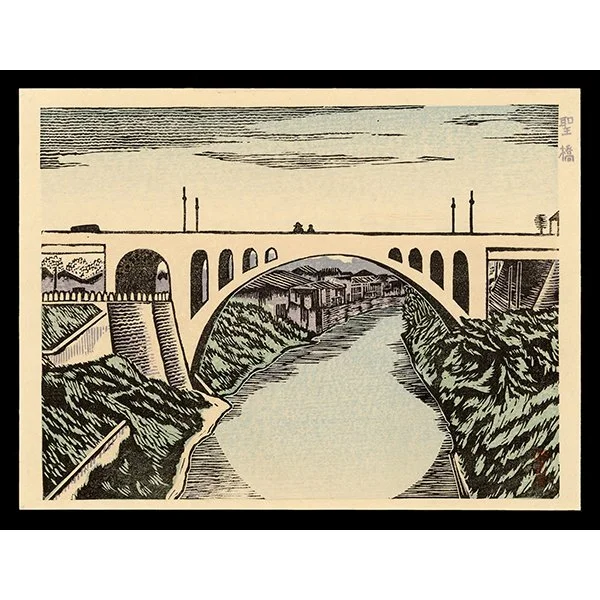
Hijiri Bridge
Takashi Henmi (1895–1944)
SERIES: One Hundred Views of New Tokyo
MEDIUM: Woodblock print
DATE: 1930
DIMENSIONS: 7 ¾ x 10 ½ inches
CONDITION: Excellent, paper and adhesive remnants on reverse
SOLD
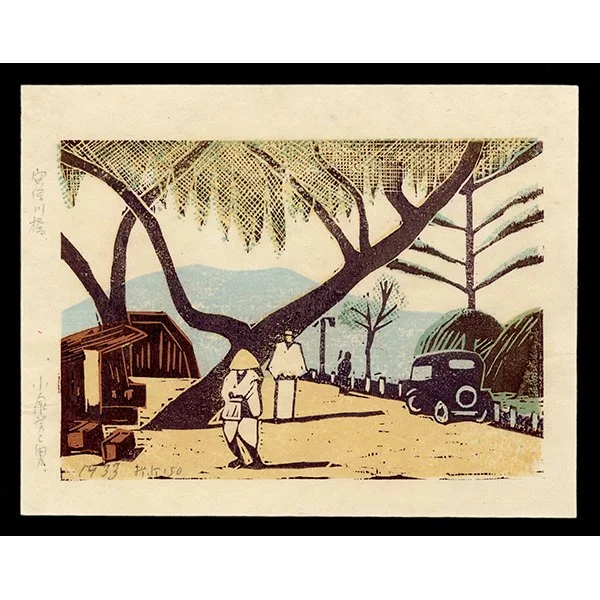
Tokyo Suburb
Kishio Koizumi (1893-1945)
MEDIUM: Woodblock print
DATE: c. 1927
DIMENSIONS: 5 x 7 inches
CONDITION: Excellent, no problems to note
SOLD
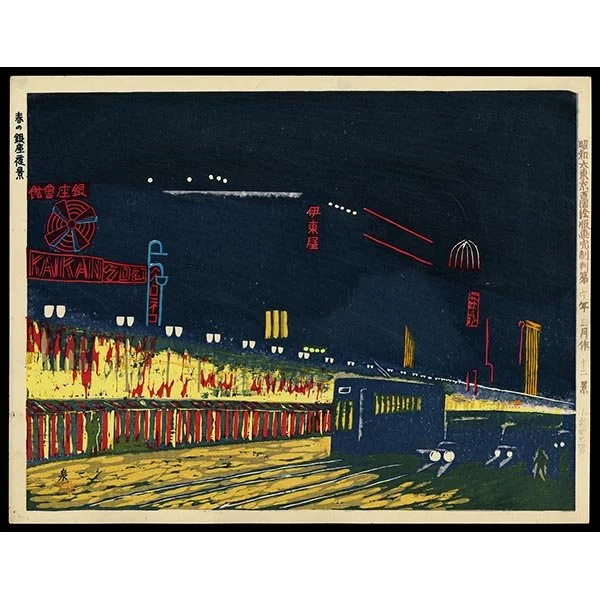
Night View of Ginza in the Spring (no. 12)
Kishio Koizumi (1893-1945)
SERIES: One Hundred Pictures of Great Tokyo in the Showa Era
MEDIUM: Woodblock print
DATE: 1931
DIMENSIONS: 11 7/8 x 15 ½ inches
CONDITION: Excellent, no problems to note
SOLD
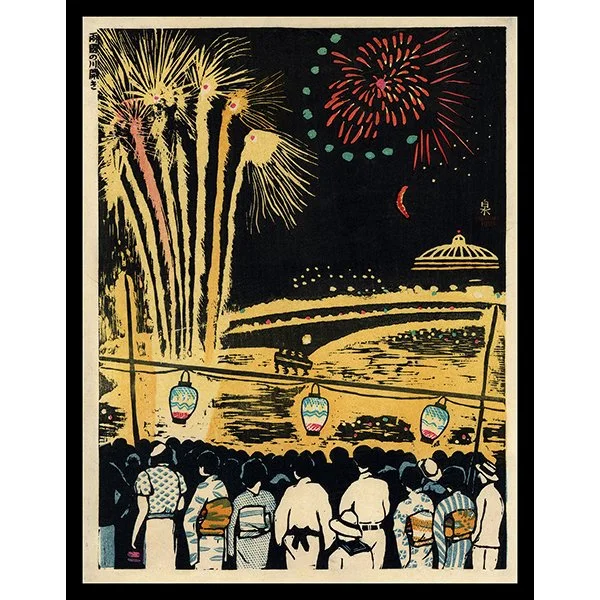
River Festival at Ryogoku (no. 66)
Kishio Koizumi (1893-1945)
SERIES: One Hundred Pictures of Great Tokyo in the Showa Era
MEDIUM: Woodblock print
DATE: 1935
DIMENSIONS: 15 ½ x 11 7/8 inches
CONDITION: Excellent, no problems to note
SOLD
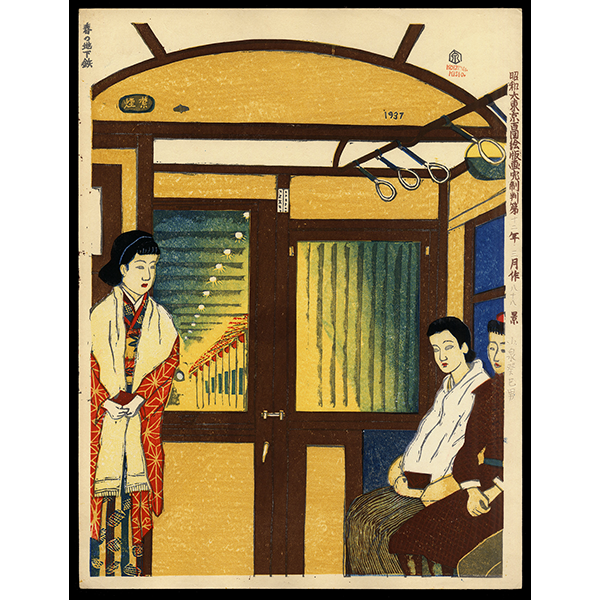
Subway in Spring (no. 88)
Kishio Koizumi (1893-1945)
SERIES: One Hundred Pictures of Great Tokyo in the Showa Era
MEDIUM: Woodblock print
DATE: 1931
DIMENSIONS: 15 1/2 x 11 7/8 inches
CONDITION: Excellent, no problems to note
SOLD
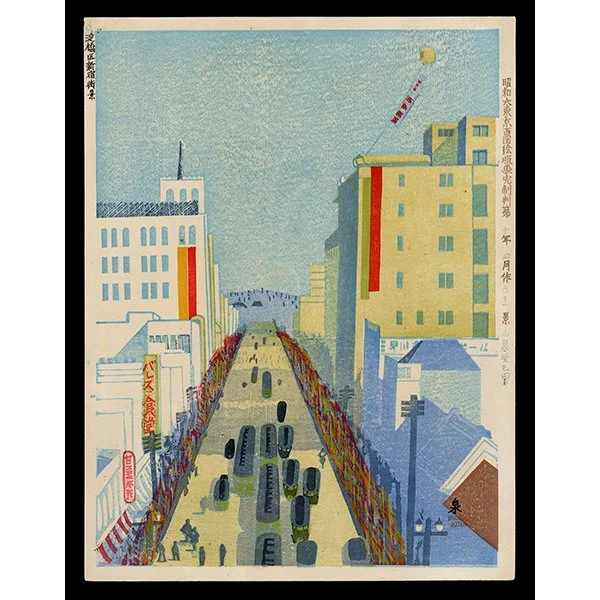
Streetscape at Shinjuku (no. 61)
Kishio Koizumi (1893-1945)
SERIES: One Hundred Pictures of Great Tokyo in the Showa Era
MEDIUM: Woodblock print
DATE: 1935
DIMENSIONS: 15 ½ x 11 7/8 inches
CONDITION: Excellent, no problems to note
SOLD
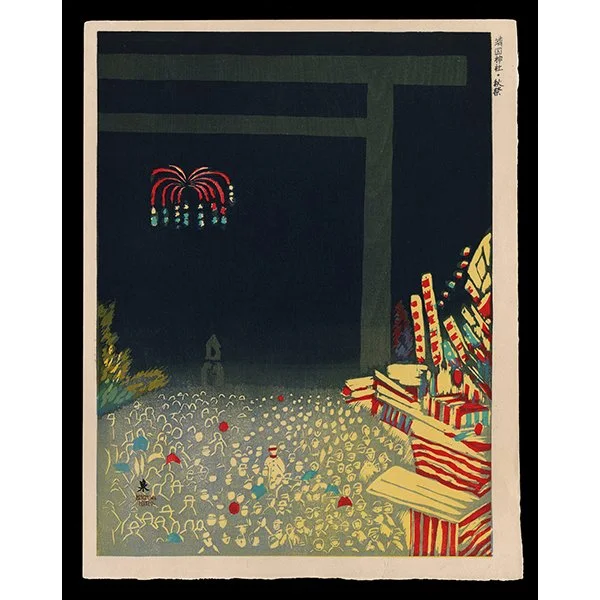
Autumn Festival at Yasukuni Shrine (no. 19)
Kishio Koizumi (1893-1945)
SERIES: One Hundred Pictures of Great Tokyo in the Showa Era
MEDIUM: Woodblock print
DATE: 1931
DIMENSIONS: 15 1/2 x 11 7/8 inches
CONDITION: Excellent, no problems to note
$2,500.00 <RESERVED>
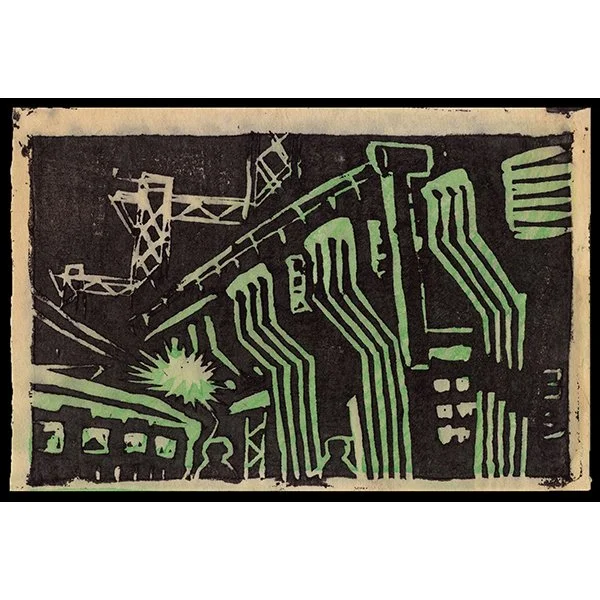
Near Okachimachi
Yoshio Fujimaki (1911-1935)
MEDIUM: Woodblock print
DATE: 1932
DIMENSIONS: 3 ¾ x 5 ½ inches
CONDITION: Excellent, no problems to note
SOLD
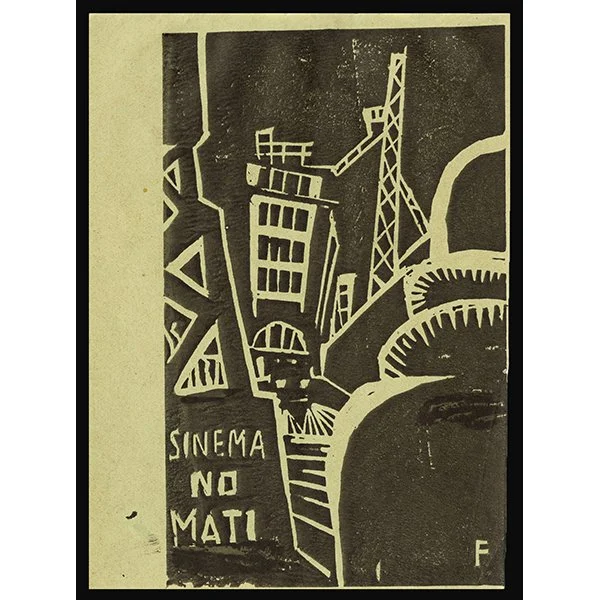
City of Cinemas
Yoshio Fujimaki (1911-1935)
MEDIUM: Woodblock print
DATE: 1932
DIMENSIONS: 7 x 5 inches
CONDITION: Excellent, no problems to note
SOLD
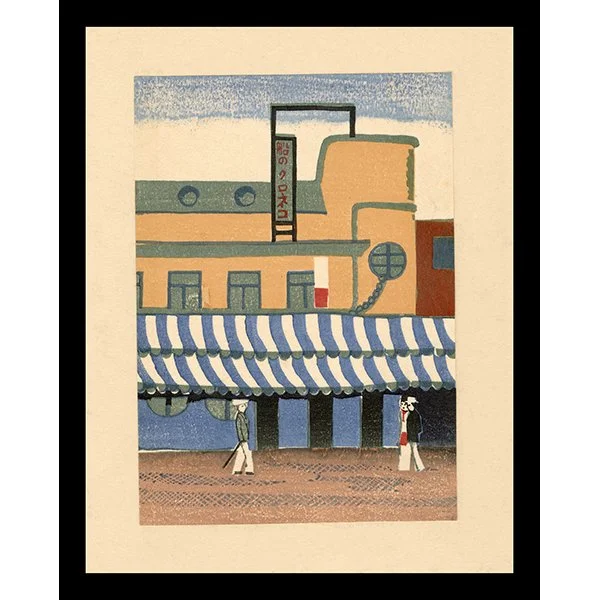
Black Cat Restaurant
Matsuki Manji (1906–1971)
MEDIUM: Woodblock print
DATE: 1930
DIMENSIONS: 7x 5 1/8 inches
CONDITION: Excellent, no problems to note
NOTE: Design appeared in the sosaku hanga magazine, Kitsutsuki Club Magazine Vol. 2
LITERATURE: Chiba Museum of Art, Japanese Prints: 1921-1930, pl. 306-2
$950.00 <RESERVED>
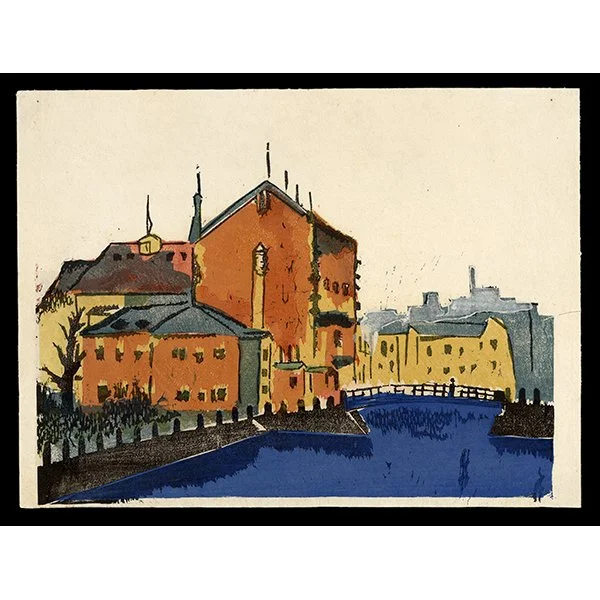
Shinbashi Bridge
Rokuro Muto (1907-1995)
MEDIUM: Woodblock print
DATE: 1932
DIMENSIONS: 11 x 15 ½ inches
CONDITION: Excellent, no problems to note
PROVENANCE: Ono Tadashige Museum
$2,000.00 <RESERVED>
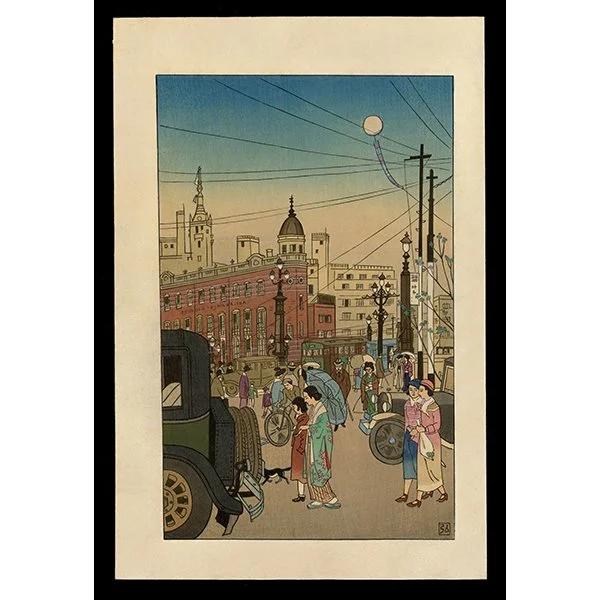
Nihonbashi in Early Spring
Nakazawa Hiromitsu (1874–1964)
MEDIUM: Woodblock print
DATE: 1933
DIMENSIONS: 9 3/4 x 14 1/4 inches
CONDITION: Excellent, no problems to note
SOLD
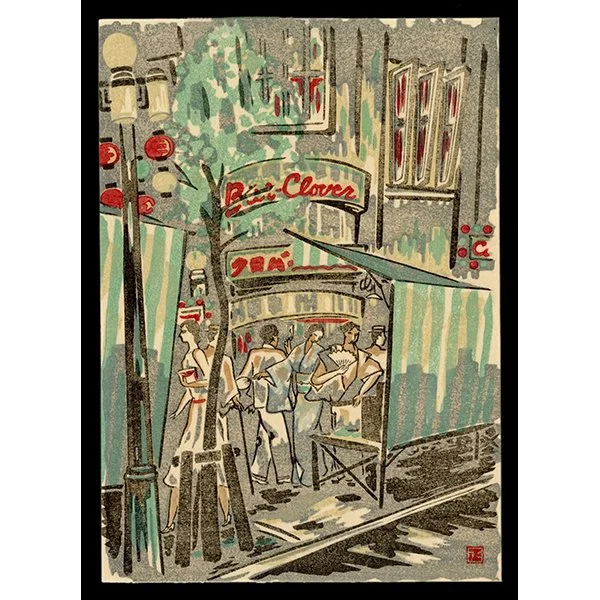
Ginza After Dark
Artist Unread
MEDIUM: Woodblock print
DATE: c. 1930
DIMENSIONS: 7 × 5 inches
CONDITION: Excellent, no problems to note
$500.00<RESERVED>
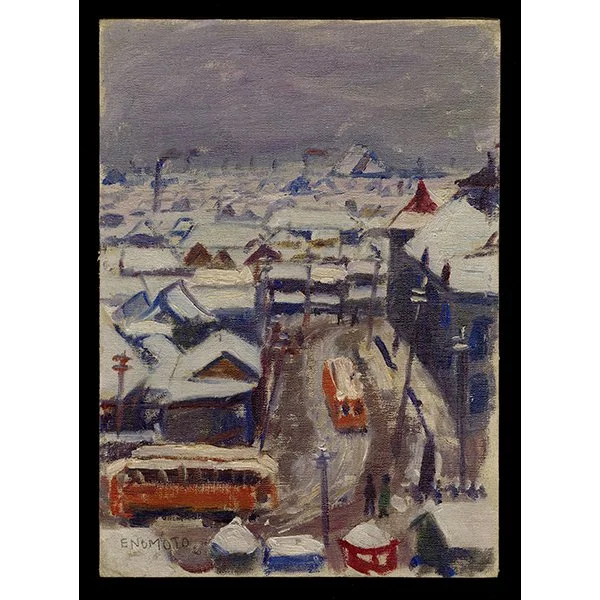
Snowy Tokyo Suburb
Enomoto (act. 20th century)
MEDIUM: Oil on canvas
DATE: c. 1930
DIMENSIONS: 10 x 8 ½ inches
CONDITION: Excellent; no problems to note
SOLD
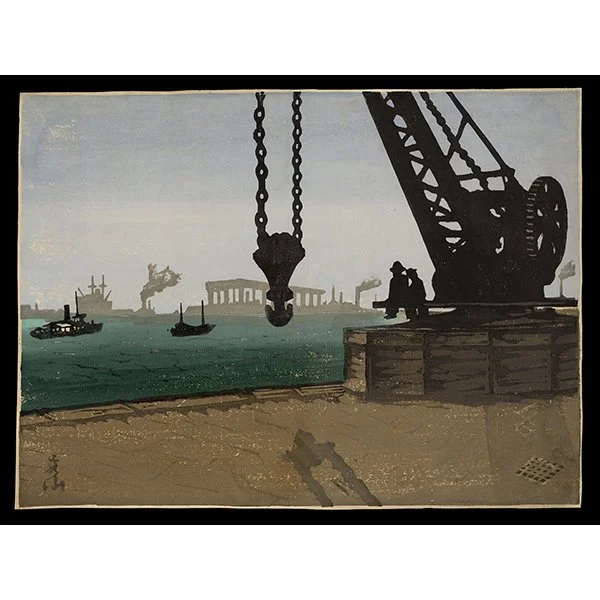
Port of Kobe
Sugato Kasen (act. 20th century)
MEDIUM: Woodblock print
DATE: 1935
DIMENSIONS: 14 1/2 x 18 3/4 inches
CONDITION: Excellent, no problems to note
SOLD
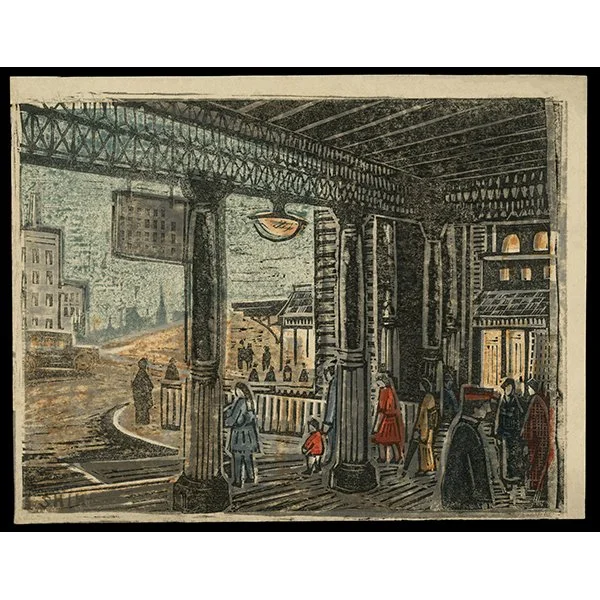
Train Station
Shintaro Takeda (1886-1957)
MEDIUM: Woodblock print
DATE: c. 1920
DIMENSIONS: 9 ½ x 11 ¾ inches
CONDITION: Excellent; slight soiling at margins
SOLD
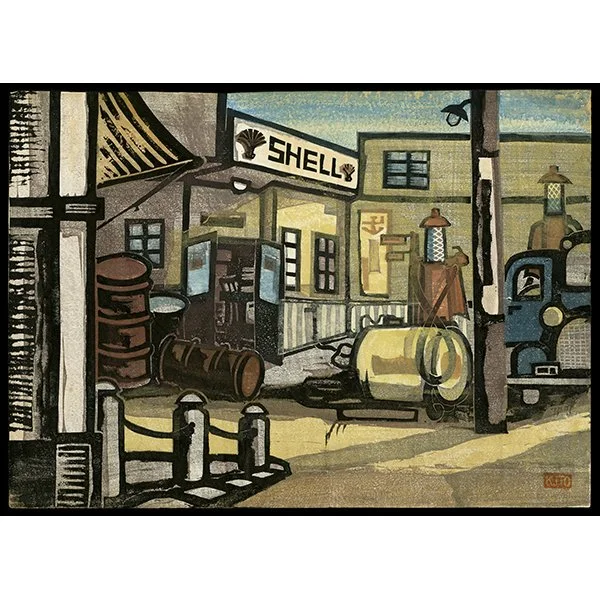
Gas Station
Kennosuke Ito (1913-?)
MEDIUM: Woodblock print
DATE: c.1925
DIMENSIONS: 9 ¾ x 10 ½ inches
CONDITION: Excellent; no problems to note
SOLD
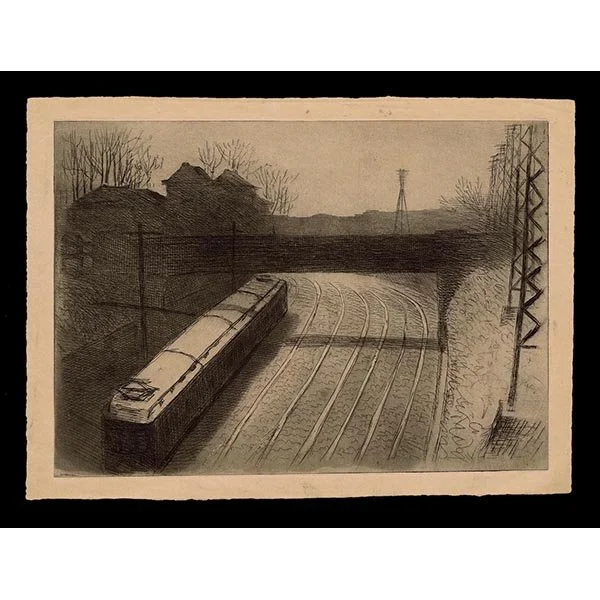
Electric Train
Kikuji Nakada (1901-1982)
MEDIUM: Etching on paper
DATE: c.1925
DIMENSIONS: 9 1/2 x 7 inches
CONDITION: Excellent; no problems to note
SOLD
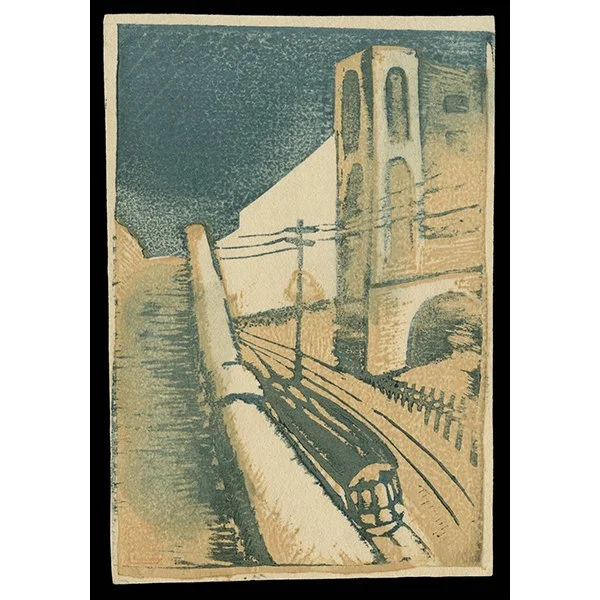
Speeding Train
Takamura Kodama (active early 20th century)
MEDIUM: Woodblock print
DATE: c. 1925
DIMENSIONS: 9 × 7 inches
CONDITION: Excellent, no problems to note
SOLD
POSTERS
UKIYO-E-REFERENCES
___LZSettings_N4IgFgyglgXgpiAXAOwK4Bt0BoQDN0D2AhgC4AiUATkmpjnMkQEbpwAyRMAnkrkegGc4OfugCiANwYkBvfkJxQScALYCAksgBKBAO5IALDhLNWJAMIF0qFclmIATMdNwSAcVQll1RwAYcKgRMUKyW1rb2AIwBQSFwHl5wPg4ArDiERAAmAIKYAPKUAApEAOZIJJSowiAZmcUlcNDwSJG+-iACBJQkEDYqRJRc6spqSCAADpRQAMZwALREAtMgOAJgehBgA3AAQp4kBHZjyASb2ysgTPuHGtOHuVAlyCrSY7PI3hdXXjfqd8hNBCIDr9TBfa52P6HMJdMYsIjTADW4J+kP+EBIXFYYwEAEdUNs5kwupkkhcsplzKQACqlczoRZCewgE7IBA4O6YODTEhQQ7UrjjIGRADMHKsrB5fOQAFVKOgxkQJEQQi45pMoB9ZMYlNjgYUtOoAHLUiAXTFCo1EF5jSYETKoHnakCoIRGmxMJKaHT6RAVKo4XSUIjjYaqAQAdSUYDYmuRiD4gmqJhYrggrl5yBK9n91UCwVY6a8muz5Uq1VdjTgAgE0qp0zAQNz4q5UsO6kyYwAbA5cJkUgAOIhdlK4Bzcgci3xwBEOIgAdgMRAupNrT0VngIJSmnZwjaySWpcAAHiQxgAeIgAAkYLwAvAAdF2IqBcAhwJ8APnPAHoiN+wAMb8mE-GUAGl1AATTyOYxDmLQxAAMTEBCjXMMQIF-EDf0Az9zRPHpYCBEAXkyKAbAucZSkaIikFSdooH6BpsgEIUeS0Ug+TGSILk5GxkCjTISDAQwHHaEp9jJRADHadAoAEEh1CYmjmkQKd0nkxTlIeJ4Xg+MZWFwM9Vjk1dCiSH1DGMAidOeV5gUM4yOnWXRqV1Jty1WFzqTAD1GBCMsA2cvQxGPWZKHGM8E3kao1j0LQZ0yABZLp2DjOQky8vRCimWYMoUCZKHtR0SAARVQGZEQANSgOBdDERhU07aLMuC3RigUgoZXGO4VBLSRpGZVAeoIPqswuF4TEyUgiEKAha15Q44TgQhdDmf5lH0nANX6QYktcLIZuOQ52Q6blDmmvaDumkxjrZC5cBCT5EFAEwyhQDBsBAaZSDgEouh4D66G+37-sGDt7AAbRALsiCIXwBz7Bx51wKd53nEVIgMTJMnnIgAE553xkAAF0AF8RE3cwivGQLqjkkowBIYlj3yvMoGPOBKUOTaoubS5CCRDsxlwaZphRycUgcAdCcycWB0HedfHNYM7FwLpRhekAipMRbkCQUAYANkBlWsIF2lQZAlDGUkyjJimOh+vVQFZrXTaqFo2hwS3reBABSEAHcB0B3eFL2XStqKQAD+2cAIKjpiUYOTf4D3EFaC3I7GGO49wXAhCil3jdDpBM99iZWaD4vU-N72s+BcZK4drpHk1Y3XZDmukBSMuo5zkBk5LxAe7r8uY4dgRETq9vq7N0vR6j23A5wQeu8QXubb+wPY5AIgrf6PWoZJnBKBndAdkFxFheBFgCCROZ8aYLsuxlsXcHnSICdwLt8YHTJpcDkAA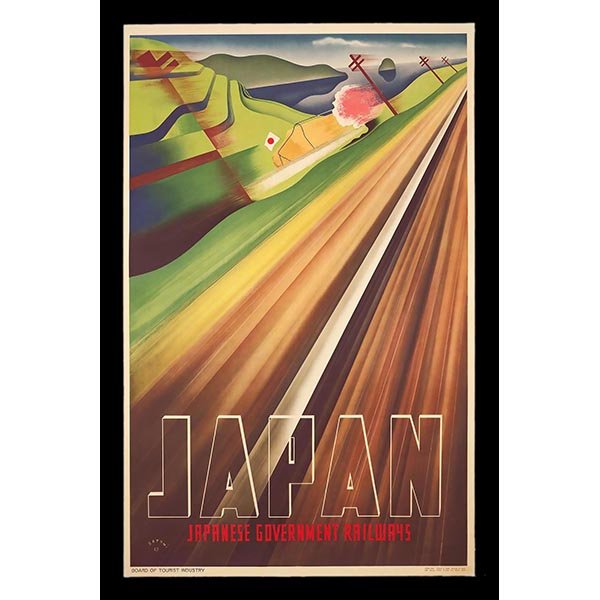
Japan – Japanese Government Railways Ad
Munetsugu Satomi (1904–1996)
MEDIUM: Offset lithograph
DATE: 1937
DIMENSIONS: 39 x 25 inches
CONDITION: Exceptional state of presentation with fresh and vibrant colors
$10,000.00
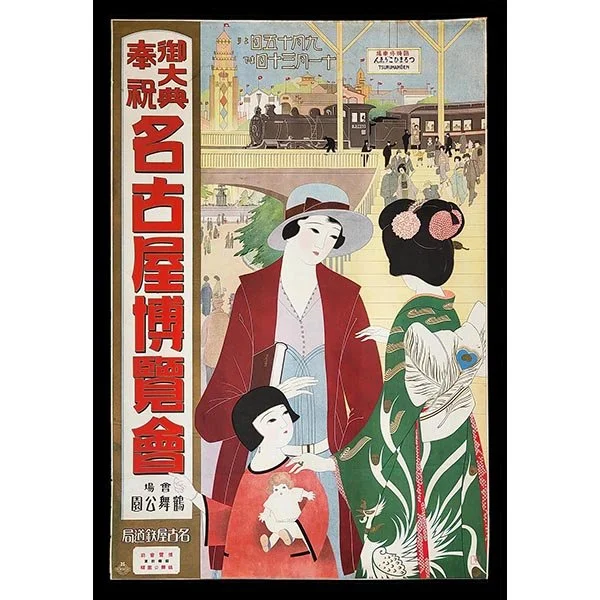
Nagoya Exposition Poster, Tsuruma Park
Unknown Artist
MEDIUM: Offset Lithograph
DATE: 1926
DIMENSIONS: 37 x 24 inches
CONDITION: Faint staining at top
NOTE: Exceptionally rare
$4,500.00
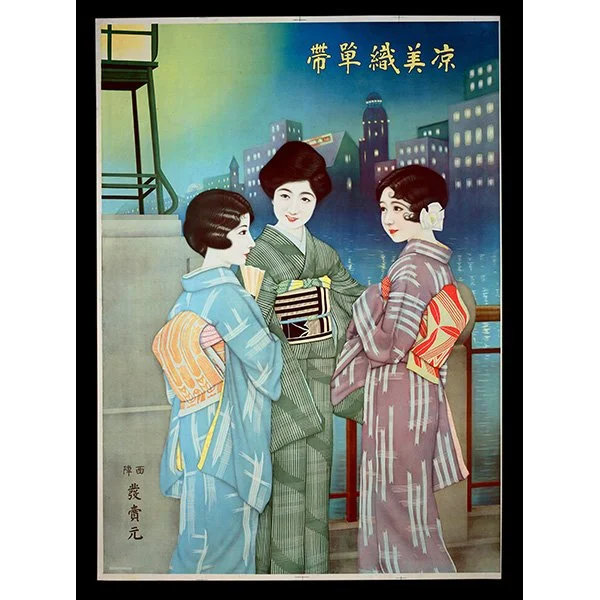
Obi and Kimono Textile Ad
Unknown Artist
MEDIUM: Offset lithograph
DATE: c. 1930
DIMENSIONS: 43 x 31 inches
CONDITION: Excellent; no problems to note
$3,500.00
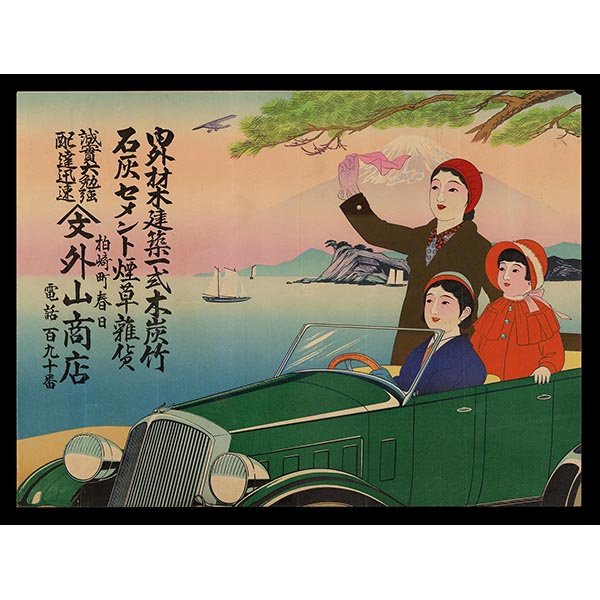
Motorcar and Mount Fuji
Unknown Artist
MEDIUM: Woodblock print
DATE: c. 1930
DIMENSIONS: 15 x 20 ¼ inches
CONDITION: Very good; faint creasing, light soiling and staining on reverse
$800.00
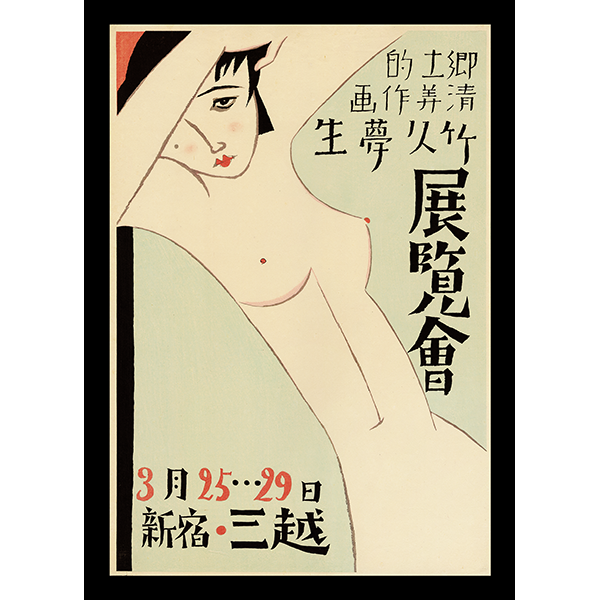
Poster for Yumeji Exhibition at Shinjuku Mitsukoshi
Takehisa Yumeji (1884–1934)
MEDIUM: Woodblock print
DATE: 1931
DIMENSIONS: 22 x 15 ¼ inches
CONDITION: Excellent, no problems to note
SOLD
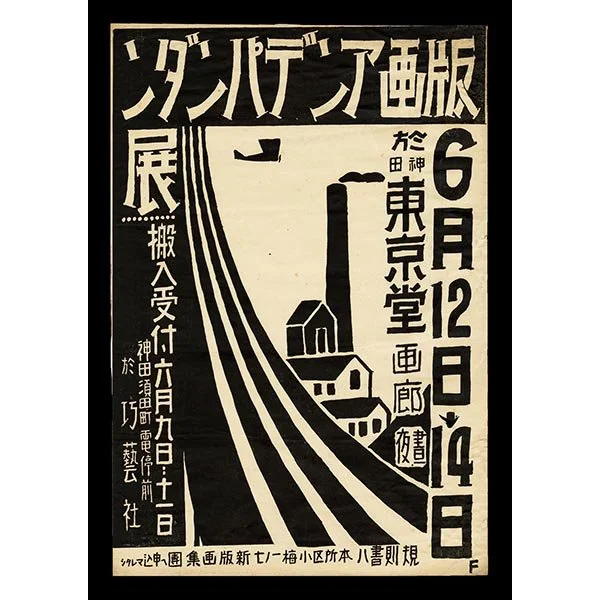
Poster for the Independent Print Artists Exhibition
Yoshio Fujimaki (1911–1935)
MEDIUM: Woodblock print
DATE: 1934
DIMENSIONS: 15 1/2 x 10 5/8 inches
CONDITION: Excellent, light soiling and minor creasing and wear consistent with age and original public use
SOLD
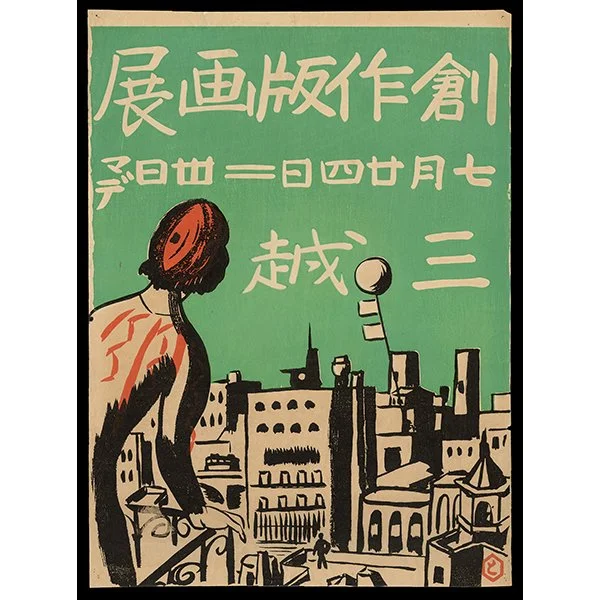
Sosaku Hanga Exhibition Poster
Artist Unread
MEDIUM: Woodblock print
DATE: c. 1930
DIMENSIONS: 20 × 16 inches
CONDITION: Excellent, no problems to note
SOLD
POSTCARDS
UKIYO-E-REFERENCES
___LZSettings_N4IgFgyglgXgpiAXAOwK4Bt0BoQDN0D2AhgC4AiUATkmpjnMkQEbpwAyRMAnkrkegGc4OfugCiANwYkBvfkJxQScALYCAksgBKBAO5IALDhLNWJAMIF0qFclmIATMdNwSAcVQll1RwAYcKgRMUKyW1rb2AIwBQSFwHl5wPg4ArDiERAAmAIKYAPKUAApEAOZIJJSowiAZmcUlcNDwSJG+-iACBJQkEDYqRJRc6spqSCDIBAC0nd0gOAJgehBgA3AAQp4kBHZjE8urcyBMm9saAMbbuVAlyCrSY2fSSYfHXqfqF8hNCIgd-ZgvE52D7bMJdMYsIhnADWgLewM+EBIXFYYwEAEdUKtJkwuplniJMplzKQACqlczoIgCIT2cbbBA4C6YOBnEhQbakrgABx+kQAzEyrKw2RzkABVSjoMZECREEIuSbcyhQZAyQ7skio36FLTqABypIgGp5cH1RDuY2VBEyqDZshwqCE+psTCSmh0+kQFSqOF0lCI3OGqgEAHUlGA2KrYYg+IJqiYWK4IK52cgSvYfdVAsFWCmvKqM+VKtUnY04DSxSSzmAflmhSzRdt1JkxgA2By4TIpAAcRDbKVwDlZPf5vjgUIcRAA7AYiId8QJrsgZZ4CCUVa2cLWsklSXAAB4kMYAHiIAAJGHcALwAHRAqGhUC4BDg94AfCeAPRET9gAyfkw77igA0uoACaeSTGIkxaGIABiYhwfq5hiBA35Ad+-7vhqh49LAPwgHcmRQDYhzcqUjQEUgqTtFA-QNNkAi8myWikByYyRIczI2Mg4aZCQYCGA47QlJszyIAY7ToFAAgkOoDFUc0iBjuksnyYpVw3HcapjKwuDHvMMmLoUSSeoYxh4Vptz3L8+mGR0iy6KSSjavWjl6KSYCuowITFr6Hm6GIB6PJQ3LHrG8jVAsehaBOmQALJdOw0ZyPG8xOYUKqPGlCggNatpsgAiqgUAwgAalAcBBYwSatpF6WBcUckFOK3IXCohaSNIdKoO1BCdemhx3CYmSkEQhQEEu7LbBCcCELokyfMouk4Mq9EDFwCWuFk427AyhxCJ8Y2DNto17b8EzIIyeAhN4SCgCYZQoBg2AgGcpBwCUXQ8C9dDvZ932DC29gANogG2RBEL4ACc-IiSkcDTm2-IdjDvh8NO04pJkvggAAugAviIa7mJQBDcv51QySUYAkLiB65dmUAHnAxLbCtEXuSwBAwi2Yy4GcZzTrgo4pA4PYw9OmTCz2vbTnjxgBnYuBdKMiCgOTJgzSuGsgDAD0gHK1g-O0qDIEoYz4mUhPEx0H3aqAjN68bVQtG0joWxFIAAKQgHbv2gK7fIew+XtjH7ts4BTUJKIHRv8G7iCtGb4e-JH0e4LgQgRU7hvB0gqeW783KMwH+eJ6bnvF-lZd2101yqobztB5XSApEX3sZyA8cF4gHfV13-t2wI0LVc3Fcm4Xg9W19-s4L3beIJ3s821HIBEBb-Q62D+M4JQE7oGshB8-VRwn9CkxwOO-YpEwbaZMjBhwCkMNnA4kRv-7QA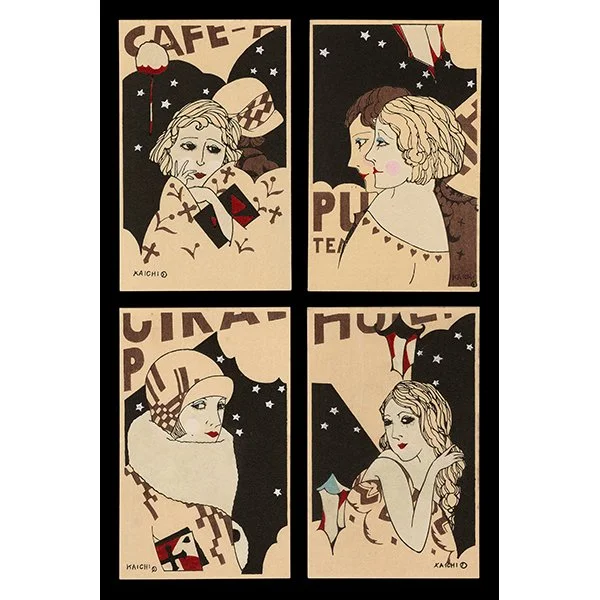
Moga
Kaichi Kobayashi (1896-1968)
MEDIUM: Woodblock print
DATE: 1925-26
DIMENSIONS: 6 x 4 inches each
CONDITION: Excellent, no problems to note
NOTE: Complete set of 4 designs with original folder; published by Kyoto Kyogoku Sakuraiya
$1,200.00
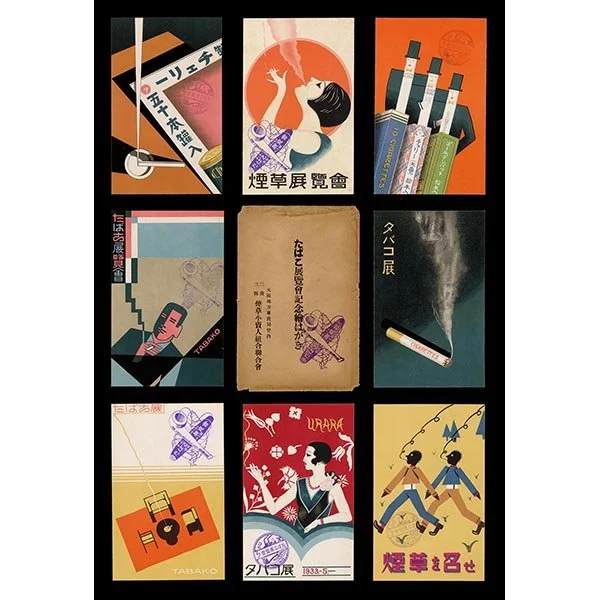
Tobacco Exhibition Commemorative Postcard Set
DATE: c. 1928–1933
MEDIUM: Printed postcard set with original commemorative envelope
ARTIST: Various designers, unidentified
DIMENSIONS: Standard postcard format
CONDITION: Complete set of eight postcards with original exhibition envelope; mailed and stamped examples present; minor age wear consistent with use and preservation.
NOTE: Produced to commemorate a tobacco exhibition held in Osaka during the late Taishō to early Shōwa period.
$800.00
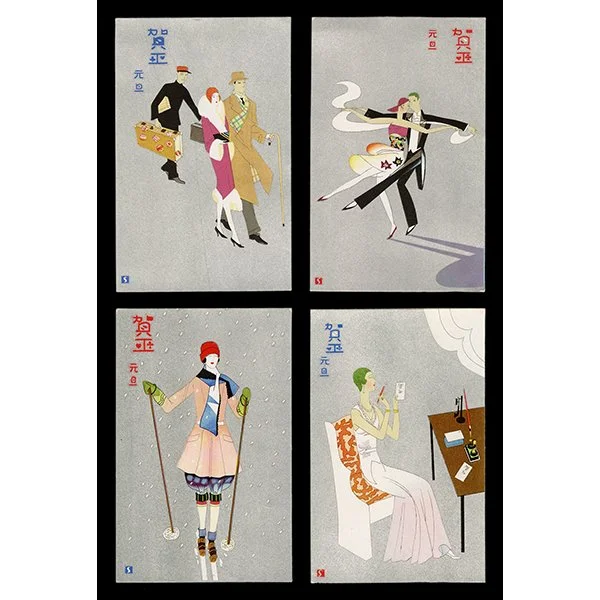
Set of Four Modern Life Postcards
ARTIST: Dazai Atsuo (act. early 20th century)
DATE: Late 1920s–Early 1930s
MEDIUM: Woodblock print
DIMENSIONS: Postcard format (each approximately 14 x 9 cm)
CONDITION: Excellent, no problems to note
NOTE: A rare series of four woodblock-printed promotional postcards issued by Isetan; silver mica background
$450.00
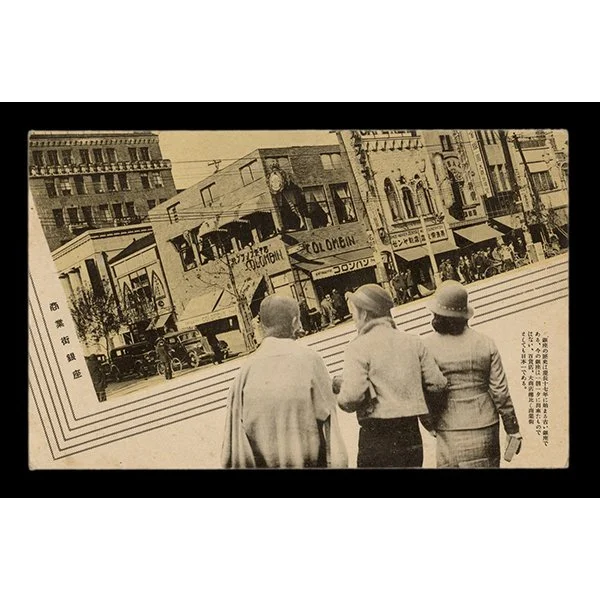
Ginza: The Modern Boulevard
Artist Unknown
MEDIUM: Photomechanical postcard
DATE: c. 1930-35
DIMENSIONS: 4 × 6 inches
CONDITION: Excellent, faint soiling
SOLD
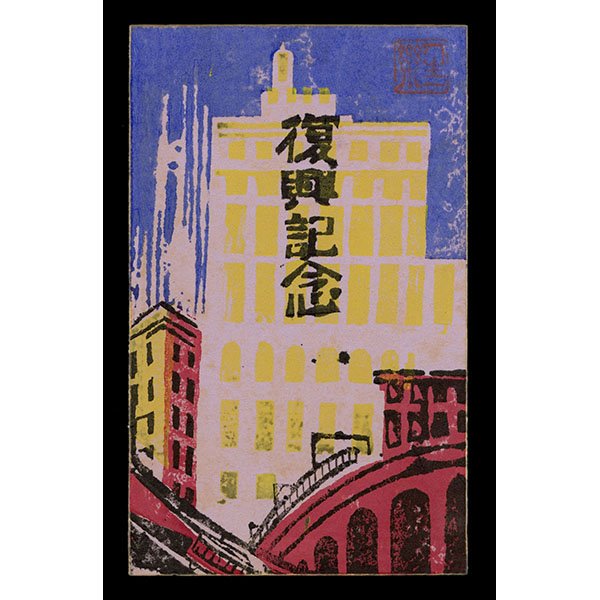
Ginza and the Wako Building
Unknown Artist
MEDIUM: Woodblock print
DATE: c. 1928-35
DIMENSIONS: 6 × 4 inches
CONDITION: Excellent, faint soiling
SOLD
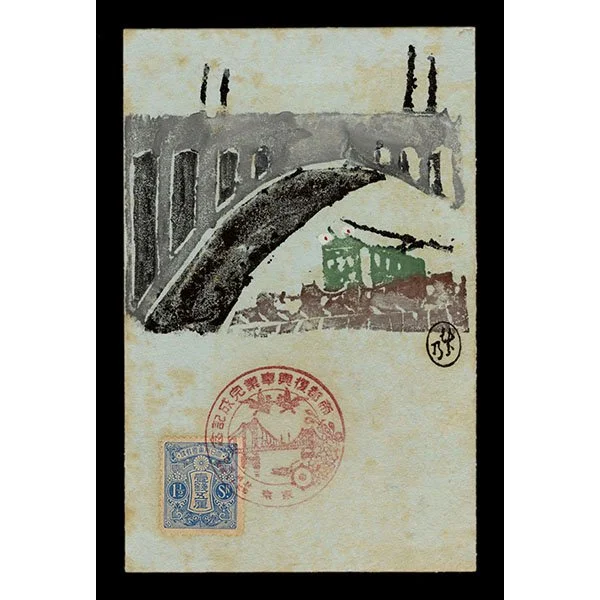
Bridge in the Rebuilt Capital
Artist Unknown
MEDIUM: Woodblock print
DATE: c. 1928-35
DIMENSIONS: 6 × 4 inches
CONDITION: Excellent, faint soiling
SOLD
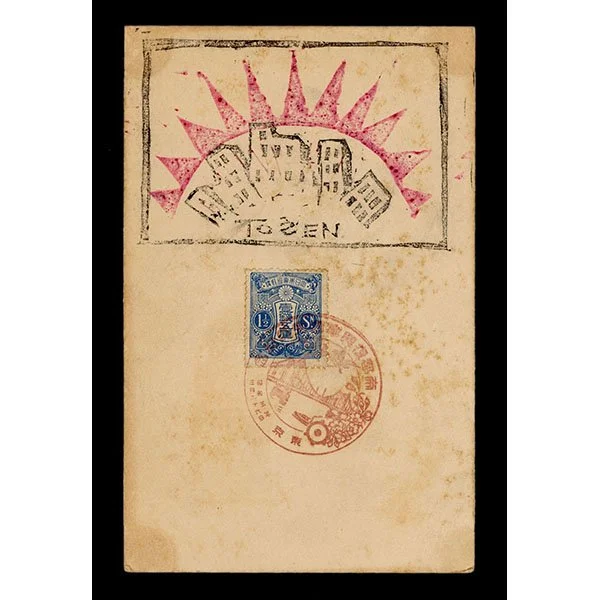
Rising City
Artist Unknown
MEDIUM: Woodblock print
DATE: c. 1928-35
DIMENSIONS: 6 × 4 inches
CONDITION: Excellent, faint soiling
SOLD
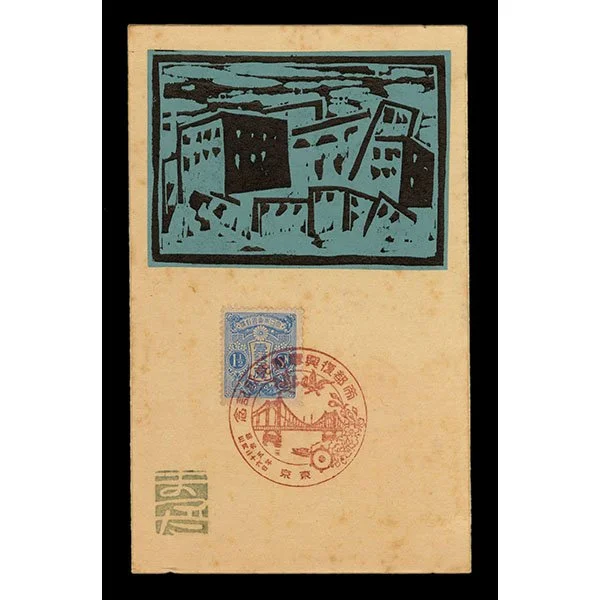
Modern Residential Development
Artist Unknown
MEDIUM: Woodblock print
DATE: c. 1928-35
DIMENSIONS: 6 × 4 inches
CONDITION: Excellent, faint soiling
SOLD
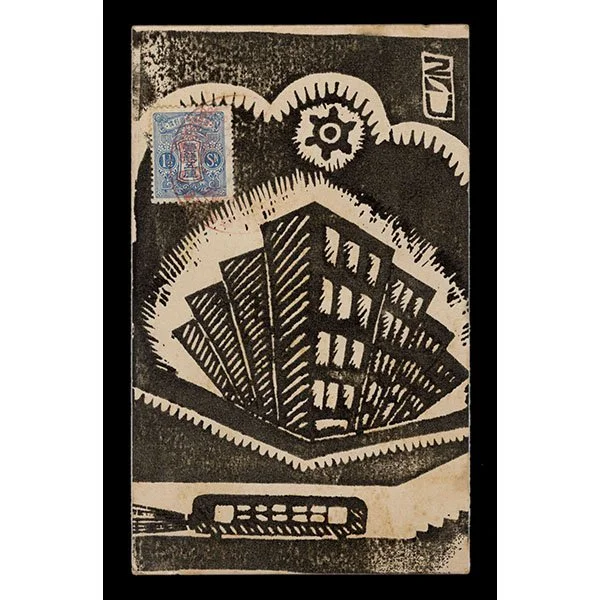
Industry and Transportation
Artist Unknown
MEDIUM: Woodblock print
DATE: c. 1928-35
DIMENSIONS: 6 × 4 inches
CONDITION: Excellent, faint soiling
SOLD
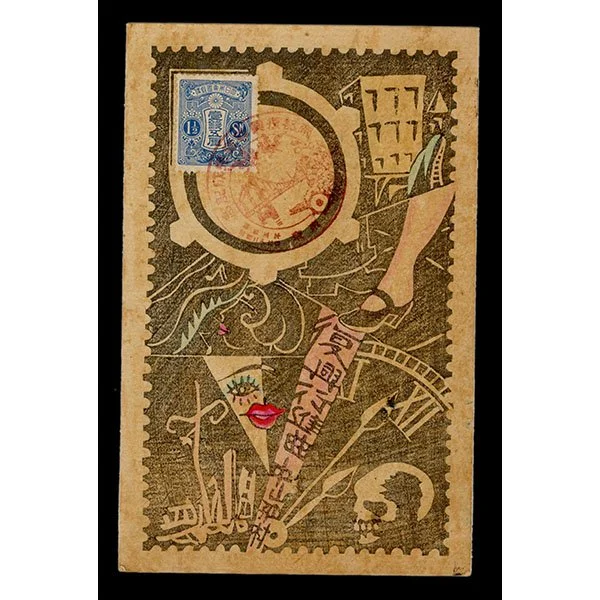
Modern Girl, Modern City
Artist Unknown
MEDIUM: Woodblock print
DATE: c. 1928-35
DIMENSIONS: 6 × 4 inches
CONDITION: Excellent, faint soiling
SOLD
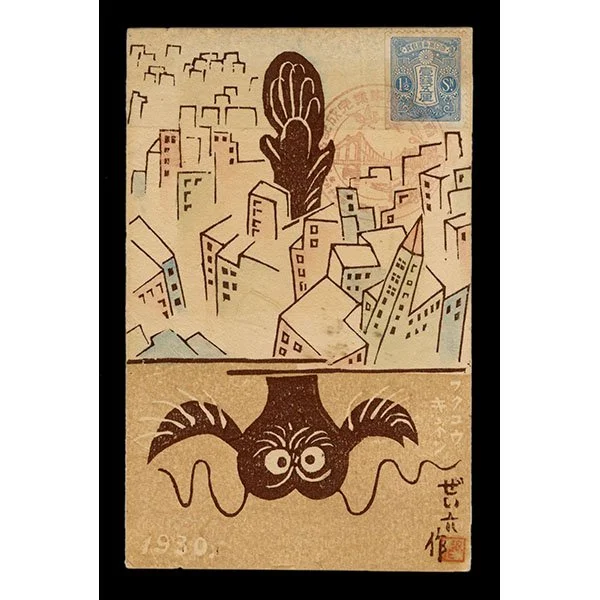
Tokyo Owl
Artist Unknown
MEDIUM: Woodblock print
DATE: 1930
DIMENSIONS: 6 × 4 inches
CONDITION: Excellent, faint soiling
SOLD
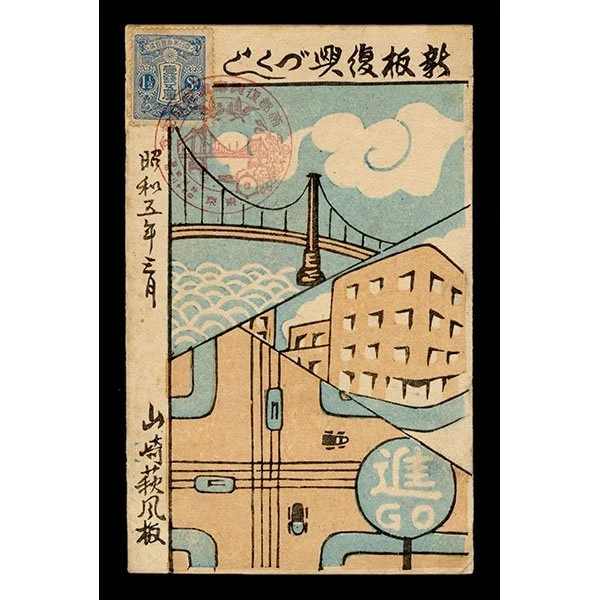
Progress
Artist Unknown
MEDIUM: Woodblock print
DATE: c. 1928-35
DIMENSIONS: 6 × 4 inches
CONDITION: Excellent, faint soiling
SOLD
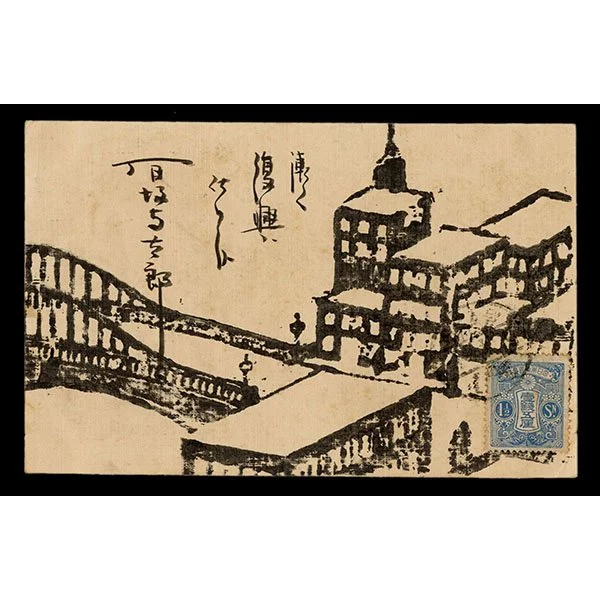
Reconstruction at Dawn
Artist Unknown
MEDIUM: Woodblock print
DATE: c. 1928-35
DIMENSIONS: 4 × 6 inches
CONDITION: Excellent, faint soiling
SOLD
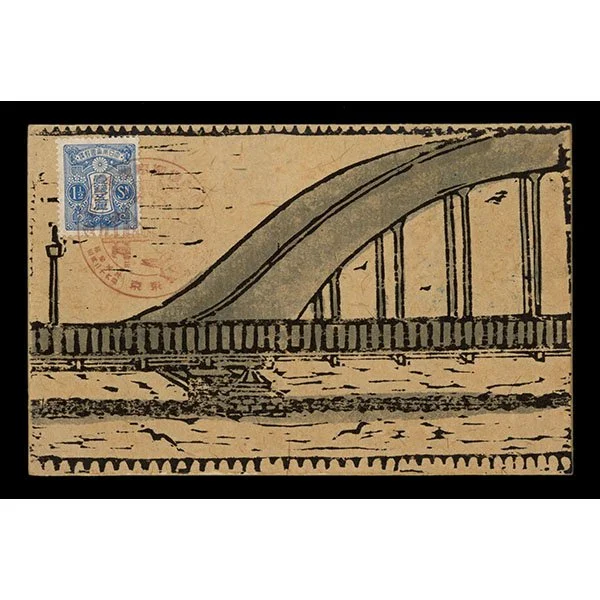
Bridge of the New Capital
Artist Unknown
MEDIUM: Woodblock print
DATE: c. 1928-35
DIMENSIONS: 4 × 6 inches
CONDITION: Excellent, faint soiling
SOLD
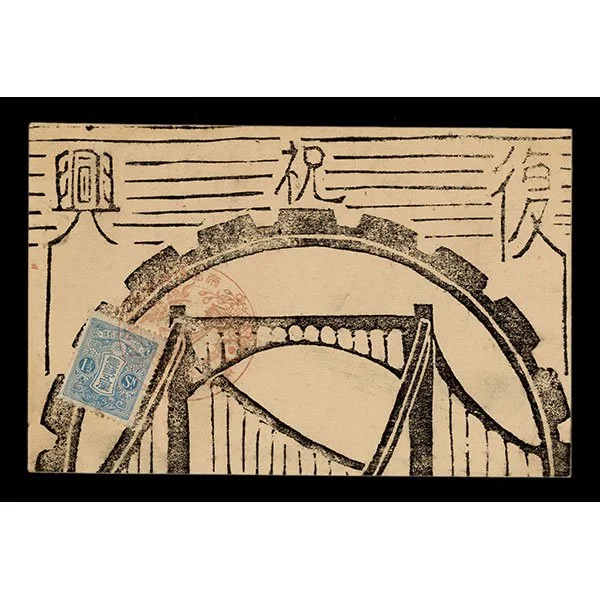
Bridge of Reconstruction
Artist Unknown
MEDIUM: Woodblock print
DATE: c. 1928-35
DIMENSIONS: 4 × 6 inches
CONDITION: Excellent, faint soiling
SOLD
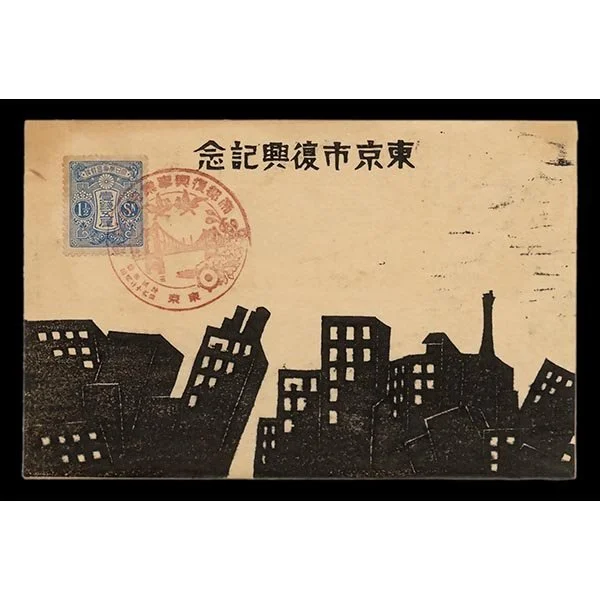
The Modern Metropolis
Artist Unknown
MEDIUM: Woodblock print
DATE: c. 1928-35
DIMENSIONS: 4 × 6 inches
CONDITION: Excellent, faint soiling
SOLD
SHEET MUSIC
UKIYO-E-REFERENCES
___LZSettings_N4IgFgyglgXgpiAXAOwK4Bt0BoQDN0D2AhgC4AiUATkmpjnMkQEbpwAyRMAnkrkegGc4OfugCiANwYkBvfkJxQScALYCAksgBKBAO5IALDhLNWJAMIF0qFclmIATMdNwSAcVQll1RwAYcKgRMUKyW1rb2AIwBQSFwHl5wPg4ArDiERAAmAIKYAPKUAApEAOZIJJSowiAZmcUlcNDwSJG+-iACBJQkEDYqRJRc6spqSCCZpHAAtEQCAMYgOAJgehBgA3AAQp4kBHZjyARrG4sgTDt7GnN7uVAlyCrSY3PSSafnXpfq18hNCIgdfqYd4XOzfPZhLpjFhEOYAaxBnzBPwgJC4rDGAgAjqgNlMmF1Mm8RJlMuZSAAVUrmdCzIT2ECHZAIHDXTBwOYkKB7ClcAAO-0iAGZWVZWJzucgAKqUdBjIgSIghFxTPmUKDIGSnLkkDEAwpadQAOQpEG1-LgRqIjzGaoImVQnNkOFQQiNNiYSU0On0iAqVRwukoRD5w1UAgA6kowGwNQjEHxBNUTCxXBBXFzkCV7P7qoFgqx014NdnypVqq7GnABAJJeS5mB-rnReyJXt1JkxgA2By4TIpAAcRC7KVwDg5A6FvjgsIcRAA7AYiKcibX7vLPAQSurOzhG1kkhS4AAPEhjAA8RAABIxHgBeAA6IFQcKgXAIcCfAD5zwB6Ig-mABg-kwX5SgA0uoACaeRTGIUxaGIABiYiIUa5hiBAf6gX+QFftqJ49LA-wgI8mRQDYpx8qUjTEUgqTtFA-QNNkAgCpyWikNyYyRKcbI2MgUaZCQYCGA47QlDsbyIAY7ToFAAgkOozG0c0iBTukClKSptz3I8mpjKwuBnks8mroUSQ+oYxiEbpDxPACRkmR0Ky6BSSh6s2Ll6BSYAeowIRlgG3m6GIx4vJQfJngm8jVMsehaDOmQALJdOwcZyEmSyuYU6ovJlCggHaDqcgAiqgUDwgAalAcChYwqadjFWUhcUikFFKfLXCoJaSNIDKoF1BA9VmpyPCYEwmIUBC1lyezQnAhC6FMPzKAZOBqkxAxcMlrhZKQy4AkyLIdByewTIMu0TQdBx7CduAhN4SCgCYZQoBg2AgHMkwlF0PDvXQX0-X9Hb2AA2iAXZEEQvgDn2KQGEwsMAJxCgYcBdkjmRzPOyMLAAugAviIm7mJQBB8kF1TySUYAkASx4FXmUDHnAZJ7Gt0VeSwBDwh2Yy4HMOO4JOKQOAOyPztj84DoO86+NqwZ2LgXSjIgoDkyYc3IM9IAwLrirWP87SoMgShjESZSE8THTfXqoCM+rICG1ULRtC6ZvRSAACkIA2-9oAu4K7vPp7Yy+9bOAU7CSgB87-Cu4grQm2HAIR1HuC4EI0UOwbCfGx75sAnyjP+3nRtICnRdFaXNtdHcGq647gf50gKRV176cgHHQdtx34d+zbAhwnVTfl4n-cApbfs4D3reIJP4xwFbkcgEQZv9Nr4P4zglAzugmyEHzTVnEfcJTF2kRs60yNMEKRKo74QoOAYkSREwftAA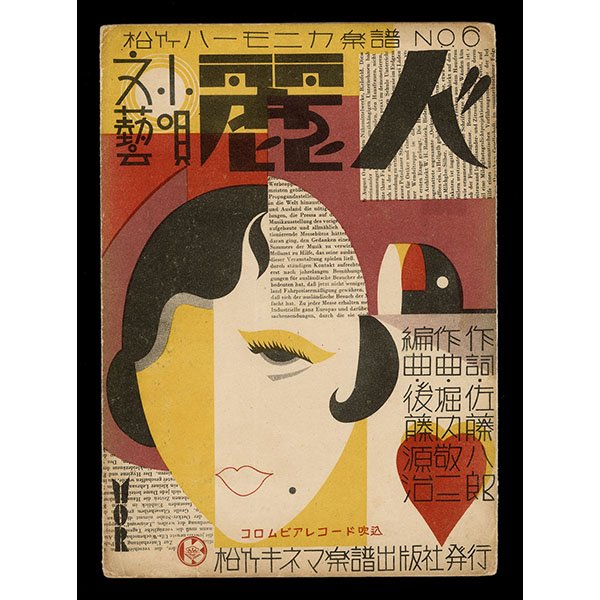
Reijin (A Fair Lady)
Tomita Morizō (富田森三)
MEDIUM: Offset lithograph
DATE: Undated, c. 1930
DIMENSIONS: 12 × 9 inches
NOTE: Produced by Shōchiku Harmonica Score No. 6; lyrics by Satō Hachirō, music by Horiuchi Keizō, arrangement by Gotō Genji
SOLD
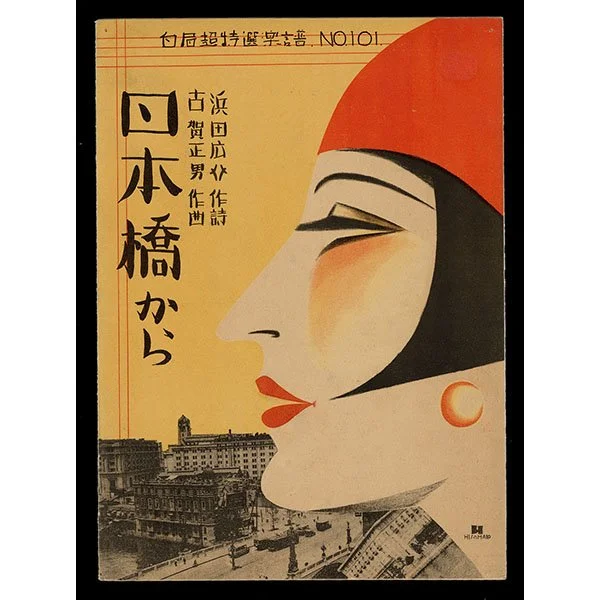
Nihonbashi Kara (From Nihonbashi)
Hisamaro
MEDIUM: Offset lithograph
DATE: Undated, c. 1930
DIMENSIONS: 12 × 9 inches
NOTE: Produced by Hakubi Super Special Selection Score No. 101; lyrics by Hamada Hirosuke , music by Koga Masao
SOLD
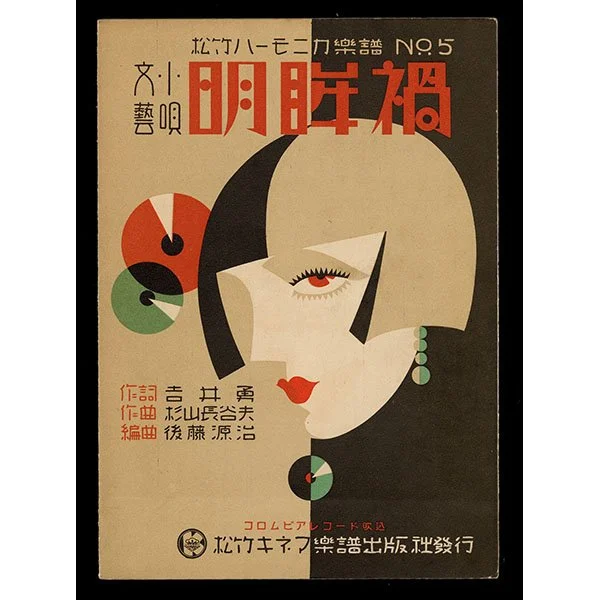
Meiboka (The Curse of Beautiful Eyes)
Artist Unknown
MEDIUM: Offset lithograph
DATE: Undated, c. 1930
DIMENSIONS: 12 × 9 inches
NOTE: Produced by Shōchiku Harmonica Score No. 5; lyrics by Yoshii Isamu, music by Sugiyama Haseo, arrangement by Gotō Genji
SOLD
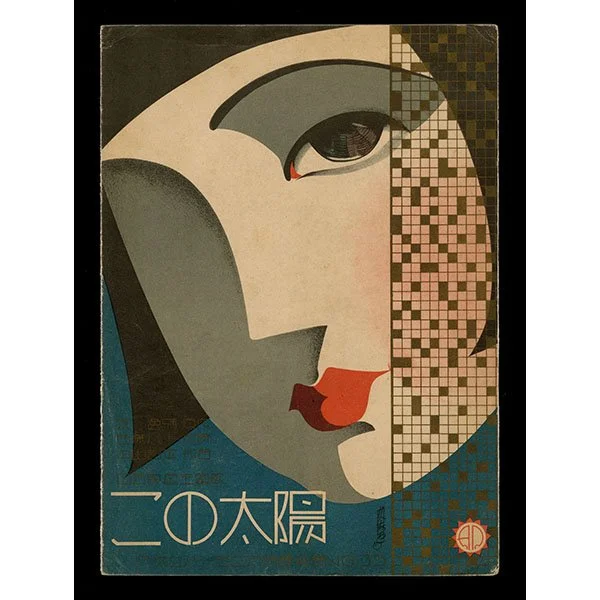
Kono Taiyō (This Sun)
Artist Unread
MEDIUM: Offset lithograph
DATE: Undated, c. 1930
DIMENSIONS: 12 × 9 inches
NOTE: Produced by Apollo Harmonica Special Selection Score No. 33; lyrics by Saijō Yaso, music by Nakayama Shinpei
SOLD
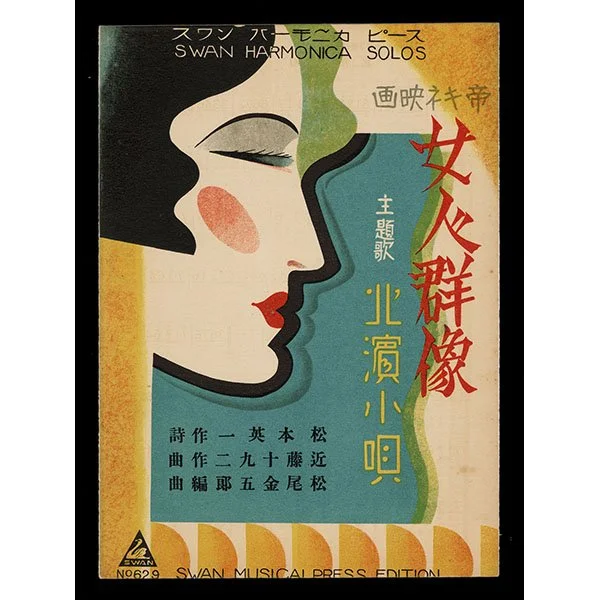
Kitahama Kouta (Kitahama Ballad)
Artist Unknown
MEDIUM: Offset lithograph
TITLE: Theme Song from Stories of Women – Kitahama Ballad
DATE: Undated, c. 1930
DIMENSIONS: 12 × 9 inches
NOTE: Produced by Swan Harmonica Score No. 629; lyrics by Matsumoto Eiichi, music by Kondō Tokuji, arrangement by Matsuo Kingorō
SOLD
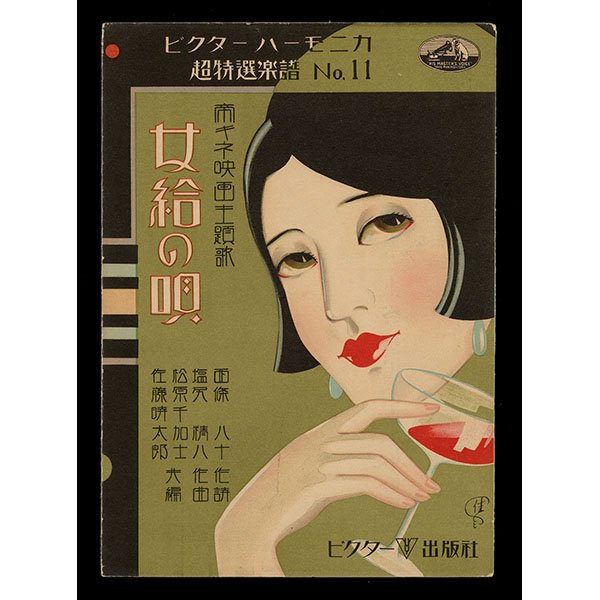
Jokyū no Uta (Song of the Café Waitress)
Saitō Kazō (斉藤佳三)
MEDIUM: Offset lithograph
DATE: Undated, c. 1930
DIMENSIONS: 12 × 9 inches
NOTE: Produced by Victor Harmonica Special Selection Score No. 11; lyrics by Saijō Yaso, music by Shiojiri Seihachi; arrangement by Matsubara Chikashi and Satō Seitarō
SOLD
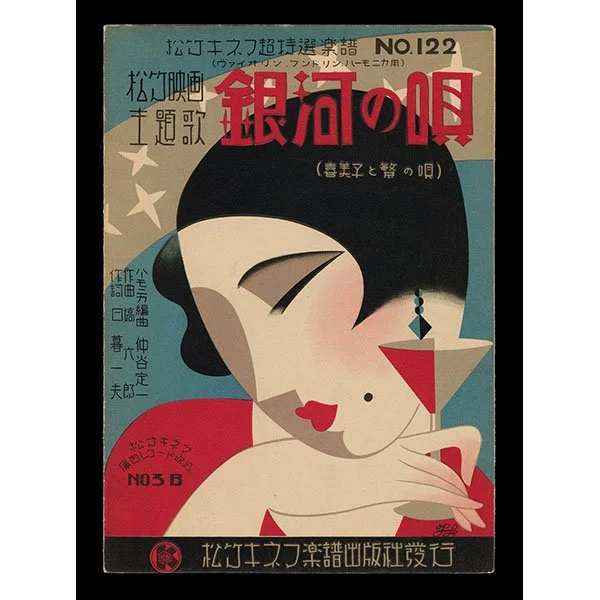
Shōchiku Movie Theme Song: Song of Galaxy (Ginga no Uta)
Artist Unread
MEDIUM: Offset lithograph
DATE: Undated, c. 1930
DIMENSIONS: 12 × 9 inches
NOTE: Produced by Shōchiku Kinema Special Selection Score No. 122; lyrics by Higurashi Kazuo, music by Hanawa Rokurō
SOLD
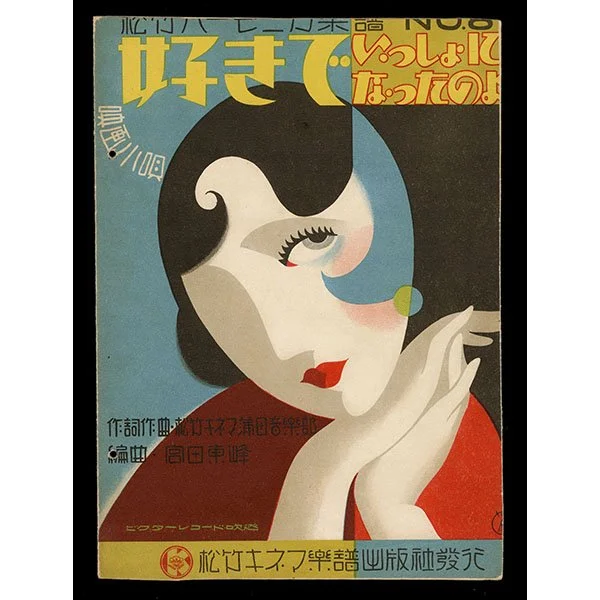
Suki de Issho ni Natta no Yo (I Married Him for Love)
Artist Unknown
MEDIUM: Offset lithograph
DATE: Undated, c. 1930
DIMENSIONS: 12 × 9 inches
NOTE: lyrics and Music by Shōchiku Kinema Kamata Music Department; arrangement by Miyata Tōhō
SOLD
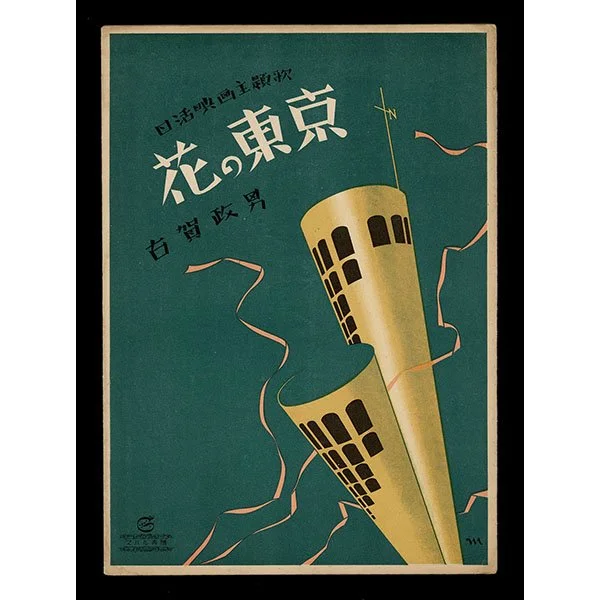
Hana no Tokyo (Glamorous Tokyo)
Artist Unknown
MEDIUM: Offset lithograph
DATE: Undated, c. 1930
DIMENSIONS: 12 × 9 inches
NOTE: Produced by Subaru Score, Record No. 27111; lyrics by Shigure Otoha, music by Koga Masao
SOLD
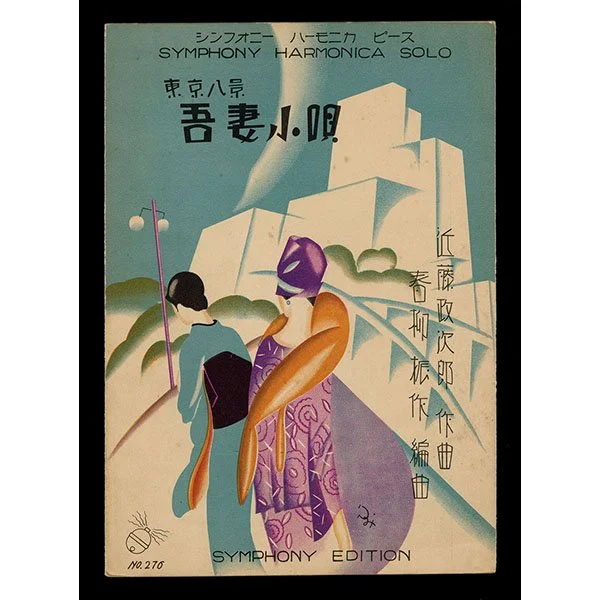
Tokyo Hakkei / Azuma Kouta (Eight Views of Tokyo)
Fujita Fumi (藤田ふみ)
MEDIUM: Offset lithograph
DATE: Undated, c. 1930
DIMENSIONS: 12 × 9 inches
NOTE: Produced by Symphony Harmonica Score No. 278; lyrics by Uchiyama Sōjūrō, music by Kondō Masajirō, arrangement by Haruyanagi Shinsaku
SOLD
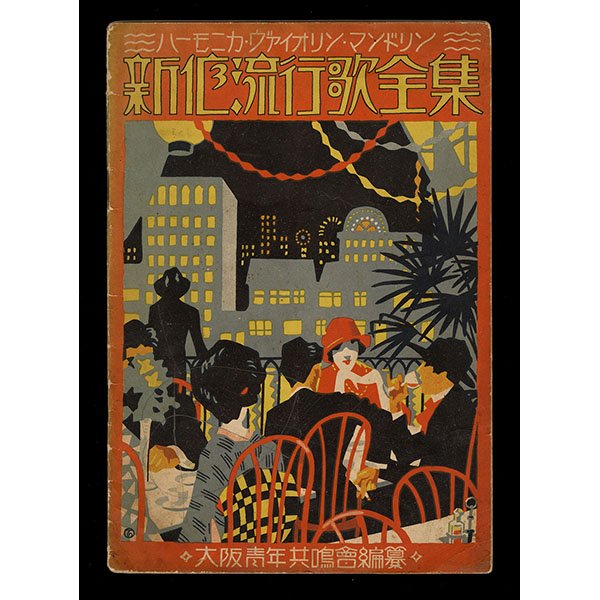
Shinsen Ryūkōka Zenshū (New Collection of Popular Songs)
Artist Unknown
MEDIUM: Offset lithograph
DATE: Undated, c. 1930
DIMENSIONS: 12 × 9 inches
NOTE: Harmonica, Violin, and Mandolin Arrangements
SOLD
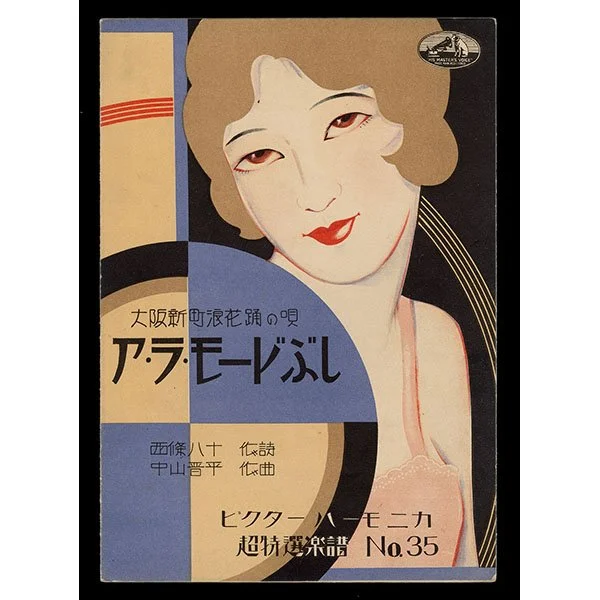
A La Mode Bushi (A La Mode Melody)
Artist Unknown
MEDIUM: Offset lithograph
DATE: Undated, c. 1930
DIMENSIONS: 12 × 9 inches
NOTE: Produced by Victor Harmonica Special Selection Score No. 35; lyrics by Saijō Yaso, music by Nakayama Shinpei
SOLD
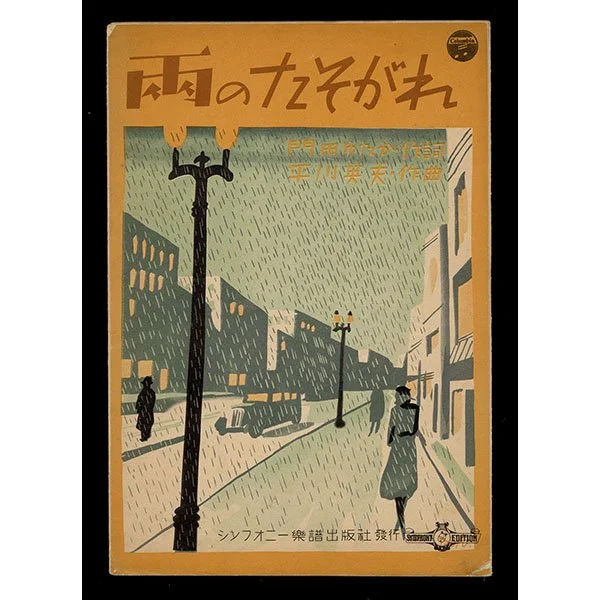
Ame no Tasogare (Twilight in the Rain)
Artist Unknown
MEDIUM: Offset lithograph
DATE: Undated, c. 1930
DIMENSIONS: 12 × 9 inches
NOTE: Produced by Symphony Score; lyrics by Kadota Yutaka, music by Hirakawa Hideo
SOLD
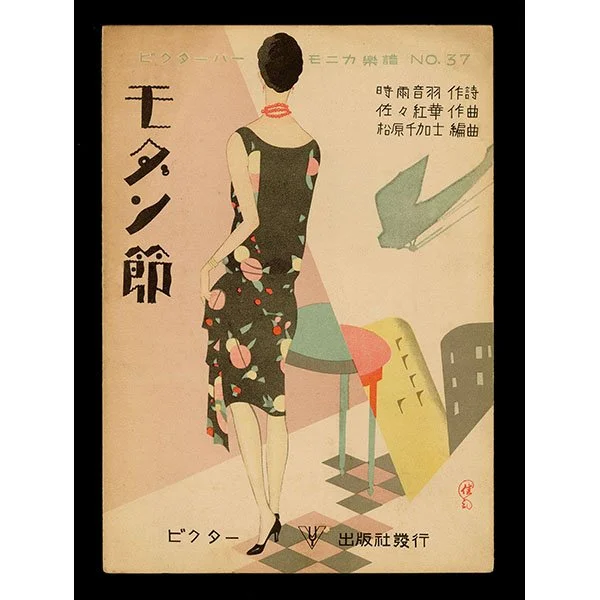
Shanghai Blues (Shanhai Blues)
Artist Unread
MEDIUM: Offset lithograph
DATE: Undated, c. 1930
DIMENSIONS: 12 × 9 inches
NOTE: Produced by Victor Harmonica Score No. 37; lyrics by Shigure Otoha, music by Sasaki Kōka, arrangement by Matsubara Chikatoshi
SOLD
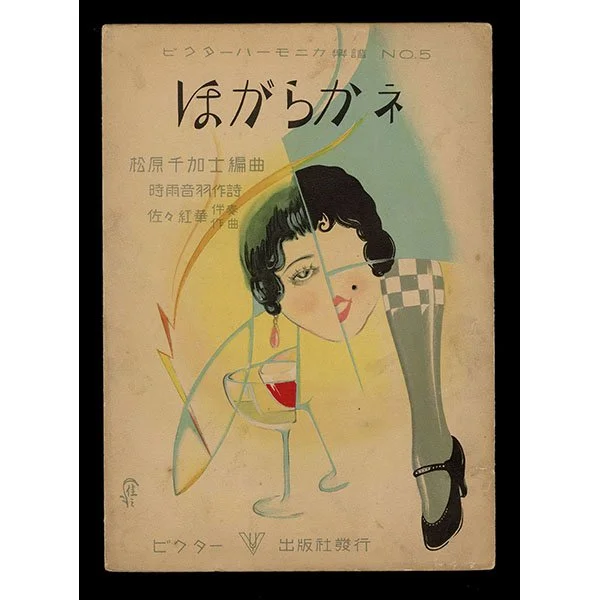
Nebagara Ka (While Lying Down)
Artist Unread
MEDIUM: Offset lithograph
DATE: Undated, c. 1930
DIMENSIONS: 12 × 9 inches
NOTE: Produced by Victor Harmonica Score No. 5; lyrics by Shigure Otoha, music by Sasaki Kōka arrangement by Matsubara Chikatoshi
SOLD
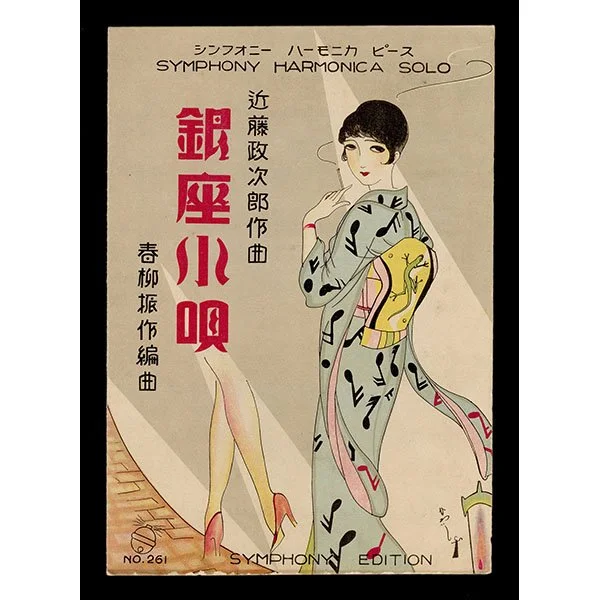
Ginza Kouta (Song of Ginza)
Artist Unkown
MEDIUM: Offset lithograph
DATE: Undated, c. 1930
DIMENSIONS: 12 × 9 inches
NOTE: Produced by Symphony Harmonica Solo No. 261; lyrics by Haruyanagi Shinsaku, music by Kondō Masajirō
SOLD
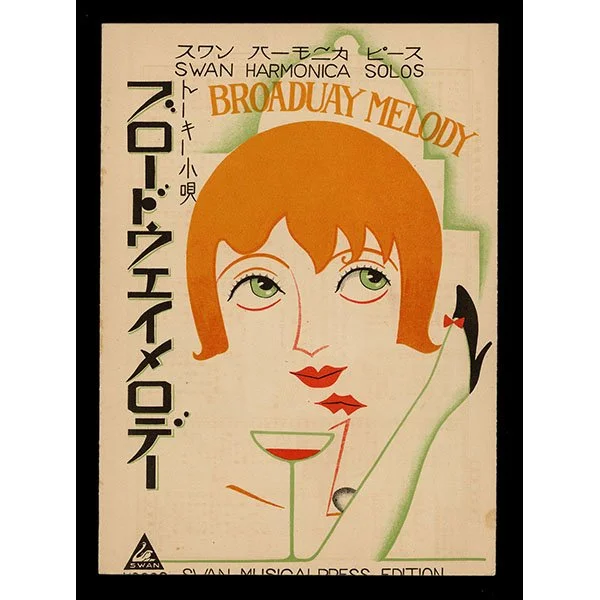
Broadway Melody
Artist Unknown
MEDIUM: Offset lithograph
DATE: Undated, c. 1930
DIMENSIONS: 12 × 9 inches
NOTE: Produced by Swan Harmonica Solos, music by Nacio Herb Brown, arrangement by Kawaguchi Matsutarō
SOLD
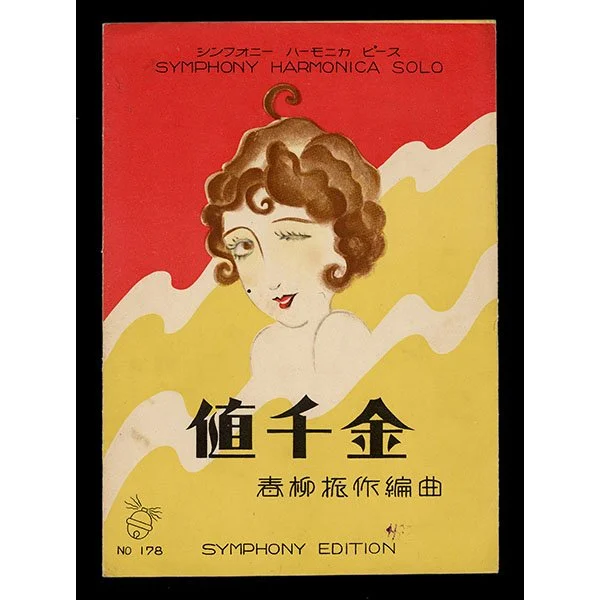
Atai Senkin (Worth Its Weight in Gold)
Artist Unknown
MEDIUM: Offset lithograph
DATE: Undated, c. 1930
DIMENSIONS: 12 × 9 inches
NOTE: Produced by Symphony Harmonica Score No. 178; arrangement by Haruyanagi Shinsaku
SOLD
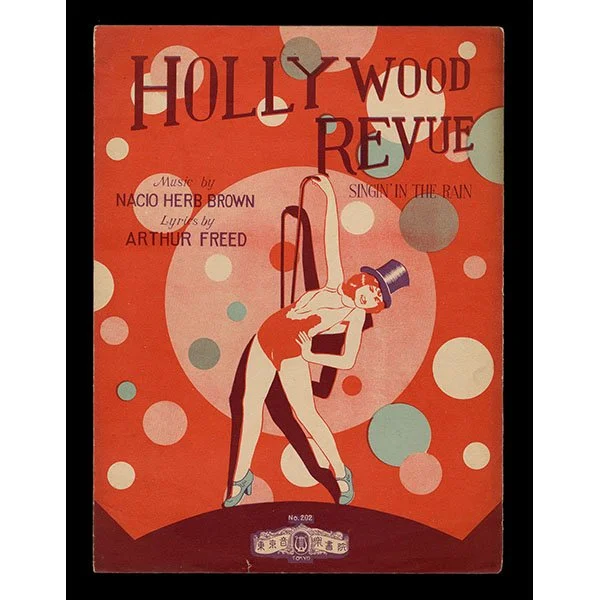
Hollywood Revue—Singin’ in the Rain
Artist Unknown
MEDIUM: Offset lithograph
Date: Undated, c. 1930
Dimensions: 12 × 9 inches
Note: Produced by Tokyo Ongaku Shoin No. 202; lyrics by Arthur Freed, music by Nacio Herb Brown
SOLD
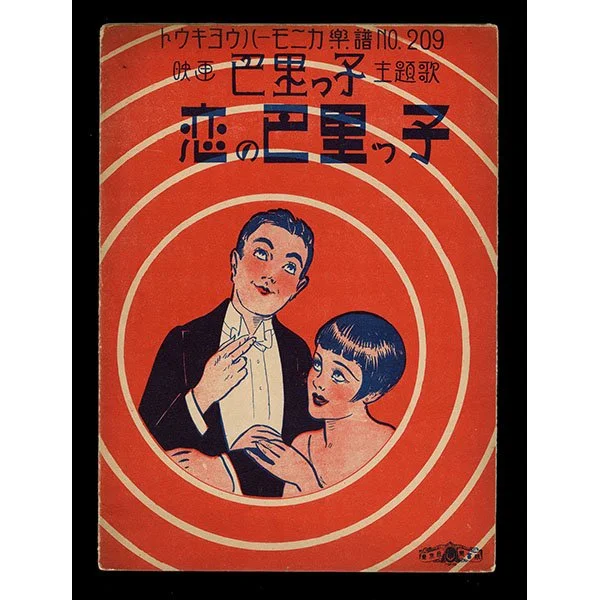
Koi no Hoshi no Ko (Child of the Star of Love)
Artist Unknown
MEDIUM: Offset lithograph
DATE: Undated, c. 1930
DIMENSIONS: 12 × 9 inches
NOTE: Produced by Tokyo Ongaku Shoin Harmonica Score No. 209; Theme song for the film Hoshi no Ko
SOLD
1924
SOLD
Dancing at the New Carlton Hotel, Shanghai
Yamamura Kōka (Toyonari) (1885–1942)
MEDIUM: Woodblock print
DATE: 1924
DIMENSIONS: 16 ¼ x 11 inches
CONDITION: Excellent; no problems to note
NOTE: Silver mica highlights in background
SOLD