

 Image 1 of 1
Details
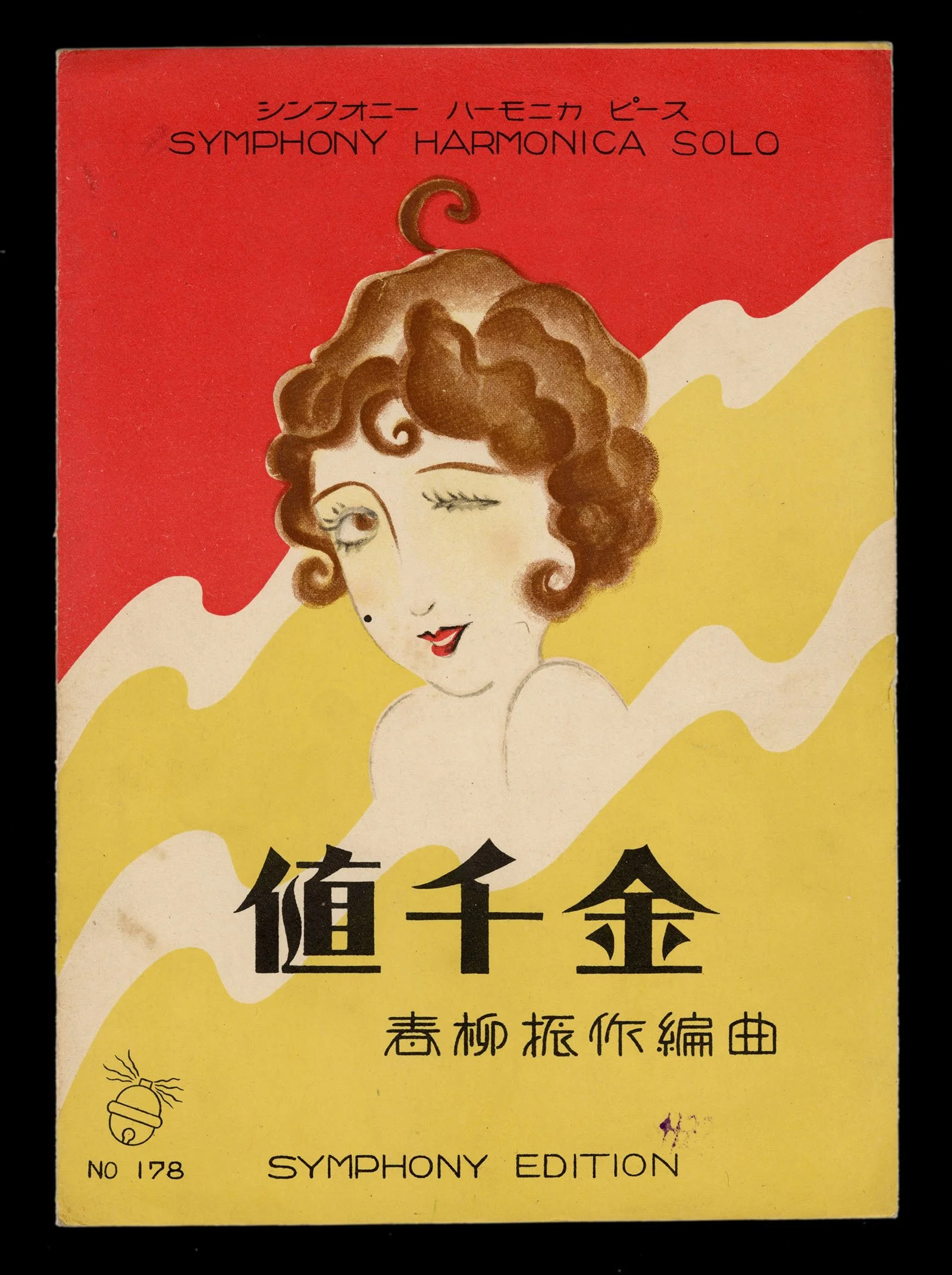
Against a radiant field of red and yellow, a coquettish young woman emerges from undulating bands of white. Her curled hair, beauty mark, and playful wink evoke the glamour of cinema stars and fashion illustrations that flooded Japanese magazines during the late 1920s and early 1930s. The image is intentionally simplified, allowing the figure’s expression to carry the composition’s emotional charge.
The design captures the flirtatious spirit of the modern age. Rather than presenting a traditional beauty, the artist depicts a woman shaped by urban popular culture. The bold color contrasts and stylized features reflect international graphic trends while celebrating the confidence and self-awareness associated with the moga. The image feels less like a portrait than a momentary glance exchanged across a dance hall or café.
Connoisseur's Note
The success of this design lies in its economy. A few carefully arranged forms create an atmosphere of urban chic that immediately evokes jazz-age modernity. The image demonstrates how Japanese commercial artists absorbed international graphic influences while developing a distinctly local visual language. The playful wink and theatrical presentation transform the singer into a symbol of confidence, sophistication, and modern femininity.
The popularity of such imagery reflects a society increasingly defined by consumer culture and mass entertainment. At a time when Japan enjoyed one of the highest rates of music literacy in the world, sheet music covers served not merely as packaging for songs but as mirrors of contemporary taste. They communicated ideals of beauty, fashion, and urban aspiration to a broad audience, preserving visual evidence of how music and modern life became inseparable during the interwar years.