

 Image 1 of 1
Details
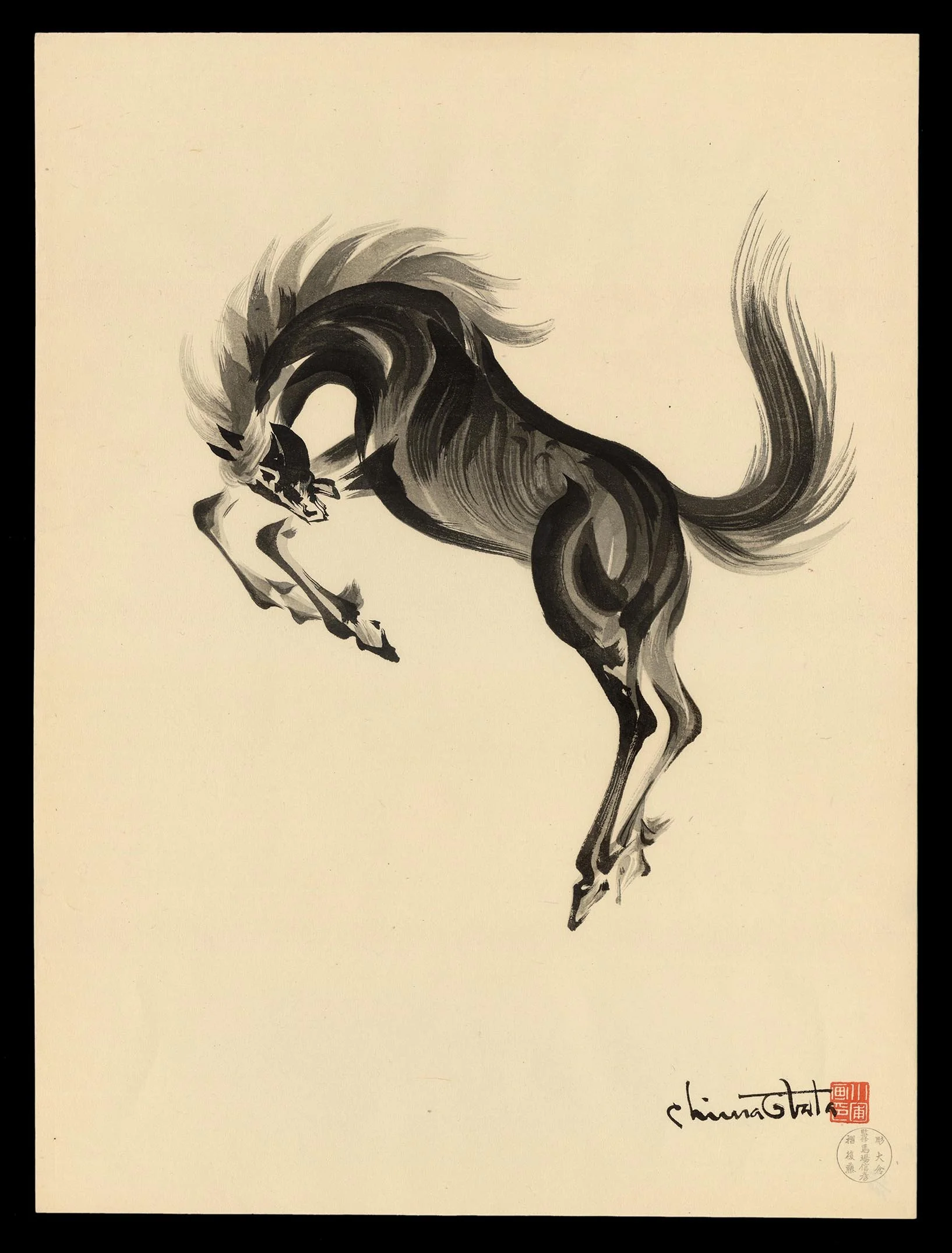
In this dynamic composition from 1930, Chiura Obata captures the raw energy and sublime grace of a horse mid-leap. Though a woodblock print, the work is executed with a remarkable fluidity of line and tonal subtlety more commonly associated with sumi-e ink painting. The spirited arc of the horse’s form, its tail sweeping like calligraphic flame, evokes both power and weightlessness. Every detail—from the flex of the muscles to the toss of the mane—is reduced to its expressive essence, yielding an image that is both anatomically observant and emotionally resonant.
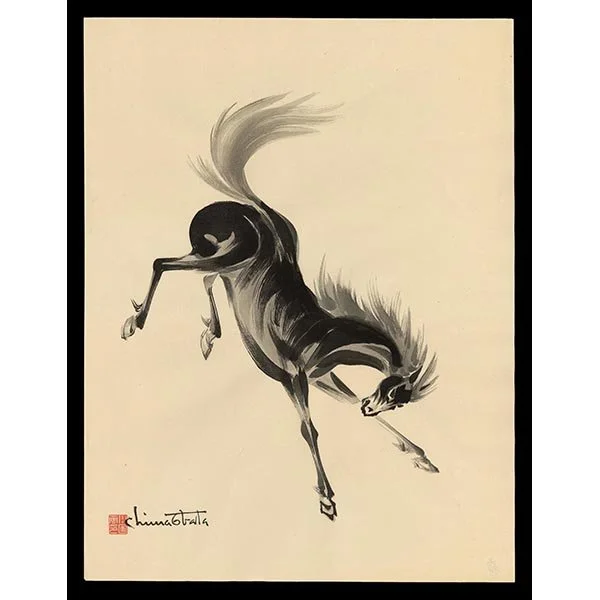
This print is one of several equine designs created by Obata in 1930. It was produced in Japan by the Takamizawa studio, under the close and direct supervision of the artist himself. Though professionally published, the project maintained the integrity of Obata’s vision throughout. In this series, Obata returned to one of his lifelong fascinations: the horse—not as a romantic ideal or decorative motif, but as a living force, pulsing with movement and rhythm. There are Buddhist undertones here as well—in East Asian thought, the horse often symbolizes spiritual energy and transformation, qualities that Obata distills through the elegant austerity of his line.
Connoisseur's Note
Though best known for his sweeping landscapes of Yosemite and the High Sierra, Obata’s mastery of ink brushwork—refined over years of training in Japan—found its most distilled and expressive outlet in his depictions of animals. This particular impression, one of a handful of variants in this prancing horse series, is characterized by its harmony of line and gesture, suggestive of calligraphic spontaneity yet grounded in the artist’s deep anatomical understanding.
Collectors will note the subtle nuances in brush texture achieved through woodblock—a testament to Obata’s innovation in combining traditional Japanese materials with modern aesthetic sensibilities. Produced at the Takamizawa studio in Japan in 1930, this impression reflects Obata’s close involvement in every stage of production, ensuring that the fidelity of the ink-brush aesthetic was preserved in the carved block. These rare horse prints remain among the most poetic and technically accomplished expressions of Obata’s East-West synthesis.
More prints by Chiura Obata:
1930
RESERVED
Leaping Horse (Left)
Chiura Obata (1885–1975)
DATE: 1930
MEDIUM: Woodblock Print
DIMENSIONS: 20 ½ x 15 ¼ inches
CONDITION: Excellent impression and color; no issues to note
NOTE: Brush signature and seal of the artist lower left
$800.00 <RESERVED>
Contact us to purchase