

 Image 1 of 1
Details
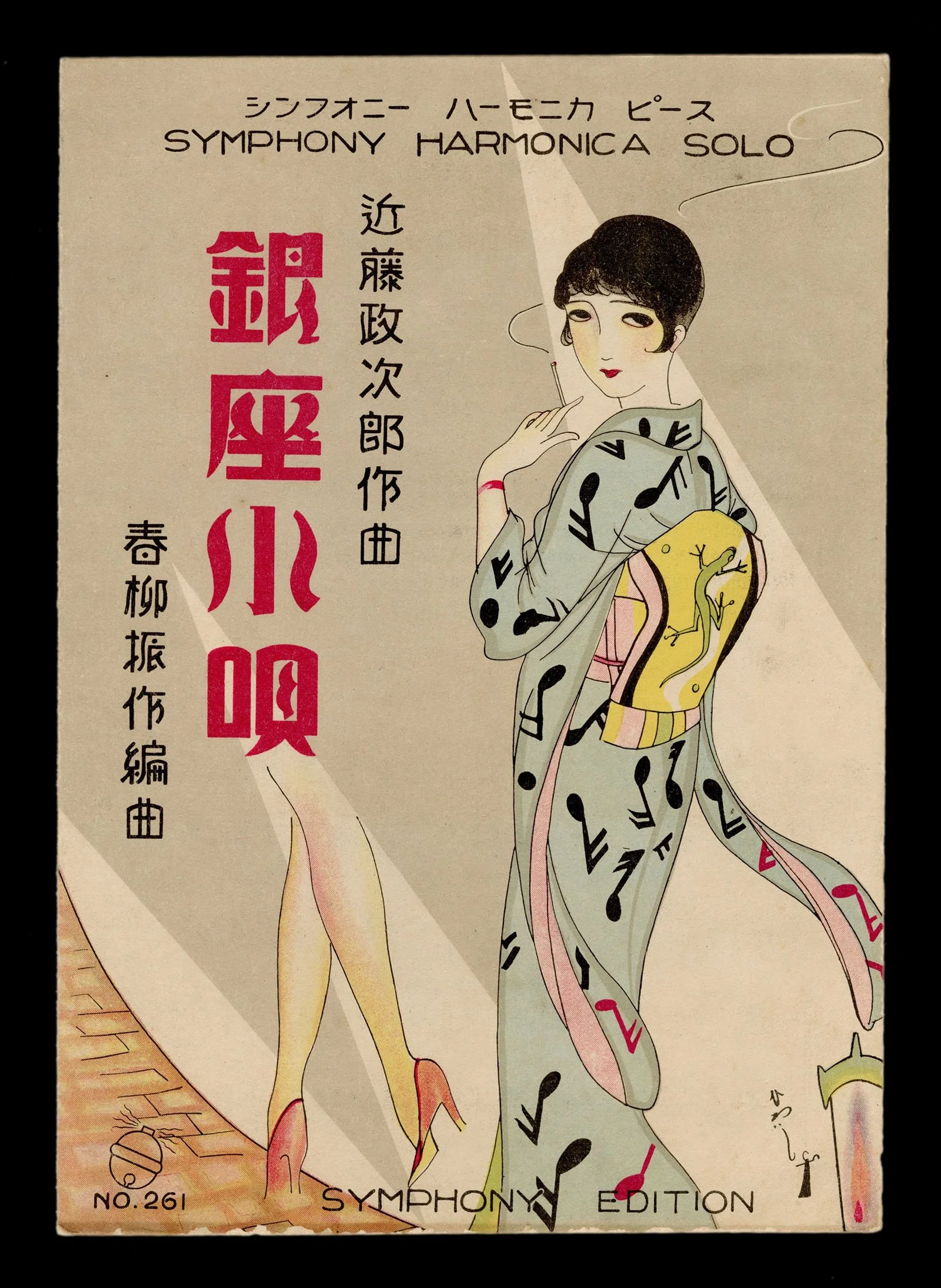
One of the most compelling images of the moga within the exhibition, this cover presents a fashionable young woman strolling confidently through the city while smoking a cigarette. Her kimono, decorated with boldly modern abstract motifs, merges traditional dress with contemporary design sensibilities. The elongated figure and elegant pose recall fashion illustration, while the diagonal spotlight-like forms behind her suggest the excitement of nightlife and urban spectacle.
The title's reference to Ginza is significant. By the 1930s, Ginza had become synonymous with modern consumption, department stores, cafés, and fashionable society. The woman appears entirely at ease within this environment, embodying the new freedoms and public visibility increasingly associated with urban women. Her cigarette functions as both an accessory and a symbol of cosmopolitan sophistication, reinforcing her identity as a participant in modern city life.
Connoisseur's Note
Few surviving sheet music covers capture the spirit of the modan garu more successfully than this example. The image balances elegance and independence, presenting a woman who is both fashionable and self-possessed. The cover serves as a vivid reminder of how visual culture participated in constructing new ideals of femininity during the interwar years.
Japan's extraordinary music literacy ensured that sheet music reached a vast audience. These publications became cultural ambassadors, pairing popular melodies with imagery that reflected contemporary fashion, leisure, and social change. As a result, they provide an unusually rich visual record of the aspirations and identities that defined urban modernity.