

 Image 1 of 1
Details
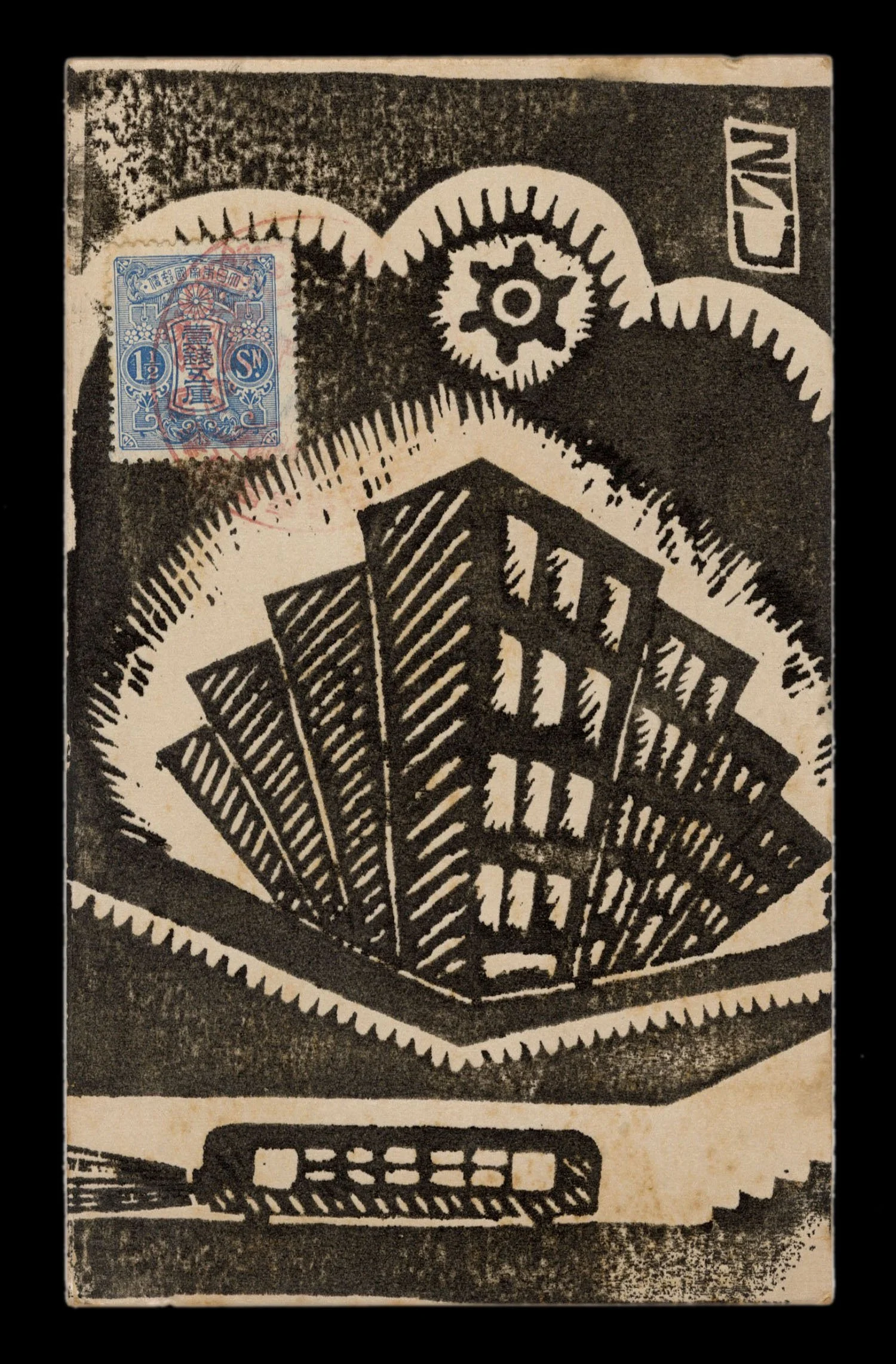
A dynamic arrangement of factory-like buildings, gears, and a modern railcar creates one of the most industrial compositions in the group. The bold contrast of black and white emphasizes mechanical energy, while the interlocking forms suggest the interconnected systems that powered the expanding metropolis. The image celebrates movement, production, and technological progress through a vocabulary of simplified geometric forms.
Tokyo's reconstruction coincided with rapid industrial growth and the expansion of urban transportation networks. Railways, electric transit systems, and modern factories became defining features of the capital's identity. This postcard reflects the fascination with technology that characterized the period, presenting machinery and architecture as symbols of national advancement.
Connoisseur's Note
The imagery recalls contemporary graphic design, particularly the machine-age aesthetics that flourished internationally during the 1920s and 1930s. Yet the rough carving and expressive printing preserve the handmade qualities associated with sōsaku hanga. The result is a compelling fusion of traditional craft and modern subject matter.
As mailed objects, postcards such as this reveal how deeply the imagery of industry and infrastructure entered everyday life. The rebuilt capital was increasingly understood through its transportation systems, factories, and modern buildings. These modest prints therefore provide valuable insight into how ordinary citizens experienced and celebrated the transformation of Tokyo into a modern metropolis.