

 Image 1 of 1
Details
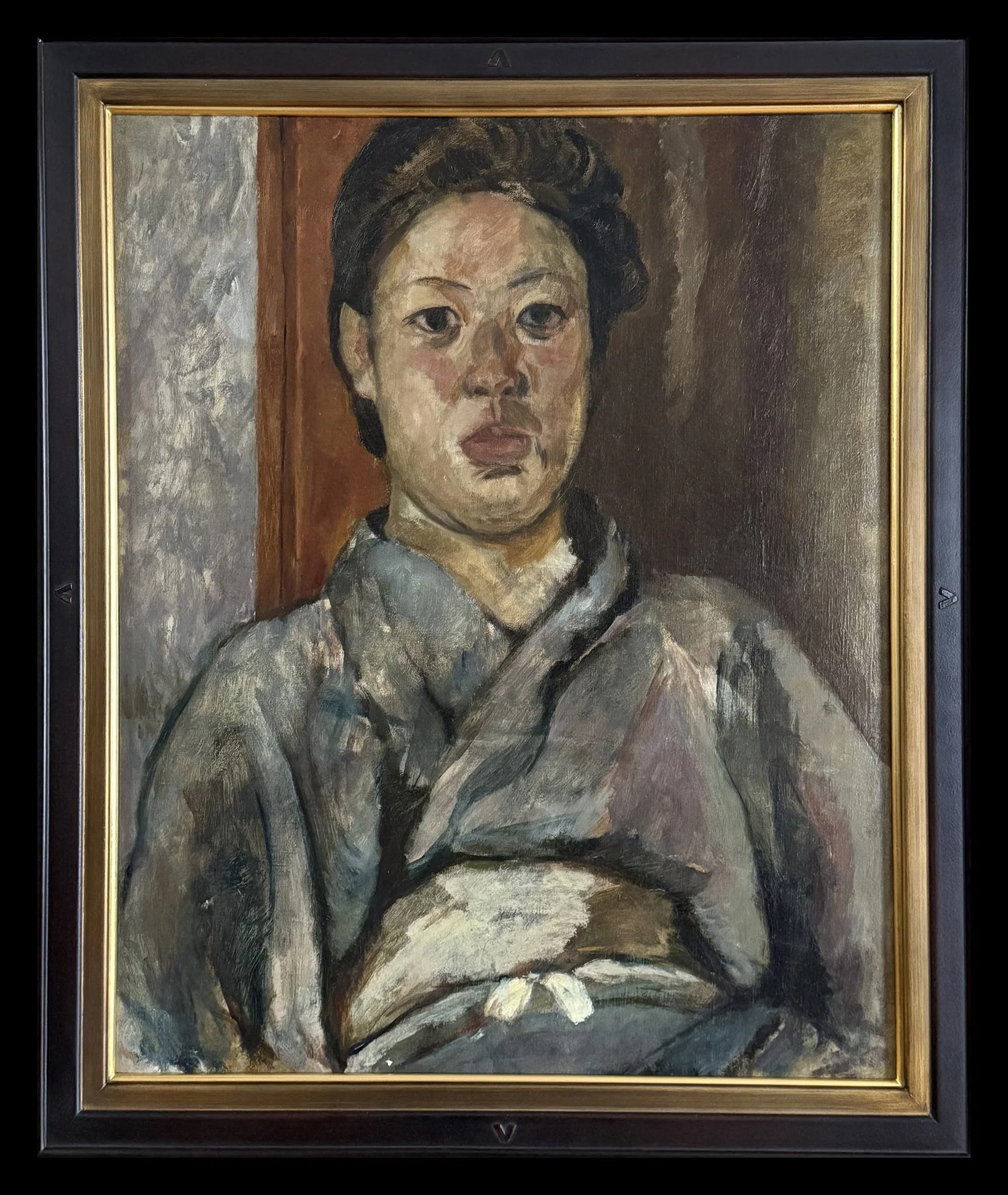
In Nubuo in a Blue Kimono, Koshiro Onchi presents an intimate and contemplative portrait of his new wife, rendered shortly after the couple’s marriage in 1916. The painting captures a quiet gravitas—an early glimpse into Onchi’s lifelong devotion to fusing the personal with the poetic. The subject, clad in a loosely tied indigo kimono, sits facing forward with a firm but vulnerable expression. The composition is closely cropped, emphasizing not only the physical presence of the sitter but the inward tension of her gaze. It is not just a portrait of a woman, but a study in presence and patience.
Executed in deep, subdued tones and built up through layered brushwork, the painting reveals the young Onchi’s close attention to the work of Paul Cézanne. Although Onchi never saw Cézanne’s paintings in person, he studied the French master’s work through black-and-white reproductions in imported art journals and European books. The influence is palpable in the sculptural modeling of form, the use of color blocks to describe volume, and the emotive weight embedded in the sitter’s pose.
Connoisseur's Note
This rare oil painting stands as a significant milestone in Koshiro Onchi’s career. Created after his departure from formal academic training, it signals the artist’s independent vision—a synthesis of Western modernist strategies and a deeply personal sensibility that would come to define his pioneering role in the Sosaku Hanga movement.
Notably, art historian Elizabeth Swinton, in her 1980 dissertation on Onchi’s work, identified Nubuo in a Blue Kimono as possibly the artist’s finest achievement in oil painting. Given Onchi’s later commitment to printmaking and abstraction, surviving early canvases of this caliber are exceedingly rare. This work not only offers profound insight into Onchi’s evolving artistic identity but also provides an invaluable glimpse into the broader narrative of Japanese modernism as it absorbed and reinterpreted European influence during the Taisho period.
More prints by Koshiro Onchi:
1938
$3,000
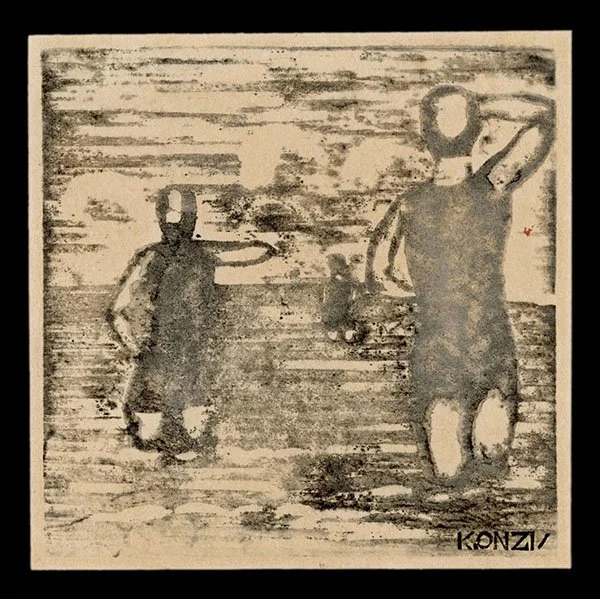
Yuigahama Beach, Kamaura
Koshiro Onchi (1891–1955)
SERIES: New 100 Scenic Views of Japan
MEDIUM: Woodblock print
DATE: 1938
DIMENSIONS: 9 x 12 ¼ inches
CONDITION: Excellent, no problems to note
$3,000.00