

 Image 1 of 1
Details
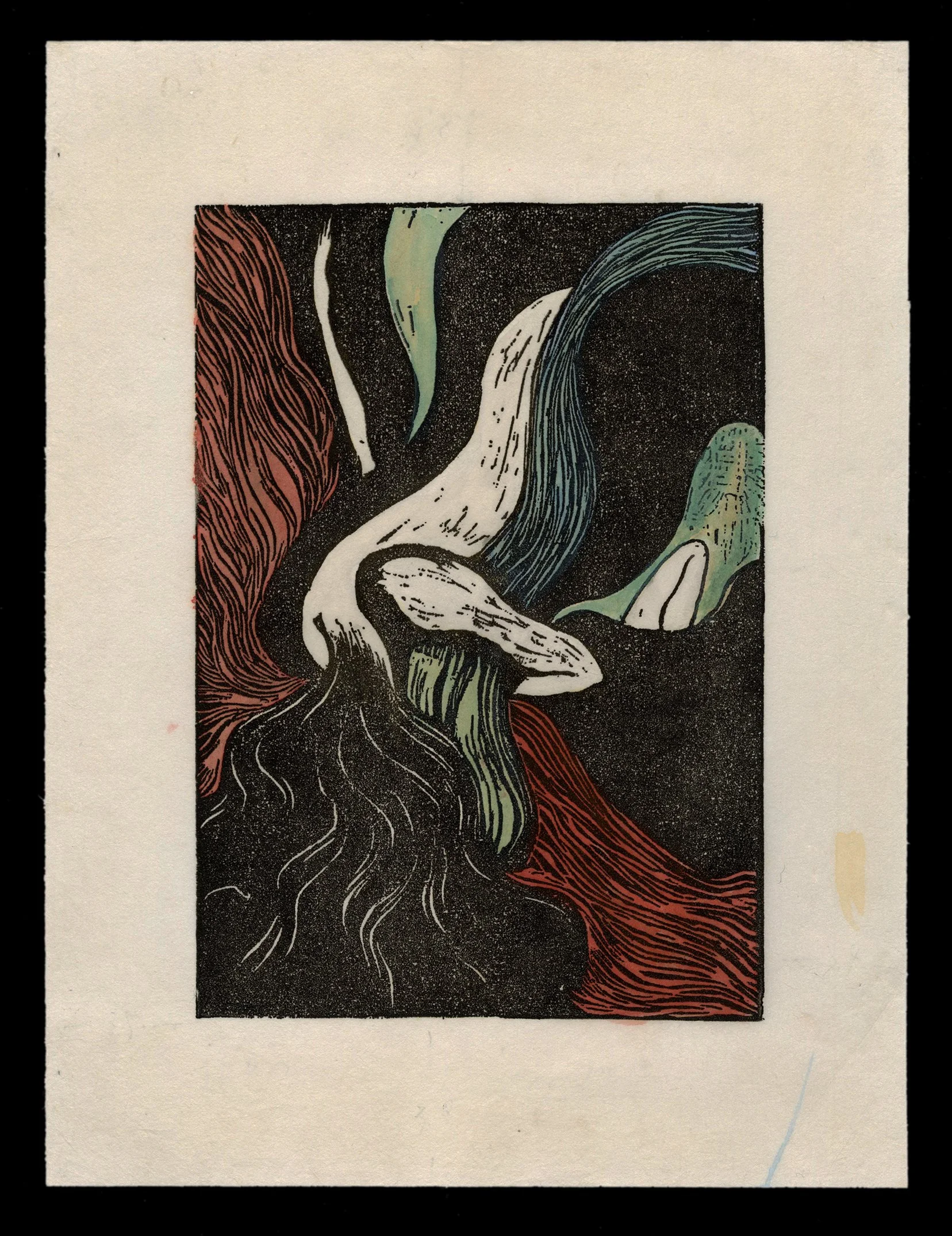
In this haunting and intensely expressive woodblock print, Kyokichi Tanaka captures the raw, symbolic power of a woman bathing, her long hair streaming into a river tinged with a blood-red hue. The composition twists and writhes with emotional urgency, the figure's body fragmented into flowing, almost abstracted forms against a dense black field—the scene is less a portrait than a vision — an elegy carved into wood and ink. Against a dense, brooding ground, her form dissolves into a storm of twisting lines and organic shapes, both intimate and otherworldly. The river’s blood-red swell stains the quiet act of bathing with undercurrents of violence, memory, and inevitable loss.
Executed in 1914, the year before the final year of Tanaka’s short life, the print vibrates with the tension of youth, mortality, and transformation. His stylized treatment of the female form and the stark emotional tone reflect the heavy influence of German Expressionism, particularly the psychological rawness found in the work of Edvard Munch.
Tanaka was a central figure in the early Sosaku Hanga ("creative print") movement, collaborating with Onchi Koshiro and Fujimori Shizuo to produce the pioneering art-and-poetry magazine Tsukuhae ("Moonglow"). Works from this ephemeral publication embodied a radical new spirit, emphasizing individual emotional expression over technical refinement. Here, Tanaka channels personal vulnerability through the language of symbol and distortion, offering a glimpse into both his inner landscape and the broader aesthetic ferment of Taisho-era Japan. The river’s crimson tide may be read as a metaphor for the passage of life, the inevitability of loss, or the searing intensity of lived experience — themes profoundly resonant given Tanaka’s impending death from tuberculosis at the age of twenty-five.
Connoisseur's Note
This rare impression is a vital document of the birth of Japanese modernism, embodying the fusion of Western Expressionist influence and native Japanese sensibility that characterized the Tsukuhae generation. Tanaka’s mastery lies not in polished surfaces but in his raw conveyance of atmosphere and inner turmoil. Every carved line, every unexpected wash of color, serves to deepen the viewer's engagement with the emotional terrain he sought to navigate. This was not printmaking as craft — it was printmaking as a direct extension of the soul.
Impressions of Tanaka’s prints, especially those associated with Tsukuhae, are exceedingly scarce, and their importance cannot be overstated. They mark a foundational moment when Japanese artists, looking inward even as they gazed outward to Europe, reshaped the identity of printmaking into a medium of personal voice and existential reflection. This poignant, powerfully charged image remains a testament to Tanaka’s brief but brilliant flame within the history of modern Japanese art.