

 Image 1 of 1
Details
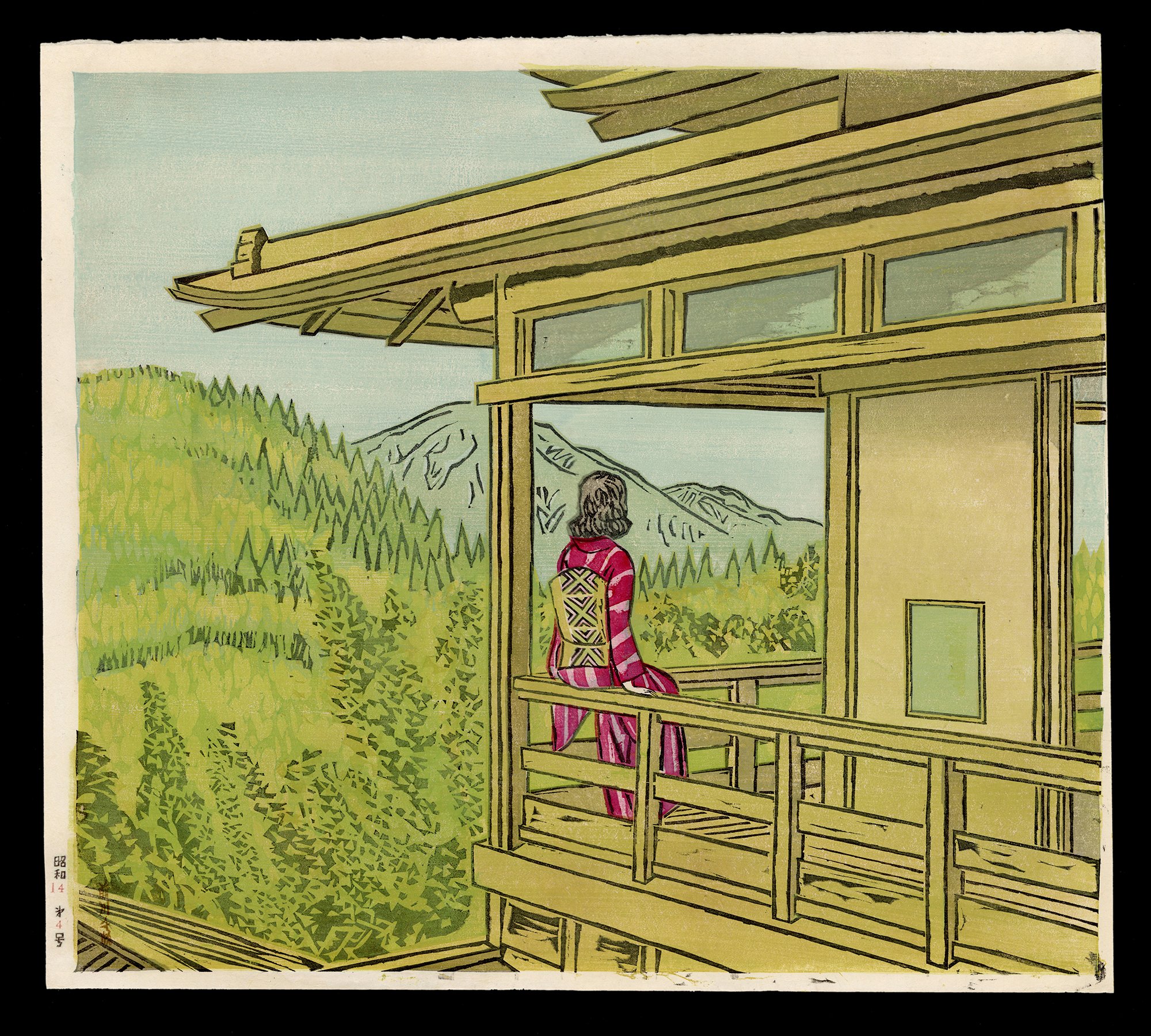
In Fresh Verdure, Maekawa Senpan captures the serene vitality of early summer in the Japanese countryside. Rolling hills, rendered in soft gradients of green, stretch beneath a luminous sky, while a meandering path invites the viewer into the tranquil landscape. The composition is both simple and evocative, reflecting Senpan’s ability to distill the essence of nature into harmonious forms and colors.
Senpan’s background as a cartoonist informs his distinctive style, characterized by bold outlines and a gentle humor. In this print, his lines delineate the landscape with clarity, while the subtle color palette conveys the freshness and renewal associated with the season. The work exemplifies the Sosaku Hanga movement’s emphasis on the artist’s personal vision and hand in every stage of printmaking.
Connoisseur's Note
Maekawa Senpan was a pivotal figure in the Sosaku Hanga ("creative prints") movement, which advocated for the artist’s direct involvement in the design, carving, and printing processes. His works often depict everyday scenes and landscapes, imbued with warmth and a touch of whimsy. Fresh Verdure, created in 1938, stands as a testament to his mature style, balancing compositional simplicity with emotional depth.
This print is part of Senpan’s broader exploration of rural Japan, a theme he revisited throughout his career. Collectors value Fresh Verdure for its embodiment of Sosaku Hanga principles and its reflection of Senpan’s unique artistic voice. The print’s serene imagery and masterful execution make it a cherished example of mid-20th-century Japanese woodblock art.

c. 1930
$3,500
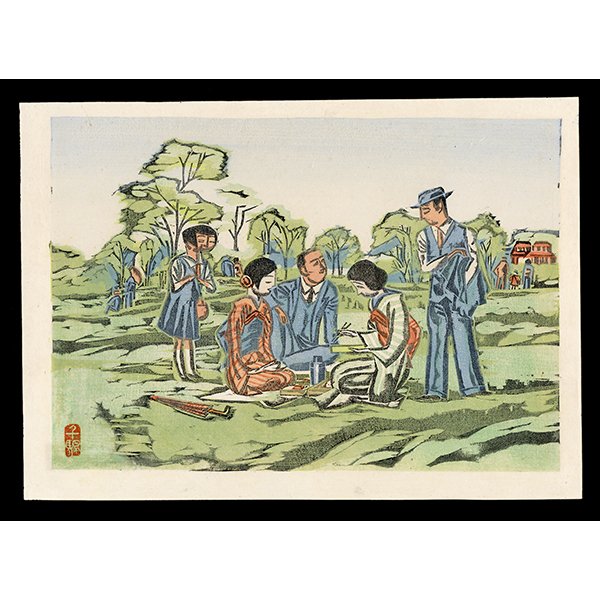
Tokyo Suburb
Maekawa Senpan (1888–1960)
MEDIUM: Woodblock print
DATE: c. 1930
DIMENSIONS: 10 1/4 x 14 5/8 inches
CONDITION: Excellent, no problems to note
$3,500.00