

 Image 1 of 1
Details
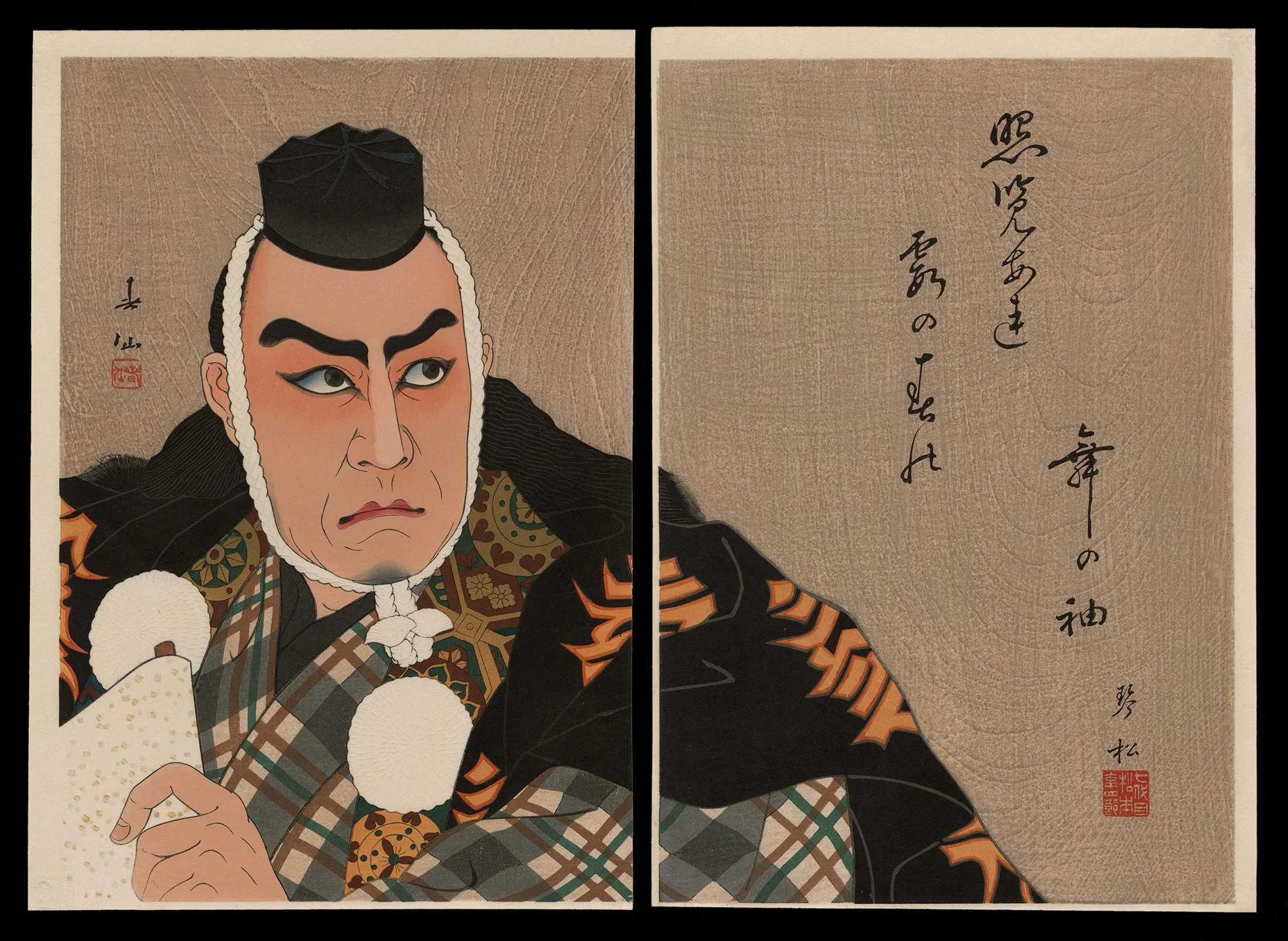
This commanding diptych by Natori Shunsen presents the renowned actor Matsumoto Koshiro VII in the role of Benkei, the warrior monk of Japanese legend. Created in 1935, the print is a pinnacle of Shunsen’s acclaimed yakusha-e (actor print) series, which revitalized the theatrical portraiture genre in the Showa era through his meticulous design and psychological depth. The subject—Benkei—was a famed retainer of the warrior Minamoto no Yoshitsune, a character of loyalty, ferocity, and tragic nobility deeply ingrained in Japanese folklore and stagecraft.
In this depiction, Shunsen isolates the actor in a moment of dramatic introspection. The face is rendered with bold planes and sharp shadows, the iconic mie pose frozen in woodblock form. The elaborate garment patterns—checkerboard, floral, and stylized flames—evoke not only the sumptuousness of kabuki costume but also the tension between discipline and emotional volatility within the character. The mica-laced background shimmers subtly, reinforcing Benkei’s ethereal yet forceful presence on stage.
Connoisseur's Note
Shunsen’s portraits are not simply actor likenesses—they are psychological studies rooted in the spirit of the No and Kabuki traditions. His collaboration with the legendary publisher Watanabe Shozaburo placed him at the forefront of the Shin-Hanga movement, which sought to blend traditional ukiyo-e techniques with modern sensibilities. This diptych stands among the most iconic from his oeuvre, embodying the ideal synthesis of dramatic tension and elegant restraint.
In this work, one also discerns a reverence for the aesthetic of yūgen—a sense of profound grace and mystery. Benkei, caught between violence and self-sacrifice, is rendered not with exaggerated bravado but with inner gravitas. The texture of the woodgrain background and the restrained color palette reflect the sabi ideal of subdued beauty. As a diptych, the composition’s rhythm flows from one panel to the next with deliberate asymmetry, emphasizing the tension between stillness and performance. It is not merely a record of a role, but a distilled moment in the spiritual drama of Japanese theatre.
More prints by Natori Shunsen: