

 Image 1 of 1
Details
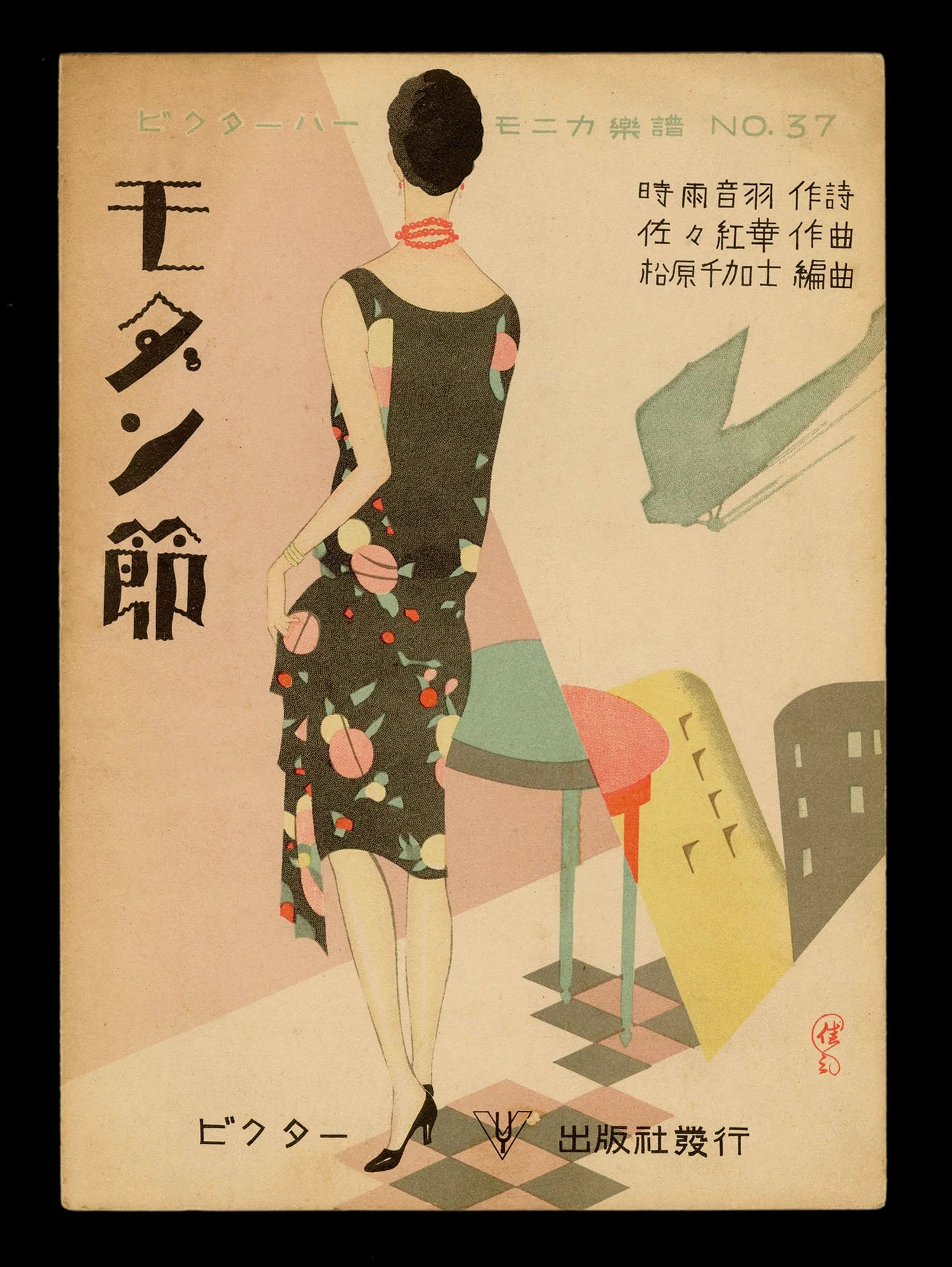
A solitary woman viewed from behind dominates this elegant composition. Her fashionable black dress, decorated with colorful circular motifs, drapes gracefully over a slender figure poised within a stylized interior. Beyond her, abstract architectural forms suggest a modern cityscape, while geometric floor patterns reinforce the Art Deco character of the design. The restrained palette of soft pinks, greens, and blacks creates a sophisticated atmosphere of quiet refinement.
The title invokes Shanghai, one of the most cosmopolitan cities in Asia during the interwar years and a place that occupied a powerful position within the Japanese imagination. Rather than depicting Shanghai directly, the artist evokes its reputation for glamour, nightlife, and international sophistication. The figure appears suspended between interior and exterior worlds, embodying the allure of distant urban modernity.
Connoisseur's Note
This cover demonstrates the fascination many Japanese audiences felt toward Shanghai as a symbol of modern cosmopolitan life. The elegant figure and refined setting transform the city into an idea as much as a place—a vision of style, luxury, and urban possibility.
As with many surviving sheet music covers from the period, the image reflects the extraordinary reach of printed music in Japan. With one of the highest music literacy rates in the world, Japanese audiences consumed songs through scores as readily as through recordings. These covers consequently became important vehicles for the dissemination of fashion, cultural trends, and visual ideals, preserving a vivid portrait of modern life during the early Shōwa era.