

 Image 1 of 1
Details
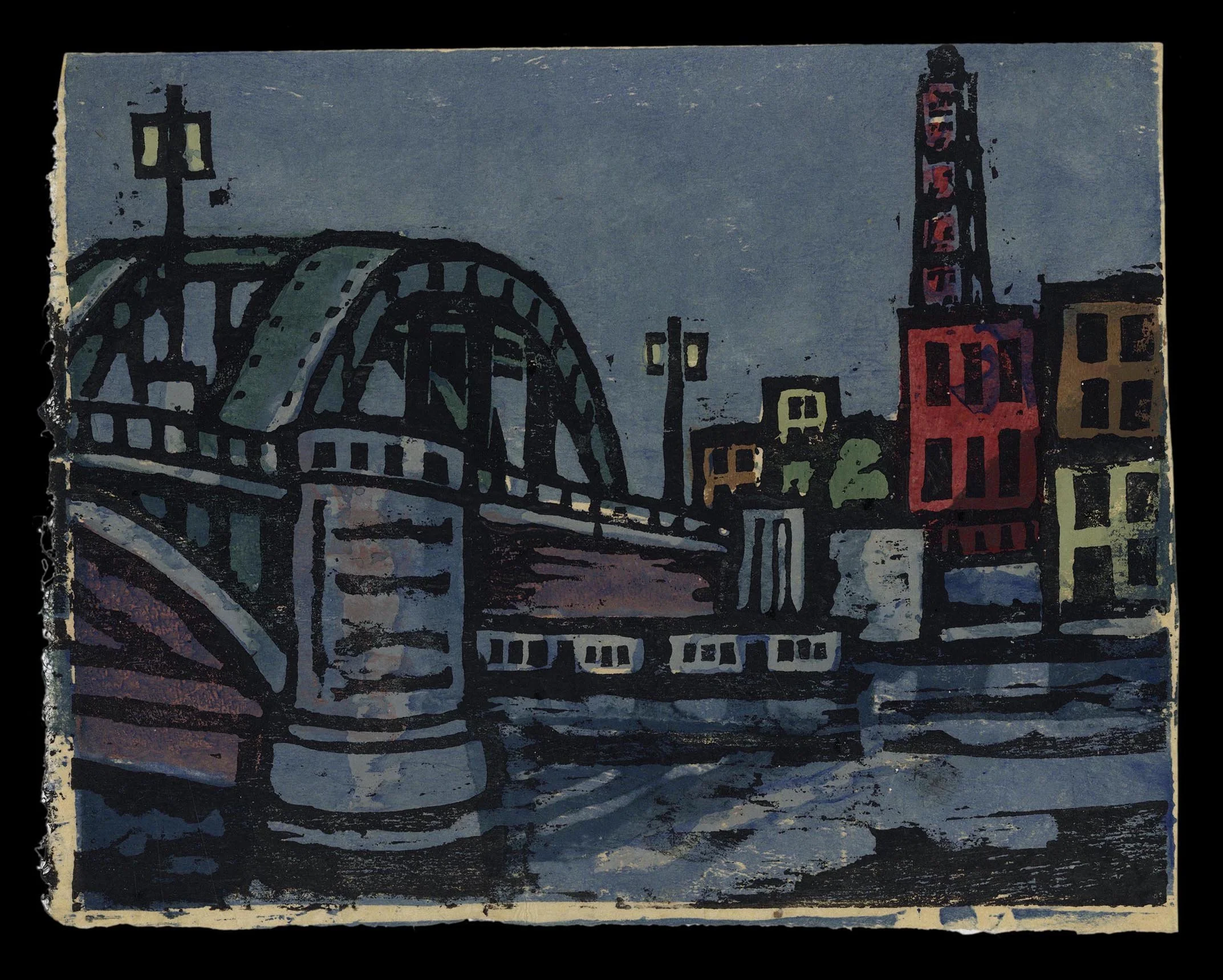
Executed in 1933, Komagata Bridge presents a compelling vision of modern Tokyo through the bold, expressive vocabulary of the sōsaku hanga movement. Ono depicts the steel arch of the bridge stretching powerfully across the Sumida River, surrounded by electric poles, riverside buildings, and industrial structures rendered in muted blues, violets, greys, and deep blacks. The water below reflects the fractured geometry of the bridge and city, creating a restless urban atmosphere charged with movement and modernity.
The composition reveals Ono’s fascination with the transformed landscape of post-earthquake Tokyo. Following the devastation of the Great Kantō Earthquake of 1923, the city underwent rapid reconstruction, producing new steel bridges, reinforced concrete buildings, electrical infrastructure, and modern transportation systems. Bridges such as Komagata became emblems of this rebuilt metropolis, symbolizing not only technological advancement but also the physical and psychological linking of old Edo neighborhoods with the expanding modern city.
Particularly significant is the artist’s focus on the horizontal monumentality of the bridge itself. Whereas Western modernism during the same period often celebrated the soaring verticality of skyscrapers as symbols of industrial progress, Japanese artists and architects frequently directed their attention toward bridges, railways, and infrastructural networks that stretched laterally across the urban environment. The steel bridge became a uniquely Japanese symbol of modernity—an elegant synthesis of engineering, movement, and civic reconstruction. Ono captures this sensibility beautifully, emphasizing the rhythmic span of the arch rather than overwhelming height.
Stylistically, the print embodies the expressive freedom central to sōsaku hanga. The carving remains intentionally rough and immediate, preserving the tactile presence of the artist’s hand. Rather than pursuing polished realism, Ono distills the city into simplified architectural masses and dynamic linear structures. The result is both deeply modern and emotionally atmospheric, conveying not simply the appearance of Tokyo, but the sensation of inhabiting a rapidly changing industrial world.
Connoisseur's Note
Komagata Bridge stands among the most important early urban works by Tadashige Ono, revealing the artist’s sophisticated engagement with modern metropolitan subject matter well before his later recognition. Prints from this formative period are exceedingly scarce and offer invaluable insight into the development of Japanese modernist printmaking during the early Shōwa era.
The work’s compositional structure demonstrates Ono’s remarkable sensitivity to industrial form and spatial rhythm. The bridge arches across the image with muscular solidity, yet the surrounding atmosphere remains quiet and contemplative. Rather than portraying the city as chaotic spectacle, Ono presents modern Tokyo as a place of layered stillness, reflection, and engineered beauty. Water, steel, smoke, and architecture merge into a unified urban poetry.
The print also occupies an important position within the broader context of Japanese modernism. During the 1920s and 1930s, many sōsaku hanga artists rejected nostalgic depictions of premodern Japan in favor of contemporary realities—factories, bridges, electric infrastructure, and rebuilt cityscapes. Ono’s treatment of Komagata Bridge exemplifies this shift perfectly. The bridge is not incidental background scenery but the very subject of modern life itself: a symbol of reconstruction, circulation, and technological optimism.
More prints by Tadashige Ono:
1934
$1,500
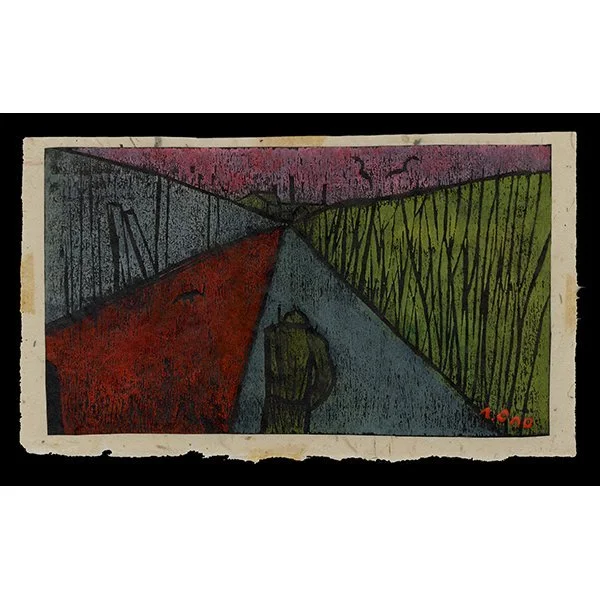
Factory District (Red Wall)
Tadashige Ono (1909–1990)
MEDIUM: Woodblock print
DATE: 1934
DIMENSIONS: 9 ¾ x 12 inches
CONDITION: Excellent, no problems to note
NOTE: Rare early work
LITERATURE: Complete Prints by Tadashige Ono, pl. 176
PROVENANCE: Ono Tadashige Museum
$1,500.00