

 Image 1 of 1
Details
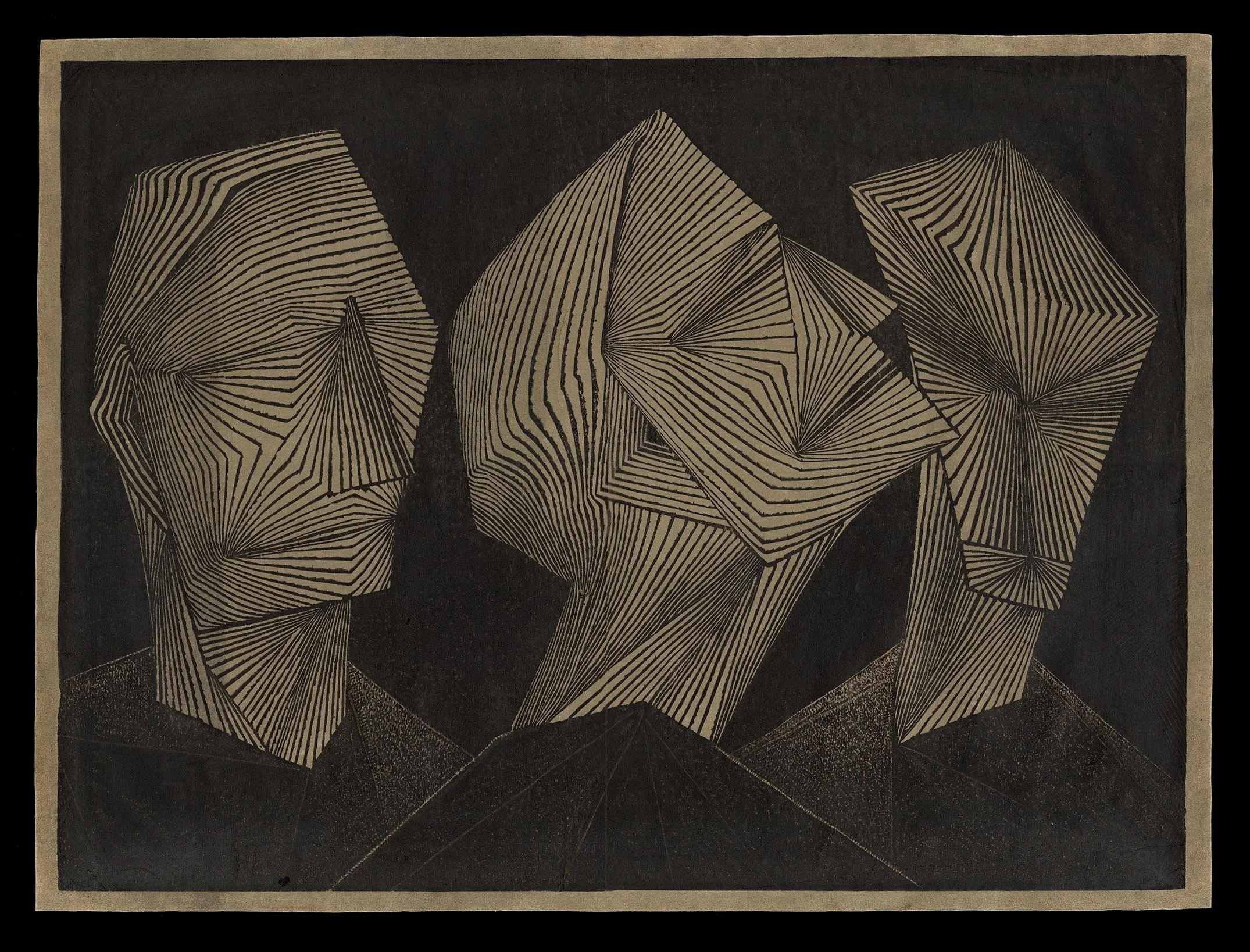
In this somber and contemplative early impression of Three Masks (Kamen 3), Tomio Kinoshita presents three abstracted figures composed entirely of fine black lines etched across a muted, stone-gray field. Without the vivid coloration of later impressions, these forms seem carved from shadow itself, evoking the deep, ritualistic spirit of traditional Japanese masks. In Japan, masks have long served as vessels of transformation — from the sacred performances of Noh, where actors embody spirits, gods, or archetypes, to village festivals where masks protect, conceal, and celebrate. Kinoshita’s fractured, shifting visages speak to this legacy: identity as a layered construct, ever-shifting yet anchored by ancient forms. The stripped-down palette heightens the sense of quiet intensity, offering a meditation on impermanence and hidden selves.
Connoisseur's Note
This rare early state of Three Masks (Kamen 3) predates the introduction of vibrant color, favoring a subdued monochromatic scheme that emphasizes Kinoshita’s masterful control of line, form, and spatial tension. The influence of Japanese theatrical traditions is palpable here, yet the abstraction is thoroughly modern — reflecting the Sosaku Hanga movement’s ethos of individual creative expression. Impressions of this state are particularly sought after by collectors for their quiet power and philosophical depth, embodying a bridge between Japan’s rich cultural inheritance and postwar artistic innovation.
1957
$2,000
Three Masks (Kamen 3)
Tomio Kinoshita (1923-2014)
DATE: 1957
MEDIUM: Woodblock Print
DIMENSIONS: 23 × 30 ¾ inches
CONDITION: Excellent impression; small flaws in paper from printing process
NOTE: Earliest black and white version of this design; first state and as is typical with no signature, date or edition; executed on poor quality paper as was the cause with his earliest b & w designs executed before Kinoshita was a professional artist; important historical work
$2,000.00
Contact us to purchase