

 Image 1 of 1
Details
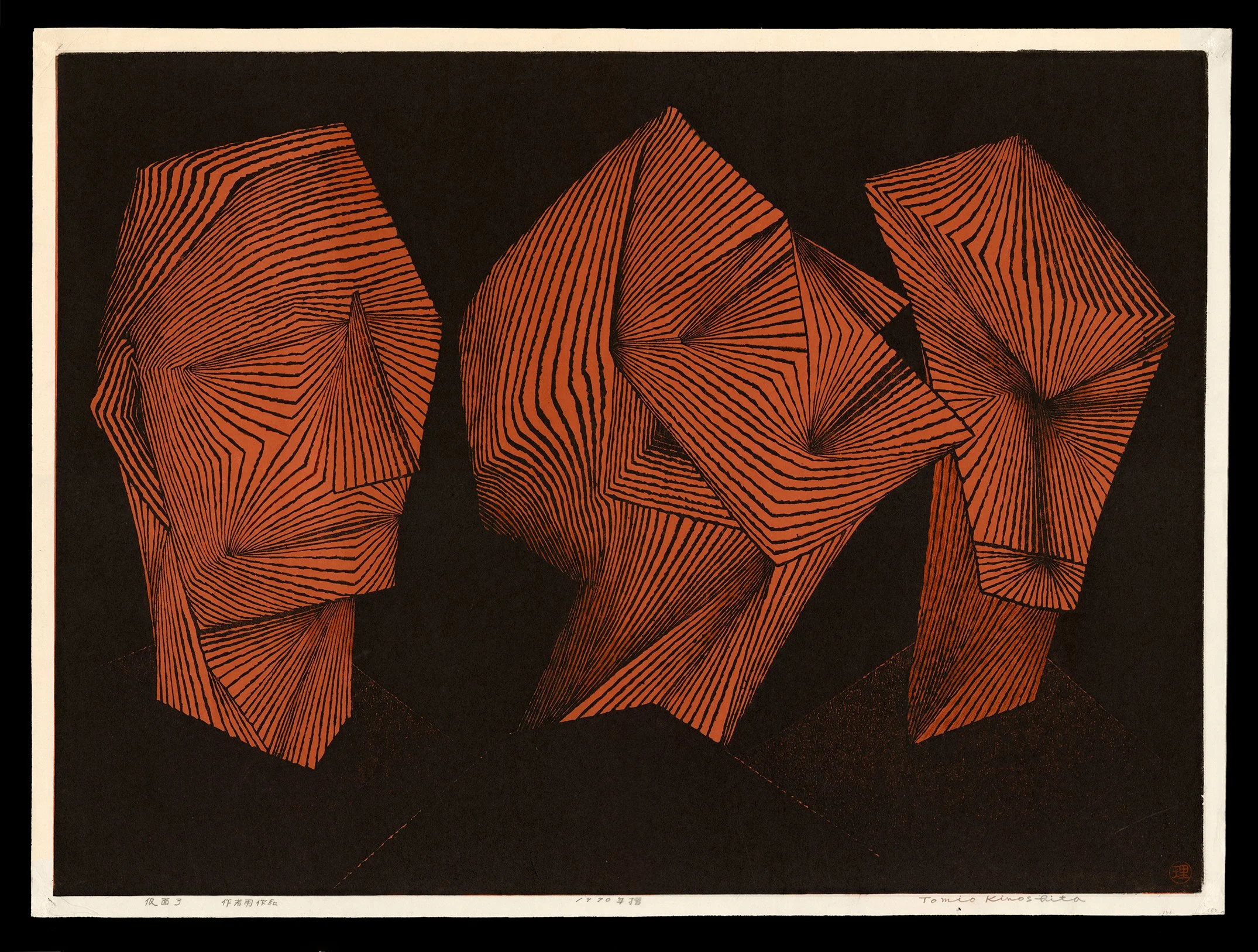
In this vivid impression of Three Masks (Kamen 3), Tomio Kinoshita summons three abstracted figures into striking existence through a lattice of rhythmic, angular lines, set ablaze by brilliant orange-red hues against a deep black void. The masks appear caught mid-transformation, their fractured planes suggesting the shifting nature of identity itself. In Japanese culture, masks (men) hold profound significance — from the solemn visages of Noh and Kyogen theater, embodying spirits, deities, or emotional states, to the folk traditions of kagura and seasonal festivals where masks serve as vessels bridging the human and the divine. Kinoshita’s masks seem to hover between these worlds: at once ancestral and modern, personal and universal. The dynamic coloration electrifies the forms, infusing the timeless tradition with the urgency of contemporary abstraction.
Connoisseur's Note
This later color state of Three Masks (Kamen 3) is especially prized for its vivid orange-red palette, a bold departure from the subdued monochrome of earlier versions (offered here). The brilliance of the color breathes energy and heat into the composition, emphasizing the fluid, unstable nature of the masks themselves — a meditation on the many faces we wear and the transformations we undergo. As a strong voice of the Sosaku Hanga movement, Kinoshita here captures the tension between permanence and flux, tradition and innovation. This rare impression stands as a compelling intersection of Japan’s rich theatrical heritage and the artist’s singular postwar modernist vision.
1957
$2,000
Three Masks (Kamen 3)
Tomio Kinoshita (1923-2014)
DATE: 1957
MEDIUM: Woodblock Print
DIMENSIONS: 23 × 30 ¾ inches
CONDITION: Excellent impression; small flaws in paper from printing process
NOTE: Earliest black and white version of this design; first state and as is typical with no signature, date or edition; executed on poor quality paper as was the cause with his earliest b & w designs executed before Kinoshita was a professional artist; important historical work
$2,000.00
Contact us to purchase