

 Image 1 of 1
Details
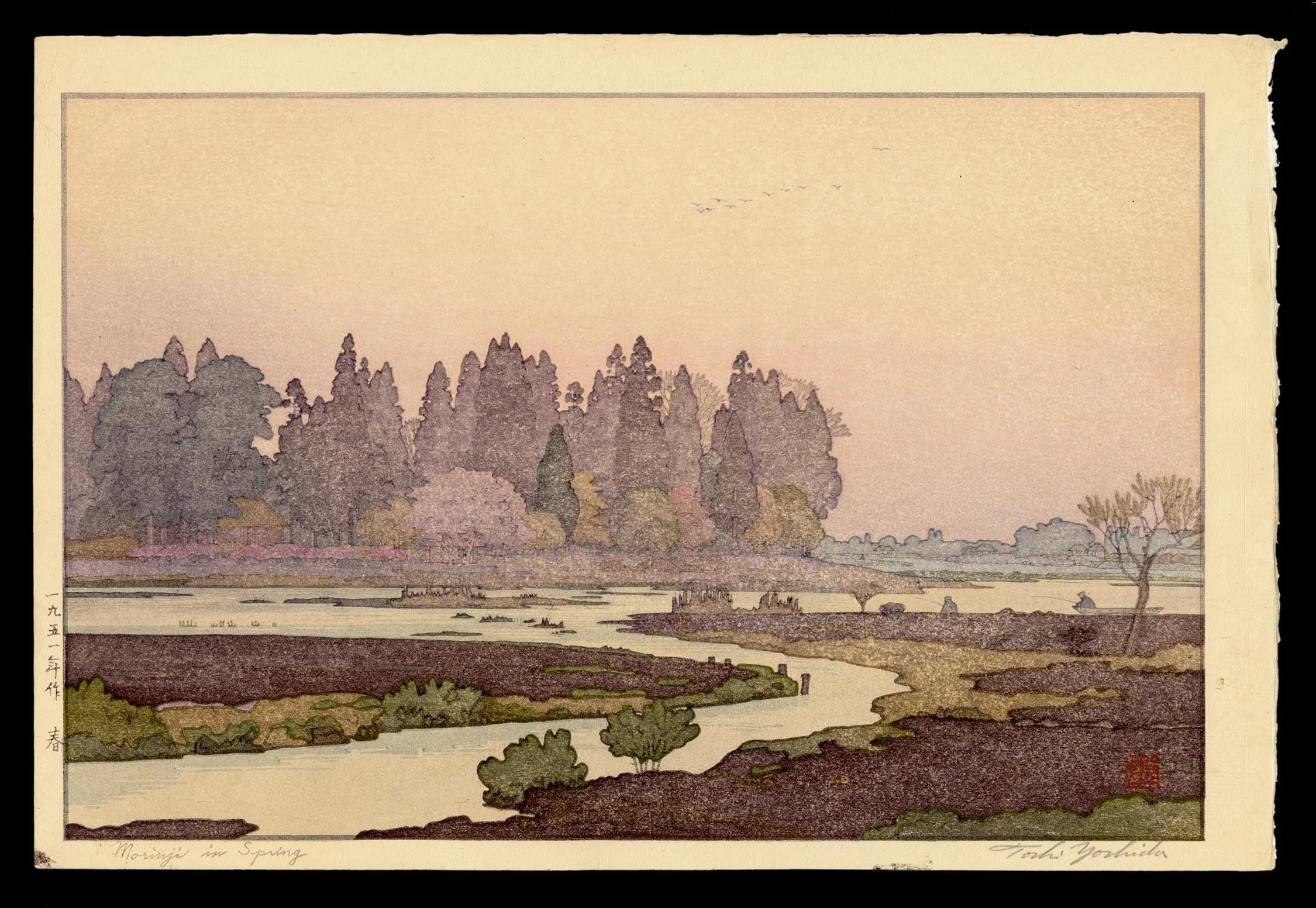
In Morinji in Spring, Toshi Yoshida captures the tranquil splendor of a sacred and storied site nestled in the lush greenery of Gunma Prefecture. The Morin-ji Temple, famed in folklore for its association with the shape-shifting tanuki (raccoon dog) of Japanese legend, becomes here not a stage for mythic drama but a gentle meditation on seasonal renewal and quiet reverence. Created in 1951, this woodblock print reflects Yoshida's mature synthesis of natural observation and compositional harmony, honed through years of both domestic and international travel.
Softly suffused in the diaphanous light of spring dawn, the scene reveals a murmuring stream that winds gently through the wetlands, bordered by tufts of new green and flowering trees in blush-pink bloom. A screen of cedar silhouettes—cool and serene—rises in the background, echoing the meditative rhythm of the Buddhist sanctuary that lies nestled within. Yoshida's palette is muted yet luminous, invoking shibui elegance—subtlety, restraint, and emotional depth. His skill in gradation (bokashi) evokes both atmosphere and impermanence, aligning the composition with the seasonal ethos of haru no aware—the gentle melancholy of spring.
Connoisseur's Note
Toshi Yoshida, the eldest son of Hiroshi Yoshida, inherited not only his father’s technical mastery but expanded the aesthetic vocabulary of the Shin-Hanga movement into the postwar period. This print belongs to a series of landscapes produced in the early 1950s that sought to reestablish a quiet harmony with nature after the tumult and trauma of World War II. Here, Yoshida’s voice is contemplative and painterly, marked by an almost haiku-like economy of means that renders the familiar both intimate and transcendent.
What distinguishes Morinji in Spring is its emotional stillness—a deliberate turning away from dramatized gesture or ornate detail in favor of inward attention. This restraint evokes the aesthetic of wabi, where beauty is found in simplicity, and the subdued mood allows the viewer to feel not only the freshness of new growth but also the centuries of spiritual quietude imbued in the temple’s grounds. The print is thus both a landscape and a silent offering—a reverent bow to the enduring dialogue between nature, history, and the unseen presences that dwell therein.
More prints by Toshi Yoshida:
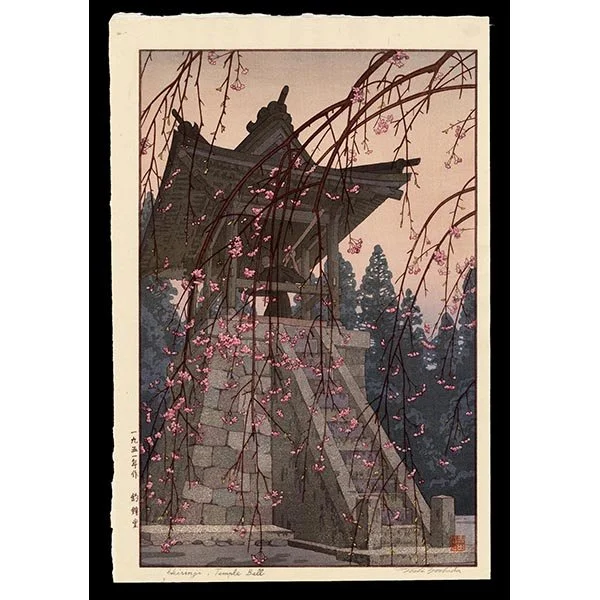

1946
$1,500
Ishiyama Temple
Toshi Yoshida (1911–1995)
DATE: 1946
MEDIUM: Woodblock Print
DIMENSIONS: 15 ½ x 10 ½ inches
CONDITION: Excellent impression and color; no problems to note
NOTE: Early lifetime impression—signed in pencil by the artist in the lower margin; rare color variant
$1,500.00
Contact us to purchase