

 Image 1 of 1
Details:
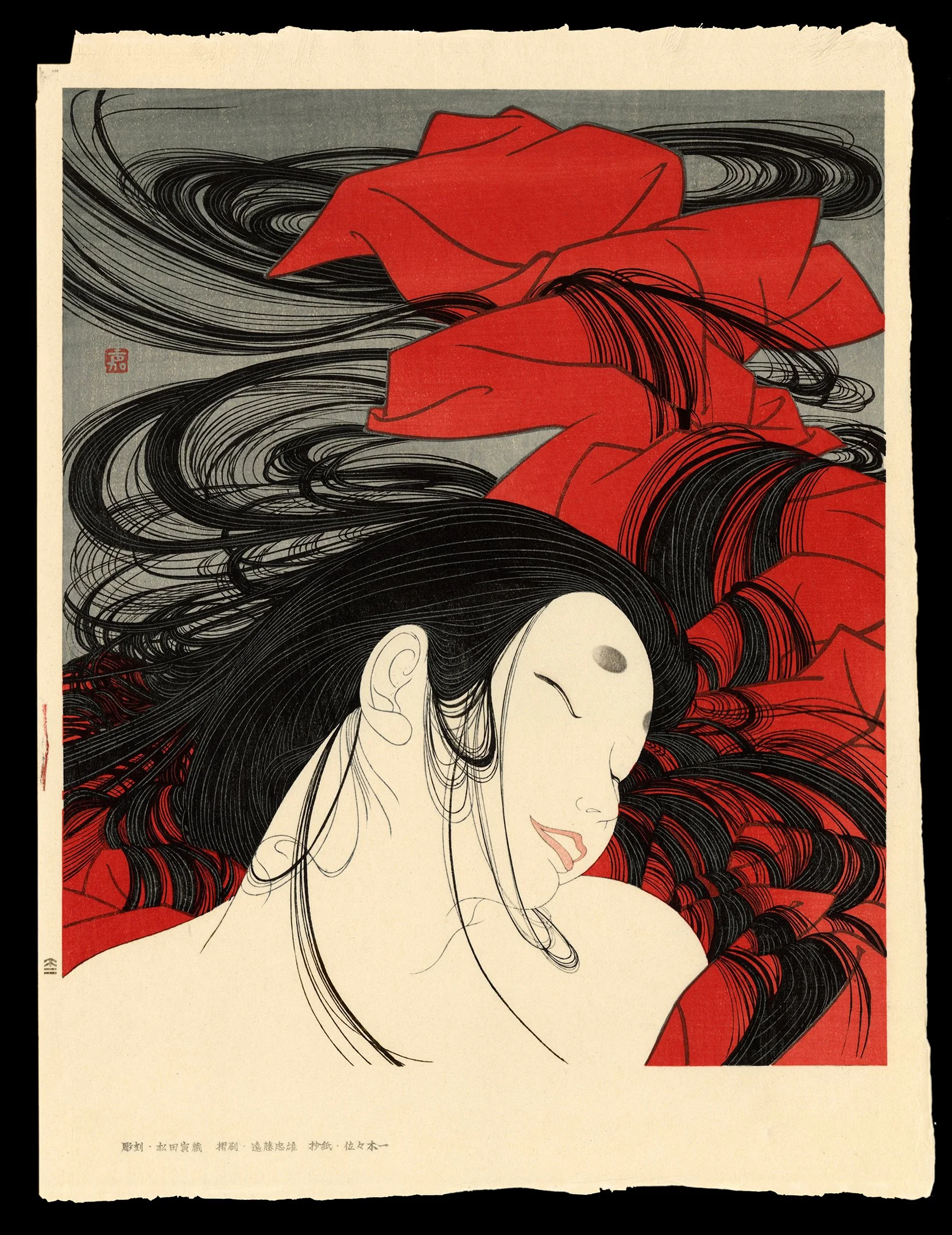
The Wind Through the Pines is one of Yoshio Okada’s most evocative designs from a series of prints inspired by The Tale of Genji, the classical 11th-century literary masterpiece by Murasaki Shikibu. In this elegant and emotionally charged composition, Okada reimagines a Genji heroine with modern verve—her hair unbound and swirling, her eyes closed in a moment of private emotion. The visual poetry of the scene reflects the deep interiority and longing that pervades the original text.
Rendered with sinuous black lines and bold sweeps of crimson, the composition breathes with both delicacy and drama. The woman’s serene, slightly parted lips and graceful posture hint at an atmosphere of intimacy and restrained sensuality. The background, filled with waves of flowing hair and fabric, evokes both the natural world and the emotional currents of Genji’s court—a realm of shifting alliances, fleeting beauty, and unspoken feeling. The reference to wind and pines, frequent poetic motifs in classical Japanese literature, adds further layers of symbolic resonance.
Connoisseur's Note
Yoshio Okada’s series interpreting The Tale of Genji blends the time-honored aesthetics of bijin-ga with the visual clarity and stylization of 20th-century graphic design. In The Wind Through the Pines, the influence of postwar Japanese pop art is visible in the bold contrast of colors and the minimal yet expressive linework. And yet, the emotional register remains rooted in Heian ideals—evanescence, refined sorrow, and the subtle tension between passion and decorum.
The slightly erotic undertone of the print is tastefully executed, suggesting rather than declaring. It is a sensuality in keeping with Genji’s world—a courtly gaze, restrained yet intimate, emotionally complex and visually distilled. Okada’s muse is not merely beautiful; she is a conduit of layered memory, one of Genji’s many women, perhaps, dreaming of love that passed like wind through the pines.
This print is a testament to Okada’s ability to reinterpret classical literature through a contemporary lens, while retaining the lyrical spirit of the source material. The masterpiece from his Genji series, it offers collectors a rare fusion of narrative, design, and timeless elegance.
1978
$2,800
The Wind Through the Pines
Yoshio Okada (Japanese, 20th Century)
SERIES: Scroll of the Tale of Genji
DATE: 1978
MEDIUM: Woodblock Print
DIMENSIONS: 13 ¼ x 11 1/8 inches
CONDITION: Excellent color and impression; No problems to note
NOTE: Published by Yuyu, complete with original folder
$2,800.00
Contact us to purchase