

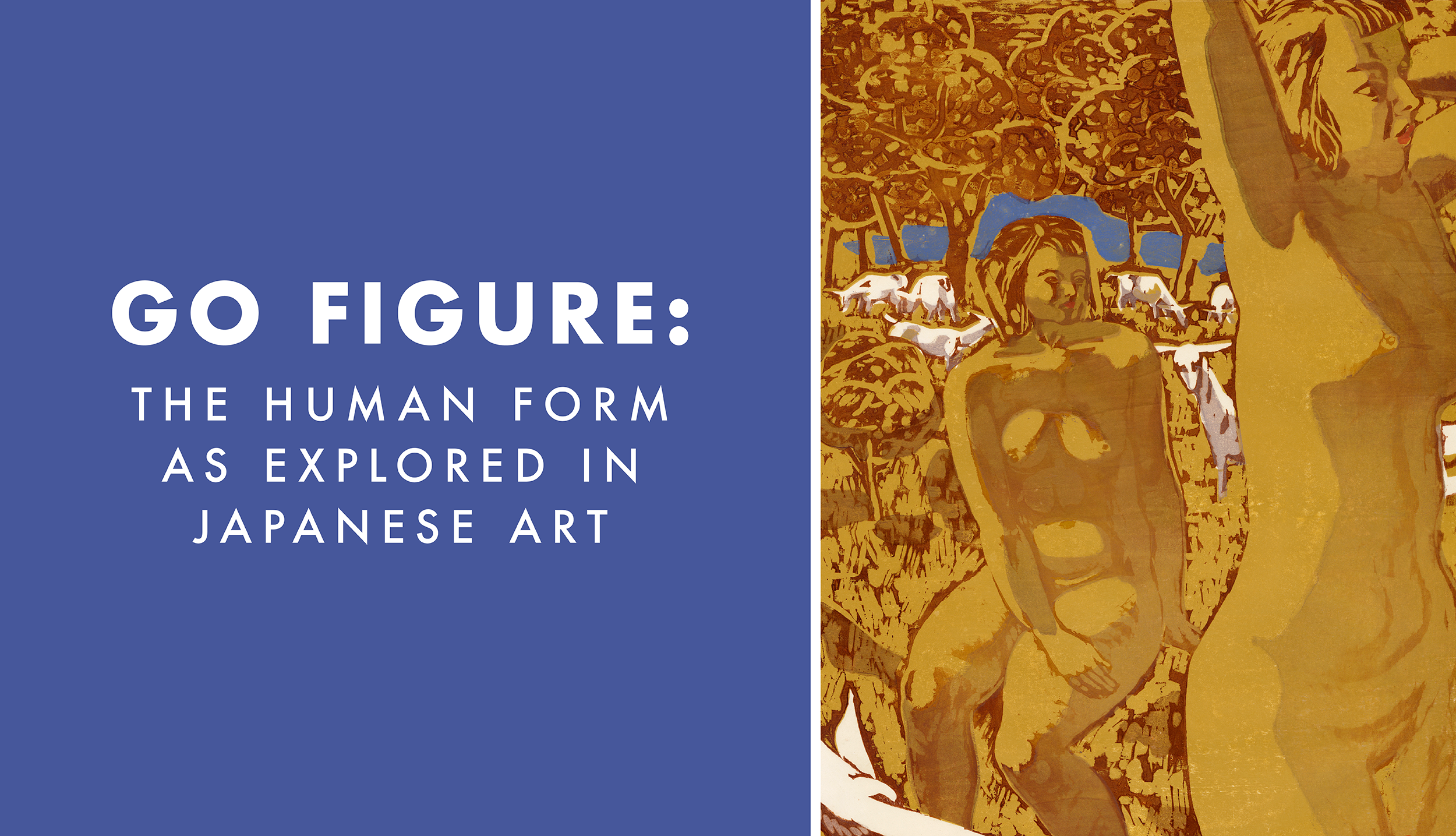
GO FIGURE
The Human Form in Japanese Art
The human form is at once the most familiar and inexhaustible of artistic subjects. A body may convey beauty, desire, strength, vulnerability, movement, character, or mortality; transformed by imagination, it can become theatrical, supernatural, or abstract. Through paintings, sculpture, and woodblock prints spanning centuries, this exhibition explores the remarkable ways Japanese artists have continually reconsidered the figure—and the seemingly limitless meanings the body can assume.
From the elegant conventions of ukiyo-e to the heightened realism of the Meiji period, the refined modernity of shin hanga, the expressive independence of sōsaku hanga, and the experimentation of contemporary art, the figure has remained a potent vehicle for artistic invention. It may embody idealized beauty, fashion, eroticism, theatrical drama, or everyday life; elsewhere it becomes portrait, actor, apparition, symbol, or pure form. Styles and techniques change dramatically, yet the fascination with the human presence remains constant.
Among the exhibition’s highlights is a painting by Katsushika Hokusai, whose lifelong fascination with movement and expression produced some of the most penetrating observations of the figure in Japanese art. In striking contrast, an extraordinary Meiji-period ghost painting on silk, rendered with unsettling realism, transforms the body into something unstable—recognizable yet otherworldly, suspended between physical presence and supernatural apparition. Together, these works suggest the extraordinary distance the figure can travel, from close observation to unfettered imagination.
The woodblock print extended these possibilities across successive generations. Shin hanga artists brought new intimacy and psychological refinement to portraiture, combining traditional elegance with modern approaches to light, modeling, and individual presence. Sōsaku hanga artists pushed further, simplifying, distorting, carving, and abstracting the body according to increasingly personal visions. In contemporary works, those boundaries become more fluid still, as the figure dissolves into line, color, gesture, and form, only to re-emerge in unexpected ways.
Seen together, these works reveal not a single tradition of depicting the body, but an evolving conversation about what the human form can express. Beauty and grotesquerie, sensuality and spirituality, humor and unease, physical presence and abstraction exist side by side. Across centuries of Japanese art, the figure remains endlessly mutable yet immediately recognizable—a reflection of the enduring impulse to look at ourselves and discover something new.
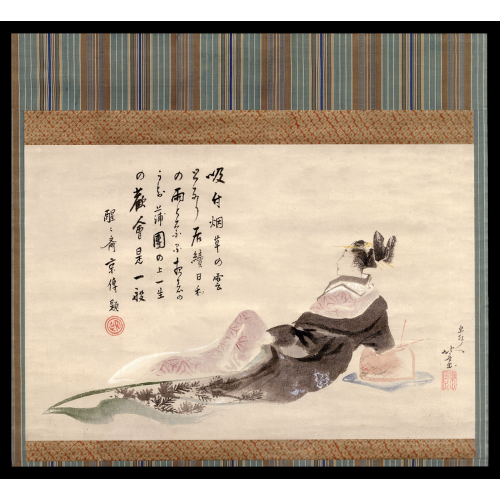
Reclining Courtesan Painting
Katsushika Hokusai (1760-1849)
MEDIUM: Pigment on paper
DATE: c.1802
DIMENSIONS: 11 5/8 x 17 5/8 (painting); 47 1/4 x 18 3/4 inches (with mount)
CONDITION: Excellent
NOTE: Sealed, Kimo Dasoku; Signed, Gakyojin Hokusai-ga
LITERATURE: See extensive publication list below
MEDIA: This work was discussed on Woodblock Wednesday, Episode 76
PROVENANCE: Upon Request
Price Upon Request
Contact us to purchase
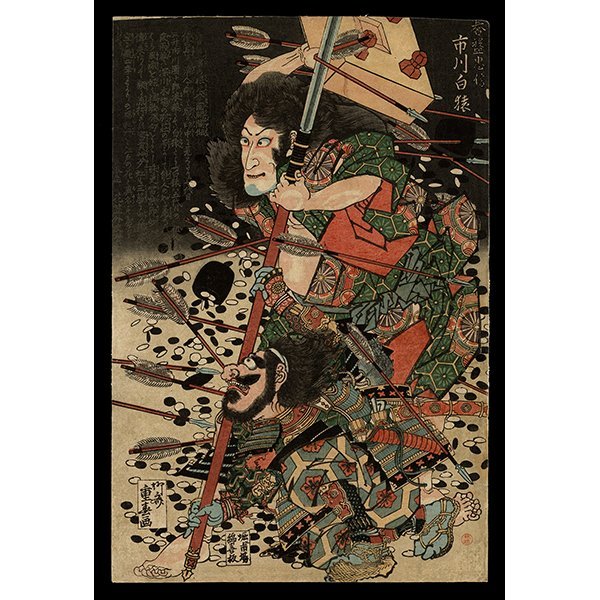
Ichikawa Hakuen II
Ryusai Shigeharu (active c. 1821-41)
MEDIUM: Woodblock Print
DATE: c.1830
DIMENSIONS: 15 x 10 inches
CONDITION: Excellent impression with the text at the upper left well preserved; very slight fading and minor trimming
PROVENANCE: The eminent ukiyo-e dealer Hayashi Tadamasa (1853-1906); small red circular Hayashi seal at lower right
$4,500.00
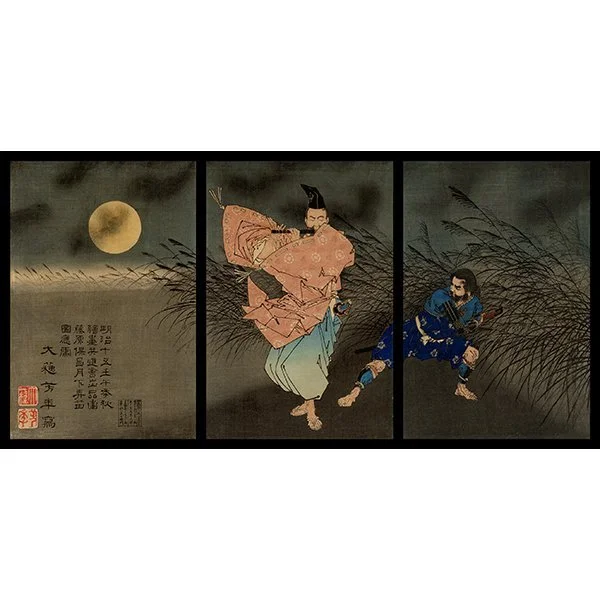
Yasumasa Playing The Flute by Moonlight
Tsukioka Yoshitoshi (1839-1892)
MEDIUM: Woodblock Print
DATE: 1883
DIMENSIONS: 13 3/4 x 29 1/4 inches; (13 3/4" x 9 3/4" each)
CONDITION: Original album backing, trimming to margins, otherwise in fine state of preservation
LITERATURE: Beauty and Violence, van den Ing, Schaap, Fig. 12.2. pg 43
SOLD
Contact us to purchase
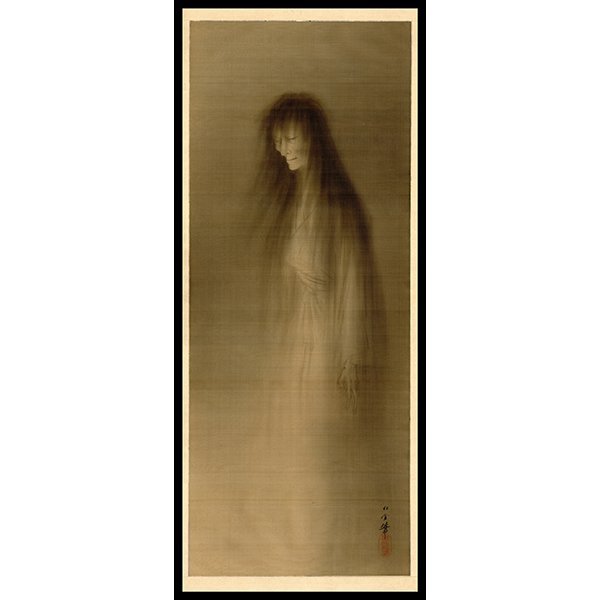
Ghost
Yukawa Shodo (1869-1955)
MEDIUM: Sumi pigment on silk with underpainting of gold
DATE: C. 1900
DIMENSIONS: 84 x 24 5/8 inches
CONDITION: No condition problems to note
MEDIA: This work was discussed on WBW episode 86
SOLD
Contact us to purchase
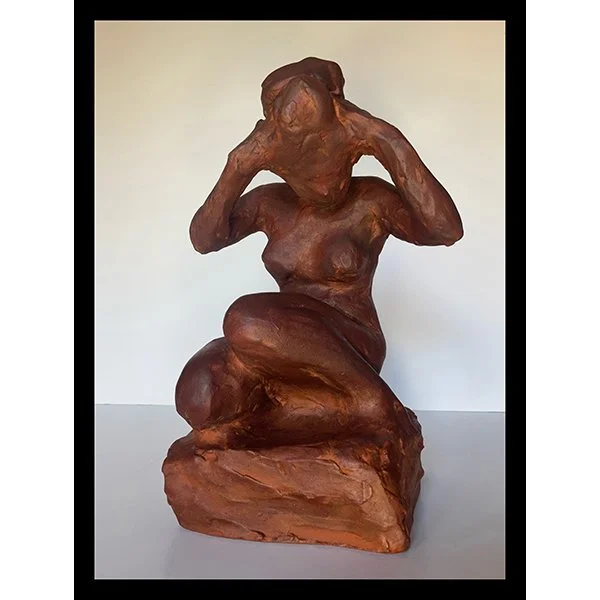
Nude
Ishikawa Toraji (1875-1964)
MEDIUM: Plaster and pigment
DATE: c. 1900
DIMENSIONS: 13.8 x 9.2 x 7.8 inches
CONDITION: Excellent
LITERATURE: Museum of Art Kochi, Toraji Ishikawa, 2002, pl. 236
SOLD
Contact us to purchase
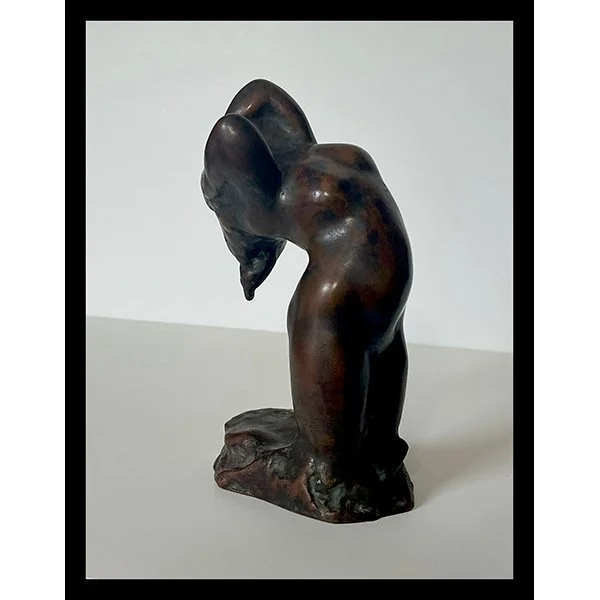
Cloudiness
Tobari Kogan (1882-1927)
MEDIUM: Cast Bronze
DATE: 1917
DIMENSIONS: 9.25 x 3.14 x 5.11 inches
CONDITION: Excellent
LITERATURE: Aichi Prefectural Museum of Art, Tobari Kogan and Modern Japanese Sculpture, 1994, pl. 20
SOLD
Contact us to purchase

A Rainy Night
Helen Hyde (1868-1919)
MEDIUM: Aquatint
DATE: 1906
DIMENSIONS: 14 1/2 x 9 inches
CONDITION: Excellent
LITERATURE: Mason, Tim, Helen Hyde (American Printmakers: A Smithsonian Series), pl.69
$1,500.00
Contact us to purchase
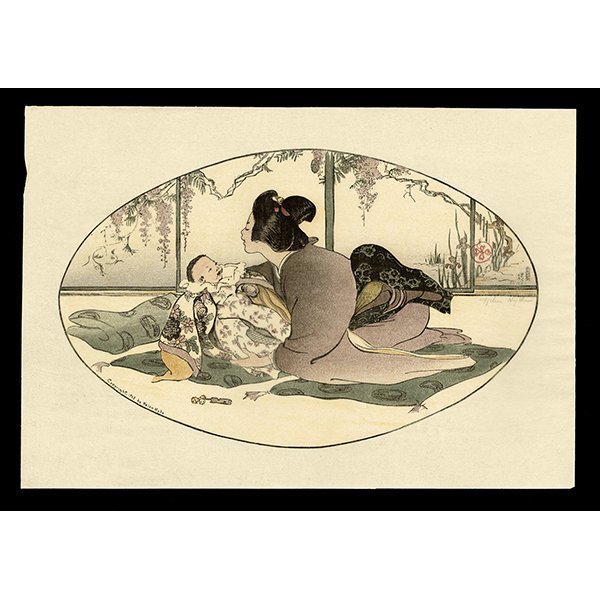
Baby Talk
Helen Hyde (1868-1919)
MEDIUM: Woodblock Print
DATE: 1908
DIMENSIONS: 9 x 12 inches
CONDITION: Excellent, faint wrinkling; tipped onto mat
LITERATURE: Mason, Tim, Helen Hyde (American Printmakers: A Smithsonian Series), pl.69
SOLD
Contact us to purchase
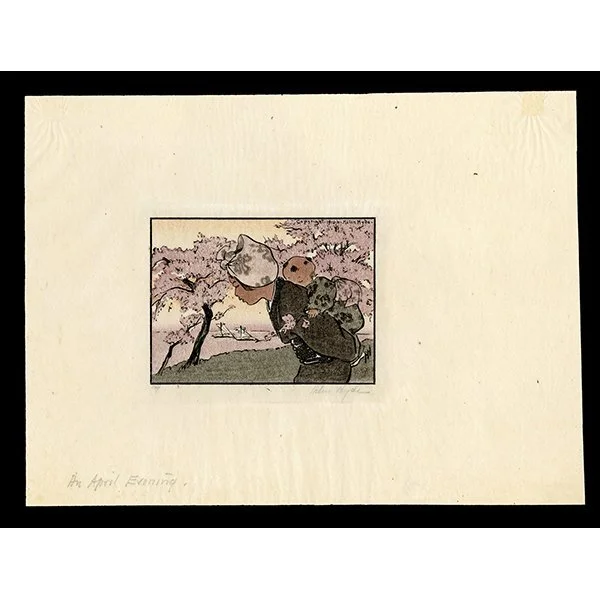
An April Evening
Helen Hyde (1868-1919)
MEDIUM: Woodblock Print
DATE: 1910
DIMENSIONS: 9 x 12 inches
CONDITION: Excellent, faint wrinkling; tipped onto a mat
LITERATURE: Mason, Tim, Helen Hyde (American Printmakers: A Smithsonian Series), pl.69
$750.00
Contact us to purchase
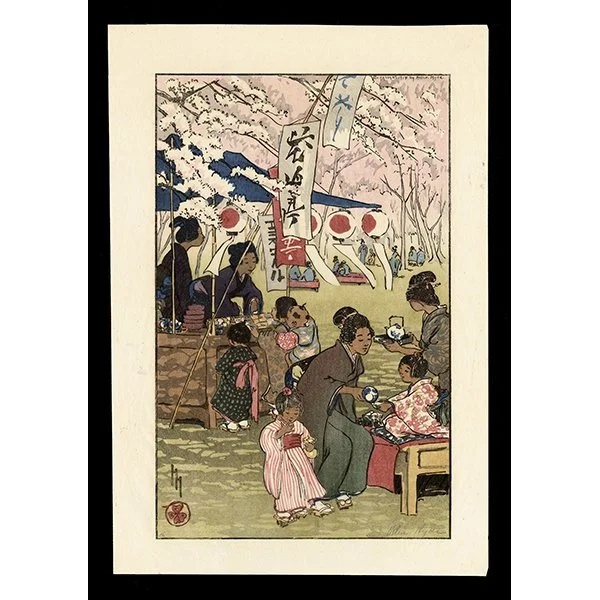
Blossom Time in Tokyo
Helen Hyde (1868-1919)
MEDIUM: Woodblock Print
DATE: 1914
DIMENSIONS: 19 x 13 inches
CONDITION: Excellent
LITERATURE: Mason, Tim, Helen Hyde (American Printmakers: A Smithsonian Series), pl.115
$2,000.00
Contact us to purchase
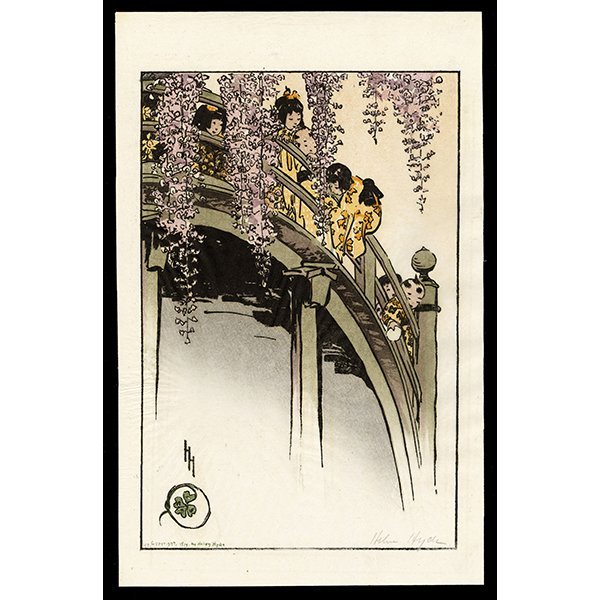
Moon Bridge at Kameido
Helen Hyde (1868-1919)
MEDIUM: Woodblock Print
DATE: 1914
DIMENSIONS: 16 x 10 inches
CONDITION: Excellent
LITERATURE: Mason, Tim, Helen Hyde (American Printmakers: A Smithsonian Series), pl.115
SOLD
Contact us to purchase
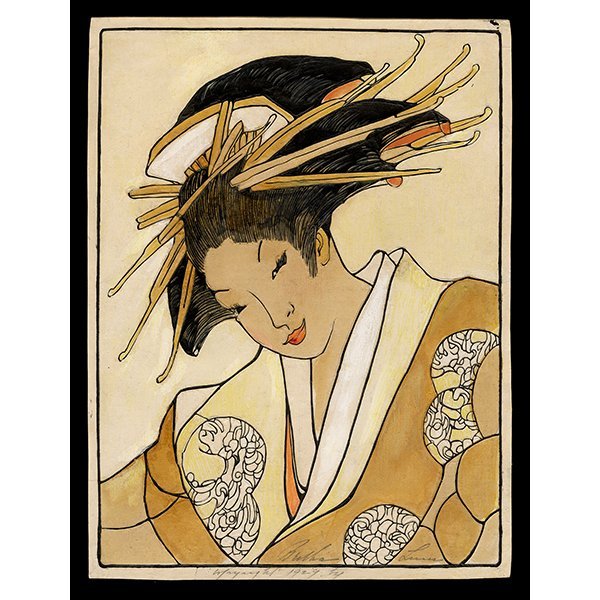
Geisha
Bertha Lum (1869-1954)
MEDIUM: Woodblock (raised line print)
DATE: 1924
DIMENSIONS: 15 7/8 x 12
CONDITION: Excellent, light tape stains on reverse
LITERATURE: Pulin, Carol, Gravalos, Mary Evans O'Keefe, Bertha Lum (American Printmakers: A Smithsonian Series)
$3,500.00
Contact us to purchase
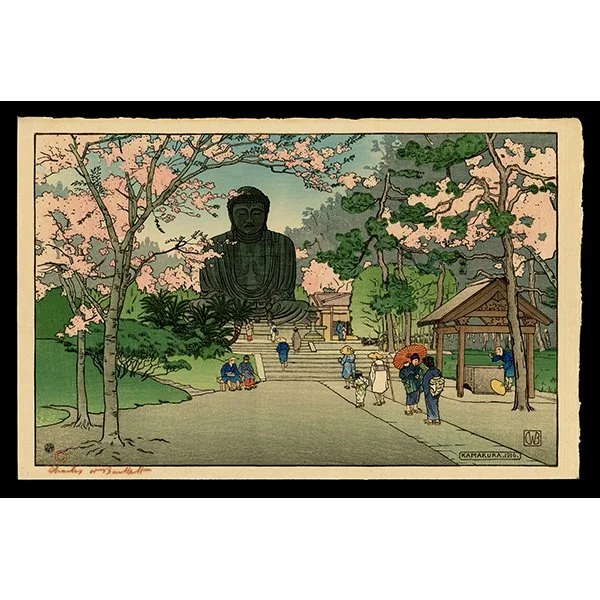
Kamakura
Charles Bartlett (1869-1940)
MEDIUM: Woodblock Print
DATE: 1916
DIMENSIONS: 9 7/8 x 15 1/8 inches
CONDITION: Excellent—no problems to note
LITERATURE: Honolulu Academy of Arts, A Printmaker in Paradise: The Art and Life of Charles Bartlett, pl. 36
NOTE: The circular red seal at the lower-left corner attests it is an early printing of the design.
SOLD
Contact us to purchase
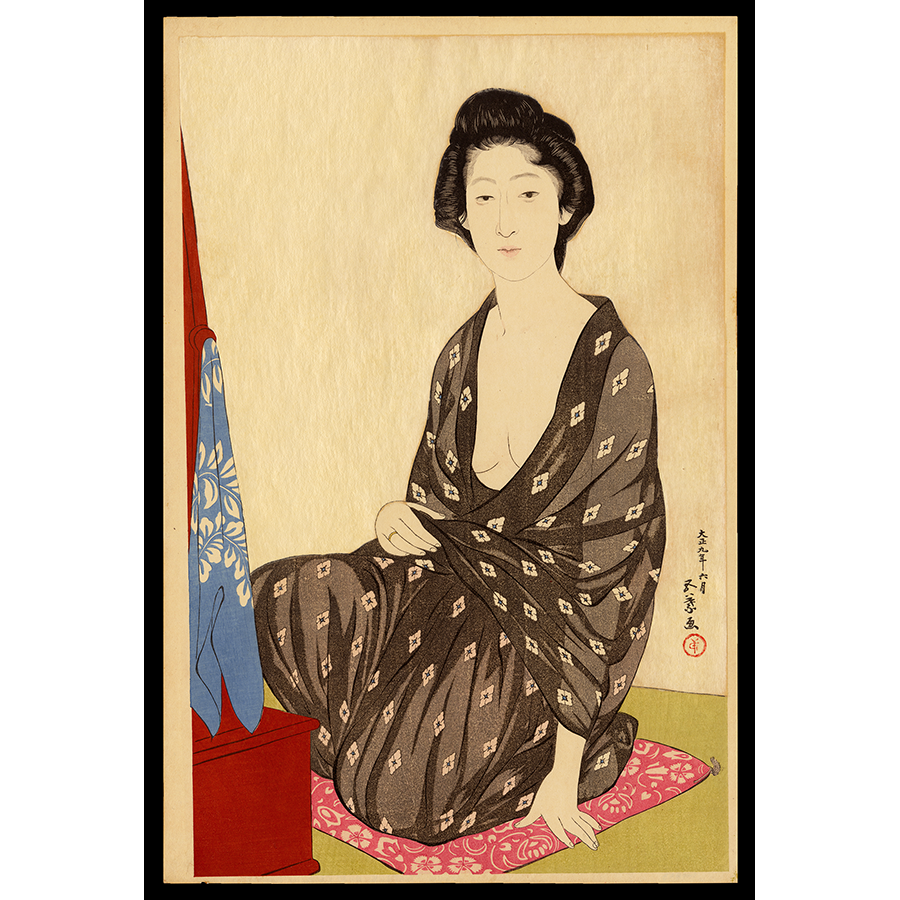
Woman in Summer Garment
Hashiguchi Goyo (1880-1921)
MEDIUM: Woodblock Print
DATE: 1920
DIMENSIONS: 18 x 11 3/4 inches
CONDITION: Excellent
NOTE: Early work published during artist’s lifetime; silver mica over bronze color background
LITERATURE: Hashiguchi Goyo: Women of the Taisho Era, Limited Edition Luxury Prints, 1989
$25,000.00
Contact us to purchase
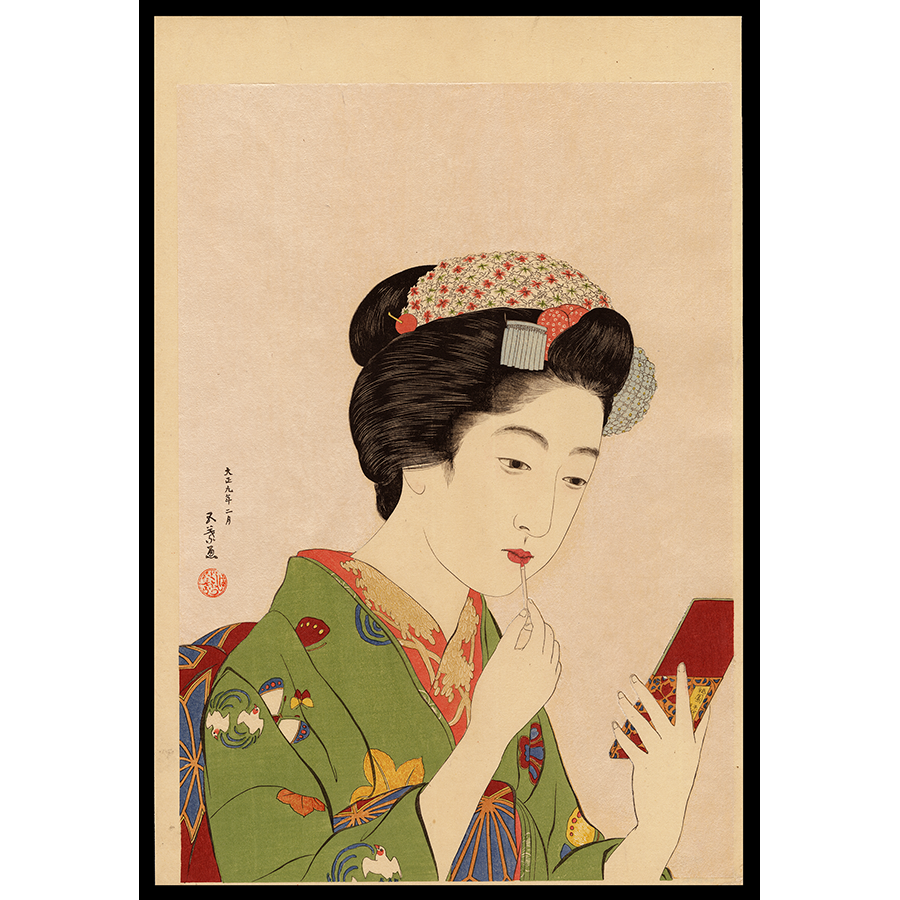
Woman Holding Lipstick
Hashiguchi Goyo (1880-1921)
MEDIUM: Woodblock Print
DATE: 1920
DIMENSIONS: 16 5/8 x 11 1/4 inches
CONDITION: Excellent
NOTE: Early work published during artist’s lifetime; silver mica over background
LITERATURE: Hashiguchi Goyo: Women of the Taisho Era, Limited Edition Luxury Prints, 1989
$20,000.00
Contact us to purchase
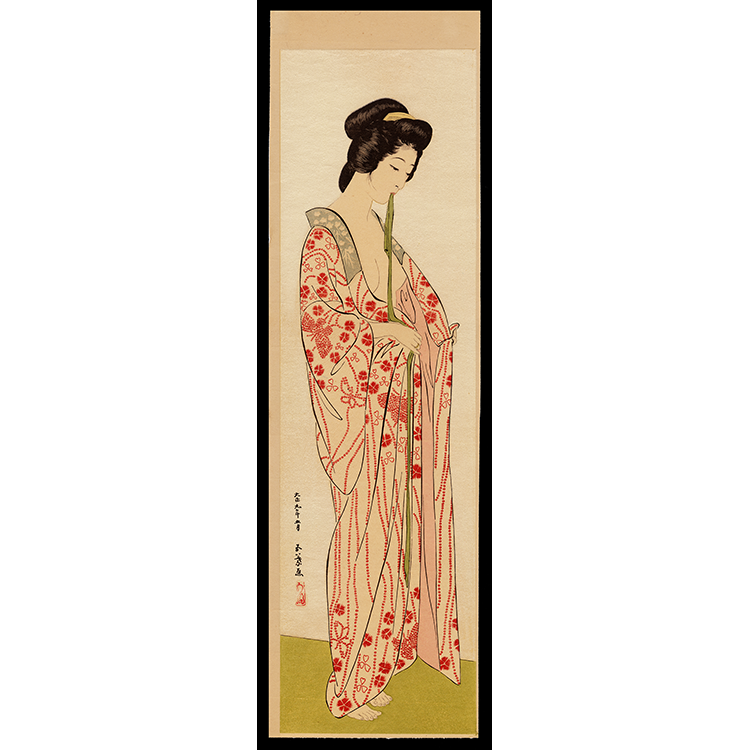
Beauty in Long Undergarment
Hashiguchi Goyo (1880-1921)
MEDIUM: Woodblock Print
DATE: 1920
DIMENSIONS: 19 1/2 x 5 3/4 inches
CONDITION: Excellent; faint toning to paper
NOTE: Early work published during artist’s lifetime; silver mica background
LITERATURE: Hashiguchi Goyo: Women of the Taisho Era, Limited Edition Luxury Prints, 1989
SOLD
Contact us to purchase
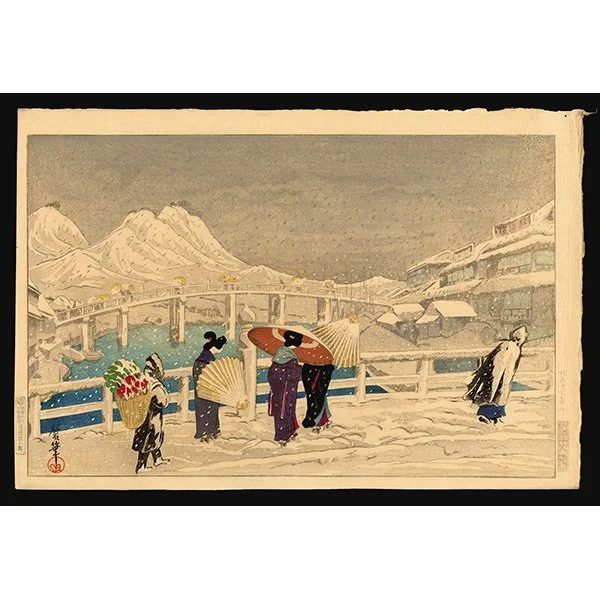
Snow on the Bridge Matsue
Kazuma Oda (1882-1956)
MEDIUM: Woodblock Print
DATE: 1924
DIMENSIONS: 10 1/2 x 15 1/2 inches
CONDITION: Excellent condition, no problems to note
NOTE: Watanabe D-Type seal, early impression
SOLD
Contact us to purchase

The Actor Kataoka Gado as Miyuki
Yoshikawa Kanpo (1894-1979)
MEDIUM: Woodblock Print
DATE: 1924
DIMENSIONS: 16 5/8 x 10 5/8 inches
CONDITION: Very minor losses to the mica at the right edge; otherwise in excellent condition
NOTE: Silver mica printed over bronze background
LITERATURE: Amy Reigle Stephens, gen. ed., The New Wave: Twentieth-century Japanese Prints from the Robert O. Muller Collection, 1993, pl. 216
$ 2,000.00
Contact us to purchase
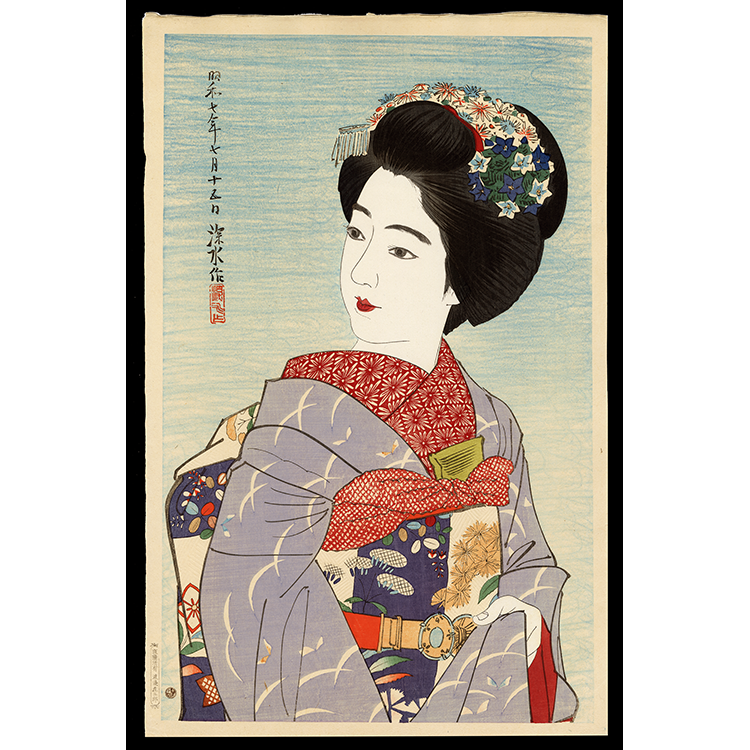
Maiko
Ito Shinsui (1898-1972)
MEDIUM: Woodblock Print
DATE: 1932
DIMENSIONS: 17 x 10 7/8 inches
PUBLISHER: Watanabe
CONDITION: Excellent; no problems to note
NOTE : 1st state
LITERATURE: Tadasu Watanabe, Ito Shinsui: All the Woodblock Prints, 1992, pl. 66
$5,000.00
Contact us to purchase
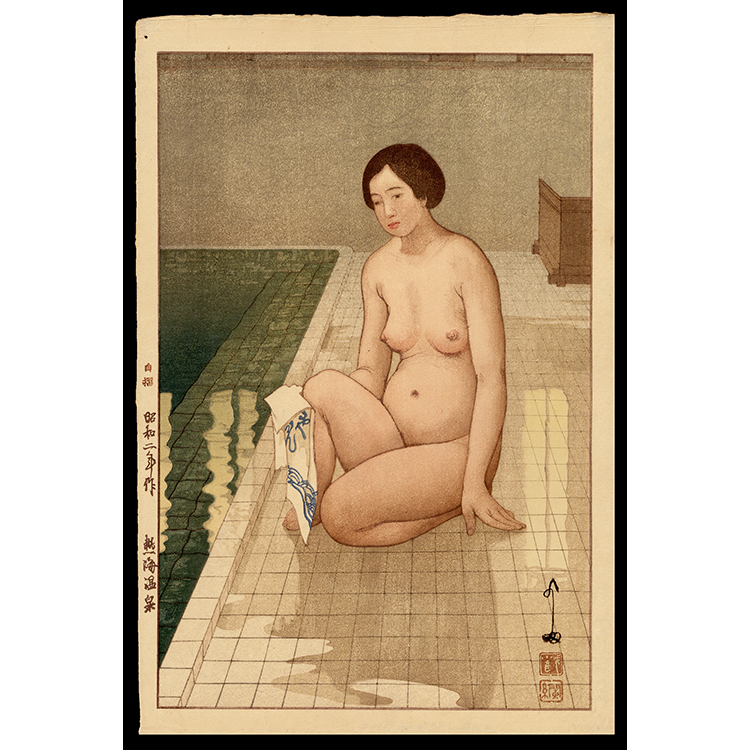
Atami Hot Spring
Hiroshi Yoshida (1876-1950)
DATE: 1927
MEDIUM: Woodblock Print
DIMENSIONS: 16 1/4 x 10 7/8 inches
CONDITION: Excellent, no condition problems to note
LITERATURE: Ogura, Yoshida Hiroshi Zenhangashu (The Complete Woodblock Prints of Hiroshi Yoshida), Abe Shuppan, Tokyo, 1987, pl. 95
PROVENANCE: Yoshida Family Collection
SOLD
Contact us to purchase
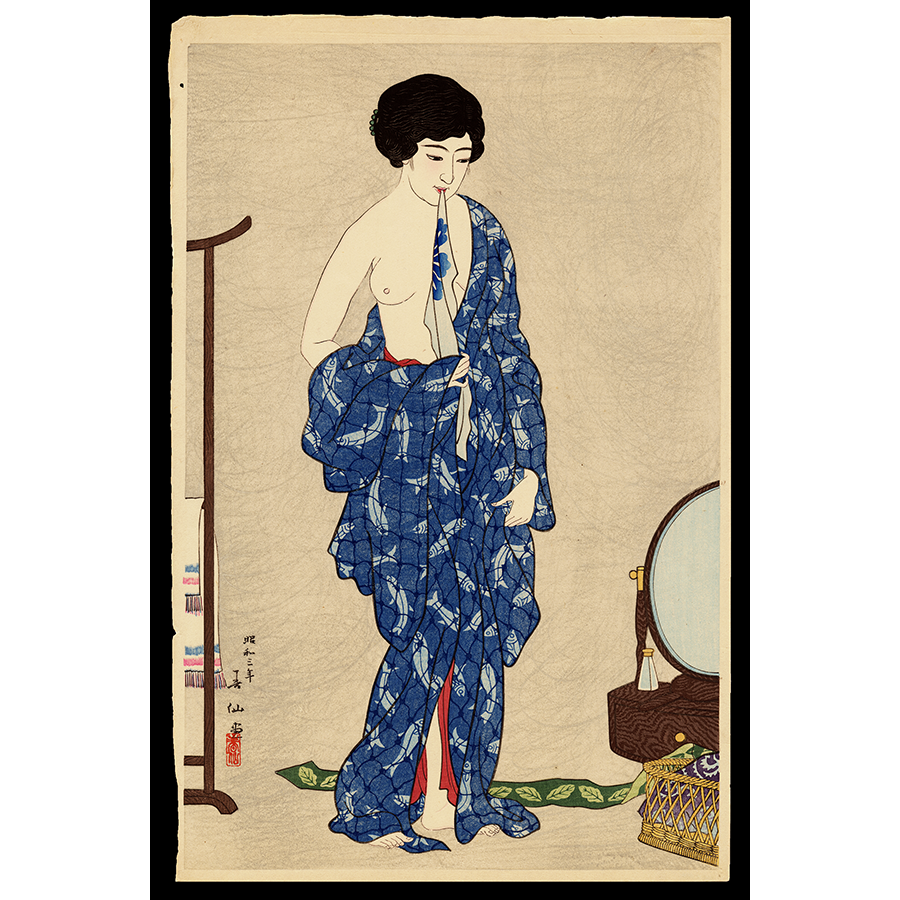
Woman Before A Mirror
Natori Shunsen (1886-1960)
MEDIUM: Woodblock Print
DATE: 1928
EDITION: 147/150
DIMENSIONS: 16 3/8 x 10 5/8 inches
CONDITION: No condition issues to note
LITERATURE: Yamaguchi Keizoro, Shunsen Natori Exhibition Catalogue, Kushigata, 1991, no. 87
NOTE: One of two nudes the artist produced—very scarce
SOLD
Contact us to purchase
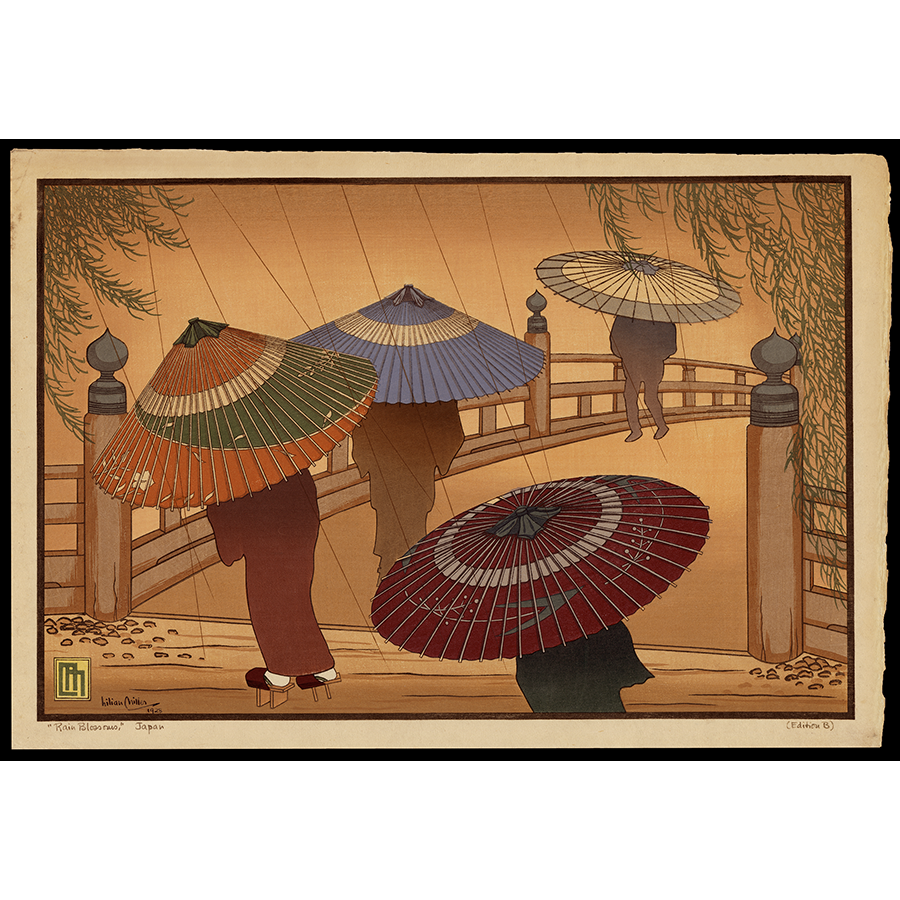
ARTIST: Lilian May Miller (1895-1943)
TITLE: Rain Blossoms Japan B
MEDIUM: Woodblock
DATE: 1928
DIMENSIONS: 10 3/4 x 15 3/4 inches
CONDITION: Minor printer’s smudges at top left; faint paper remnants on reverse top margin
LITERATURE: Brown, Ken,Pacific Asian Museum, Between Two Worlds: The Life and Art of Lilian May Miller, pl. 73
SOLD
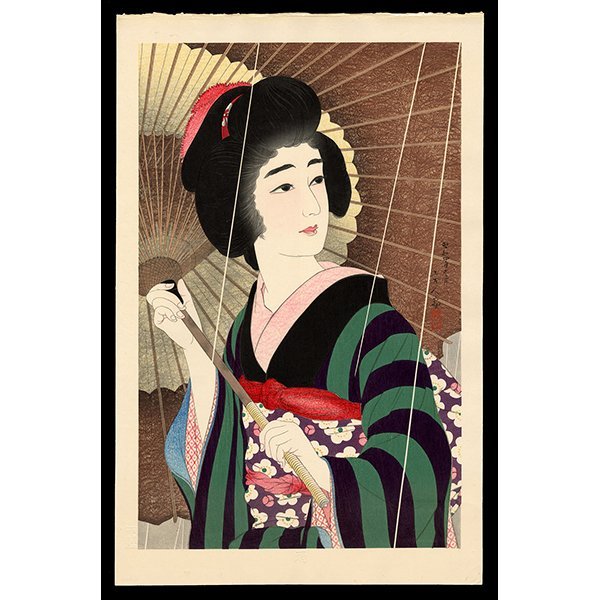
Ame (Rain)
Torii Kotondo (1900-1976)
MEDIUM: Woodblock print
DATE: 1929
DIMENSIONS: 18 1/4 x 11 /2 inches
LITERATURE: The Female Image, pl 172
CONDITION: Excellent condition, no problems to note
NOTE: Published by Kawaguchi & Sakai, numbered 54/200 on reverse
SOLD
Contact us to purchase
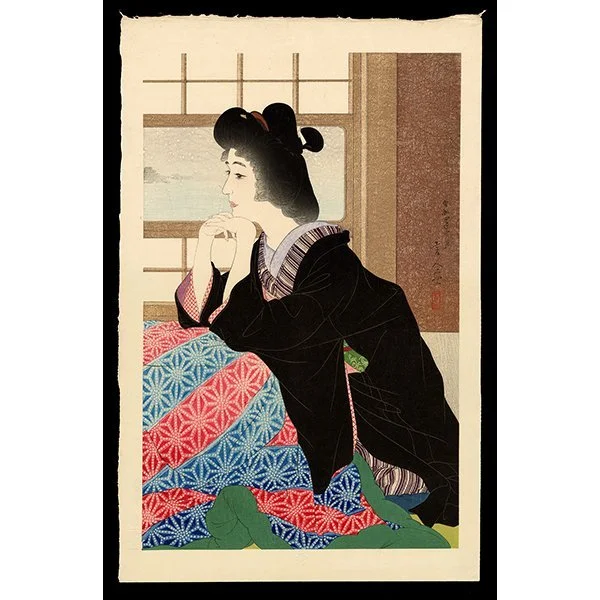
Yuki (Snow)
Torii Kotondo (1900-1976)
MEDIUM: Woodblock print
DATE: 1929
DIMENSIONS: 18 1/4 x 11 1/2inches
LITERATURE: The Female Image, pl 172
CONDITION: Excellent condition, no problems to note
NOTE: Published by Kawaguchi & Sakai, numbered 54/200 on reverse|
SOLD
Contact us to purchase
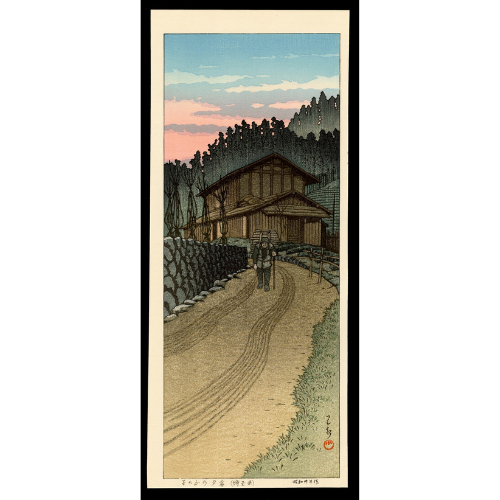
Sunset at Nenoyama
Kawase Hasui (1883-1957)
MEDIUM: Woodblock Print
DATE: 1955
DIMENSION: 19 1/4 x 8 1/4 inches
PUBLISHER: S. Watanabe Print Co.
CONDITION: Pristine
LITERATURE: Kendall H. Brown, Kawase Hasui: The Complete Woodblock Prints, 2003, pl.602
NOTE: Printed by Watanabe, hand-numbered 100/500 on reverse; comes with original folder
SOLD
Contact us to purchase
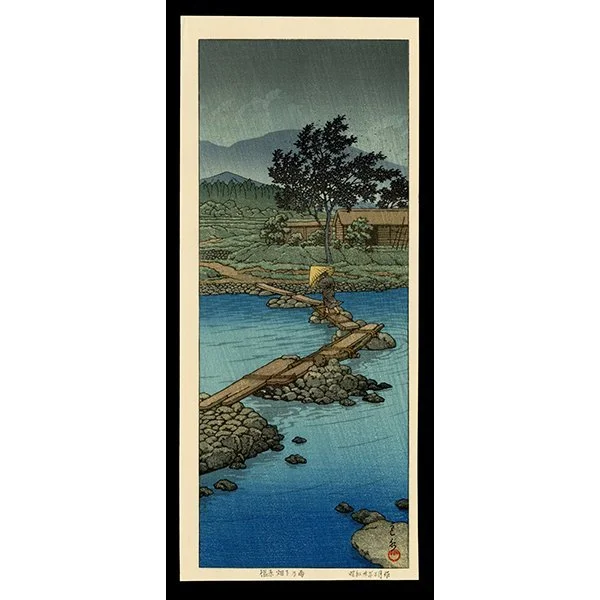
Sudden Rain at Shiobara Hatori
Kawase Hasui (1883-1957)
MEDIUM: Woodblock Print
DATE: 1955
DIMENSION: 19 1/4 x 8 1/4 inches
PUBLISHER: S. Watanabe Print Co.
CONDITION: Pristine
LITERATURE: Kendall H. Brown, Kawase Hasui: The Complete Woodblock Prints, 2003, pl. 601
NOTE: Printed by Watanabe, hand-numbered 100/500 on reverse; comes with original folder
SOLD
Contact us to purchase
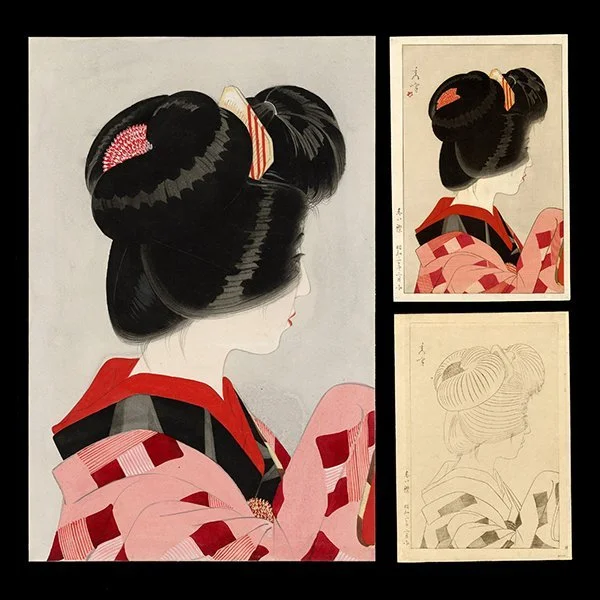
Red Collar (Finished print, keyblock, and original painting)
Yamakawa Shuho (1898-1944)
MEDIUM: Woodblock print, pigment on paper
DATE: 1930
DIMENSIONS: 5 3/8 x 10 1/2 inches
CONDITION: Excellent; no problems to note
Literature: The Female Image, pl. 154
SOLD
Contact us to purchase
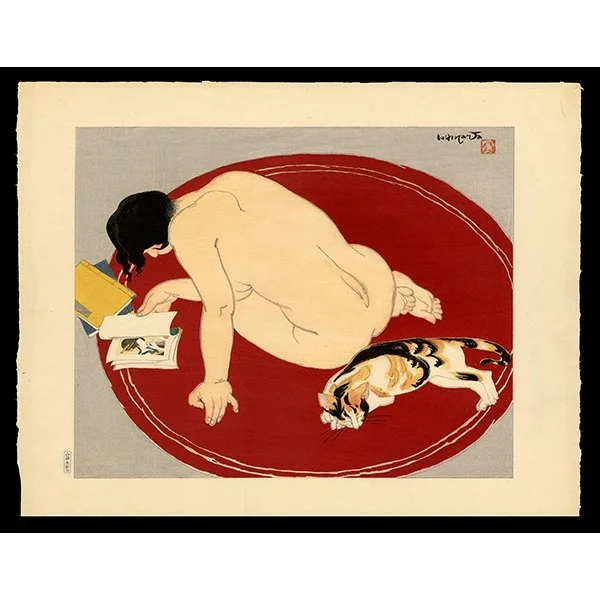
Bored
Ishikawa Toraji (1875-1964)
SERIES: Ten Types of Female Nudes
MEDIUM: Woodblock Print
DATE: 1935
DIMENSIONS: 14 3/4 x 19 1/4 inches
CONDITION: Excellent, no problems to note
LITERATURE: Hotei Publishing, Leiden, 2000, The Female Image 20th Century prints of Japanese Beauties, pl. 244
SOLD
Contact us to purchase
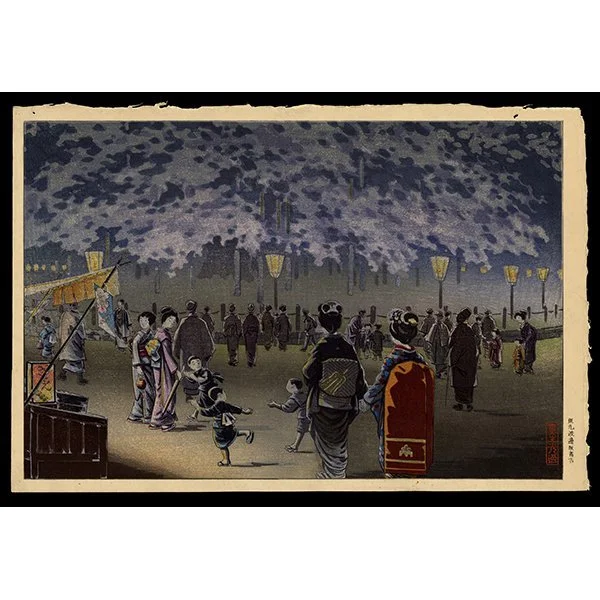
Evening Cherry Blossoms at Gion
Tsuchiya Koitsu (1870-1949)
MEDIUM: Woodblock print
DATE: 1932DIM
ENSIONS: 10 1/2 x 15 1/2 inches
CONDITION: Excellent; no problems to note
NOTES: Published by Watanabe; B-type seal at right margin
LITERATURE: Ross Walker and Toshikazu Doi, The Catalogue Raisonne of Tsuchiya Koitsu, 2008, p. 167, fig 4.3
SOLD
Contact us touch to purchase
1941
SOLD
Self-portrait
Kihei Sasajima (1906-1993)
EDITION: A.P.
MEDIUM: Woodblock Print
DATE: 1955
DIMENSIONS: 10 1/4 x 8 inches
CONDITION: No condition problems to note
SOLD
Contact us to purchase