

 Image 1 of 1
Details
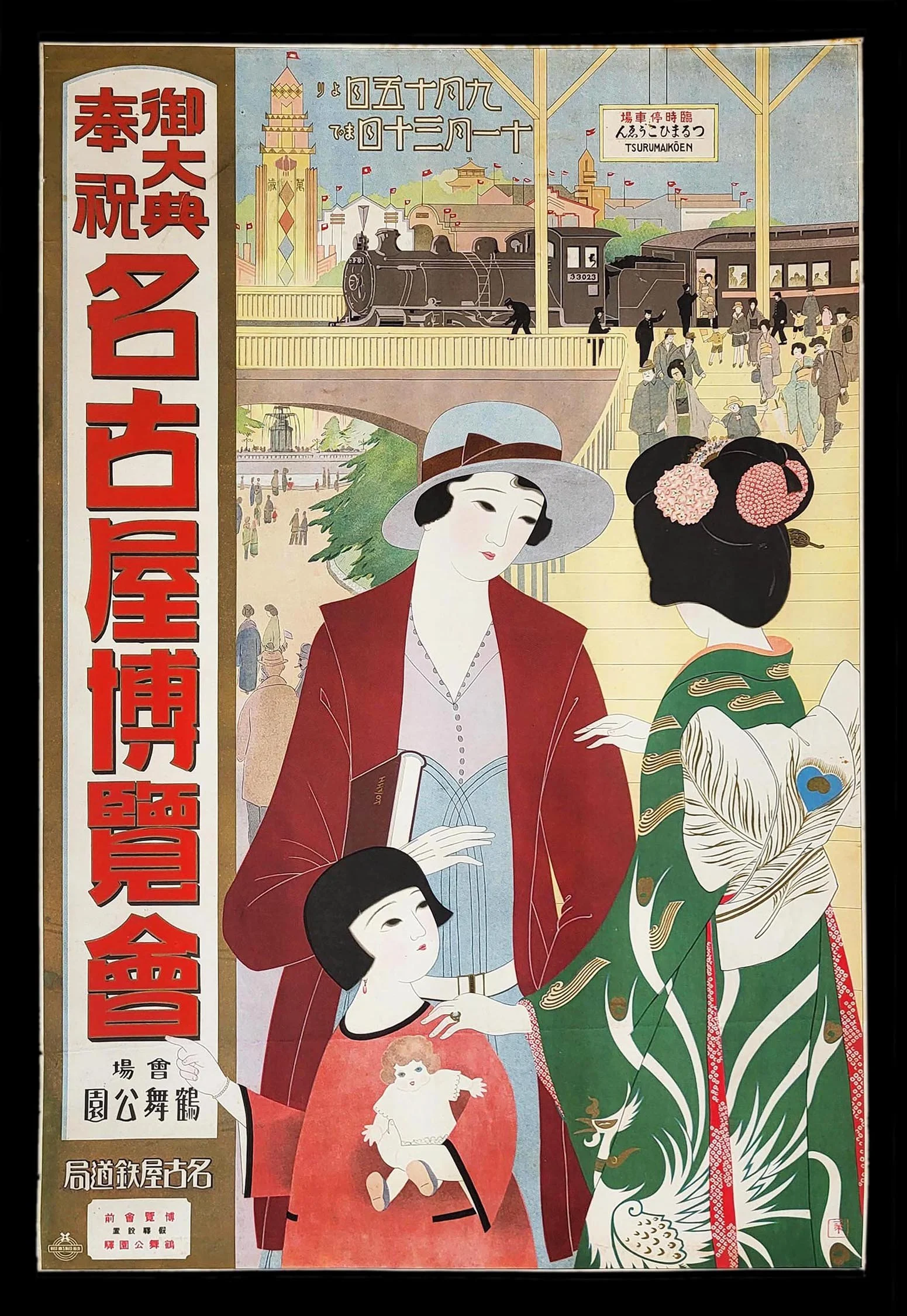
Produced for the 1926 Nagoya Exposition held at Tsuruma Park, this ambitious advertising poster presents a vivid intersection of modern spectacle and ceremonial tradition. The composition is structured around three elegantly staged female figures positioned prominently in the foreground: a stylish modern woman in a pale blue dress, red overcoat, and wide-brimmed Western hat, a young girl clutching a doll, and a kimono-clad woman viewed partially from behind. Beyond them unfolds the bustling atmosphere of the exposition grounds, animated by crowds of visitors, exhibition pavilions, electric signage, and a steam locomotive arriving at the nearby station. The integration of rail transport directly into the composition underscores the increasingly central role of railway travel in shaping mass leisure and public events during the 1920s.
Particularly significant is the kimono worn by the standing female figure at right. The garment is adorned with an elaborate phoenix motif, while the obi incorporates sweeping feather-like forms suggestive of the bird’s trailing plumage. In Japanese visual culture, the phoenix carried strong imperial associations and was frequently connected to themes of renewal, ceremony, and national prestige. Its presence here transforms the figure into more than simply an elegantly dressed visitor; she becomes a symbolic embodiment of cultural continuity and imperial grandeur within the rapidly modernizing environment of the exposition itself. The juxtaposition of the phoenix-patterned kimono with the Western-dressed modern woman beside her encapsulates the coexistence of tradition and cosmopolitan modernity that defined urban Japan during the late Taishō era.
The poster’s compositional richness reflects the atmosphere of large public expositions held throughout Japan during the early twentieth century. Such events combined entertainment, commerce, industrial achievement, transportation, and national identity into immersive public spectacles attended by increasingly diverse audiences. Here, the artist balances monumental vertical typography with carefully orchestrated figural groupings and architectural detail, producing a composition that feels both celebratory and highly modern in its graphic clarity. The result is less a straightforward advertisement than a visual manifesto for the optimism and cultural ambition of 1920s urban Japan.
Connoisseur's Note
Perhaps the most compelling aspect of this poster is its nuanced treatment of feminine identity across generations and social spheres. Rather than centering a single idealized type, the artist presents three distinct modes of modern womanhood simultaneously: the cosmopolitan figure in Western attire, the formally dressed kimono wearer rooted in ceremonial elegance, and the child representing the future consumer generation emerging within modern urban society. Together, the trio forms a carefully balanced social tableau reflecting the increasingly visible participation of women and families in public leisure culture during the interwar years.
The visual structure of the composition reveals a sophisticated understanding of commercial poster design during the late Taishō period. Large vertical blocks of typography anchor the sheet with striking immediacy, while the recession into the crowded exposition grounds creates remarkable spatial depth. The artist’s use of contrasting silhouettes—particularly between the pale face and red coat of the modern woman and the deep green kimono adorned with flowing phoenix forms—produces a dynamic interplay between flat decorative pattern and volumetric presence. This synthesis of decorative elegance and graphic boldness reflects broader international currents in Art Deco and commercial illustration while remaining distinctly Japanese in sensibility.
Exposition posters from the 1920s occupy a fascinating position within Japanese visual culture because they functioned simultaneously as advertisements, commemorative objects, and expressions of civic aspiration. Most were intended for temporary display and discarded after the event concluded, making surviving examples comparatively scarce today. The present work is especially important for the way it captures a transitional cultural moment: steam locomotives, department-store fashion, imperial symbolism, urban crowds, and modern print design all converge within a single composition. It stands as a vivid document of how public spectacle, consumer culture, and evolving ideals of femininity became inseparable elements of modern Japanese life during the decade preceding the early Shōwa era.