

 Image 1 of 1
Details
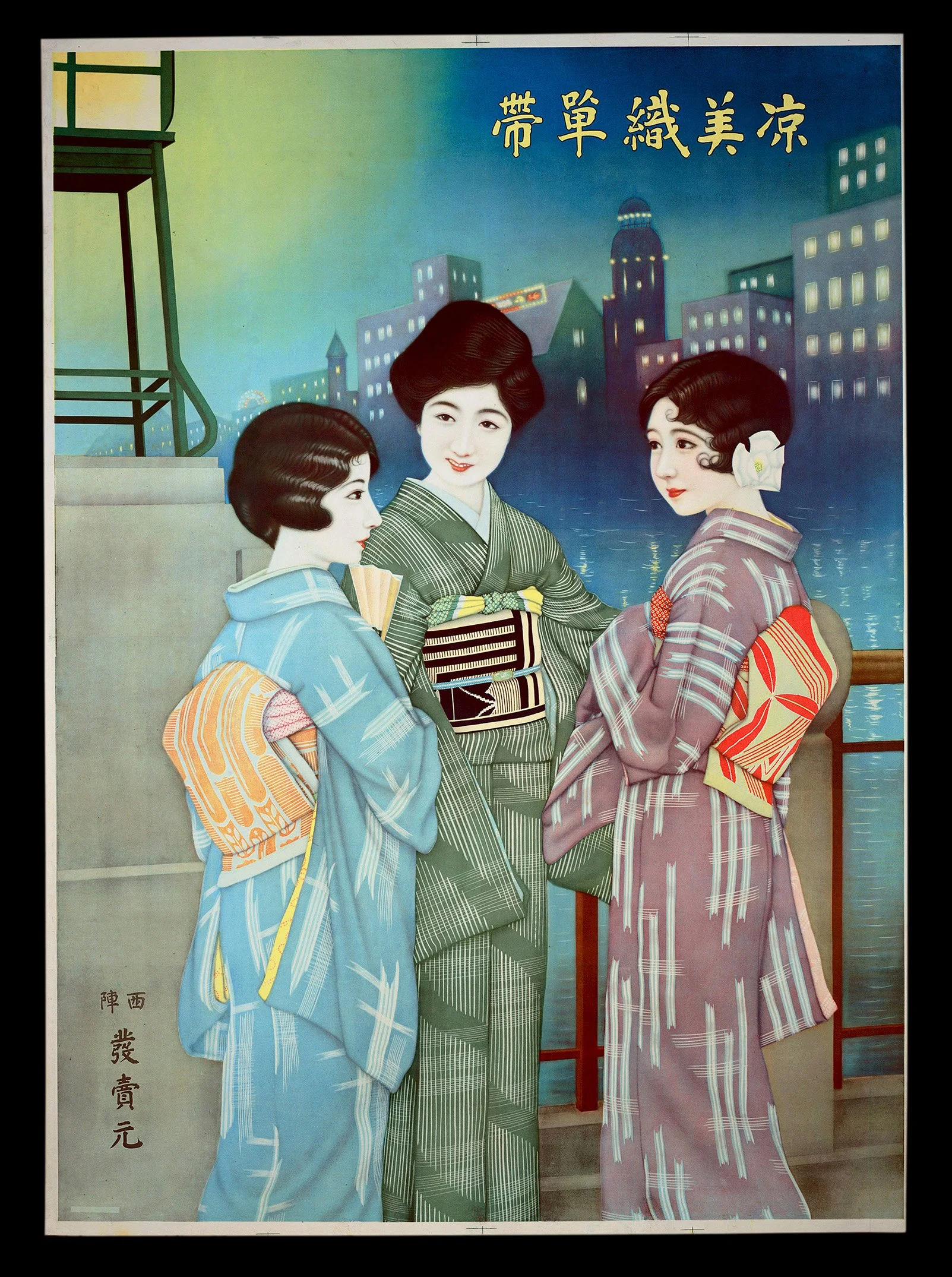
This elegant advertising poster depicts three stylish young women gathered along a riverside or terrace overlooking an illuminated urban skyline. Dressed in softly patterned kimono of pale blue, sage green, and lavender, the figures stand in quiet conversation beneath the glow of electric city lights reflected across the water behind them. Their coiffed hairstyles, carefully arranged obi sashes, and refined poses embody the fashionable sensibilities of urban Japan during the late 1920s and early 1930s, when traditional dress remained central to female identity even amid accelerating modernization.
The poster advertises obi sashes and kimono textiles, yet its appeal extends beyond the garments themselves. Rather than focusing solely upon product display, the composition constructs an aspirational atmosphere of sophistication and cosmopolitan leisure. The distant skyline—with illuminated office buildings, towers, and hints of amusement lighting—situates the women within the rapidly modernizing entertainment districts of interwar Japan. Electric illumination transforms the city into a shimmering theatrical backdrop, suggesting evening promenades, department store outings, theater visits, and social encounters along newly modernized urban waterways.
Particularly striking is the harmony between traditional attire and contemporary urban life. Although the women wear kimono rather than Western dress, their appearance reflects evolving ideals of feminine modernity. Their abbreviated hairstyles, poised self-awareness, and relaxed social interaction align closely with the visual culture associated with café society, women’s magazines, and department store advertising of the early Shōwa period. The poster demonstrates how commercial artists increasingly presented kimono not as relics of the past, but as adaptable expressions of modern elegance suited to the rhythms of city life.
Connoisseur's Note
Perhaps the most compelling aspect of this poster is its masterful orchestration of color and atmosphere. The artist employs a restrained nocturnal palette dominated by cool blues, greens, and muted violets, allowing the pale complexions and softly patterned textiles to emerge with remarkable luminosity against the darkened skyline. The subtle gradations of reflected light across the water create an almost cinematic depth, revealing the extent to which commercial design of the period absorbed influences from photography, film, and contemporary stage lighting.
The treatment of textile patterning is equally sophisticated. Each kimono design is rendered with deliberate variation, balancing geometric repetition with fluidity in order to differentiate the personalities and social presence of the three women. The obi themselves function not merely as advertised products but as compositional anchors, introducing concentrated passages of decorative intensity that stabilize the vertical elegance of the figures. This sensitivity to fabric design reflects the close relationship between commercial illustration and Japan’s flourishing textile industry during the interwar years.
Large-scale advertising posters promoting kimono textiles survive far less frequently than smaller printed ephemera, as most were intended for temporary display in department stores or commercial arcades. Their rarity today offers valuable insight into how traditional fashion industries adapted to modern consumer culture. The present work is especially notable for its refusal to frame kimono as nostalgic or antiquarian. Instead, the poster presents traditional dress as entirely compatible with the glamour and sophistication of the modern metropolis, revealing how commercial imagery helped redefine feminine elegance for a rapidly changing urban society.