

 Image 1 of 1
Details
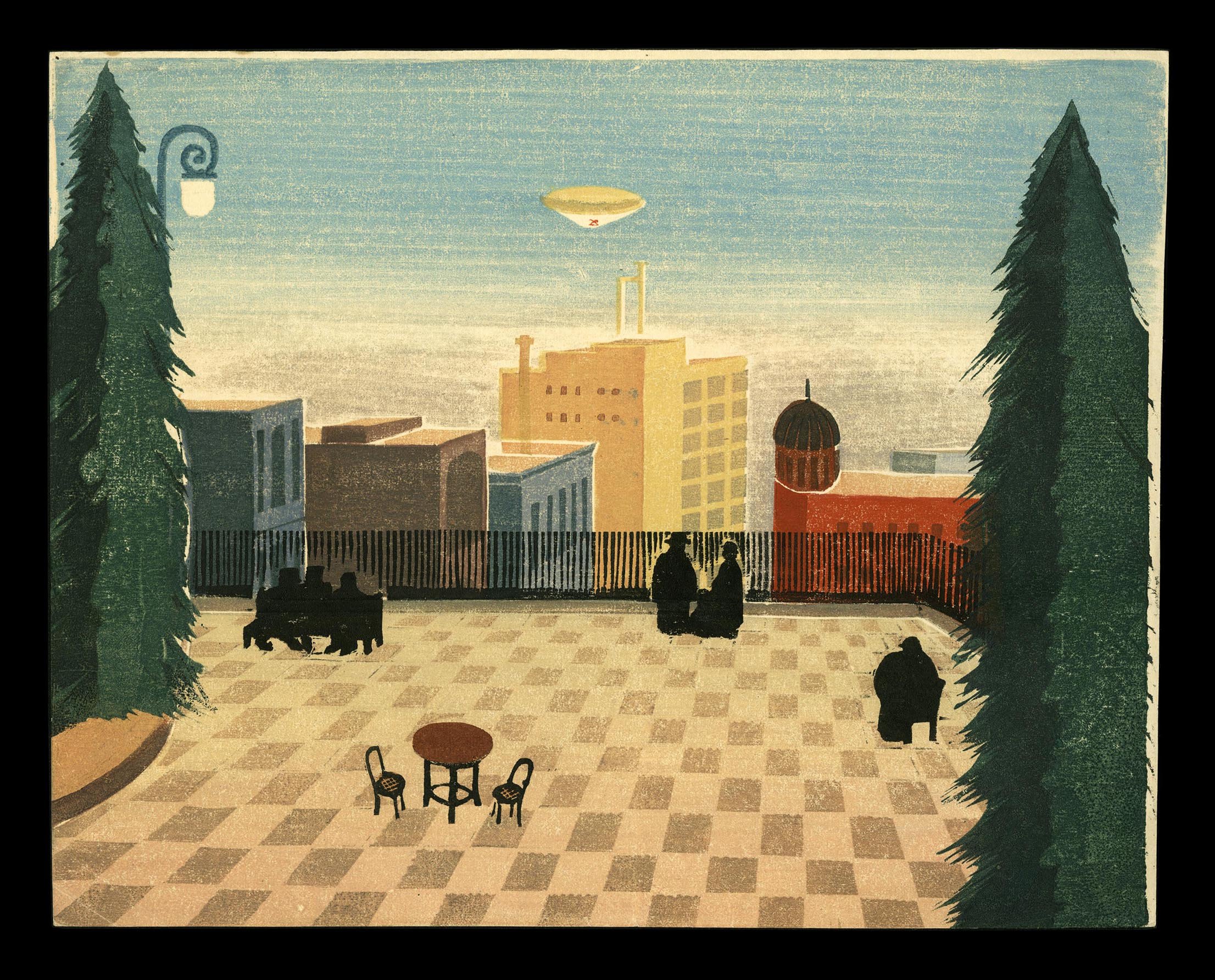
This elegant and quietly surreal composition transforms the modern city into a space of elevated leisure and contemplation. A tiled rooftop terrace stretches across the foreground, sparsely populated by seated figures and strolling silhouettes. Two towering trees frame the composition like theatrical curtains, opening onto a distant skyline of modern buildings rendered in softened geometric forms. Suspended above the city floats a zeppelin, its smooth form gliding silently across the pale sky.
During the late 1920s and early 1930s, rooftop garden cafés became important symbols of modern urban culture in Japan. Department stores, hotels, and commercial buildings increasingly incorporated rooftop leisure spaces where visitors could dine, socialize, and observe the rapidly changing metropolis from above. Such elevated environments embodied new forms of urban sophistication associated with café culture, consumerism, and cosmopolitan social life. The sparse café table and empty chairs at the center of the design subtly suggest the transient nature of these modern encounters.
The zeppelin introduces a particularly evocative symbol of international modernity. Airships represented technological progress, global mobility, and futuristic spectacle during the interwar period. Their appearance above Tokyo’s skyline reflected the city’s growing awareness of international culture and technological advancement. Here, the airship drifts almost dreamlike above the terrace, suggesting both excitement and distance — an emblem of the modern age passing quietly overhead.
The composition itself is remarkably restrained. Broad open spaces dominate the image, while figures appear as dark silhouettes against luminous architecture and sky. This balance between emptiness and structure creates an atmosphere of stillness unusual for urban imagery of the period. Rather than emphasizing the crowded energy of city life, the artist presents modernity as something suspended, contemplative, and strangely serene.
The print’s refined geometry reveals the influence of modern graphic design and contemporary architectural aesthetics associated with Sosaku Hanga experimentation during the early Shōwa years. Simplified buildings, flattened perspective, and carefully balanced color fields create a sophisticated visual harmony that feels both modern and timeless. The artist reduces the city to essential forms while preserving a profound sense of atmosphere.
Connoisseur's Note
Though unsigned, this remarkable print stands as a sophisticated example of urban Sosaku Hanga from the early 1930s. The anonymous artist demonstrates a refined understanding of modern composition, balancing architectural geometry with expansive open space and subtle psychological mood. The result is a work that feels simultaneously intimate and cosmopolitan.
Particularly striking is the print’s ability to capture the emotional atmosphere of interwar urban leisure. Rooftop cafés occupied a unique cultural position during this period, functioning as spaces where modern men and women could momentarily withdraw from the dense rhythms of the city below while still remaining visually connected to it. The elevated perspective creates a sensation of detachment from street-level life, reinforcing the work’s meditative quality.
The zeppelin adds an especially important modern dimension to the composition. Airships fascinated audiences worldwide during the 1920s and 1930s, symbolizing international travel, technological innovation, and the romance of the machine age. Within this image, however, the airship appears not triumphant but distant and almost silent, moving gently across the skyline like a passing dream of the future.