

 Image 1 of 2
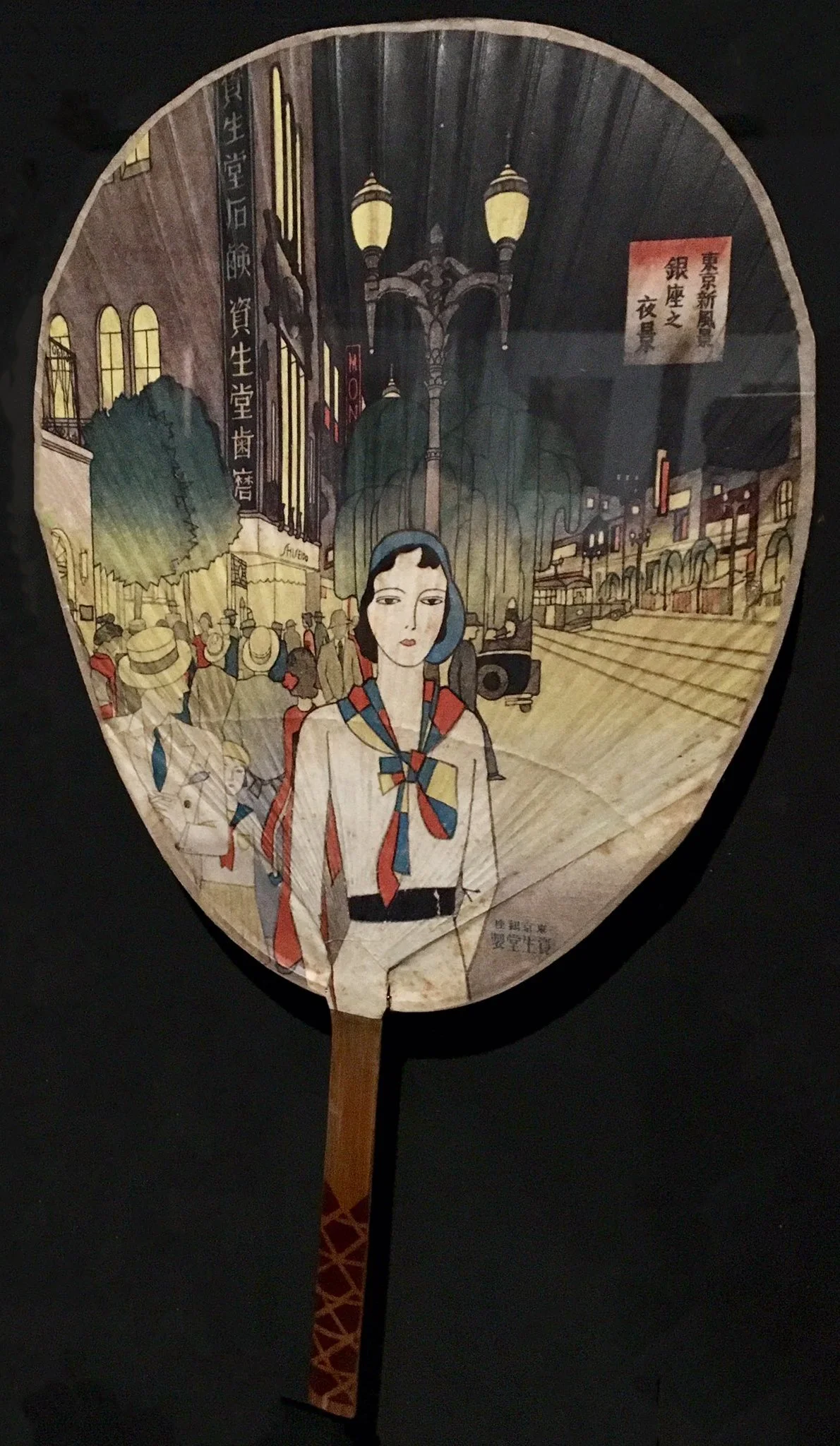 Image 2 of 2
Details
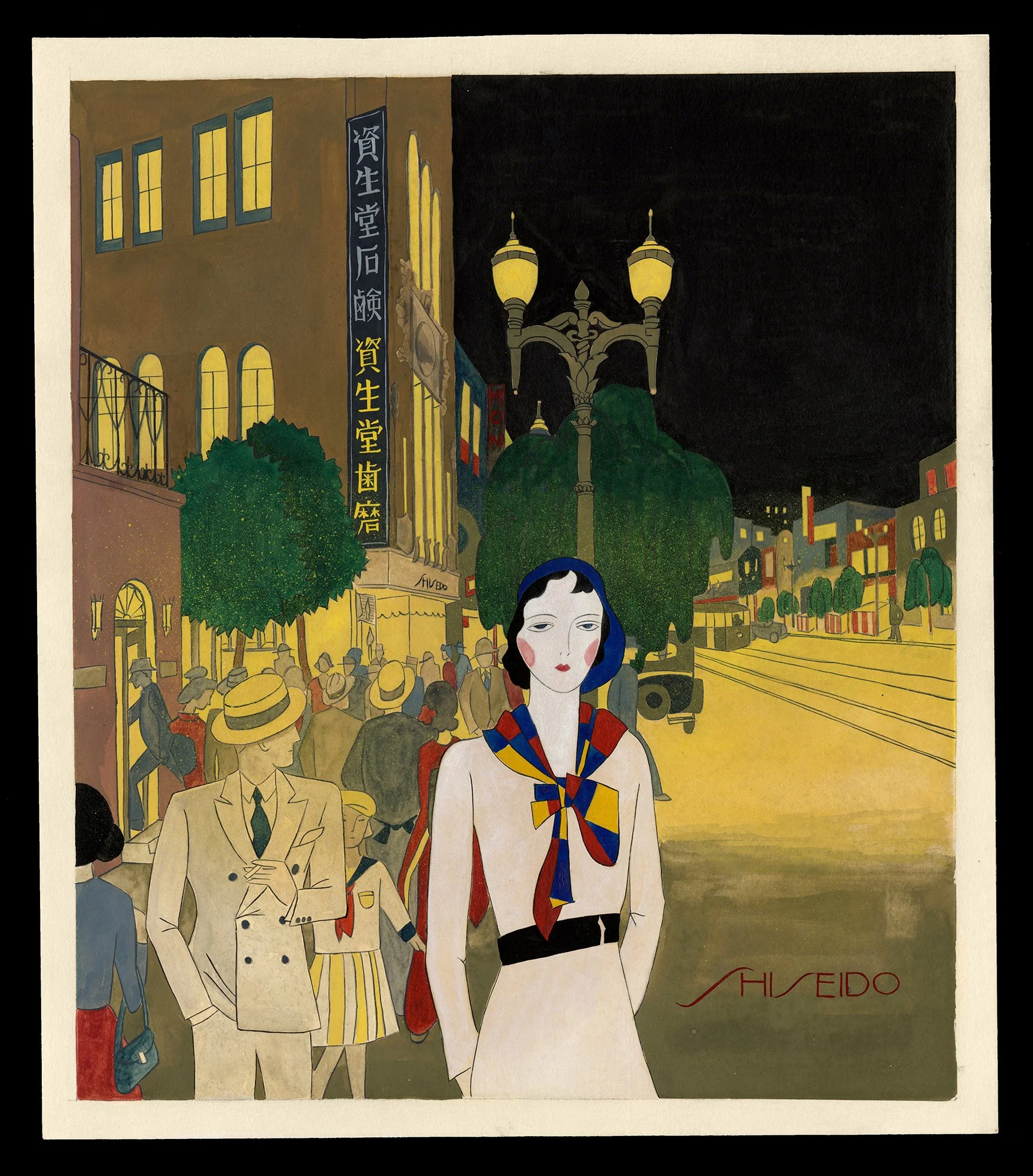
Few artists shaped the visual identity of interwar Japanese modernity as profoundly as Yamana Ayao durring his tenure at the Shiseido Design Department. In this elegant preparatory watercolor, the artist presents a nocturnal Ginza transformed into a theater of light, commerce, and modern desire. Beneath the glow of electric streetlamps and illuminated storefronts, a poised moga emerges at the center of the composition. Her pale elongated figure, crimson lips, and sharply stylized features embody the new cosmopolitan femininity cultivated through the visual culture of cafés, department stores, cinema, and advertising. Around her swirls the restless life of the modern metropolis: strolling pedestrians, automobiles, glowing windows, and the unmistakable signage of Shiseido itself rising vertically through the cityscape.
The composition reveals Yamana’s extraordinary command of graphic simplification and decorative rhythm. Buildings flatten into elegant geometric masses while the trees become rounded ornamental forms, their surfaces softly textured like textile patterns or lacquer. The artist’s use of black night sky against warm yellow illumination creates a dramatic chromatic tension reminiscent of both European Art Deco poster design and Japanese decorative traditions. Particularly striking is the moga’s vividly colored scarf rendered in bold primary tones, functioning almost as a modernist abstraction within the larger urban scene. Though originally conceived as a commercial design, the watercolor possesses the refinement and balance of an autonomous painting.
The transition from watercolor painting to woodblock printed fan is itself deeply significant. Shiseido’s promotional culture during the 1920s sought to dissolve the boundaries between fine art, fashion, advertising, and daily life. The uchiwa fan transformed an image of urban sophistication into a tactile object carried through the streets during summer evenings, allowing consumers to physically participate in the atmosphere of cosmopolitan chic the company promoted. In this sense, the fan was not merely advertising—it was a portable performance of modern identity.
The imagery also reflects Ginza’s central role in the imagination of modern Japan. Rebuilt following the Great Kantō Earthquake of 1923, Ginza became a symbolic stage upon which new forms of leisure, femininity, and consumer culture emerged. The illuminated avenue seen here is not simply a location but an idealized psychological space of aspiration and transformation. The moga appears simultaneously part of the crowd and detached from it, embodying the self-conscious theatricality of urban modern life.
Connoisseur's Note
This watercolor occupies a remarkable position between commercial illustration and avant-garde modernism. Yamana Ayao, one of Shiseido’s most celebrated designers, helped define the visual vocabulary through which modern beauty was imagined in prewar Japan. As explored in scholarship surrounding Shiseido’s advertising culture, the company cultivated an aesthetic of cosmopolitan sophistication through stylized female imagery, elegant typography, and carefully orchestrated fantasies of urban refinement. The women in Yamana’s designs were not portraits of specific individuals, but embodiments of aspirational modern identity—figures through whom viewers could imagine participation in a glamorous international world of fashion, leisure, and consumer culture.
The present work is especially important because it preserves the intermediary stage between original painting and mass-produced promotional object. The surviving watercolor allows direct access to Yamana’s creative process before the image was translated into woodblock form and adapted into the functional shape of the fan. Delicate washes, subtle tonal transitions, and compositional refinements remain visible here in ways often softened or standardized through the printing process. Equally significant, the watercolor permits the viewer to experience the composition in its complete original format as Yamana first conceived it. In the final fan version, the rounded uchiwa form necessarily cropped and compressed substantial portions of the design, trimming architectural elements, figures, and sections of the nocturnal sky. The watercolor therefore preserves the full spatial balance and urban expansiveness of the composition in a way the finished fan cannot fully convey. Preparatory works of this nature are exceptionally rare, particularly for commercial designs intended for everyday circulation rather than formal preservation.
Within the broader context of interwar Japanese visual culture, the work demonstrates how advertising increasingly absorbed the language of fine art and modernist design. Shiseido did not simply market cosmetics; it promoted an entire lifestyle centered upon elegance, self-fashioning, and urban sophistication. Ginza itself became inseparable from this identity. The glowing streets, fashionable crowds, and luminous storefronts seen in the composition present the city not as documentary reality, but as a carefully staged dream of metropolitan modernity.
Equally compelling is the emotional complexity of the central figure. Despite the movement and activity surrounding her, the moga retains a curious sense of solitude and introspection. She appears both participant in and observer of the modern city unfolding around her. This subtle tension between glamour and detachment gives the composition much of its enduring sophistication and reflects a recurring psychological quality within Yamana Ayao’s finest work. The image captures not simply the excitement of urban modern life, but also its fleeting and performative nature—an atmosphere suspended somewhere between elegance, aspiration, and quiet melancholy.
More prints by Ayao Yamana: