

 Image 1 of 1
Details
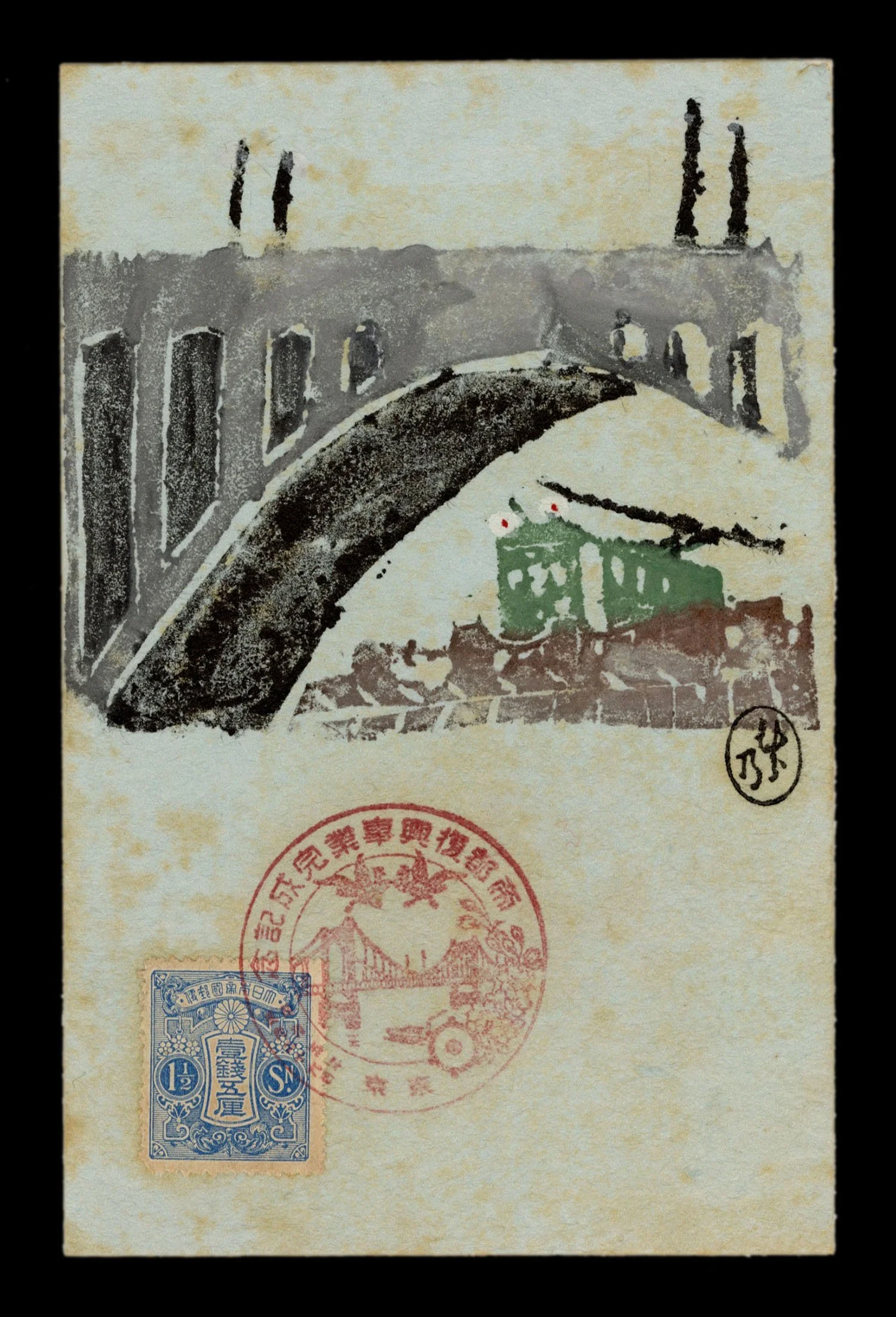
A powerful arch bridge dominates this composition, sweeping dramatically across the surface in broad strokes of black and gray. Beneath the bridge, simplified buildings and industrial forms emerge through loosely applied colors and textured printing. The artist's reduction of detail allows the structure itself to become the primary subject, transforming an engineering achievement into a modern graphic statement.
Bridges occupied a special place in the imagination of post-earthquake Tokyo. Vast reconstruction projects replaced older crossings with new steel and concrete designs intended to withstand future disasters while accommodating the growing demands of a modern city. This postcard celebrates not only a specific bridge but also the larger civic ambition that reshaped Tokyo's infrastructure during the interwar period.
Connoisseur's Note
The expressive carving and uneven application of pigment reflect the democratic spirit of the sōsaku hanga movement, which emphasized the artist's direct involvement in every stage of production. Here, the bridge is treated less as an architectural portrait than as a symbol of movement, connection, and renewal.
Postcards such as this document a period when engineering projects inspired public fascination. The repeated appearance of bridges in surviving examples suggests that residents viewed these structures as visible evidence of Tokyo's rebirth. Their circulation through the postal system further reinforced the city's image as a modern capital rising confidently from catastrophe.