

 Image 1 of 1
Details
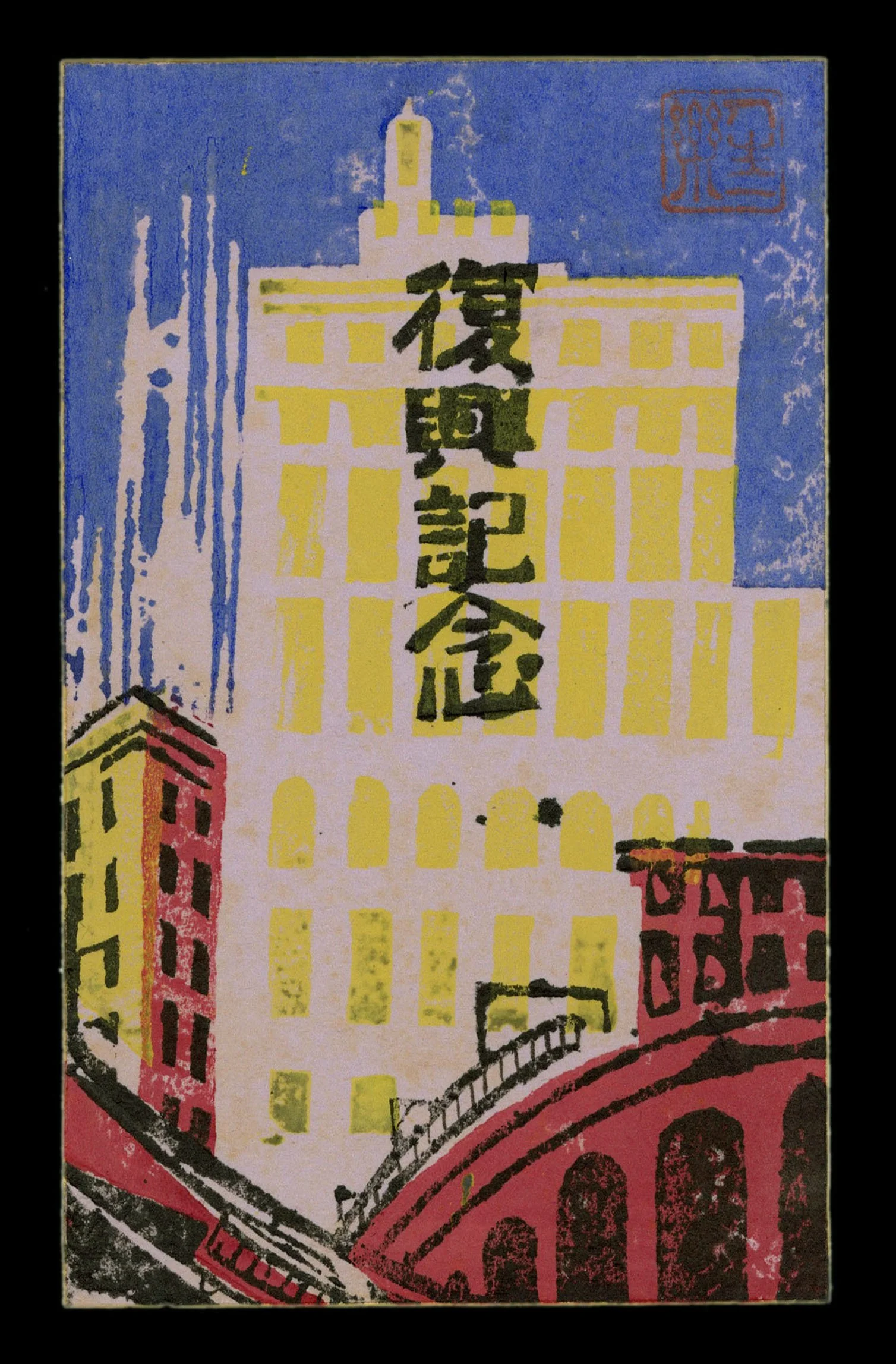
This striking postcard presents one of the most recognizable symbols of modern Tokyo: the Wako Building rising above the rebuilt Ginza district. Rendered in simplified blocks of cream, yellow, rose, and blue, the composition captures the monumental geometry of the structure while emphasizing its commanding presence within the cityscape. The artist reduces architectural forms to bold silhouettes and broad areas of color, creating a distinctly modern visual language that echoes the aesthetic principles of the sōsaku hanga movement.
Following the devastation of the Great Kantō Earthquake of 1923, Ginza emerged as a powerful symbol of reconstruction and national confidence. The newly rebuilt district embodied the aspirations of a modern metropolis, with department stores, cafés, cinemas, and fashionable promenades attracting residents and visitors alike. The Wako Building, with its celebrated clock tower, became both a landmark and a visual shorthand for Tokyo's transformation into an international city.
Connoisseur's Note
Unlike the polished commercial imagery of department-store advertisements, this postcard embraces the handmade qualities of self-carved and self-printed woodblock production. The rough textures and simplified forms lend the image a sense of immediacy, suggesting an artist recording the excitement of the rebuilt city through personal observation rather than commercial precision. Such postcards reveal how modern architecture itself became worthy of artistic celebration.
The fact that this postcard was mailed is particularly significant. It demonstrates that newly reconstructed Tokyo was not merely a local reality but a source of civic pride shared through correspondence. Buildings such as Wako became visual ambassadors of recovery and progress, carrying images of the capital's rebirth throughout Japan during the dynamic years between the earthquake and the Second World War.