

 Image 1 of 1
Details
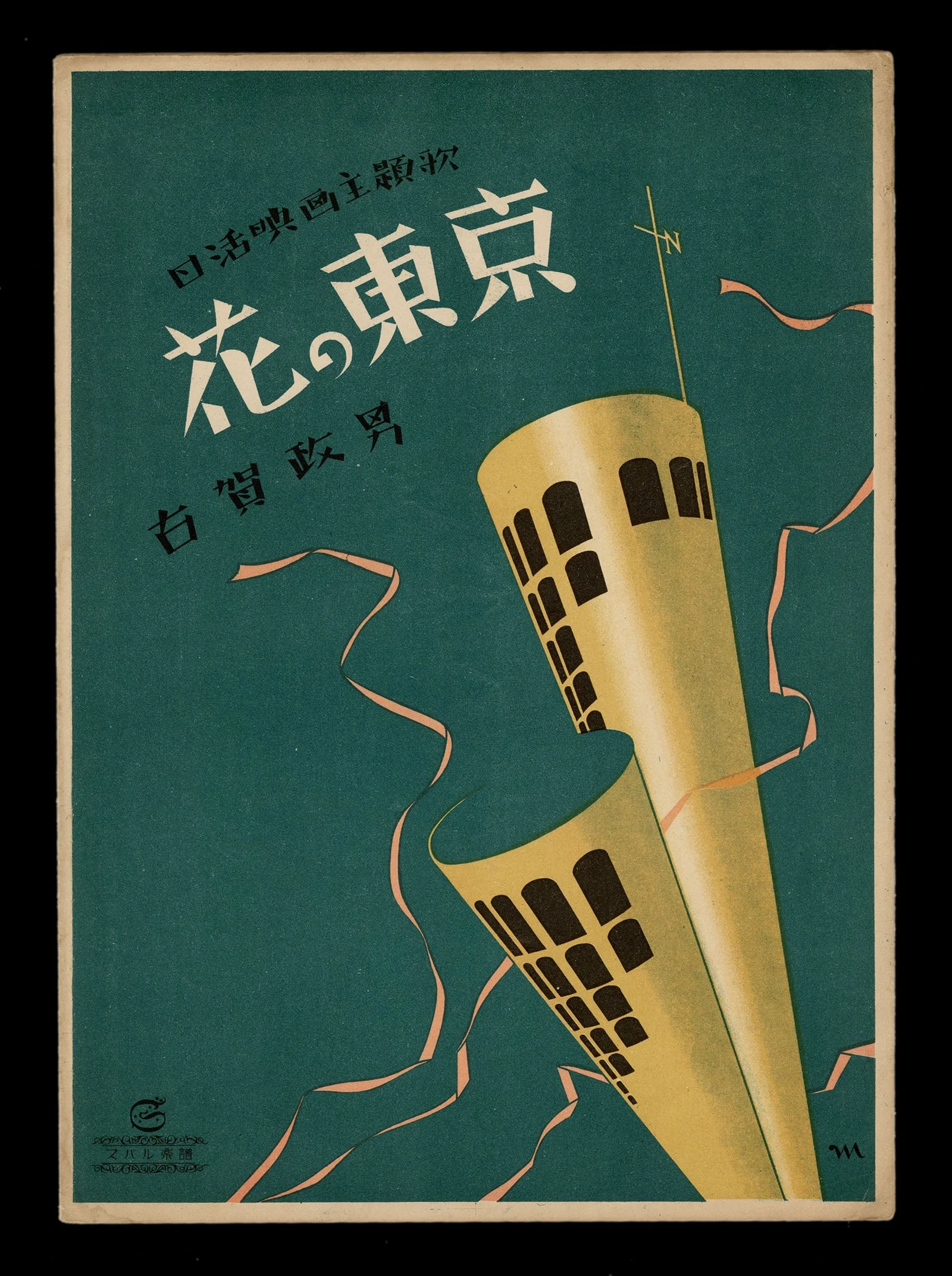
The artist employs a boldly modern composition dominated by a pair of soaring towers rendered in pale gold against a deep blue sky. Ribbon-like streamers drift through the air, suggesting celebration, movement, and urban festivity. The absence of human figures directs attention entirely toward architecture, transforming the city itself into a symbol of aspiration and progress.
The twin structures evoke the optimism associated with metropolitan growth during the reconstruction era. Their exaggerated verticality suggests a city reaching toward the future, while the dynamic diagonals create a sense of momentum. The design captures the exhilaration that accompanied Tokyo's transformation into a modern international capital.
Connoisseur's Note
This cover is notable for its architectural focus, an uncommon choice among sheet music illustrations that more often favored portraits of fashionable women. Here the metropolis itself becomes the protagonist. The soaring towers and celebratory ribbons transform Tokyo into a symbol of ambition, progress, and optimism, reflecting the excitement surrounding the city's emergence as a modern international capital.
The design also reminds us of the important role sheet music played in everyday cultural life. During the interwar years Japan enjoyed an extraordinary level of music literacy, with the overwhelming majority of people able to read and perform music from printed scores. These publications therefore became powerful visual ambassadors for popular culture, pairing songs with imagery that captured contemporary fashions, urban dreams, and the subjects that most vividly engaged the public imagination.