

 Image 1 of 1
Details
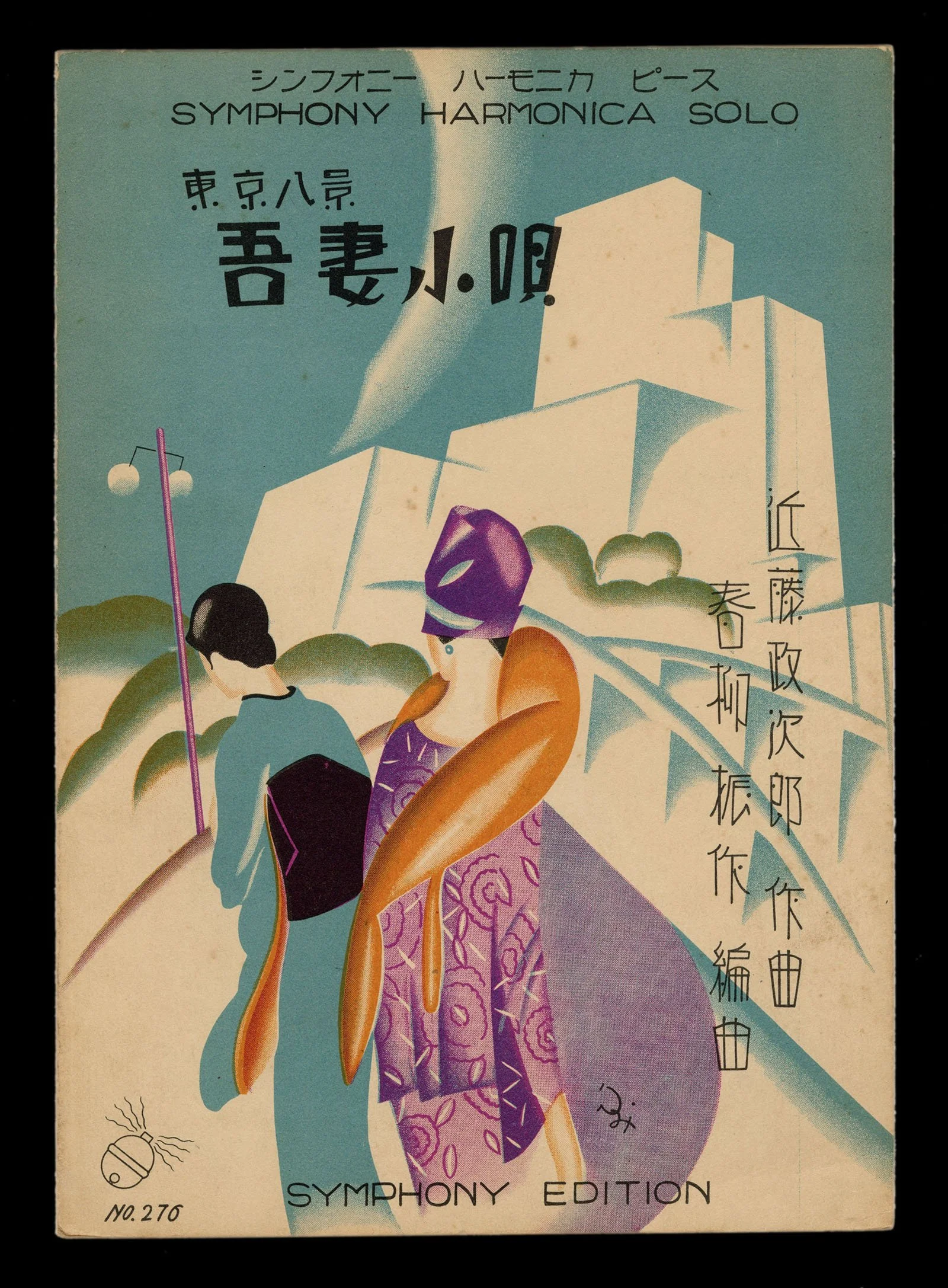
Fujita Fumi presents two elegantly dressed women standing before a dramatic ensemble of modern architecture. One figure wears a contemporary patterned garment and a fashionable cloche-style hat, while the other turns away in quieter contemplation. Behind them rise monumental white buildings rendered as geometric masses, recalling the new cityscape that emerged following the reconstruction of Tokyo after the Great Kantō Earthquake.
The juxtaposition of traditional clothing and modern architecture is particularly compelling. The women occupy a transitional world where established customs coexist with modern urban ambitions. The cover's cool palette and streamlined forms transform Tokyo itself into a protagonist, emphasizing the city's rapid evolution and the new social identities formed within its streets.
Connoisseur's Note
Few sheet music covers embody the themes of this exhibition as directly as this example. The title celebrates Tokyo, while the imagery visualizes the encounter between tradition and modernity that defined the city during the reconstruction era. Fujita Fumi's elegant design reveals how architecture itself became a symbol of social transformation, while the figures suggest the emergence of new identities within the evolving metropolis.
The cover also illustrates how women were increasingly depicted as active participants in urban culture rather than passive subjects. At a time when Japan's music literacy rate was among the highest in the world, sheet music reached a vast audience and served as a conduit for contemporary imagery and ideas. Through such publications, popular songs, modern fashions, and visions of the rebuilt city circulated together, shaping public perceptions of modern life.