

 Image 1 of 1
Details
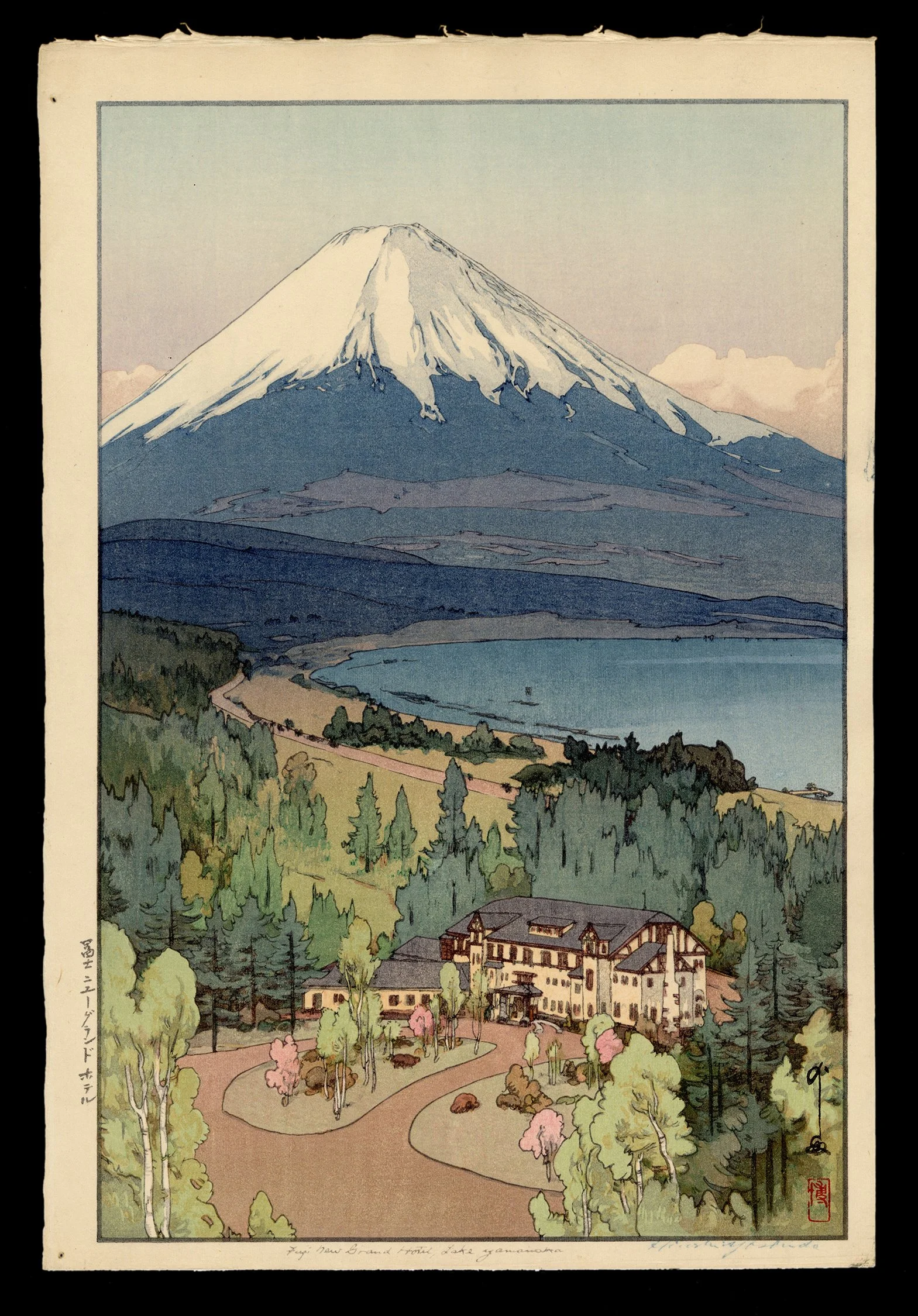
In Fuji New Grand Hotel, Lake Yamanaka, Hiroshi Yoshida masterfully composes a vision of leisure and grandeur set against Japan’s most iconic natural landmark. The towering form of Mount Fuji, cloaked in snow and rendered in serene blues and whites, anchors the composition with commanding elegance. Below, nestled within a verdant landscape of pines and spring blossoms, the Fuji New Grand Hotel rises in stately repose—a symbol of early 20th-century cosmopolitanism and modern travel.
This 1937 woodblock print captures a transitional moment in Japanese cultural history. The harmonious blending of architectural modernity with the eternal form of Fuji speaks to Yoshida’s vision of Japan as a place of both enduring tradition and worldly sophistication. The winding drive, carefully planted trees, and tranquil lake reflect a cultivated landscape—ordered, inviting, and bathed in the gentle light of early spring. The scene suggests a peaceful pause, a refined retreat beneath the gaze of a sacred mountain.
Connoisseur's Note
Fuji New Grand Hotel, Lake Yamanaka holds a unique place within Hiroshi Yoshida’s oeuvre—not only for its subject matter but for its origin and execution. Commissioned directly by the Fuji New Grand Hotel as a commemorative or promotional image, this print stands apart from Yoshida’s more widely distributed works. It is the only known design in the artist’s body of work to feature his signature rendered in blue ballpoint pen—a highly unusual detail that distinguishes this edition and further affirms its bespoke nature.
Though it does not bear the customary jizuri seal, the presence of Yoshida’s pen signature, combined with the context of a direct commission, leaves no doubt about the artist’s personal oversight in its production. For collectors, this rare confluence of provenance, subject, and signature makes the print a singular object of interest. It merges the elegance of the Shin Hanga tradition with the specificity of place and purpose, offering not just a view of Fuji, but a record of refined hospitality and national pride in prewar Japan.
This work embodies the aesthetic hallmarks of Shin Hanga—clear, luminous color, fine linework, and a delicate use of bokashi shading—yet it also reflects Yoshida’s distinctively international sensibility. By situating the viewer at the intersection of natural sublimity and refined hospitality, the print evokes a dual awareness: of Fuji as a timeless spiritual emblem and of Japan as a nation gracefully opening itself to the modern world.
More prints by Hiroshi Yoshida:
c. 1940s
$6,500
Pathway to the Summit, Fujiyama (Scroll)
Hiroshi Yoshida (1876–1950)
DATE: c.1940s
MEDIUM: Sumi on silk
DIMENSIONS: 83 x 22 inches (entire scroll); 49 x 16 1/4 (image) inches
CONDITION: Excellent
NOTE: Mounted as a kakemono scroll
$6,500.00
Contact us to purchase