

 Image 1 of 1
Details
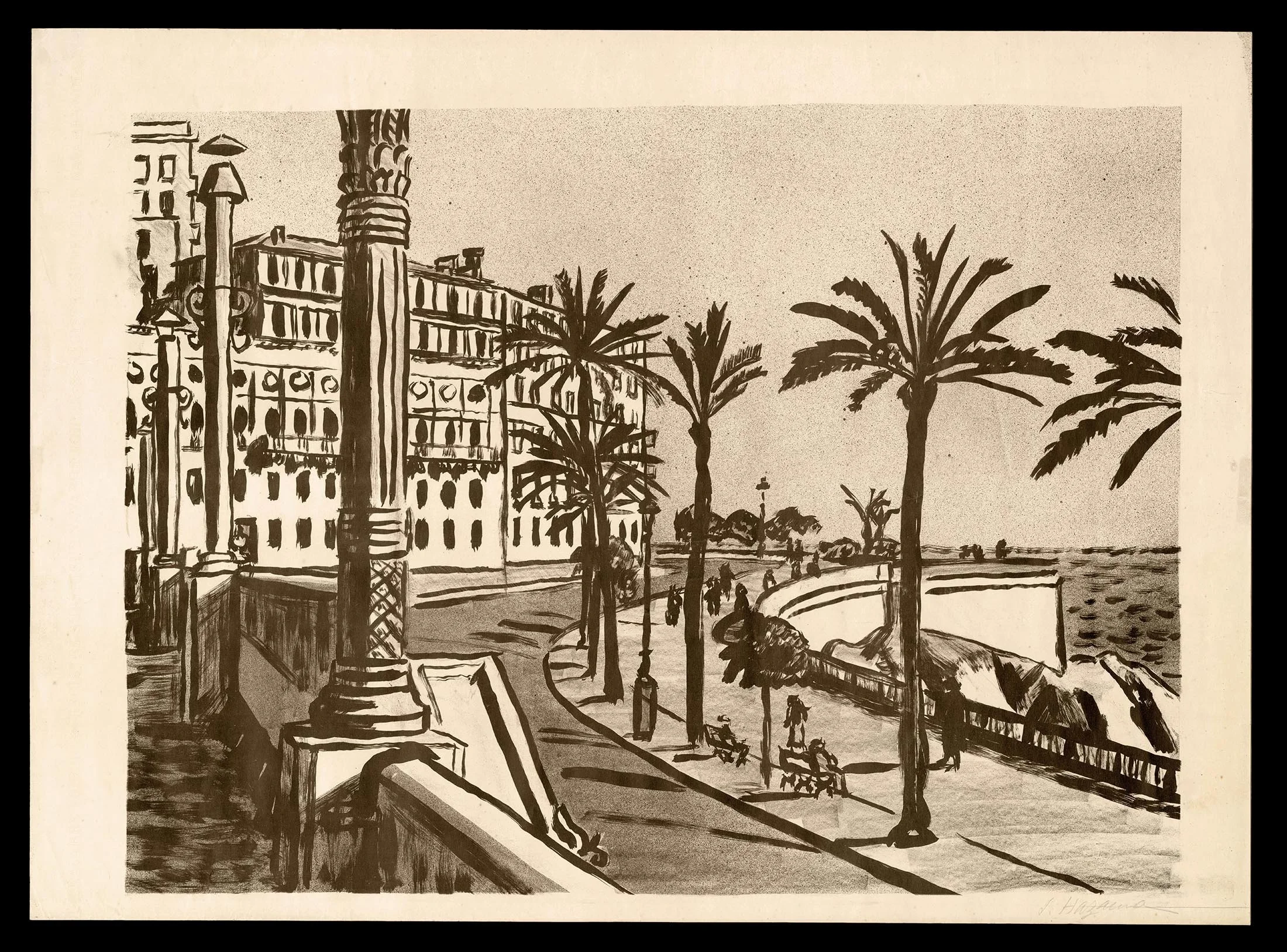
In this untitled large scale lithograph, Inosuke Hazama captures the languid beauty of the South of France — a sweeping promenade lined with elegant palms, curling gracefully along the azure edge of the Mediterranean. The composition, likely depicting the famed coastal city of Nice, is alive with strolling figures, distant sailboats, and the steady rhythm of architectural facades marching toward the sea. Executed in warm monochrome tones, Hazama’s handling of line and texture feels loose yet masterfully composed, evoking both the sun-bleached clarity and the gentle dynamism of the Mediterranean coast.
This large scale lithograph offers a striking departure from Hazama’s more familiar body of work — his smaller and brilliantly colored woodblock prints characterized by vibrant saturation and decorative stylization. Here, working with the delicate tonal range of lithography, Hazama allows atmosphere, light, and contour to carry the scene. The result is a vision at once precise and dreamlike, imbued with a European sensibility rare among Japanese artists of the period.
Connoisseur's Note
Inosuke Hazama holds a special place in the history of Japanese modern art as the only Japanese student of Henri Matisse. Invited to study under the French master in 1950, Hazama traveled to the South of France, where he absorbed firsthand the light, palette, and compositional elegance that defined Matisse’s later work. Nice — where Matisse had his studio — left an indelible mark on Hazama, and this lithograph likely reflects direct observation during that formative period.
Unlike his more ornamental and color-rich woodblock prints, this lithograph displays a refined economy of means — a Matissean sensitivity to line, rhythm, and the essential architecture of a scene. Collectors will appreciate this work not only for its rarity but for its glimpse into a unique artistic exchange: a moment when East and West met under the tutelage of one of modernism’s greatest figures, resulting in a distinctly personal and lyrical vision of the Mediterranean world.
c. early 1950s
$1,500
Untitled (South of France — Likely Nice)
Inosuke Hazama (1895–1977)
DATE: c. Early 1950s
MEDIUM: Lithograph
DIMENSIONS: 22 × 30 inches
CONDITION: Excellent impression and color; no problems to note
NOTE: Signed by the artist in pencil at the bottom margin
$1,500.00
Contact us to purchase