

 Image 1 of 1
Details
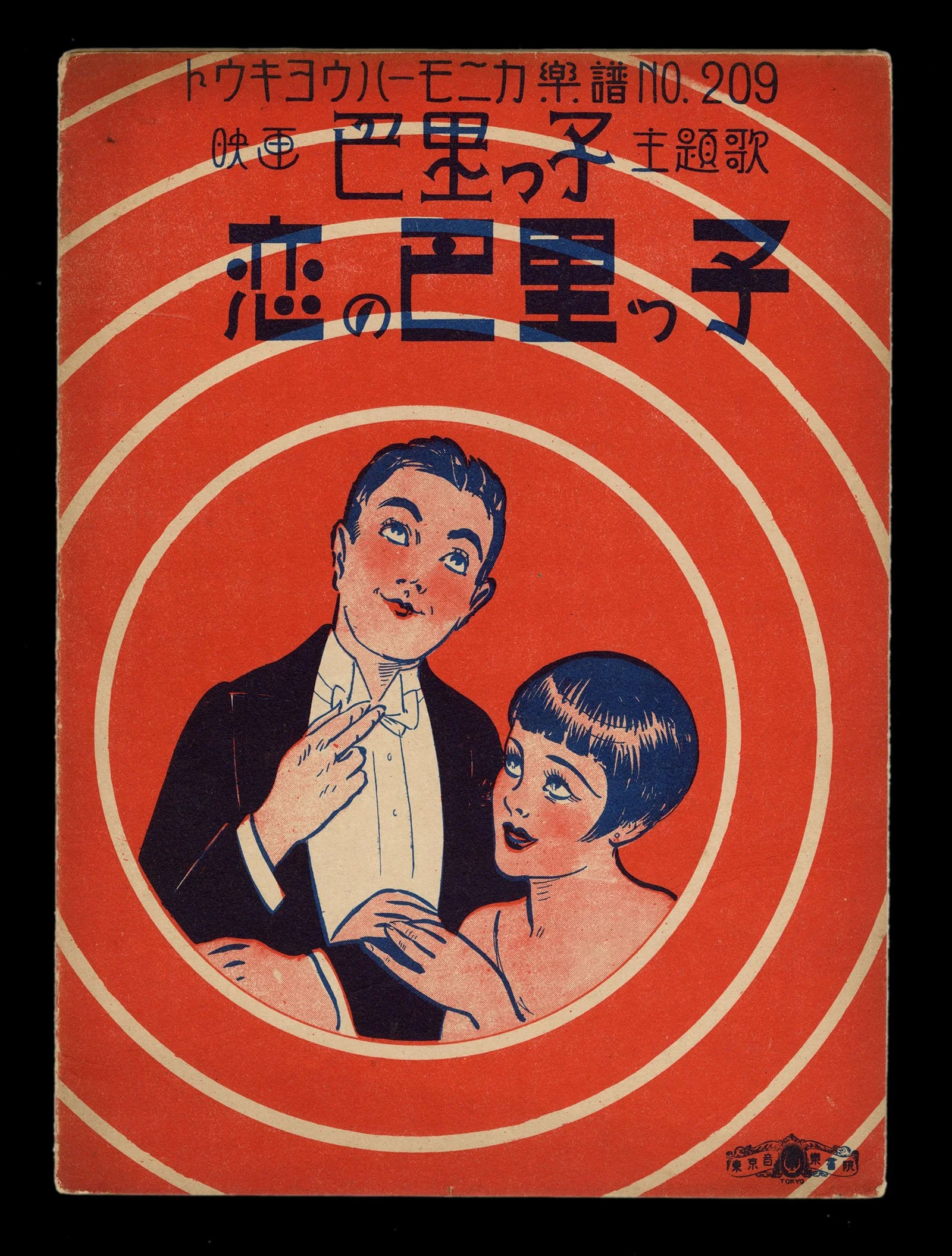
Unlike many contemporary covers that emphasize fashionable female beauty, this design centers on a modern young couple presented within a series of concentric circles that radiate across a vivid vermilion background. The simplified illustration recalls magazine cartoons and cinema advertising graphics of the period. The young man, dressed in evening attire, gestures animatedly while his companion gazes upward with admiration, their intertwined poses suggesting romance, aspiration, and youthful optimism.
The circular motif creates a sense of movement and theatrical focus, drawing the viewer directly into the relationship between the figures. Their bobbed hair, modern dress, and relaxed interaction reflect changing social customs among urban youth. The image captures a world in which cinema, popular music, and modern romance had become central elements of everyday life, reflecting the new emotional landscape of Japan's expanding consumer culture.
Connoisseur's Note
This cover demonstrates how sheet music publishers increasingly embraced the language of popular entertainment. The emphasis on youthful companionship and romantic modernity reflects the influence of cinema and mass media on public taste during the early Shōwa period.
At a time when Japan enjoyed one of the highest rates of music literacy in the world, sheet music circulated widely across social classes. These covers served not only as vehicles for popular songs but also as visual reflections of contemporary ideals, fashions, and aspirations. Today they remain invaluable documents of the cultural imagination of modern Japan.