

 Image 1 of 1
Details
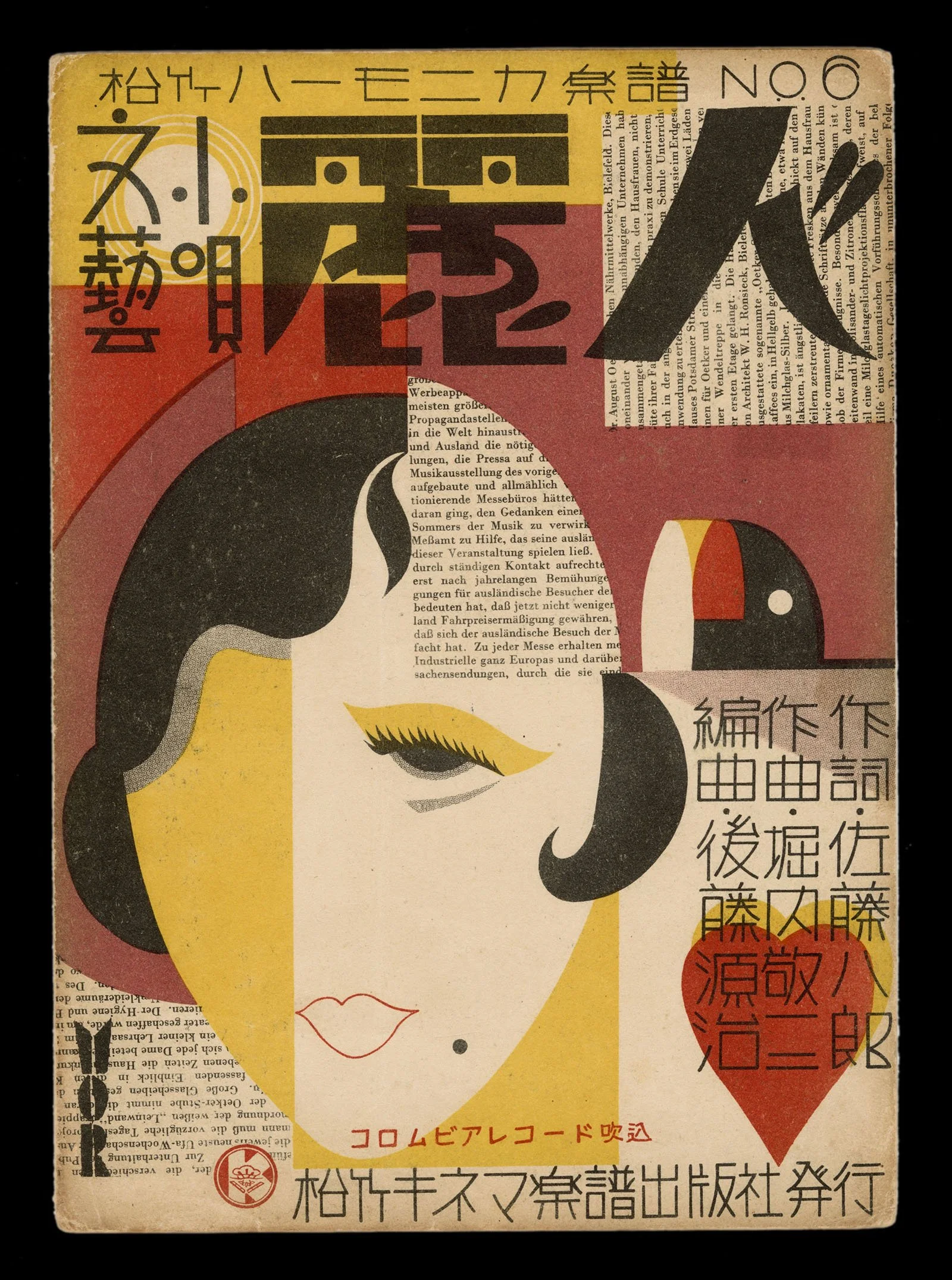
Tomita Morizō's cover presents a modern beauty constructed from intersecting geometric forms, decorative textures, and innovative typographic elements. The woman's face emerges from a collage-like arrangement that reflects the influence of European graphic design while maintaining a distinctly Japanese sense of refinement. Image and text operate as equal components within the composition, creating a visually sophisticated design that rewards close examination.
The title celebrates feminine beauty, yet the figure depicted here is unmistakably modern. Her fashionable hairstyle, carefully stylized features, and poised demeanor reflect the changing social landscape of interwar Japan. Rather than presenting a conventional ideal, the artist portrays a woman shaped by contemporary fashion, urban life, and consumer culture, embodying the evolving image of femininity promoted through magazines, cinema, and popular music.
Connoisseur's Note
Tomita Morizō's design demonstrates the increasingly important role played by professional graphic artists within the music publishing industry. Rather than merely illustrating a song title, designers created compositions capable of competing with contemporary advertisements, magazines, and film posters. The result was a vibrant and innovative form of commercial art that reflected the visual sophistication of modern Japan.
Japan's exceptionally high music literacy transformed sheet music into one of the most influential forms of mass culture during the period. These publications brought songs into homes throughout the country while simultaneously disseminating new fashions, social ideals, and artistic styles. Today they provide a rich visual record of the intersection between music, design, and modern life during the early Shōwa era.