

 Image 1 of 1
Details
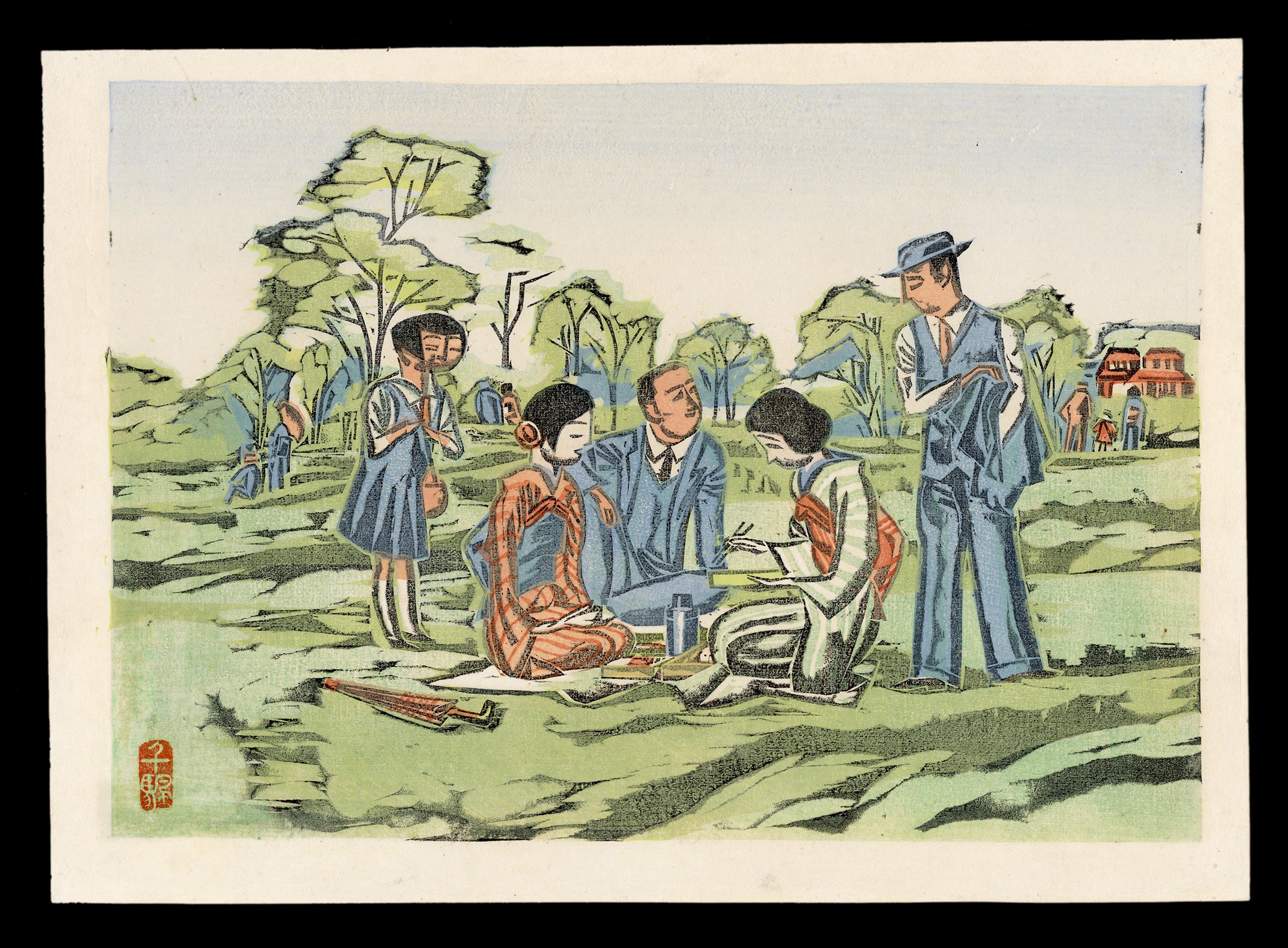
In Picnic, Maekawa Senpan offers a warm and observant vision of modern urban leisure during the late 1920s. A small gathering relaxes upon the grass beneath softly rendered trees, sharing food and conversation in an atmosphere of calm sociability. The composition is deceptively simple, yet it quietly records the shifting cultural identities of interwar Japan with remarkable sensitivity.
Particularly striking is Maekawa’s depiction of clothing. Two women wear patterned kimono while nearby figures appear in contemporary Western attire: loose dresses, jackets, neckties, and brimmed hats associated with modern urban fashion. The coexistence of these styles reflects the cultural hybridity of the period, when traditional customs and imported cosmopolitan lifestyles blended throughout Tokyo’s expanding middle-class society. Rather than presenting conflict between old and new, Maekawa portrays their coexistence as effortless and natural, revealing how modern identity in Japan often emerged through adaptation rather than rupture.
The picnic itself represents a distinctly modern form of leisure. Public parks and suburban green spaces increasingly became sites where office workers, students, and families participated in new recreational activities influenced by Western customs and modern urban planning. Such scenes became closely associated with the growing culture of cafés, department stores, cinema-going, and seasonal outings that defined metropolitan life during the period. The gathering here suggests a relaxed world of companionship and mobility, far removed from the formalized social structures of earlier generations.
Stylistically, the print reflects the approachable and personal spirit of Sosaku Hanga. Maekawa’s hand remains visible throughout the design: the lightly carved contours, airy spatial arrangement, and restrained palette lend the scene an immediacy that feels intimate rather than monumental. The greens and pale blues create an atmosphere of fresh spring light, while the figures are simplified into elegant silhouettes that emphasize gesture and mood over strict realism.
The composition also reveals Maekawa’s sensitivity to modern psychology. No single figure dominates the scene; instead, attention moves gently among the participants. Small interactions—a glance exchanged between seated companions, the standing man reading from a booklet, the quiet posture of the young woman at left—create a sense of lived experience unfolding naturally before the viewer.
Connoisseur's Note
Picnic stands among Maekawa Senpan’s most compelling explorations of everyday modern life. While many artists of the period focused upon the spectacle of Ginza streets, illuminated cafés, or monumental urban reconstruction, Maekawa instead turned toward quieter moments of social transformation. The modern city appears here indirectly, through changing habits, fashions, and patterns of leisure carried outward into nature.
The juxtaposition of kimono and Western clothing is especially significant. During the late 1920s, many urban Japanese moved fluidly between traditional and contemporary identities depending upon setting and occasion. Rather than presenting modernity as wholly foreign, Maekawa records the subtle process through which imported styles were absorbed into ordinary life. The print therefore becomes not merely a pastoral outing, but a portrait of cultural transition itself.
Collectors have long admired Maekawa’s ability to merge humor, elegance, and observational subtlety within seemingly casual subjects. His prints frequently avoid overt drama, yet they reward prolonged viewing through nuanced human detail and sophisticated compositional balance. Here, the expansive lawn and softly articulated trees create an atmosphere of openness that mirrors the social freedom experienced by Japan’s increasingly urban middle classes during the interwar years.
Fine impressions of Picnic are especially appealing for their delicate color harmonies and lightly textured printing. The gentle transparency of the greens and blues contributes greatly to the work’s atmosphere, reinforcing the sense of fleeting seasonal pleasure that lies at the heart of the composition.
More prints by Maekawa Senpan:

1931
RESERVED
Subway
Maekawa Senpan (1888–1960)
SERIES: One Hundred Views of New Tokyo
MEDIUM: Woodblock print
DATE: 1931
DIMENSIONS: 8 3/8 x 10 5/8 inches
CONDITION: Excellent, no problems to note
$3,000.00 <RESERVED>