

 Image 1 of 1
Details
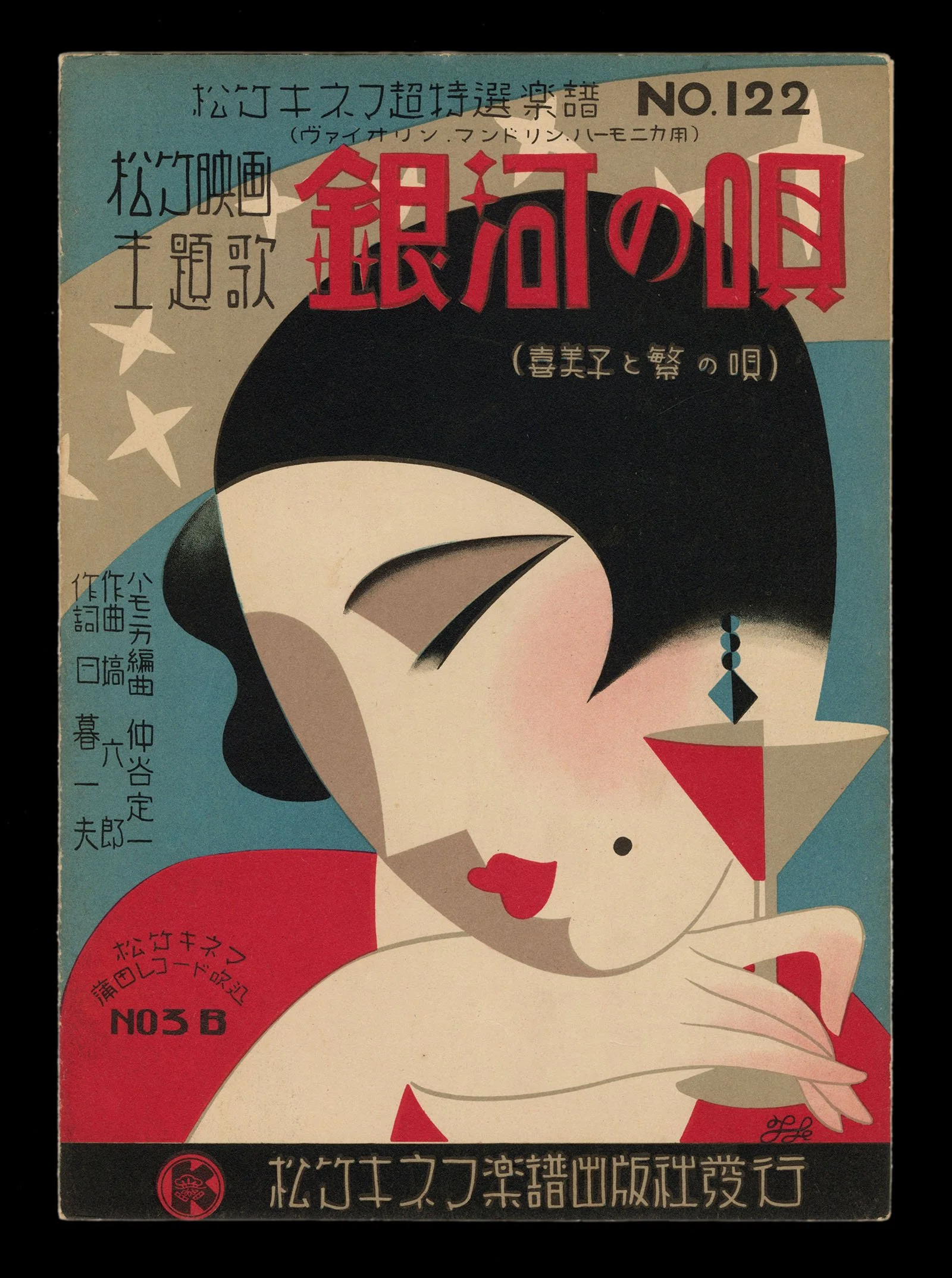
This striking Art Deco composition presents an elegant modern woman rendered through a sophisticated vocabulary of geometric forms. Her face is reduced to sweeping curves and angular planes, while a sleek black bob frames features distilled into the essentials of modern beauty: arched brows, crimson lips, and a beauty mark positioned with deliberate theatricality. In her hand rests a cocktail glass, transforming the composition into a visual manifesto of metropolitan leisure. The palette of pale blue, black, cream, and vivid vermilion echoes the fashionable graphic design of contemporary magazines and advertising posters.
Within the exhibition’s framework, the image embodies the emergence of the moga as both consumer and cultural icon. The stars scattered across the background reinforce the celestial title while simultaneously suggesting cinema marquees and the electric nightlife of modern Tokyo. The woman appears suspended between fantasy and urban sophistication, her stylized elegance reflecting a generation captivated by film, jazz, and cosmopolitan aspirations.
Connoisseur's Note
Among surviving Japanese sheet music covers, this design ranks as a particularly successful fusion of commercial illustration and avant-garde aesthetics. The artist demonstrates familiarity with European Art Deco while adapting its language to Japanese tastes, producing a composition that feels simultaneously international and distinctly local. The fashionable woman, cocktail glass, and celestial references create a visual world perfectly attuned to the aspirations of the modern urban consumer.
Such covers remind us that Japan possessed one of the highest rates of music literacy in the world during the interwar years, with well over ninety percent of the population able to read music. Sheet music functioned as a powerful vehicle for the circulation of popular songs, film themes, and contemporary fashions. As a result, these ephemeral publications became some of the most visually adventurous examples of graphic design produced during the Shōwa period, preserving the glamour, imagination, and social ideals of modern city life.