

 Image 1 of 1
Details
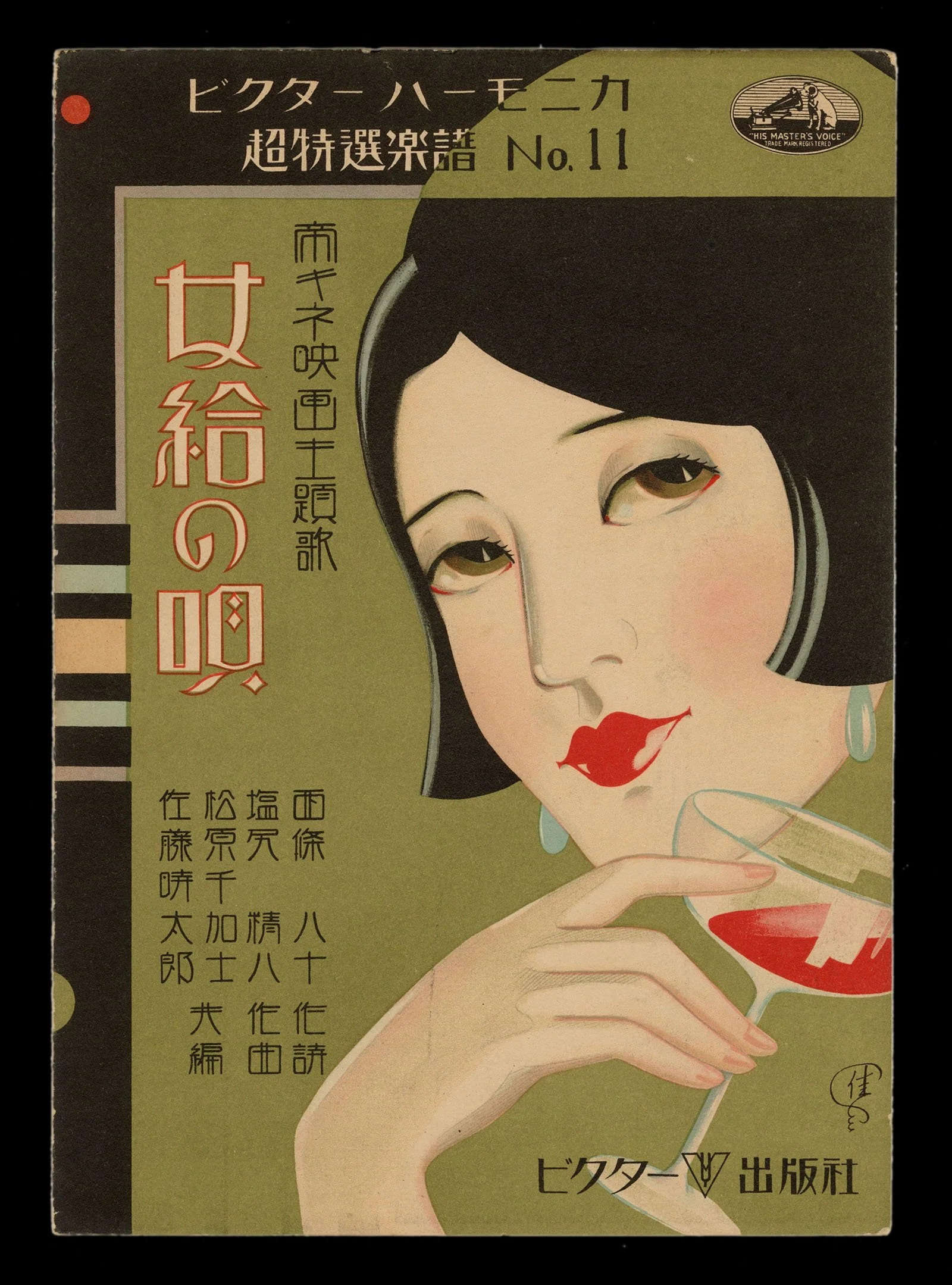
Among the most evocative images of modern urban culture in the exhibition, this cover depicts a fashionable café waitress holding a glass of wine. Her bobbed hairstyle, carefully applied cosmetics, and elegant attire place her firmly within the world of cafés, nightlife, and modern leisure. Executed in a restrained palette of green, cream, black, and crimson, the design achieves a remarkable balance between sophistication and accessibility.
The café waitress emerged as one of the defining figures of interwar Japan. Working in establishments that served as gathering places for artists, students, office workers, and intellectuals, these women became symbols of modernity itself. The image captures the allure and ambiguity associated with café culture, a world that offered both new opportunities and new social freedoms for women.
Connoisseur's Note
Few sheet music covers engage so directly with the social realities of urban modernity. The café waitress occupied a prominent place within the popular imagination, appearing frequently in songs, films, novels, and magazine illustrations. As a cultural figure, she embodied both the excitement and the uncertainties of a rapidly changing society.
Japan’s extraordinary music literacy ensured that images such as this reached audiences across the country. Sheet music served as a powerful medium through which contemporary fashions, occupations, and social trends were disseminated. Today these covers preserve invaluable evidence of how popular culture visualized the changing role of women in modern Japan.