

 Image 1 of 1
Details
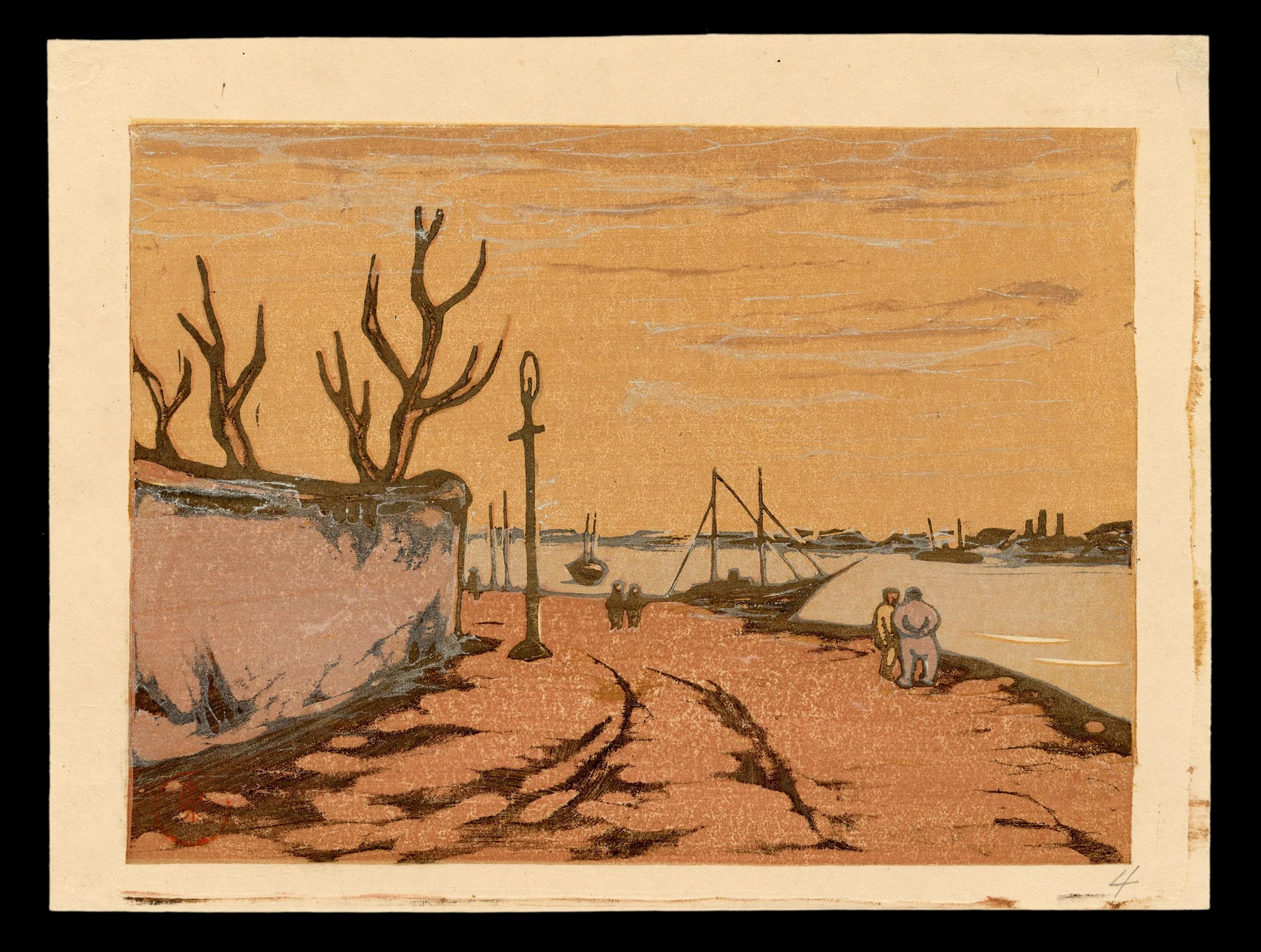
In Tsukiji, Sakuichi Fukazawa presents the modern capital through an unexpectedly restrained and intimate lens. Rather than emphasizing the crowded commercial vitality for which the district would later become famous, the artist depicts a quiet riverside path curving gently beside calm water under a muted amber sky. Bare trees rise in angular silhouettes from behind a low embankment wall, while moored boats drift softly in the harbor beyond. Small figures walk slowly along the shoreline, their presence secondary to the expansive stillness of the atmosphere surrounding them.
The composition demonstrates Fukazawa’s remarkable command of spatial simplicity. The winding shoreline draws the viewer gradually into the picture plane, while the open sky and broad water create an almost meditative sense of emptiness. Subtle tones of ochre, gray, and faded rose soften the industrial waterfront into something lyrical and reflective. Though signs of urban life remain visible in the distant smokestacks and harbor activity, the scene retains an emotional quietude that recalls earlier landscape traditions even as it depicts a rapidly modernizing Tokyo. The print exists in a delicate balance between city and memory, modernity and solitude.
Connoisseur's Note
Fukazawa occupied an important position within the creative print movement through his ability to merge modern urban subject matter with deeply atmospheric design. His prints often avoid overt drama in favor of emotional subtlety, allowing mood and tonal harmony to carry the expressive weight of the composition. In Tsukiji, this sensitivity transforms an ordinary waterfront into a contemplative meditation on the evolving identity of Tokyo itself.
The artist’s treatment of the harbor is especially significant within the broader visual culture of the reconstructed capital. Waterfront districts symbolized both economic recovery and international openness during the late 1920s, yet Fukazawa resists portraying the city as purely industrial or triumphant. Instead, he reveals how even within an expanding metropolis there remained pockets of silence, introspection, and seasonal stillness. This nuanced emotional register distinguishes the finest works of early Sosaku Hanga, where modern life was not merely documented, but quietly felt.
Only fifty impressions of each design in the One Hundred Views of New Tokyo series were produced, making surviving examples increasingly scarce today. The limited production reflects the highly artisanal nature of the project and the independent ethos central to the Sosaku Hanga movement. Prints from the series are now regarded among the most important visual records of Tokyo’s reconstruction during the interwar period.
More prints by Sakuichi Fukazawa:
1929
$2,500
Yanagibashi Bridge
Sakuichi Fukazawa (1896–1947)
SERIES: One Hundred Views of New Tokyo
MEDIUM: Woodblock print
DATE: 1929
DIMENSIONS: 7 ¾ x 10 ½ inches
CONDITION: Excellent, paper and adhesive remnants on reverse
$2,500.00