

 Image 1 of 1
Details
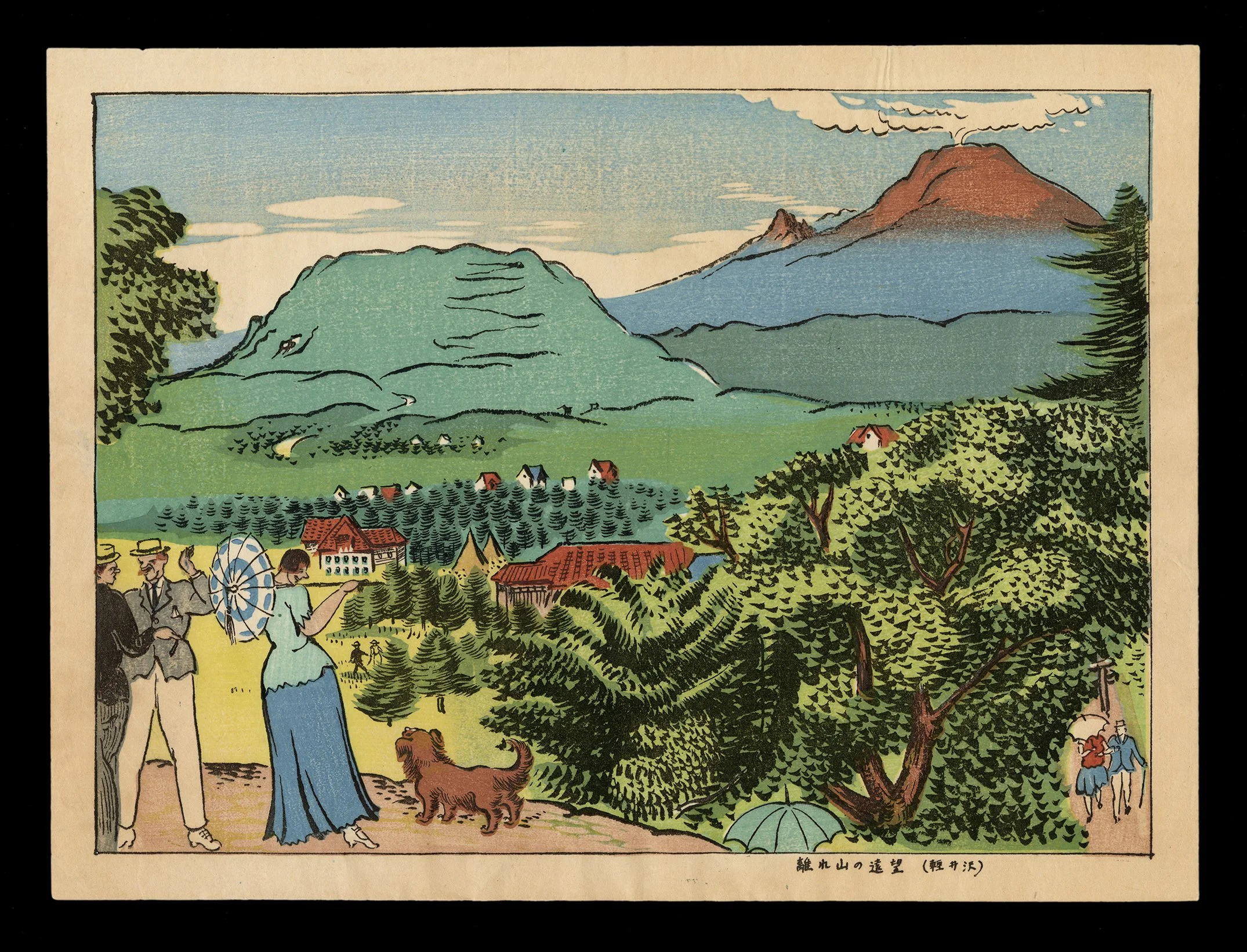
View of Mount Hanareyama from Karuizawa, Yoshio Nakanishi captures the atmosphere of a fashionable mountain retreat during the early Shōwa period. Elegant visitors stand admiring the expansive landscape while strolling paths wind through forests toward distant villas and mountain peaks. The scene radiates a quiet optimism associated with Japan’s growing culture of travel and seasonal leisure during the late 1920s and early 1930s.
Karuizawa held a unique place within modern Japanese society. Originally developed as a resort destination frequented by foreign missionaries and diplomats during the Meiji period, it evolved into an important summer retreat for affluent Japanese urbanites seeking fresh air, recreation, and cosmopolitan social life. Nakanishi’s print reflects this international atmosphere through carefully observed details: fashionable tailored suits, flowing Western dresses, parasols, hats, and even the small dog accompanying the visitors all evoke the modern resort culture associated with interwar leisure.
The composition is particularly effective in its balance between cultivated social elegance and untamed natural beauty. Mount Hanareyama rises calmly beyond layers of rolling green hills and dense forest, anchoring the scene within a recognizably Japanese landscape while the foreground figures embody the changing rhythms of contemporary life. The mountain itself appears softened rather than monumental, integrated harmoniously into a world shaped equally by tourism, mobility, and seasonal pleasure.
Nakanishi’s Sosaku Hanga technique lends the work a fresh and personal vitality. The trees are animated through rhythmic hand-carved textures, while the broad passages of green and blue preserve the immediacy of direct observation. Unlike the polished atmospheric idealization often associated with Shin Hanga landscapes, Nakanishi’s approach feels more intimate and immediate, reflecting the artist’s personal encounter with place.
The print also reveals the increasingly fluid cultural identities of the period. The visitors move comfortably through the Japanese countryside dressed in Western fashion, suggesting how modernity had become woven into ordinary experience rather than existing as something foreign or imposed. Such scenes resonated deeply during a period when travel, tourism, and recreation were rapidly transforming middle-class life in Japan.
Connoisseur's Note
View of Mount Hanareyama from Karuizawa is an especially appealing example of Sosaku Hanga’s engagement with modern leisure culture and internationalized spaces within Japan. Rather than depicting dramatic urban spectacle alone, Nakanishi focuses upon the quieter social transformations accompanying interwar modernity: tourism, resort life, outdoor recreation, and changing forms of public identity.
The work also reflects Nakanishi’s important artistic lineage. As a pupil of Kanae Yamamoto, the founder of the Sosaku Hanga movement, Nakanishi inherited a philosophy centered upon individual artistic expression and direct engagement with contemporary life. Yamamoto encouraged artists to observe the world around them personally rather than rely upon inherited pictorial formulas, a sensibility fully evident in the immediacy and observational warmth of this composition.
More prints by Yoshio Nakanishi:
1931
$1,500
Early Winter in Front of Prefectural Office
Takeji Asano (1900–1998)
MEDIUM: Woodblock print
DATE: 1931
DIMENSIONS: 10 × 13 7/8 inches
CONDITION: Excellent; no problems to note
$1,500.00