

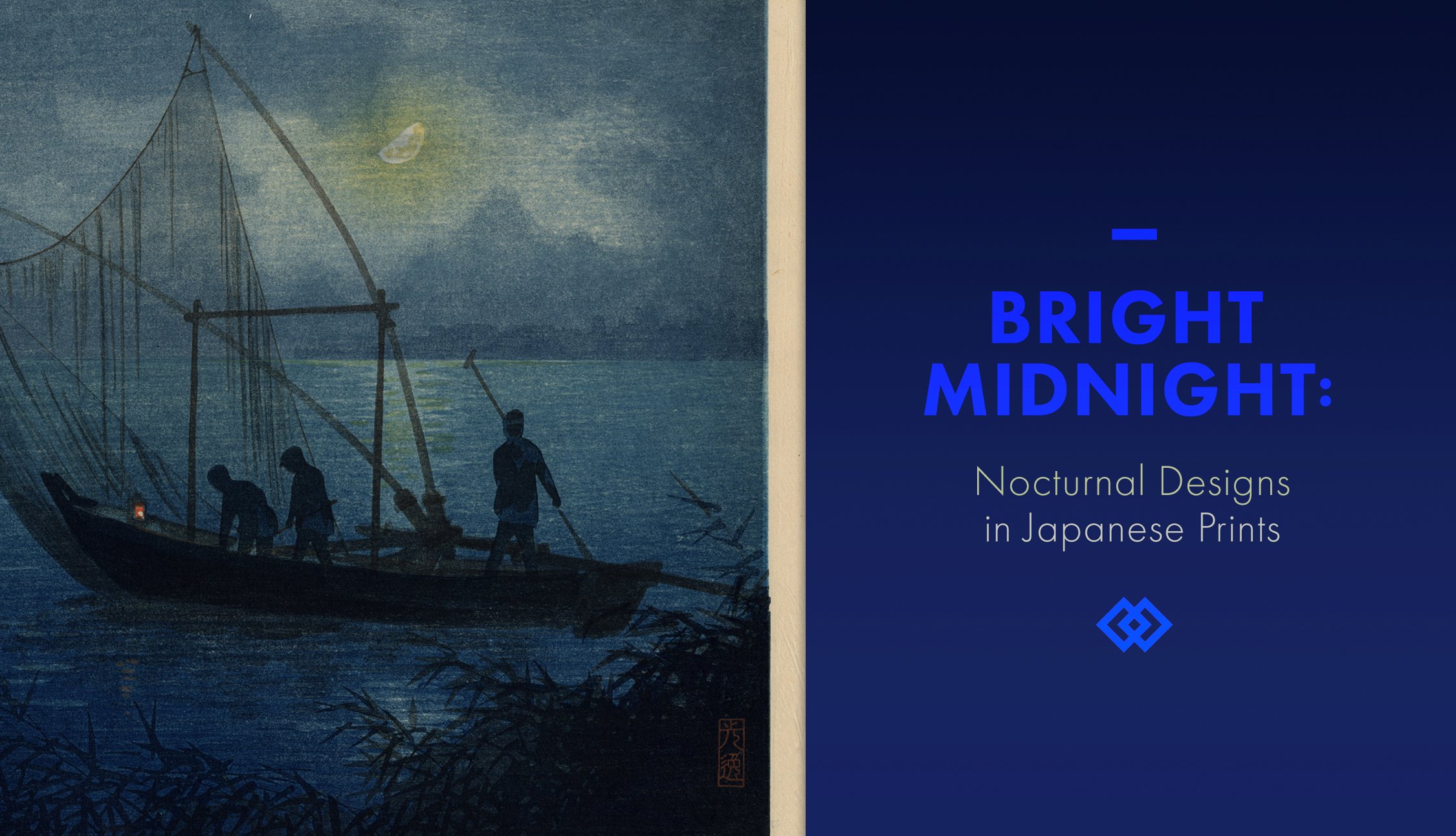
BRIGHT MIDNIGHT
Nocturnal Designs in Japanese Prints
Night has always held a particular fascination for the Japanese print artist. Beneath a luminous moon, along a rain-darkened street, or within the warm glow of lanterns reflected upon water, the familiar world is transformed. Colors deepen, silhouettes sharpen, and even the smallest source of illumination assumes dramatic intensity. Spanning Ukiyo-e, Shin Hanga, Sōsaku Hanga, and contemporary printmaking, this exhibition explores the enduring power of the nocturne and the remarkable ways Japanese artists have found light within darkness.
The great Ukiyo-e masters had already discovered the expressive possibilities of moonlight, shadow, silhouette, and restricted palettes, but as Japan entered the modern era, the night itself began to change. Gaslight and electricity introduced new points of brilliance into the darkness as railway stations, shops, bridges, theaters, and city streets joined the older world of moonlit temples and landscapes. The artists of Shin Hanga brought these effects to extraordinary atmospheric refinement, building deep blues and blacks through repeated impressions and using subtle bokashi to create skies that dissolve almost imperceptibly into darkness. Against them, a lantern, illuminated doorway, distant moon, or reflection upon water could glow with jewel-like intensity.
With Sōsaku Hanga, the nocturne became increasingly personal and expressive. Darkness could serve not simply as atmosphere, but as a vehicle for abstraction, psychological suggestion, and formal experimentation: architecture dissolved into geometric masses, figures became silhouettes, and moons or streetlamps emerged as brilliant points of tension within otherwise darkened compositions. Contemporary artists have continued this exploration, revealing the persistence of night as fertile territory for experimentation across successive generations of Japanese printmaking.
Throughout these traditions runs a shared understanding: darkness is never simply black. It may be indigo, violet, charcoal, silver, or the deepest Prussian blue; it may shimmer with reflected light or conceal nearly everything except a solitary illuminated form. The layered pigments, subtle gradations, and extraordinary sensitivity of the Japanese woodblock proved uniquely suited to capturing these fleeting effects. In these prints, darkness reduces the visible world only to intensify what remains—a distant light, falling snow, a reflection upon water, a solitary figure, or a temple roof silhouetted against the moon. It is precisely at night that light becomes most brilliant, color most mysterious, and the familiar world most capable of becoming extraordinary.
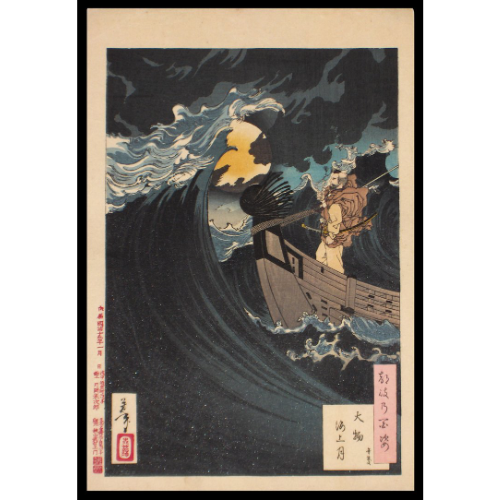
Moon Above the Sea at Daimotsu Bay
Taiso Yoshitoshi (1839-1892)
SERIES: One Hundred Aspects of the Moon
MEDIUM: Woodblock Print
DATE: 1886
DIMENSIONS: 14 3/4 x 9 7/8 inches
CONDITION: Excellent; no problems to note
LITERATURE: John Stevenson, Yoshitoshi's One hundred aspects of the moon, 2001, pl. 12
SOLD
Contact us to purchase
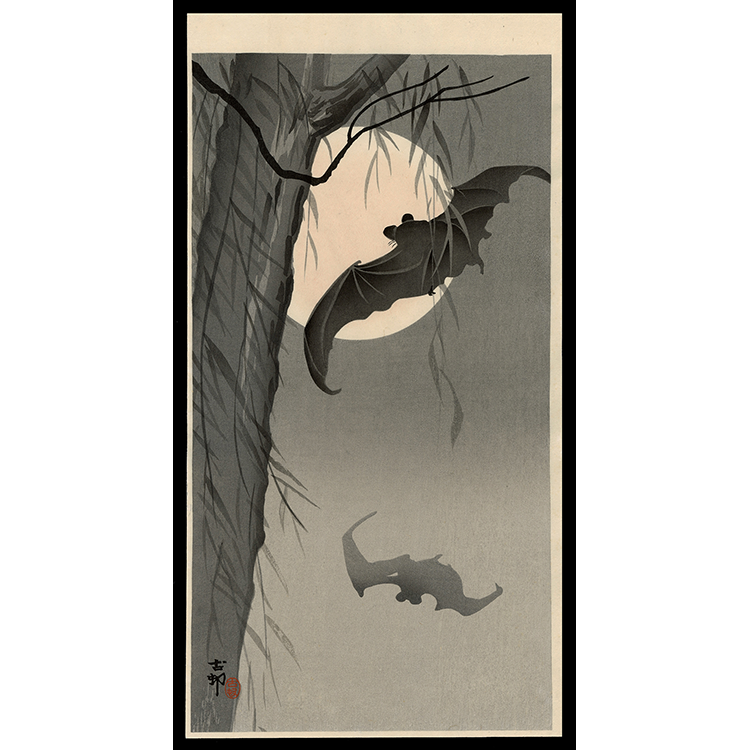
Bats Against Full Moon
Ohara Koson (1877-1945)
MEDIUM: Woodblock Print
DIMENSIONS: 14 3/8 x 7 1/2 inches
CONDITION: Excellent; no problems to note
LITERATURE: Amy Newland et. al., Crows, Cranes & Camellias: The Natural World of Ohara Koson 1877-1945, 2001, p. 138, cat. no. 135
SOLD
Contact us to purchase
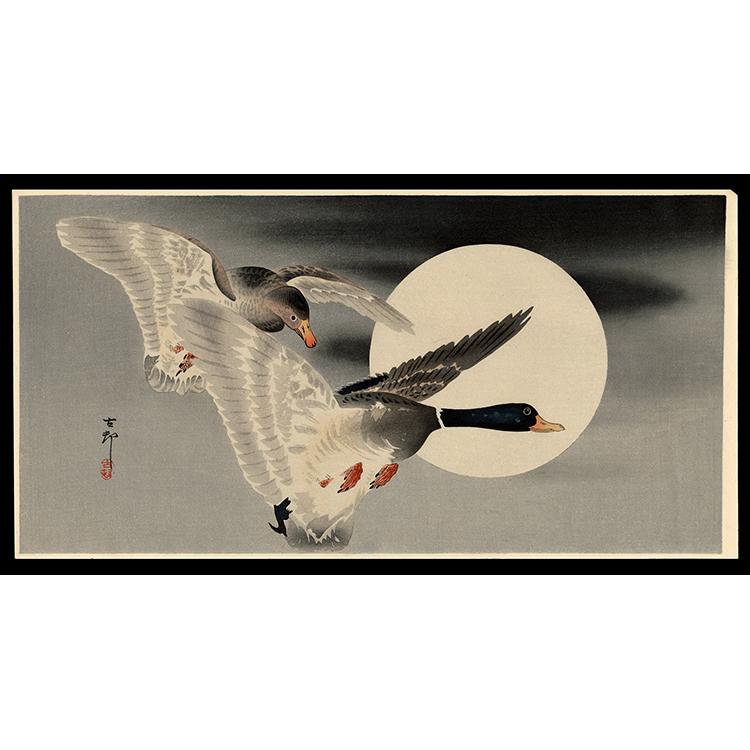
Two Mallards in Flight of Moon
Ohara Koson (1877-1945)
MEDIUM: Woodblock Print
DIMENSIONS: 7 1/2 x 14 1/2
CONDITION: Excellent; no problems to note
LITERATURE: Amy Newland et. al., Crows, Cranes & Camellias: The Natural World of Ohara Koson 1877-1945, 2001, cat. no. K7.1
SOLD
Contact us to purchase
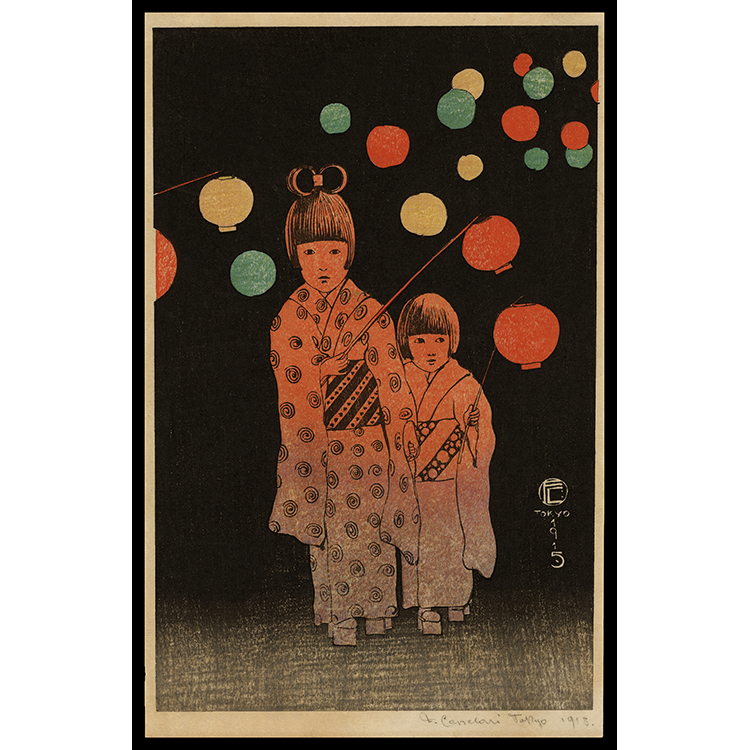
Children at the Fair
Fritz Capelari (1884-1950)
MEDIUM: Woodblock
DATE: 1915
DIMENSIONS: 9 1/4 x 5 7/8 inches
CONDITION: Excellent—no problems to note
LITERATURE: Yokohama Museum of Art, Eyes Towards Asia: Ukiyo-e Artists from Abroad, 1996, pl. 83
SOLD
Contact us to purchase
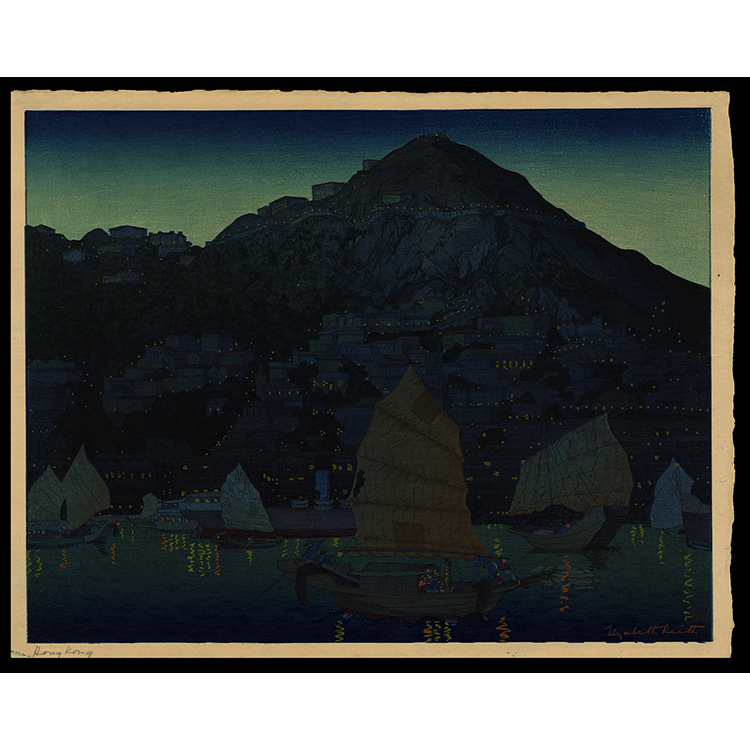
Hong Kong Harbor, Night
Elizabeth Keith (1887-1956)
MEDIUM: Woodblock Print
DATE: 1924
DIMENSIONS: 13 x 16 1/8 inches
CONDITION: Excellent; minor adhesive residue on reverse top from original Watanabe mount
LITERATURE: Richard Miles, Elizabeth Keith: The Printed Works, 1991, pl. 11
SOLD
Contact us to purchase
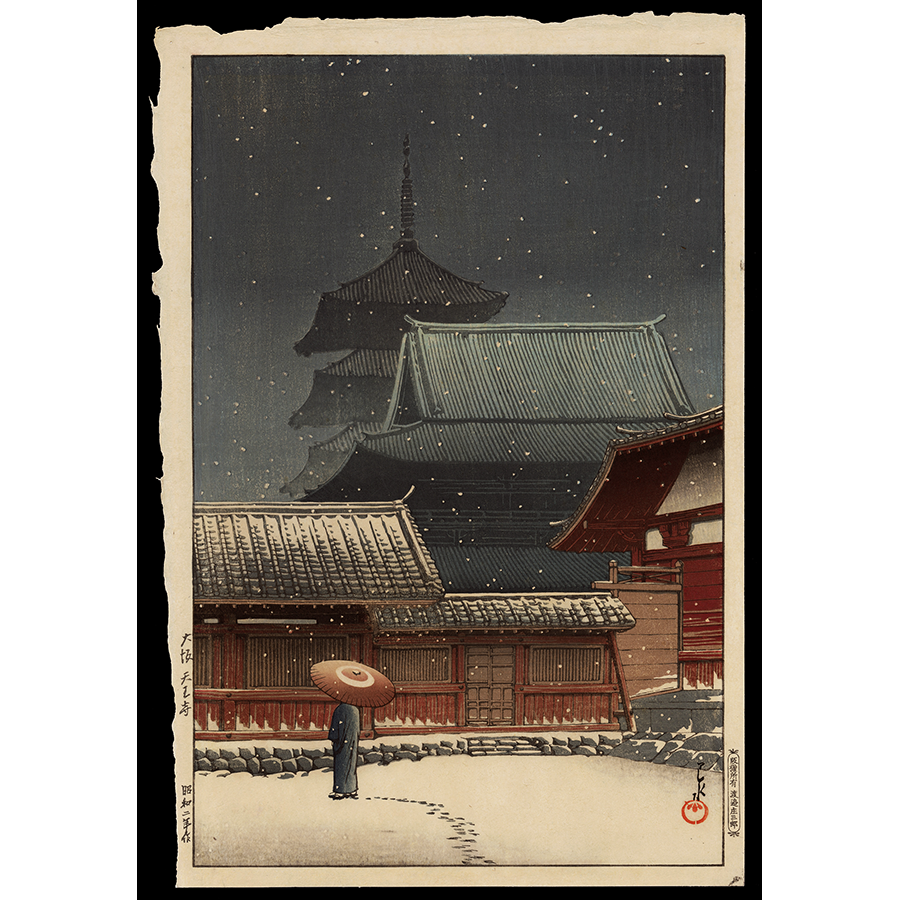
Tennoji Temple, Osaka
Kawase Hasui (1883-1957)
MEDIUM: Woodblock Print
DATE: 1927
DIMENSIONS: 15 3/8 x 10 1/4 inches
CONDITION: No condition problems to note
LITERATURE: Kendall H. Brown, Kawase Hasui: The Complete Woodblock Prints, 2003, pl. 135
NOTE: Watanabe C-Type Seal; early pre-war printing
SOLD
Contact us to purchase
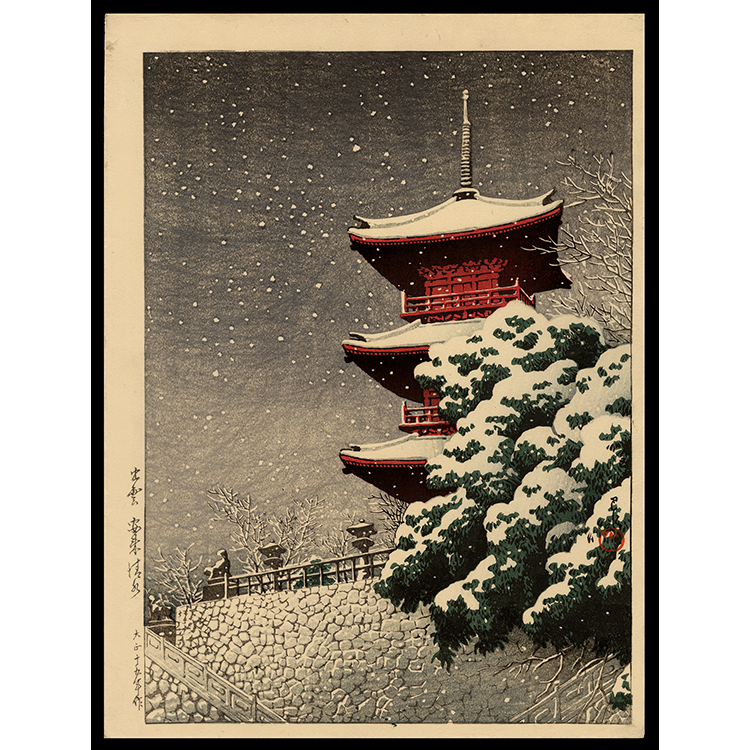
Yasugi Kiyomizu, Izumo
Kawase Hasui (1883-1957)
MEDIUM: Woodblock Print
EDITION: Watanabe, post-war impression
DATE: 1926
DIMENSIONS: 12 x 9 inches
CONDITION: Excellent; no problems to note
LITERATURE: Kendall H. Brown, Kawase Hasui: The Complete Woodblock Prints, 2003, pl. 117
SOLD
Contact us to purchase
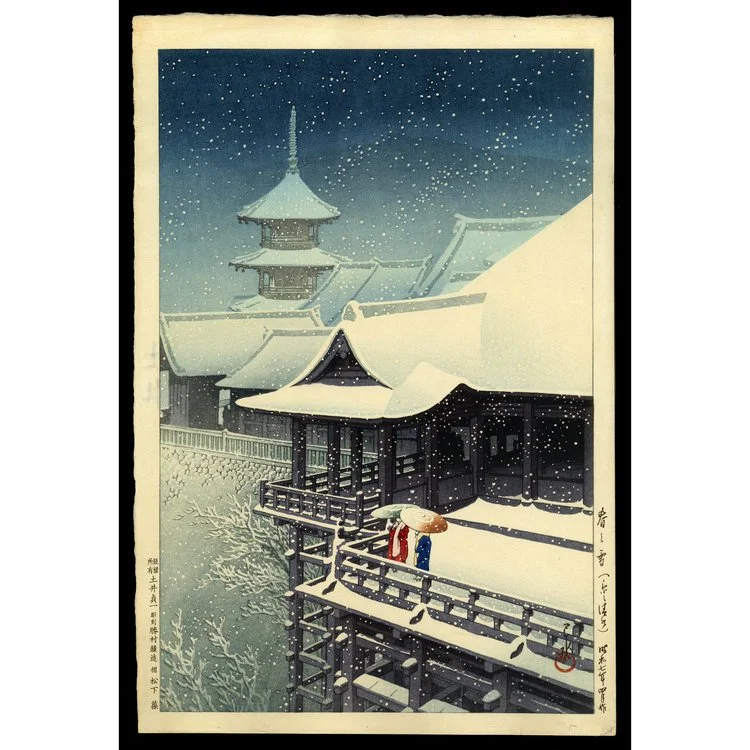
Spring Snow at Kiyomizu, Kyoto
Kawase Hasui (1883-1957)
MEDIUM: Woodblock Print
EDITION: Doi Teiichi, first state
DATE: 1929
DIMENSION: 15 1/8 x 10 1/4 inches
CONDITION: Excellent; no problems to note
LITERATURE: Kendall H. Brown, Kawase Hasui: The Complete Woodblock Prints, 2003, pl. 276
SOLD
Contact us to purchase
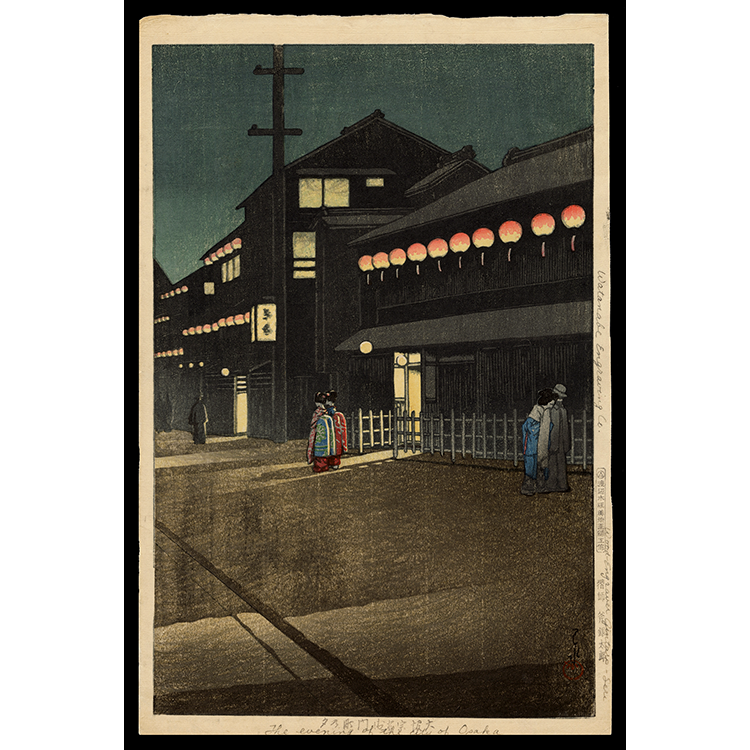
Evening at Soemon Cho, Osaka
Kawase Hasui (1883-1957)
MEDIUM: Woodblock Print
DATE: 1933
DIMENSIONS: 15 3/8 x 10 1/8 inches
CONDITION: Excellent; no problems to note
LITERATURE:Kendall H. Brown, Kawase Hasui: The Complete Woodblock Prints, 2003, pl. 318
NOTE: Additional seal indicating the carver printer is Tadasu Watanabe; notations in the same ink as seals at margins, presumably added by publisher’s assistants
SOLD
Contact us to purchase
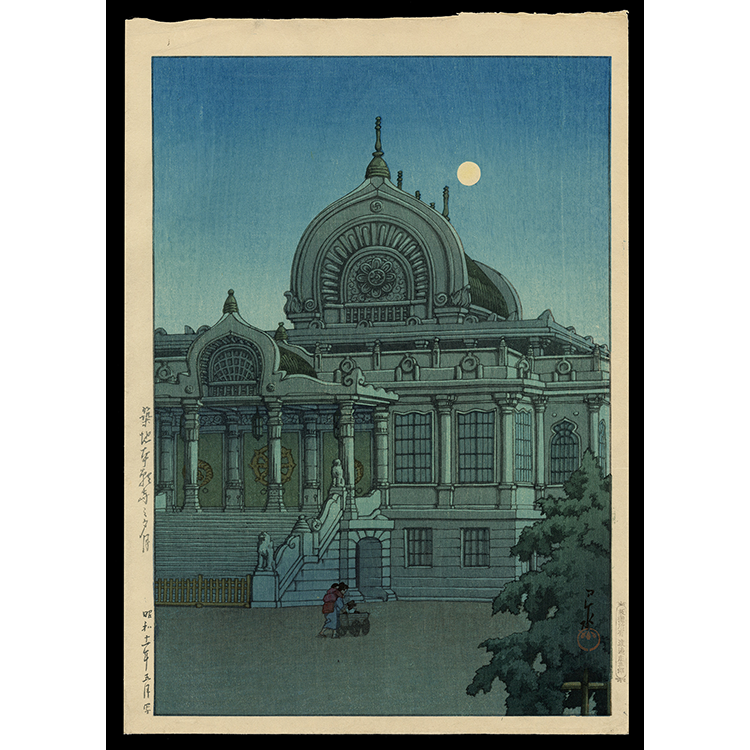
Evening Moon at Hongan Temple
Kawase Hasui (1883-1957)
MEDIUM: Woodblock Print
EDITION: Watanabe C-type seal, first state
DATE: 1936
DIMENSIONS: 13 5/8 x 9 3/4 inches
CONDITION: Excellent; no condition problems to note
LITERATURE: Kendall H. Brown, Kawase Hasui: The Complete Woodblock Prints, 2003, pl. 388
SOLD
Contact us to purchase
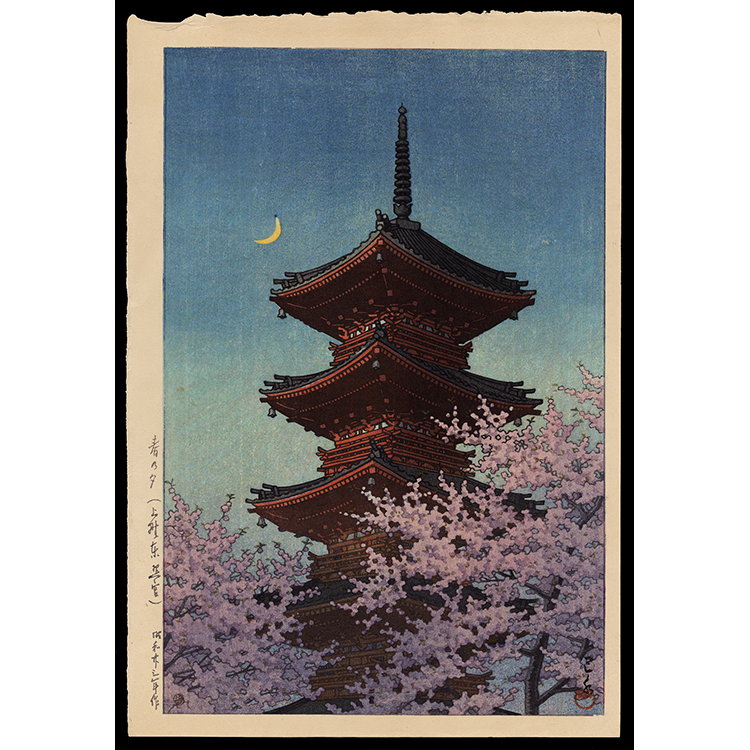
Spring Dusk at the Tosho Shrine, Ueno
Kawase Hasui (1883-1957)
MEDIUM: Woodblock Print
EDITION: Round 6mm Watanabe seal, first state
DATE: 1948
DIMENSIONS: 15 1/2 x 10 5/8 inches
CONDITION: Excellent; no condition problems to note
LITERATURE: Kendall H. Brown, Kawase Hasui: The Complete Woodblock Prints, 2003, pl. 509
SOLD
Contact us to purchase

ARTIST: Kawase Hasui (1883-1957)
TITLE: Snow at Zojoji Temple
MEDIUM: Woodblock
DATE: 1922
DIMENSIONS: 15 5/8 x 10
PUBLISHER: S. Watanabe Print Co.
CONDITION: Pristine, with sharp and vivid colors—no condition problems to note
LITERATURE: Kendall H. Brown, Kawase Hasui: The Complete Woodblock Prints, 2003, pl. 81
NOTE: Rare pre-earthquake design
.
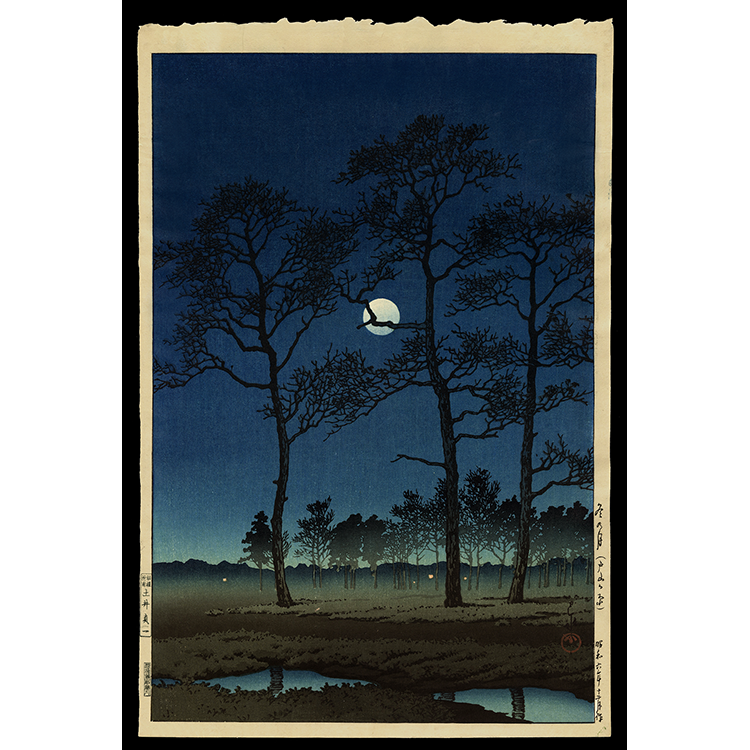
Winter Moon Over Toyama Plain
Hasui Kawase (1883-1957)
MEDIUM: Woodblock Print
EDITION: Publisher Doi Sadaichi (Teiichi), Carver/Printer, Fujikawa and Goto, first state
DATE: 1931
DIMENSIONS: 15 1/8 x 10 1/4 inches
CONDITION: Excellent; no problems to note
LITERATURE: Kendall H. Brown, Kawase Hasui: The Complete Woodblock Prints, 2003, pl. 260
SOLD
Contact us to purchase
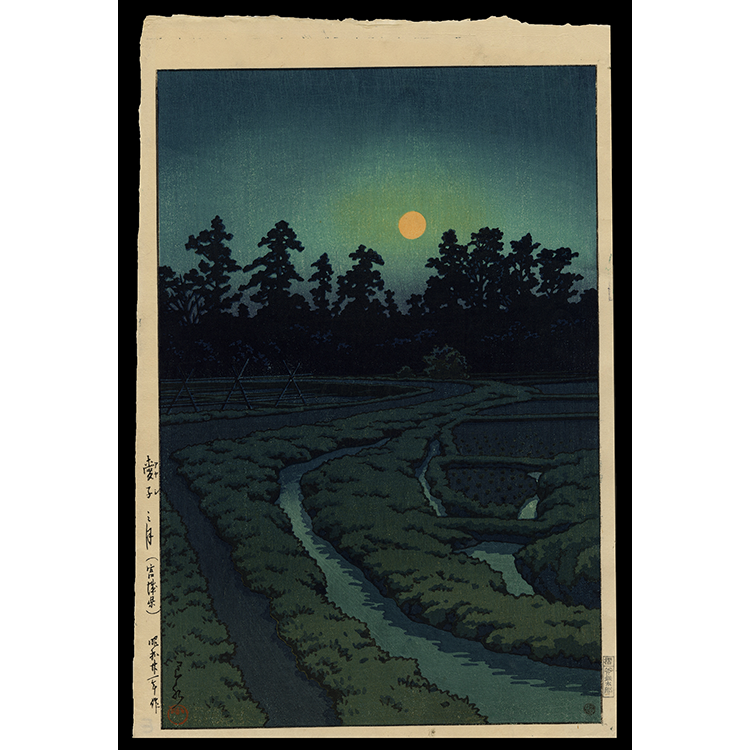
Moon at Ayashi
Kawase Hasui (1883-1957)
MEDIUM: Woodblock Print
EDITION: Round 6mm Watanabe seal, with printer seal of Ono Gintaro, first state
DATE: 1946
DIMENSIONS: 15 1/2 x 10 3/8 inches
CONDITION: Excellent; faint printer’s smudges at top margin
LITERATURE: Kendall H. Brown, Kawase Hasui: The Complete Woodblock Prints, 2003, pl. 488
SOLD
Contact us to purchase
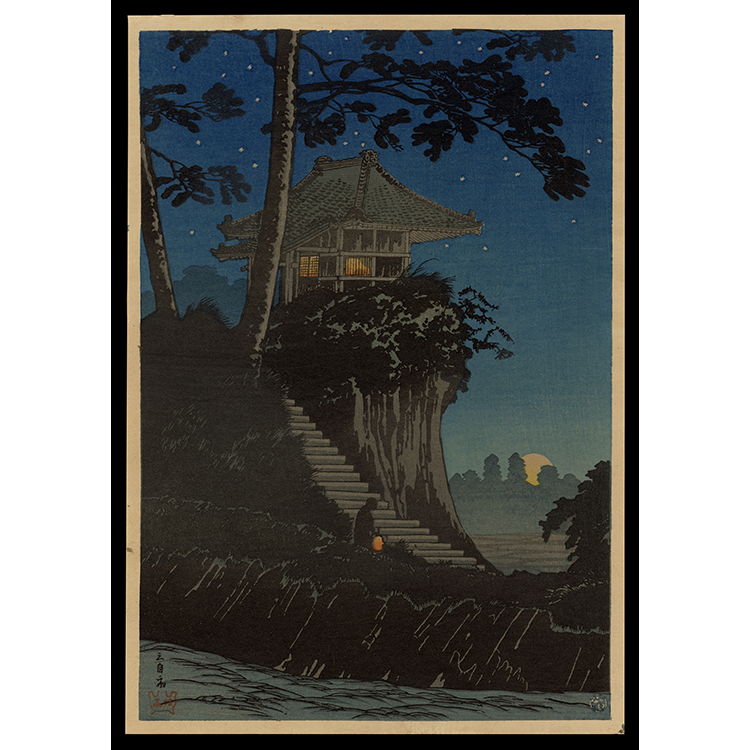
Tokumochi in Starry Night
Takahashi, Hiroaki (Shotei) (1871–1945)
MEDIUM: Woodblock Print
DATE: 1936
DIMENSIONS: 10 1/4 x 7 1/8 inches
CONDITION: Excellent, no problems to note
SOLD
Contact us to purchase
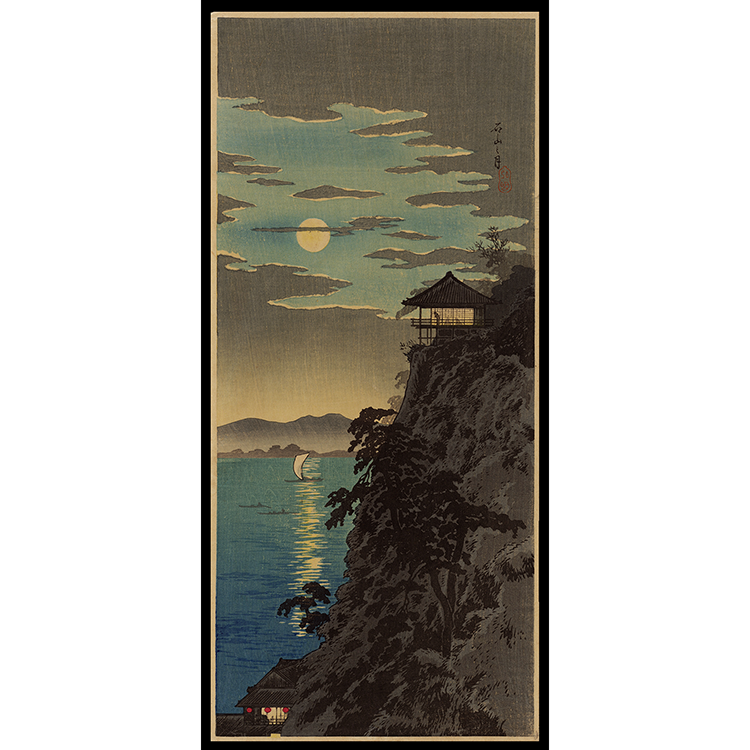
The Moon at Ishiyama
Takahashi Hiroaki (Shotei) (1871-1945)
MEDIUM: Woodblock Print
DATE: 1927
DIMENSIONS: 6 3/4 x 15 1/8 inches
CONDITION: Excellent; no problems to note
PROVENANCE: Robert O. Muller
SOLD
Contact us to purchase
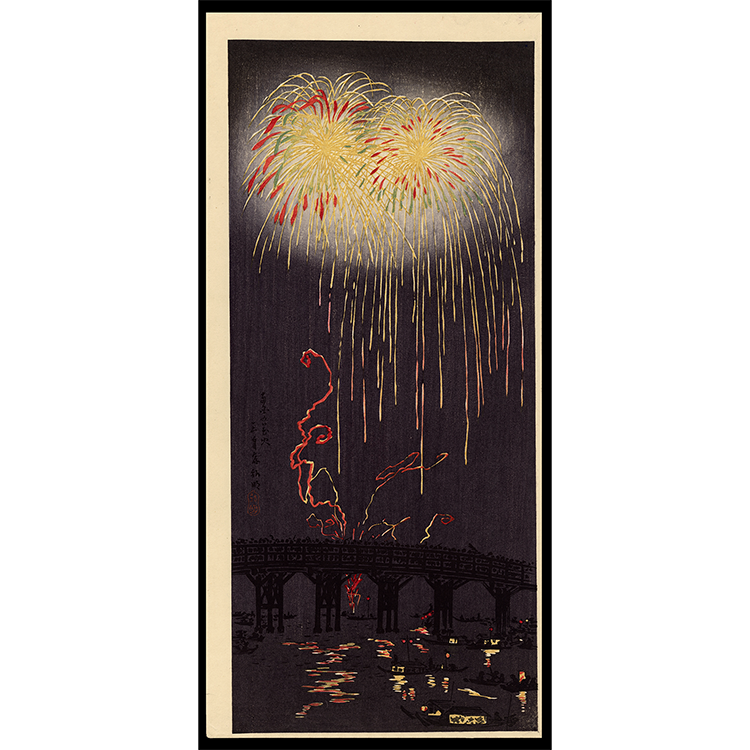
Fireworks at Ryogoku
Takahashi Hiroaki (Shotei) (1871-1945)
MEDIUM: Woodblock Print
DATE: c. 1927
DIMENSIONS: 15 1/2 x 7 3/4 inches
CONDITION: Excellent; no problems to note
LITERATURE: Hisao Shimizu, Hiroaki Takahasio. His life and Works, Folk Museum of Ota City, Tokyo, 2005, pl. 224
SOLD
Contact us to purchase
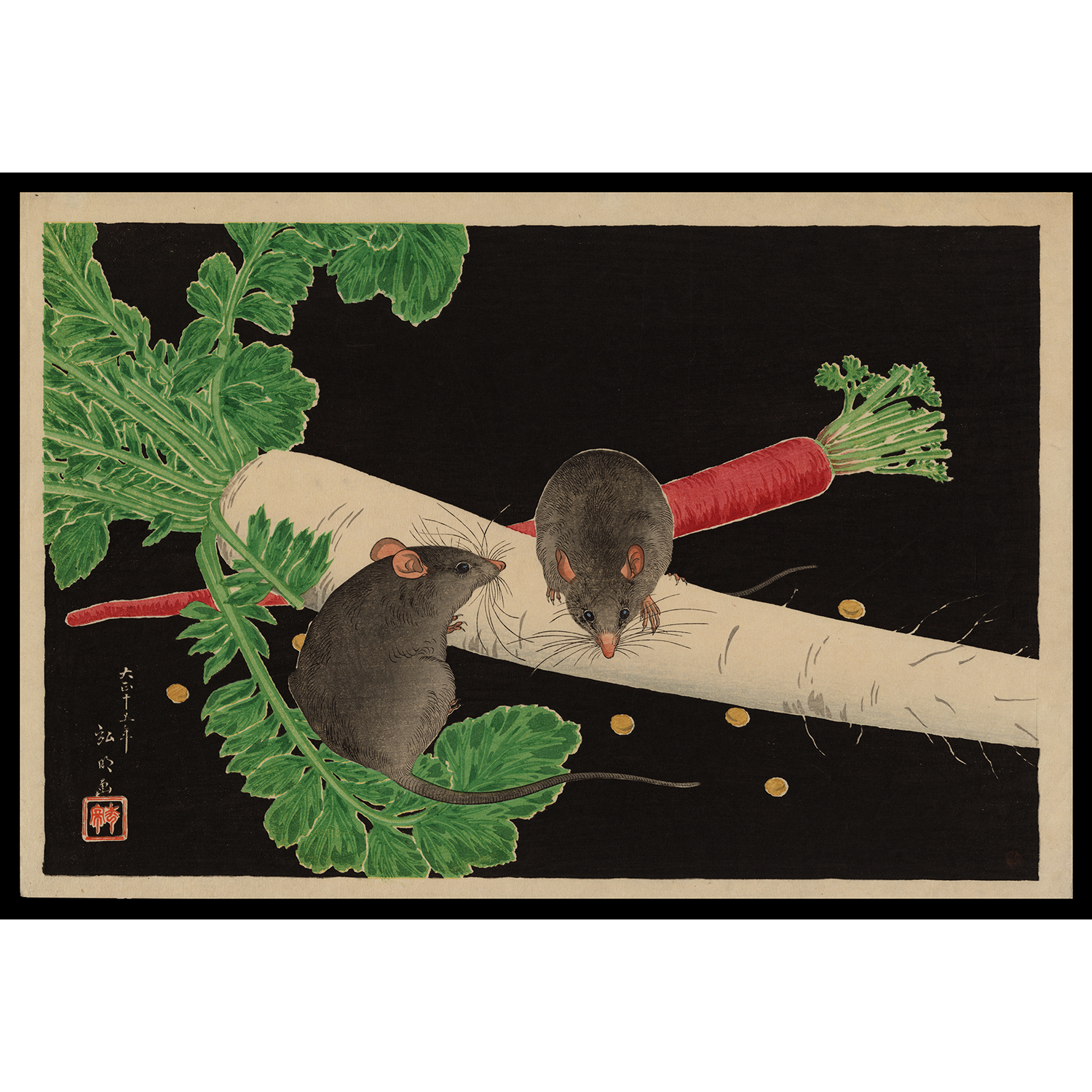
Mice, Radish, and Carrot
Hiroaki Takahashi (Shotei) (1871-1945)
MEDIUM: Woodblock Print
DATE: 1926
DIMENSIONS: 10 3/8 x 15 1/4 inches
CONDITION: Excellent; pristine colors, faint wrinkling at margins
SOLD
Contact us to purchase
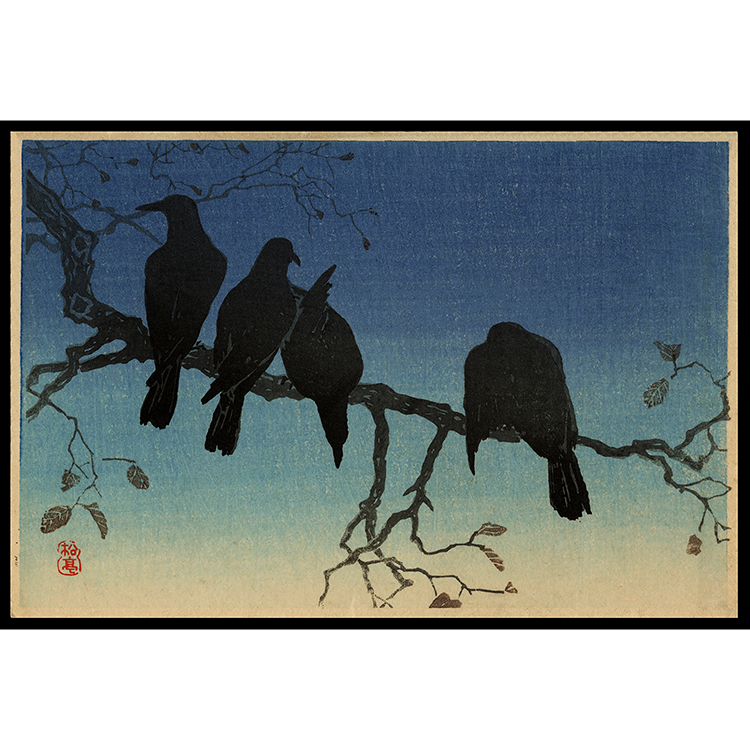
Crows on a Cold Night
Takahashi Hiroaki (Shotei) (1871–1945)
MEDIUM: Woodblock Print
DATE: 1930
DIMENSIONS: 4 7/8 x 7 1/4 inches
CONDITION: Excellent; no problems to note
PROVENANCE: Robert O. Muller
SOLD
Contact us to purchase
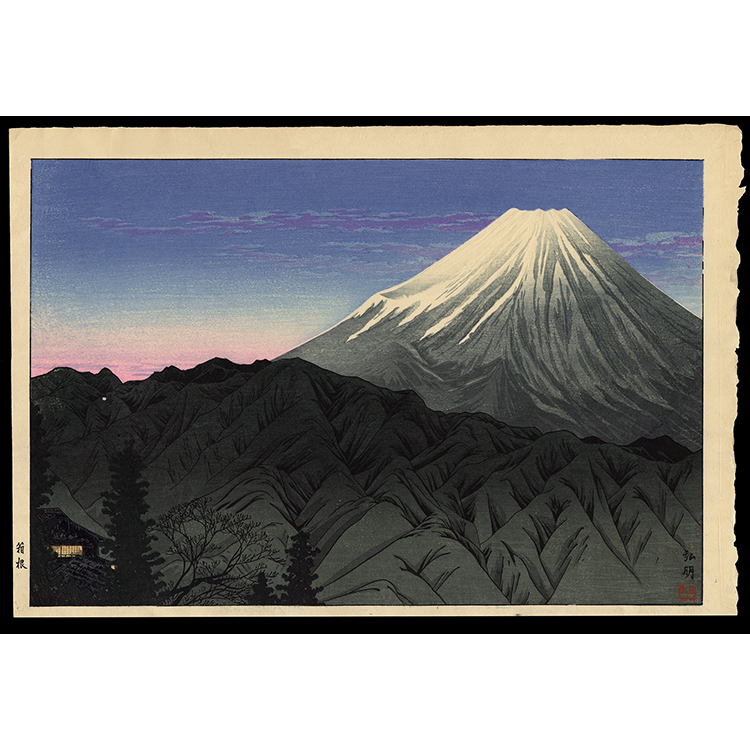
Mt. Fuji from Hakone
Takahashi Hiroaki (Shotei) (1871-1945)
MEDIUM: Woodblock Print
EDITION: No seal visible, post-war impression
DATE: 1932
DIMENSIONS: 10 5/8 x 15 5/8 inches
CONDITION: Excellent; no problems to note
NOTES: Exceedingly well executed impression with brighter coloration not typically seen
LITERATURE: Hisao Shimizu, Hiroaki Takahasio. His life and Works, Folk Museum of Ota City, Tokyo, 2005, pl. 279
SOLD
Contact us to purchase
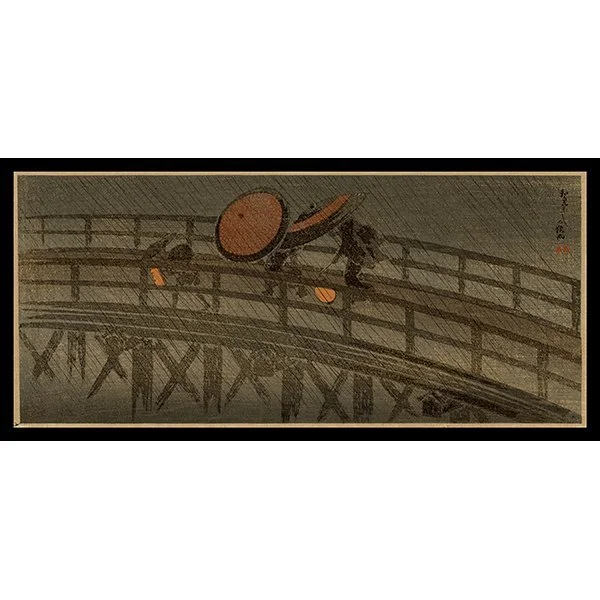
Rain on Izumibashi
Takahashi Hiroaki (Shotei) (1871-1945)
MEDIUM: Woodblock Print
DATE: 1922 (Pre-earthquake)
DIMENSIONS: 6 3/4 x 15 1/8 inches
CONDITION: Excellent; no problems to note
SOLD
Contact us to purchase
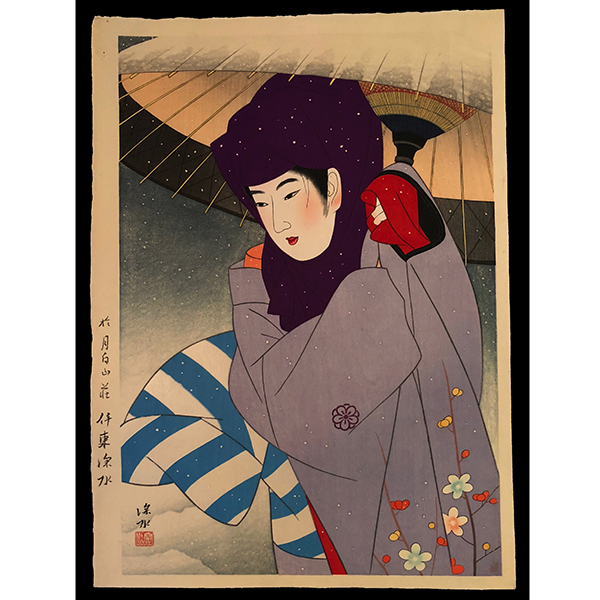
A Hooded Woman
Ito Shinsui (1898-1972)
MEDIUM: Woodblock Print
DATE: 1950
DIMENSIONS: 20 1/4 X 14 1/2 inches
PUBLISHER: Watanabe
CONDITION: Excellent; no problems to note
LITERATURE: Tadasu Watanabe, Ito Shinsui: All the Woodblock Prints, 1992, pl. 124
NOTES: Silver mica highlights, hand-applied gofun
SOLD
Contact us to purchase
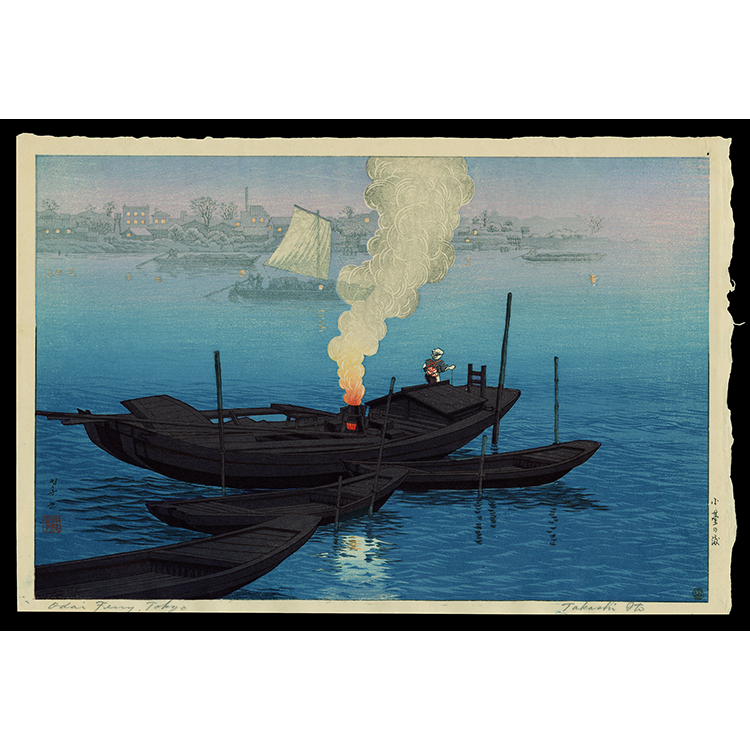
Ferry at Odai
Takashi Ito (1894-1982)
MEDIUM: Woodblock Print
EDITION: Round 6mm Watanabe seal, post-war printing
DATE: 1930
DIMENSIONS: 10 1/8 x 15 1/4 inches
CONDITION: Excellent; faint wrinkling at top right
SOLD
Contact us to purchase
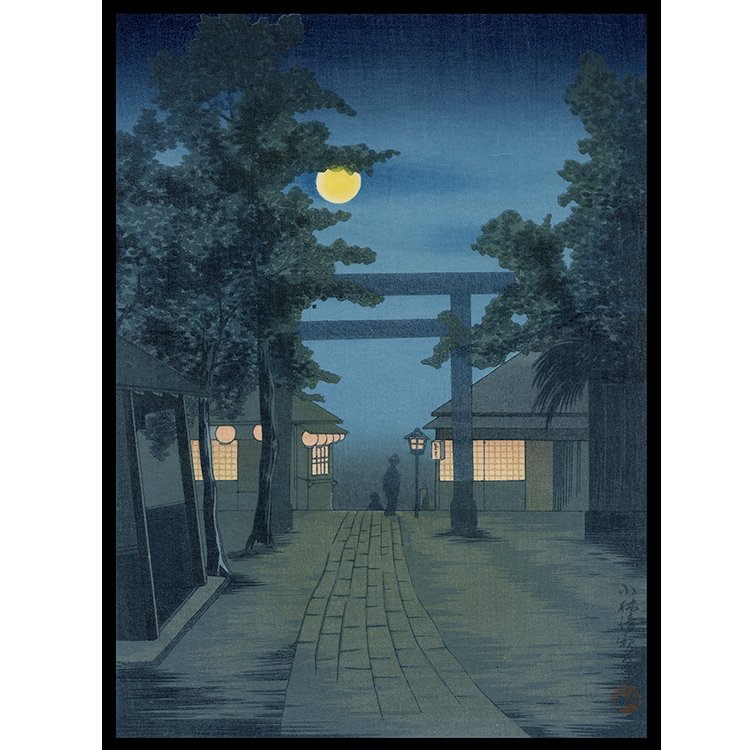
Torii and Full Moon
Kobayashi Kiyochika (1847-1915)
MEDIUM: Woodblock Print
DATE: c. 1930
DIMENSIONS: 10 1/8 x 7 1/2 inches
CONDITION: Excellent; no problems to note
PROVENANCE: Robert O. Muller
SOLD
Contact us to purchase
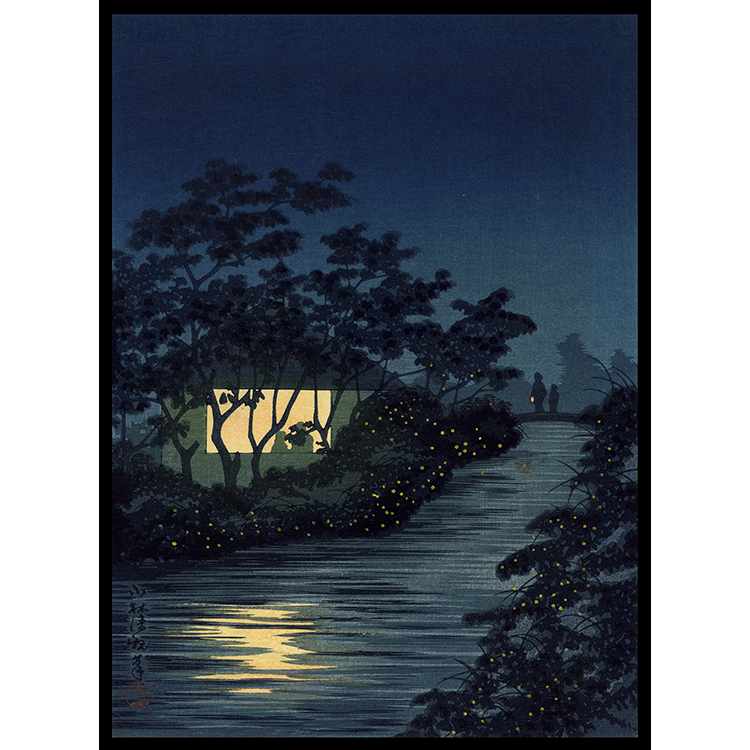
Fireflies on the Kinu River
Kobayashi Kiyochika (1847-1915)
MEDIUM: Woodblock Print
DATE: c. 1930
DIMENSIONS: 10 1/8 x 7 1/2 inches
CONDITION: Excellent
PROVENANCE: Robert O. Muller
SOLD
Contact us to purchase
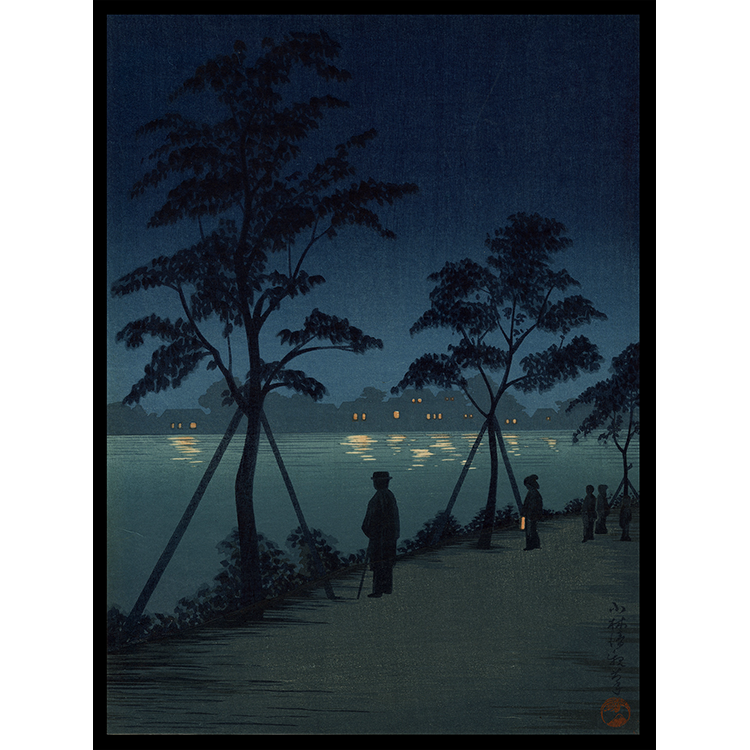
Night Scene at Sumida River
Kobayashi Kiyochika (1847-1915)
MEDIUM: Woodblock Print
DATE: c. 1930
DIMENSIONS: 10 1/8 x 7 1/2 inches
CONDITION: Excellent; no problems to note
PROVENANCE: Robert O. Muller
SOLD
Contact us to purchase
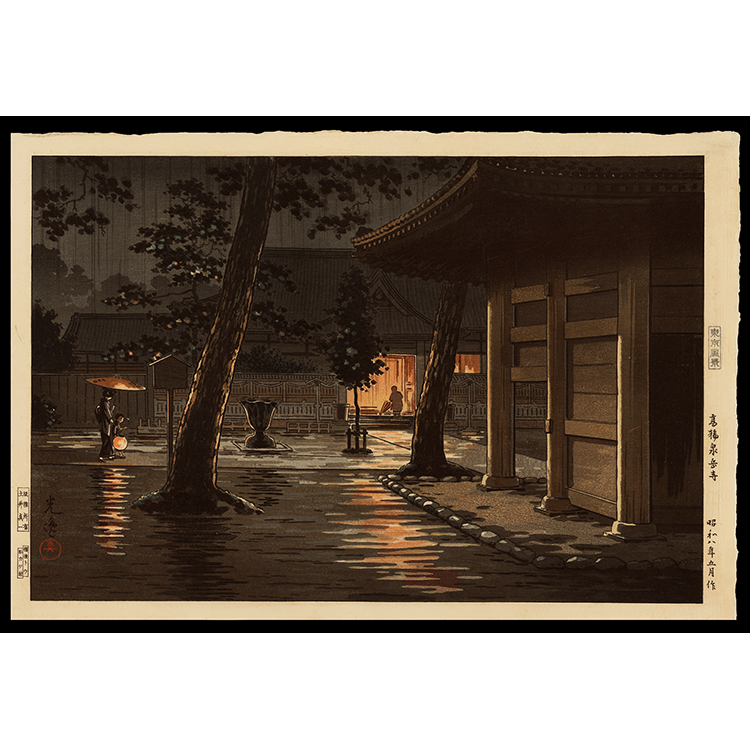
Sengakuji Temple at Takanawa in Tokyo
Tsuchiya Koitsu (1870-1949)
MEDIUM: Woodblock Print
EDITION: Publisher: Doi Sadaichi; Printer/Carver: Katsumura-Goto; first state
DATE: 1933
DIMENSIONS: 10 5/8 x 15 1/2 inches
CONDITION: Excellent; no problems to note
LITERATURE: Ross Walker and Toshikazu Doi, The Catalogue Raisonné of Tsuchiya Koitsu, 2008, p. 56, fig. 3.9
SOLD
Contact us to purchase
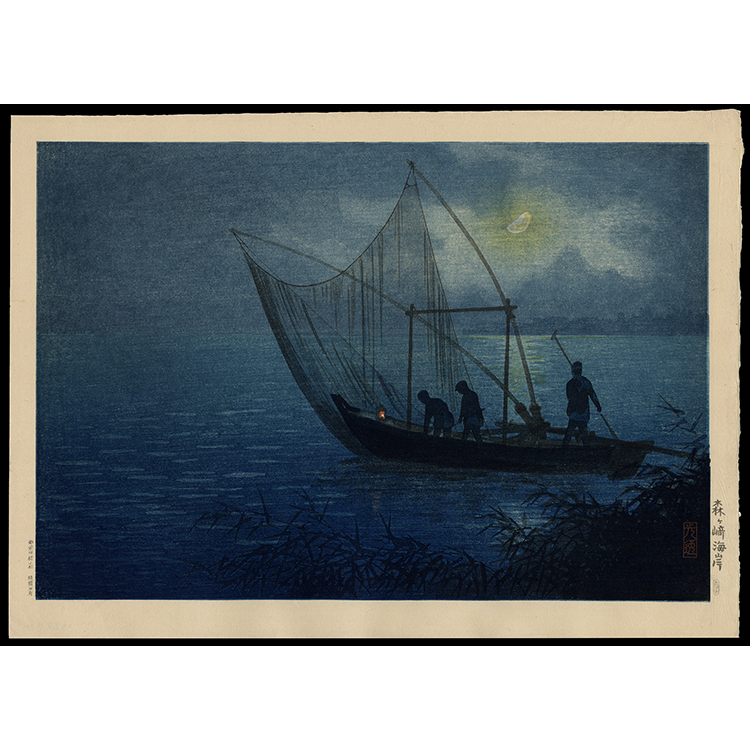
Fishing at Morigaseki
Tsuchiya Koitsu (1870–1949)
MEDIUM: Woodblock
DATE: 1930
DIMENSIONS: 11 3/4 x 16 1/4 inches
CONDITION: Excellent; no problems to note
NOTES: Published by Kawaguchi Sakai
LITERATURE: Ross Walker and Toshikazu Doi, The Catalogue Raisonné of Tsuchiya Koitsu, 2008, p. 262, fig. 8.3
SOLD
Contact us to purchase
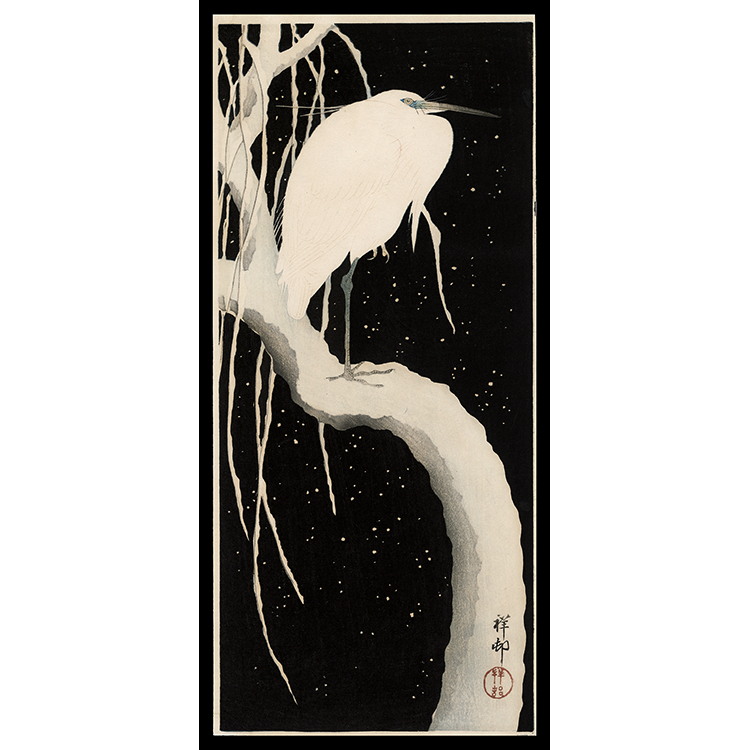
Egret On a Snow-Covered Branch
Ohara Shoson (1877-1945)
MEDIUM: Woodblock Print
DIMENSIONS: 15 x 6 3/4 inches
CONDITION: Excellent; no problems to note
LITERATURE: Amy Newland et. al., Crows, Cranes & Camellias: The Natural World of Ohara Koson 1877-1945, 2001, p. 152, cat. no. 156
SOLD
Contact us to purchase
c. 1840
SOLD
Bats and Moon
Ando Hiroshige (1797-1858)
MEDIUM: Woodblock Print
DATE: c. 1840
DIMENSIONS: 10 1/8 x 4 7/8 inches
CONDITION: Excellent; no problems to note
SOLD
Contact us to purchase