

 Image 1 of 1
Details
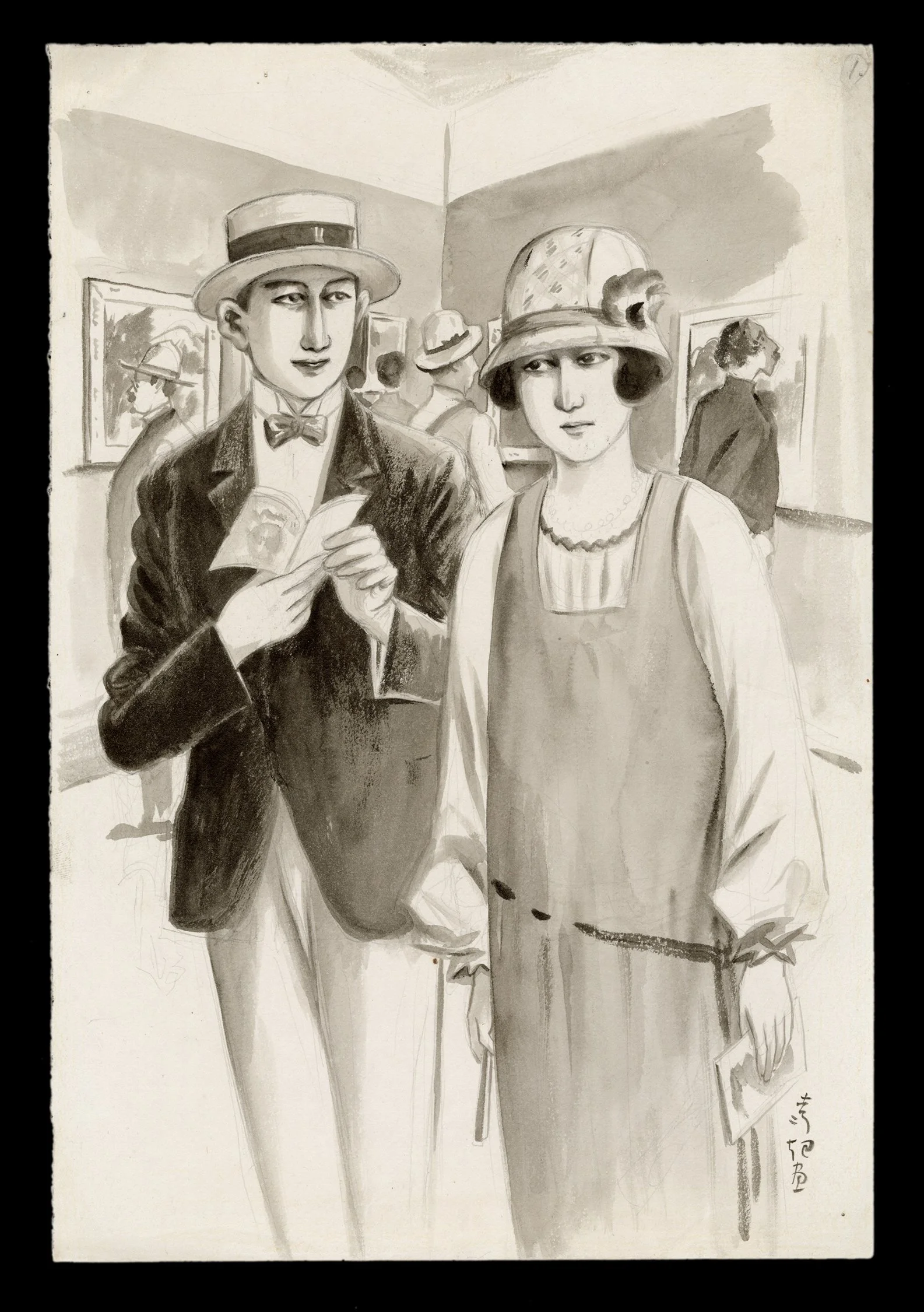
This refined ink drawing depicts a fashionable young couple attending an art exhibition or gallery interior during the late Taishō or early Shōwa period. The elegantly dressed mobo stands beside his female companion while gesturing toward a printed catalogue or illustrated pamphlet, as figures drift quietly through the exhibition space behind them. Executed with remarkable clarity and restraint, the composition captures the cultivated social atmosphere associated with modern urban leisure culture during Japan’s interwar years.
The figures themselves embody the visual sophistication of metropolitan café and gallery society during the 1920s. The young man appears in tailored Western evening attire complete with bow tie and boater hat, while the woman wears a fashionable dress and cloche hat accented by jewelry and decorative accessories. Their appearance reflects the growing influence of European and American fashion imagery circulating through Japanese magazines, cinema, and department store advertising during the period.
Likely conceived as an illustration study for serialized fiction or magazine publication, the drawing reveals how deeply modern consumer culture had become intertwined with artistic life itself. Art exhibitions increasingly functioned as social spaces where urban identity, fashion, romance, and intellectual sophistication intersected. The composition therefore operates simultaneously as portrait, genre scene, and subtle document of modern metropolitan behavior.
Particularly notable is the artist’s treatment of social performance. Although the figures stand together physically, their expressions remain psychologically reserved. The woman gazes outward with composed detachment while the man appears absorbed in his own gesture and presentation. This emotional distance introduces a sophisticated tension into the composition, suggesting the carefully constructed self-awareness that characterized much of interwar urban culture.
Connoisseur's Note
Original illustration drawings devoted to modern gallery and exhibition culture remain comparatively uncommon, making the present work an especially fascinating reflection of Japan’s evolving artistic and social environment during the 1920s. As museums, galleries, cafés, and department stores became increasingly interconnected within urban life, artists and illustrators began treating these environments as stages upon which modern identity itself was performed.
The drawing also reveals the growing influence of fashion illustration on Japanese popular art during the interwar period. The elongated silhouettes, controlled gestures, and refined clothing details closely parallel visual strategies found in contemporary European Art Deco illustration and luxury magazine design. Yet the artist tempers these international influences through a softer tonal handling and restrained emotional atmosphere.
Equally significant is the work’s subtle engagement with class and cultural aspiration. Attendance at exhibitions and artistic events became associated with cosmopolitan sophistication and intellectual modernity during the late Taishō and early Shōwa years. The figures here do not merely observe art; they themselves become part of the spectacle of modern urban refinement.
As with many surviving preparatory drawings connected to pulp fiction or magazine illustration culture, the immediacy of the work remains central to its appeal. One senses the artist working rapidly to establish mood, posture, and psychological relationship with remarkable economy. The resulting image preserves the fleeting elegance of interwar metropolitan life with unusual sensitivity and sophistication.