

 Image 1 of 1
Details
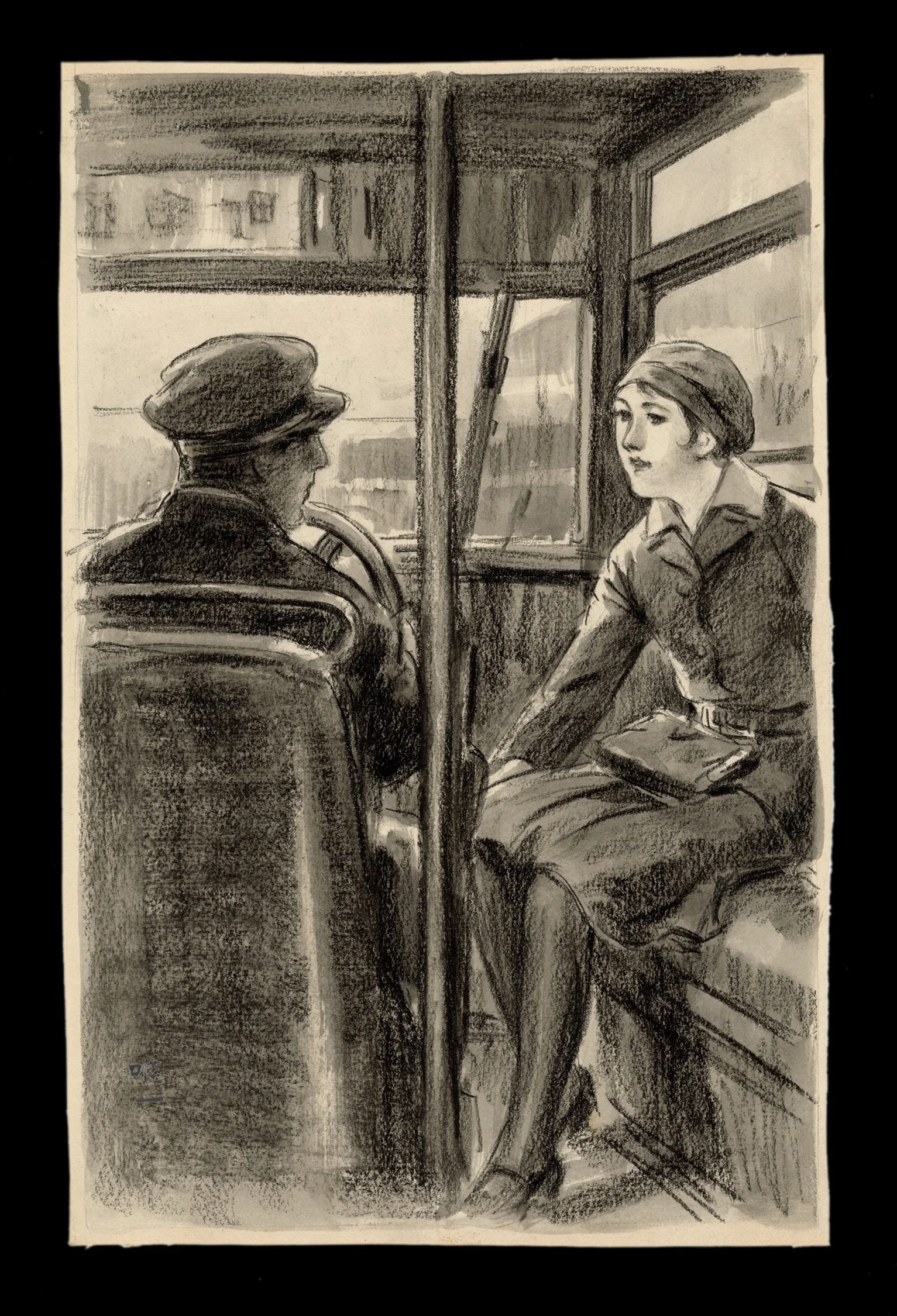
This evocative interior scene captures a young woman seated aboard a streetcar opposite a uniformed driver or conductor. Executed through soft monochromatic shading and economical line, the composition transforms an ordinary moment of urban transit into a psychologically charged encounter. The woman leans slightly forward as if engaged in intimate conversation, while the framing of the vehicle’s interior creates a compressed architectural space that heightens the emotional tension between the two figures.
Streetcars occupied a central place within the visual culture of modern Japanese cities during the interwar years. More than practical transportation, they became symbolic spaces of urban anonymity, fleeting social interaction, and changing gender dynamics. Women increasingly moved independently through metropolitan environments during the 1920s, and artists associated with illustration and pulp fiction frequently used streetcars, cafés, and train compartments as settings for narratives of romance, mystery, and modern social ambiguity.
The present drawing was likely conceived as a preparatory illustration for serialized fiction or magazine publication. The composition possesses a distinctly cinematic quality, with the vertical framing element bisecting the figures almost like a film shot. Rather than emphasizing overt narrative action, the artist focuses upon emotional atmosphere and suspended interaction. The viewer is left uncertain whether the exchange is romantic, conspiratorial, or entirely ordinary — an ambiguity that gives the work much of its sophistication.
The restrained tonal palette further enhances the intimacy of the scene. Dense passages of shadow surrounding the seated male figure contrast with the softer modeling of the woman’s face and clothing, subtly directing emotional attention toward her presence within the composition. The result is an image that feels remarkably modern in both mood and structure.
Connoisseur's Note
Drawings centered upon modern urban transportation remain particularly significant within the broader context of Japanese interwar visual culture. Streetcars, trains, and taxis represented the accelerating mobility of modern city life and frequently appeared in fiction, cinema, and illustration as symbolic environments where conventional social boundaries could briefly dissolve.
The present work is especially compelling for its understated treatment of female autonomy. The young woman occupies the emotional center of the composition not through dramatic gesture, but through composure and direct engagement. Such portrayals reflected evolving representations of women within popular literature during the 1920s and 1930s, when female characters increasingly moved through public urban spaces with confidence and independence.
Stylistically, the drawing reveals strong awareness of contemporary European illustration and film aesthetics. The dramatic interior framing, compressed perspective, and selective modeling closely resemble visual strategies associated with silent cinema and illustrated detective fiction of the period. Yet the work also retains a softness and emotional restraint distinctively Japanese in atmosphere.
As surviving original preparatory works, drawings of this nature provide rare insight into the visual language of Japan’s expanding mass-media culture before the disruptions of the wartime era. The immediacy of the artist’s hand remains fully visible, preserving the spontaneity and creative decision-making that were often lost in the transition from original drawing to published illustration.