

 Image 1 of 1
Details
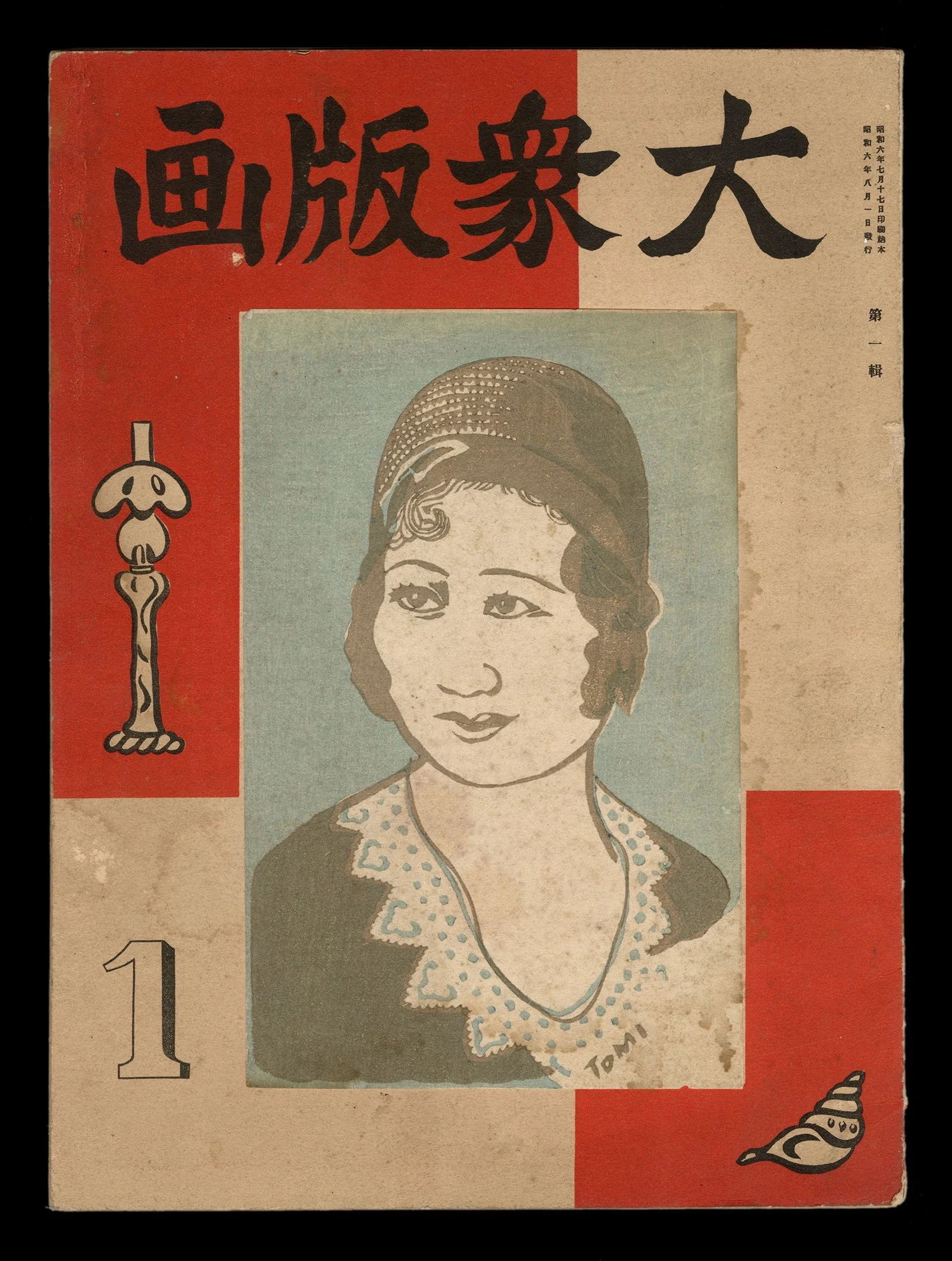
Published in Kyoto in August 1931, Taishū Hanga (Popular Prints) represented an ambitious effort to broaden awareness of Sosaku Hanga and foster a sense of community among artists working outside the better-established Tokyo circles. Co-founded by Tomikichirō Tokuriki, the magazine ultimately survived for only two issues, making complete examples today exceptionally scarce. Despite its brief lifespan, the publication served as an important platform for the dissemination of new ideas, original prints, and artistic dialogue during a formative period in the development of modern Japanese printmaking.
The striking cover design by Tokuriki depicts a fashionable young woman in contemporary dress, embodying the image of the moga, or modern girl, who became one of the defining cultural symbols of interwar Japan. Her bobbed hairstyle, stylish hat, and confident expression place the magazine firmly within the visual culture of the early 1930s, when changing attitudes toward fashion, leisure, and female identity were reshaping urban life. The issue contains contributions by leading Sosaku Hanga artists including Maekawa Senpan, Benji Asada, Hide Kawanishi, and others, offering a snapshot of the remarkable diversity and creative energy that characterized the movement during this period.
Connoisseur's Note
Although Taishū Hanga lasted only two issues, its significance far exceeds its brief publication history. Small artist-run magazines such as this played a crucial role in sustaining the Sosaku Hanga movement by circulating artistic ideas, reproductions, essays, and original prints among geographically dispersed artists and collectors. At a time when institutional support for creative printmaking remained limited, these publications functioned as informal networks of inspiration and education, helping maintain momentum for the movement while encouraging experimentation and collaboration. The choice of a modern girl for the inaugural cover is particularly revealing, linking the publication not only to developments in printmaking but also to the broader currents of urban modernity, consumer culture, and evolving social identity that defined Japan in the early Shōwa era. Today, Taishū Hanga stands as both a rare artifact of the movement and a testament to the grassroots efforts that helped ensure the continued vitality of Sosaku Hanga during one of its most important decades.