

 Image 1 of 2
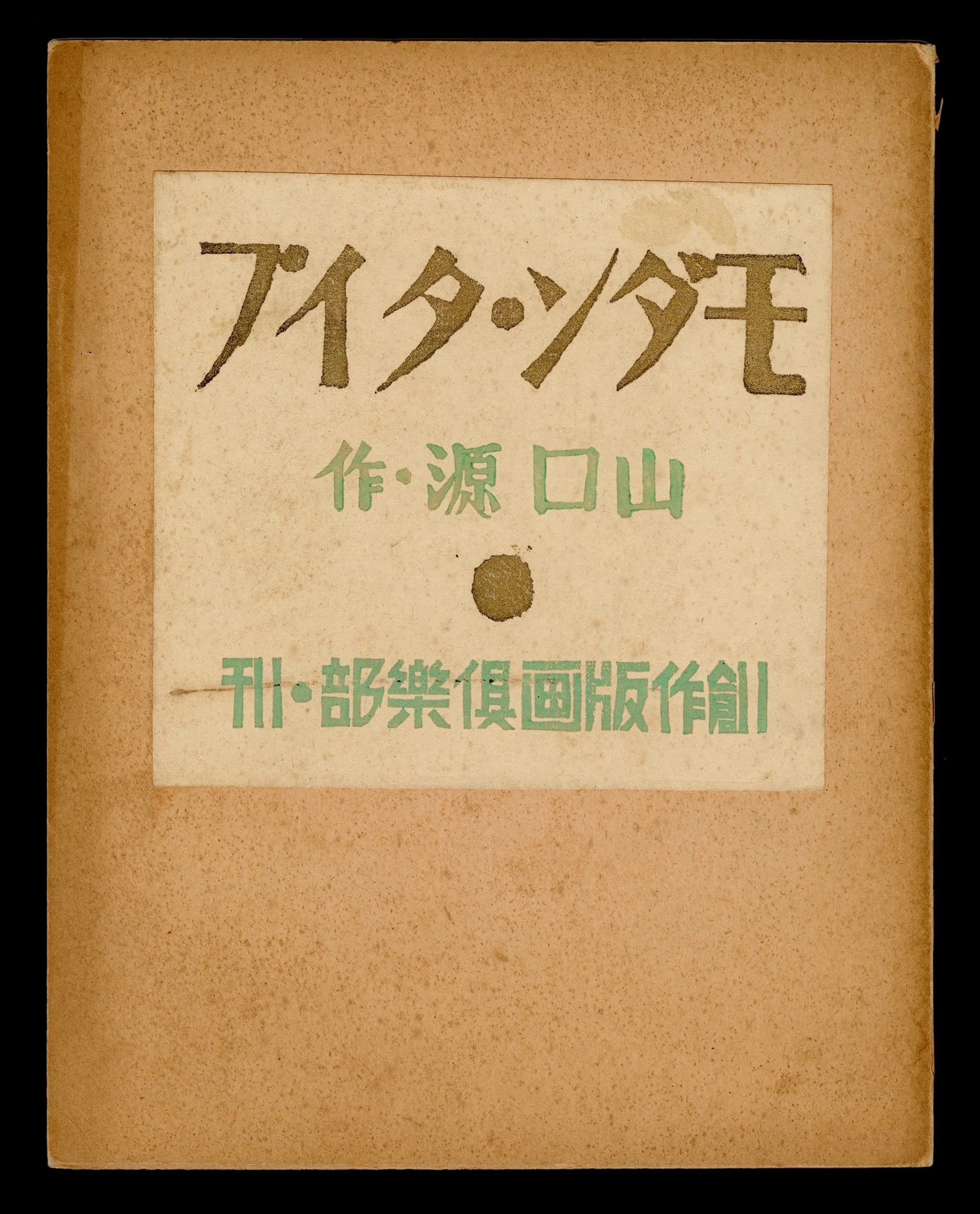 Image 2 of 2
Details
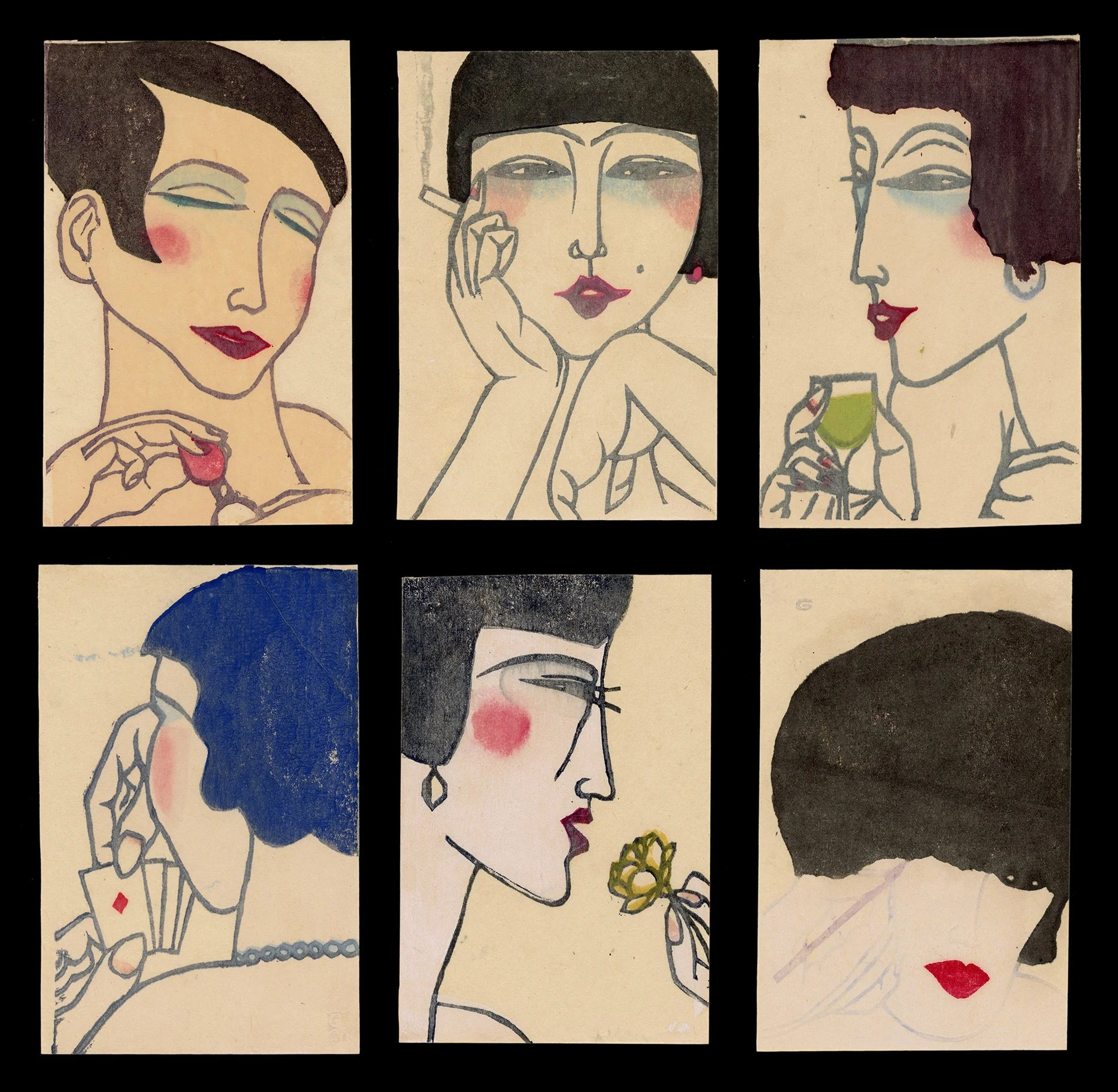
Created in 1929, this remarkable suite of six small-format woodblock prints by Yamaguchi Gen presents a concentrated study of the modern girl at the height of Japan’s interwar urban culture. Though postcard-sized in scale, the works are fully realized original prints conceived and produced by the artist himself rather than mechanically reproduced commercial ephemera. Each composition isolates a single female figure engaged in an intimate act associated with metropolitan leisure and self-fashioning: smoking, drinking, applying makeup, applying perfume, playing cards, and smelling a flower. Collectively, the series constructs a portrait of modern femininity shaped by consumption, performance, and personal ritual.
The visual economy of the designs is striking. Yamaguchi reduces each figure to sharply stylized contours, elongated hands, powdered faces, and dramatic cosmetic accents rendered in vivid blushes of crimson, blue, and green. Dark coiffures frame the compositions with bold geometric weight, while the sparse backgrounds intensify the psychological immediacy of the figures themselves. The women appear suspended between glamour and introspection, their gestures unfolding in moments of private absorption rather than theatrical display. This tension between surface sophistication and interior distance gives the series its unusual emotional complexity.
The works also reveal the extent to which modern graphic culture had transformed Japanese print design by the late 1920s. Elements of Art Deco stylization, contemporary fashion illustration, and avant-garde simplification converge within the compositions, yet the prints retain the tactile sensitivity and rhythmic line associated with artist-produced woodblock practice. Although Yamaguchi had not yet met Onchi Kōshirō personally at the time these works were created, the series bears intriguing affinities with Onchi’s contemporary explorations of flattened form, serial imagery, and psychologically charged modern subject, such as his celebrated Bijin-ga Shiki set. Such parallels suggest the degree to which artists working within the broader orbit of Sosaku Hanga were responding independently to the same rapidly changing urban environment.
Equally important is the relationship between scale and subject matter. The postcard dimensions encourage close viewing, transforming each print into an intimate encounter rather than a decorative statement. This compression of modern experience into portable format mirrors the tempo of metropolitan life itself — fleeting gestures, fragmented impressions, and cultivated appearances distilled into concise visual form.
Connoisseur's Note
Sets of original Sosaku Hanga prints conceived in postcard format remain comparatively uncommon, particularly examples devoted entirely to modern feminine imagery. The present suite occupies a fascinating position between fine art printmaking and the emerging visual culture of interwar consumer society. While postcard imagery had become widespread by the late 1920s, Yamaguchi elevates the format beyond commercial reproduction through hand-crafted production, sophisticated compositional control, and a distinctly personal graphic sensibility.
What distinguishes the series most profoundly is its serial structure. Individually, each image functions as a self-contained portrait study; collectively, the six prints operate almost cinematically, presenting a sequence of gestures associated with the rituals of modern urban life. Cigarettes, cosmetics, cocktails, perfume, and leisure games become markers of identity and social performance. Yet Yamaguchi avoids caricature or satire. His figures remain elegant, self-possessed, and psychologically distant, embodying the carefully cultivated sophistication associated with the moga phenomenon during the early Shōwa period.
The formal restraint of the designs further enhances their modernity. Large unprinted areas contrast with highly concentrated passages of color, while the reduction of facial features into linear abstraction anticipates later developments in twentieth-century graphic design. At the same time, subtle irregularities in printing and line preserve the presence of the artist’s hand, distinguishing the works sharply from mechanically reproduced commercial imagery of the period.
Surviving complete sets are particularly desirable, as the conceptual coherence of the suite depends upon the cumulative interaction of the individual designs. Seen together, the repeated visual motifs — dark bobbed hair, painted lips, elongated fingers, and suspended gestures — create a rhythmic continuity that transforms the series into a unified meditation on modern identity itself.
More prints by Gen Yamaguchi:
1929
RESERVED
Modern Girls at Leisure
Gen Yamaguchi (1896–1976)
MEDIUM: Woodblock prints
DATE: 1929
DIMENSIONS: 6 x 4 inches each print
CONDITION: Excellent, no problems to note
NOTE: Complete set of 6 designs with original folder
$3,000.00 <RESERVED>