

 Image 1 of 1
Details
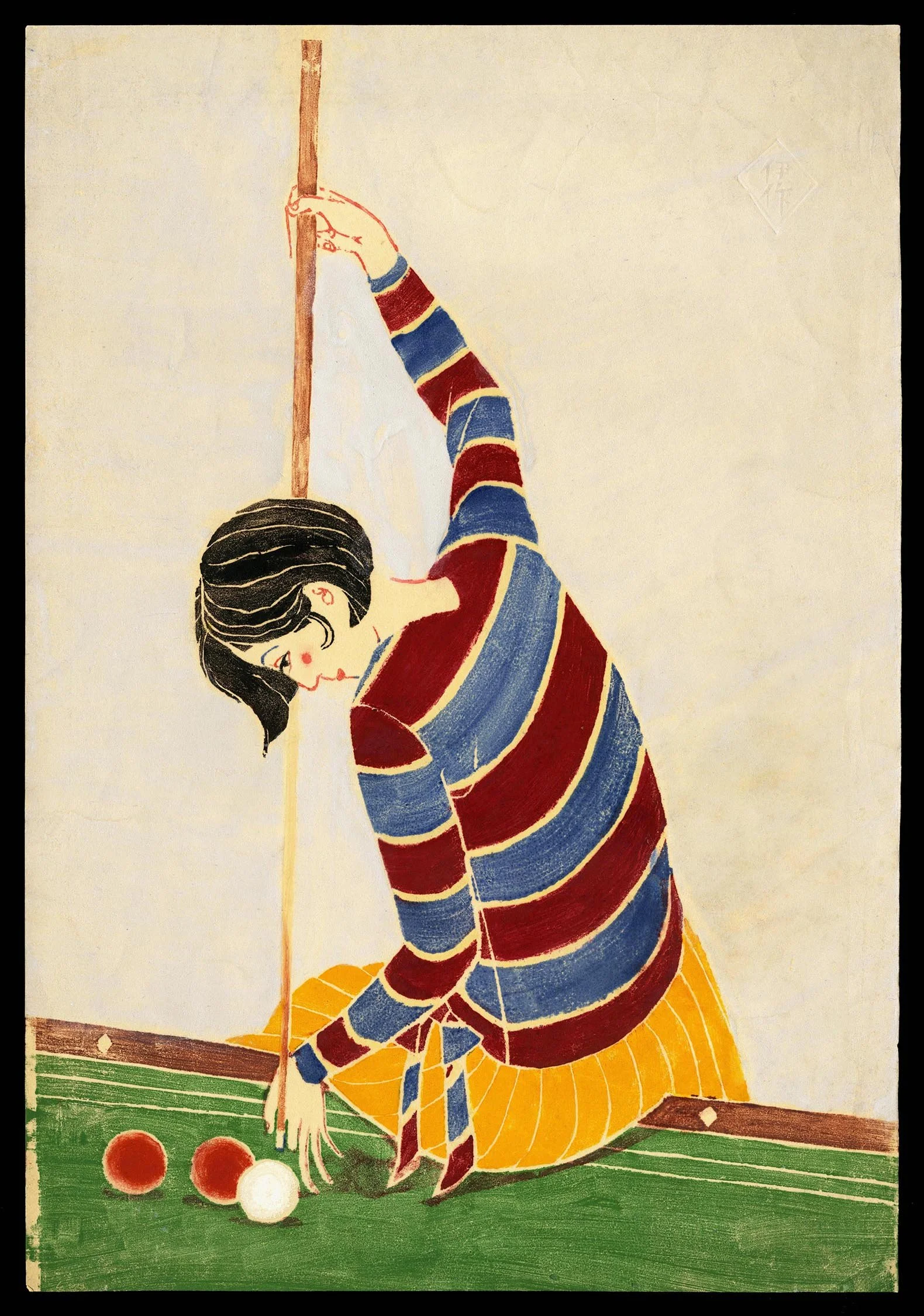
In Grand-Massé, Isaku Nakagawa presents the modern woman not as passive ornament, but as a commanding and psychologically concentrated figure. Seated at the billiards table with cue poised in a dramatic arc, the subject dominates the composition through both posture and scale. Her striped sweater and boldly colored skirt flatten into rhythmic bands of color across the surface of the print, while the stark simplicity of the surrounding space intensifies the theatricality of her gesture. The title refers to the difficult billiards maneuver known as a grand massé—a highly controlled shot requiring precision, force, and technical mastery. Nakagawa transforms this moment of play into an emblem of modern confidence and cultivated sophistication.
The image reflects the expanding visibility of women within urban leisure culture during the late Taisho and early Showa periods. Cafés, dance halls, cinemas, and billiard parlors emerged as new social spaces where the modern girl could fashion alternative identities beyond traditional domestic roles. Here, the female protagonist occupies the center of action with striking self-possession. Her downward gaze and concentrated posture suggest discipline rather than flirtation, intelligence rather than spectacle. The composition resonates with broader cultural shifts of the period, when women increasingly appeared as central protagonists in popular fiction, illustrated magazines, and cinema. Nakagawa’s figure embodies that transformation: stylish, independent, and unmistakably modern.
Executed with the direct carving and expressive simplification associated with Sosaku Hanga, the print possesses an immediacy that feels almost cinematic. The dramatic diagonal of the cue, the asymmetrical balance of empty space, and the compressed perspective create a sense of suspended motion, as though the viewer has entered the scene in the instant before impact. The reduction of setting to essential forms heightens the emotional clarity of the image and allows the figure herself to become a symbol of metropolitan modernity.
Connoisseur's Note
Unlike many depictions of women from the same period that emphasize elegance or decorative refinement, Nakagawa’s Grand-Massé grants its subject an unusual degree of agency and physical authority. The print’s compositional daring lies in its refusal of sentimentality. The elongated posture, taut geometry, and stark contrasts evoke the language of avant-garde graphic design emerging internationally during the interwar years, yet the work remains deeply rooted in the personal sensibility of Sosaku Hanga printmaking. The figure appears isolated within a nearly empty field, creating a charged psychological intensity rare in Japanese prints of the early 1930s.
Nakagawa would later achieve national acclaim in an entirely different medium, becoming recognized as a Living National Treasure for his ceramics. His prints, however, remain exceedingly uncommon, particularly designs such as Grand-Massé, which reveal a sophisticated engagement with urban modernity and contemporary visual culture. Because Nakagawa was never a professional print artist in the commercial sense, surviving impressions are seldom encountered, lending the work particular importance within the broader history of prewar Sosaku Hanga and representations of the modern woman in Japanese art.
More prints by Isaku Nakagawa: