

 Image 1 of 1
Details
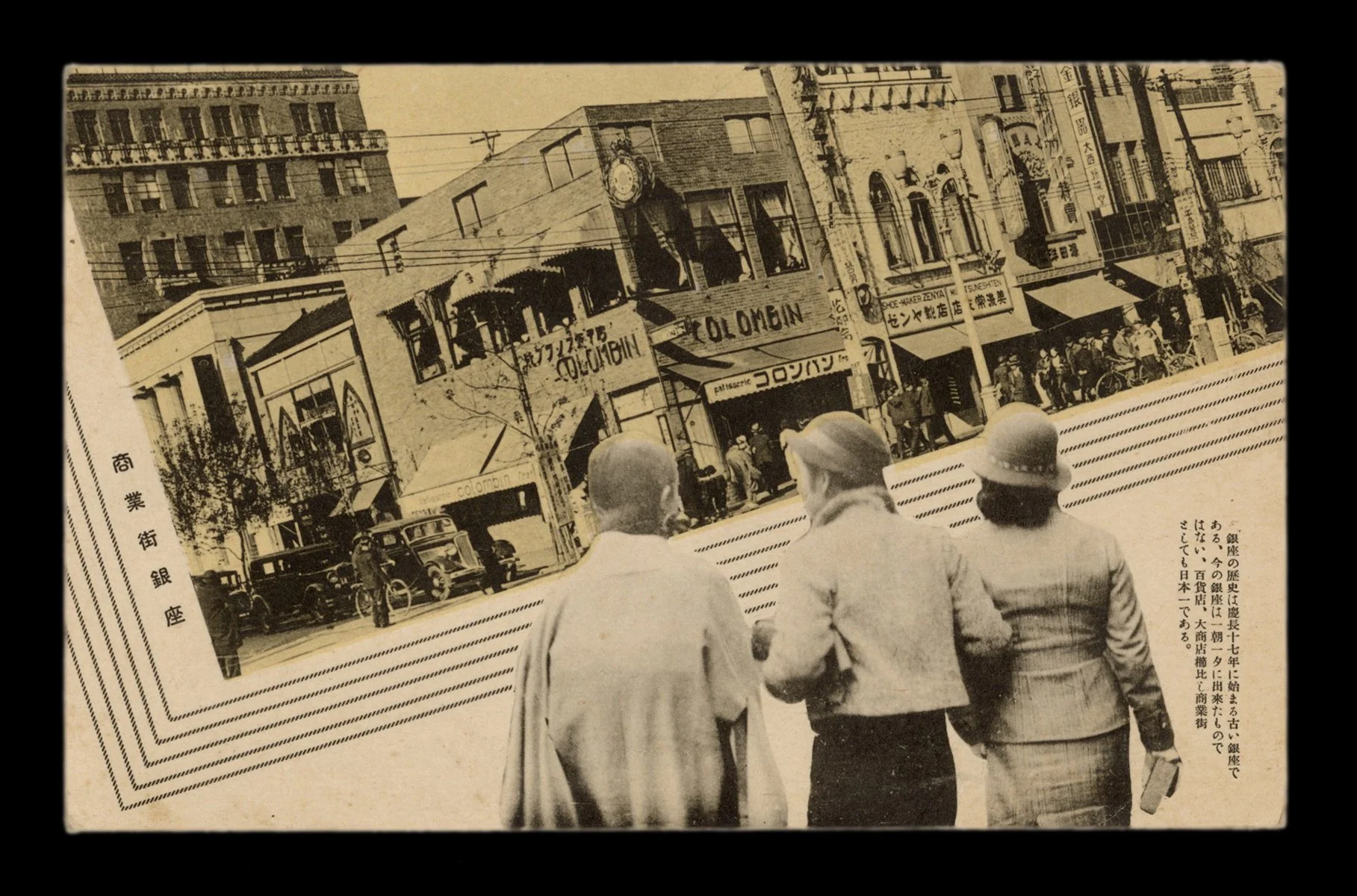
Unlike the preceding examples, this postcard is not a woodblock print but a photomechanical reproduction derived from a contemporary photograph. The image depicts the bustling commercial district of Ginza, where automobiles, pedestrians, storefronts, cafés, and department-style architecture combine to create one of the most sophisticated urban environments in East Asia. Three elegantly dressed figures viewed from behind lead the viewer into the scene, reinforcing the postcard's emphasis on modern urban experience.
The photograph captures Ginza during the height of its interwar transformation. Following reconstruction after the Great Kantō Earthquake, the district became Tokyo's premier shopping and entertainment quarter. Establishments such as cafés, confectioners, fashion boutiques, and specialty retailers lined the broad streets, creating a vibrant commercial landscape that attracted both residents and visitors. Ginza embodied the cosmopolitan aspirations of the rebuilt capital.
Connoisseur's Note
While differing in medium from the woodblock postcards, this work shares the same fascination with the new city. Photography offered an immediacy that complemented the interpretive vision of sōsaku hanga artists. Here, the camera records not simply architecture but urban life itself—the interaction of consumers, automobiles, commerce, and public space that defined modern Tokyo.
Viewed within the context of Two Puffs and a Sip: The Moga and Her City, the postcard is especially evocative. The stylishly dressed pedestrians recall the culture of the modern girl and modern boy, whose lives revolved around department stores, cafés, cinemas, and shopping streets. Ginza served as one of the principal stages upon which modern Japanese identity was performed. More than a record of a street, this postcard preserves a vision of Tokyo as a confident international metropolis, rebuilt from disaster and animated by the rhythms of consumer culture.