

 Image 1 of 1
Details
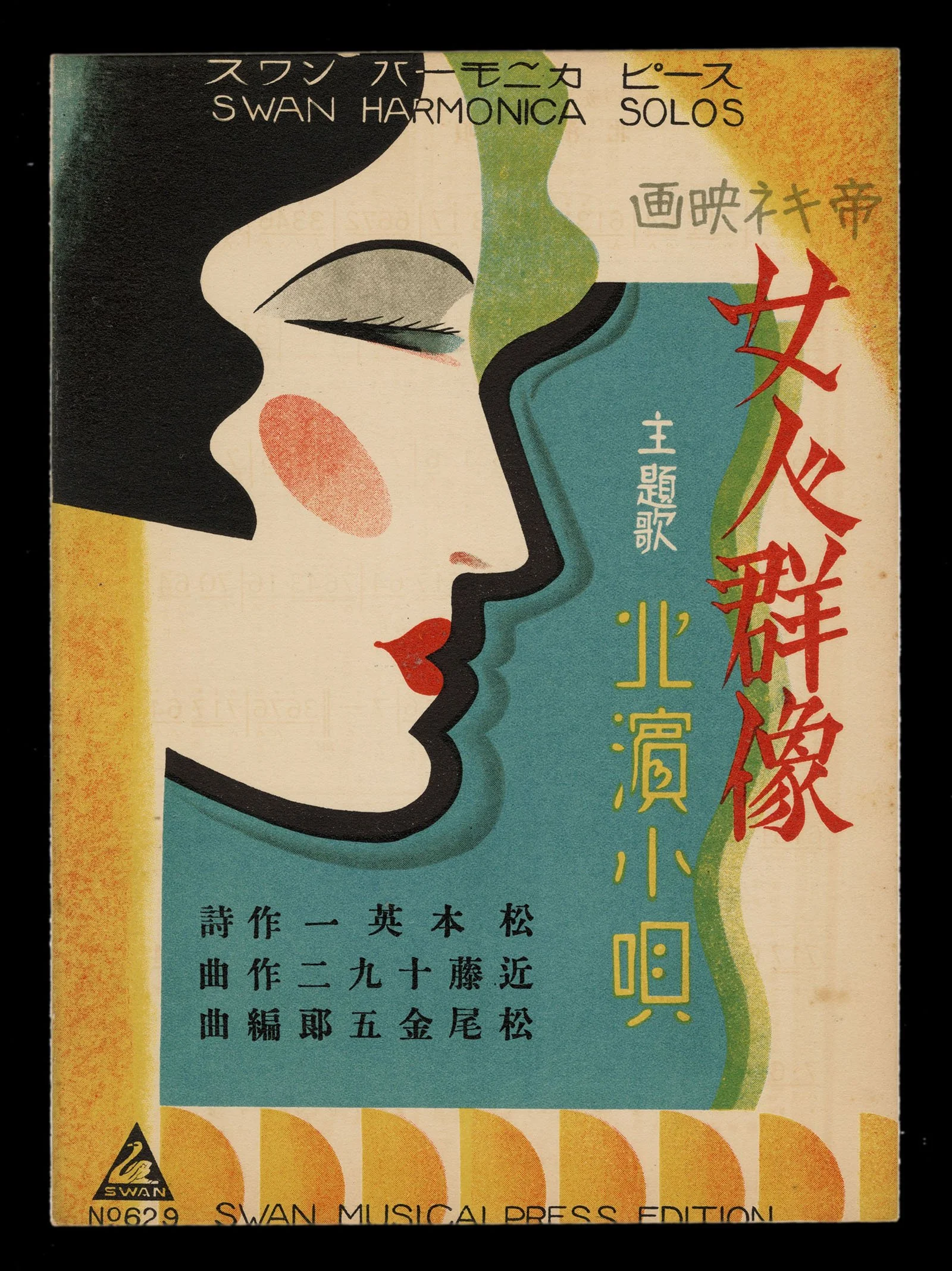
This highly sophisticated design transforms the female profile into a rhythmic arrangement of overlapping silhouettes rendered in cream, turquoise, green, and black. The flattened geometry and dramatic contrasts reveal the influence of international Art Deco aesthetics, while the layered composition creates a sense of movement and emotional complexity. Rather than depicting a specific individual, the artist constructs an image that feels simultaneously modern, theatrical, and psychologically charged.
Produced as a theme song for a motion picture, the cover reflects the growing relationship between cinema and popular music. The multiple profiles may allude to the diverse experiences and identities suggested by the film's title, while the elegant abstraction mirrors the glamour associated with contemporary movie culture. The result is a design that captures both the excitement of the silver screen and the fascination with modern womanhood that permeated Japanese visual culture.
Connoisseur's Note
The convergence of cinema and popular music became one of the defining cultural developments of the early Shōwa period. Film studios increasingly promoted theme songs alongside their productions, while publishers commissioned innovative cover designs that extended the visual appeal of the movies themselves. This cover demonstrates how graphic artists responded by creating imagery that was both emotionally evocative and unmistakably modern.
Japan's exceptional music literacy ensured that such publications circulated widely throughout society. Sheet music offered audiences a way to bring popular songs into the home while simultaneously exposing them to new visual styles and cultural trends. These covers therefore occupy a unique position at the intersection of music, film, design, and everyday life.