

 Image 1 of 1
Details
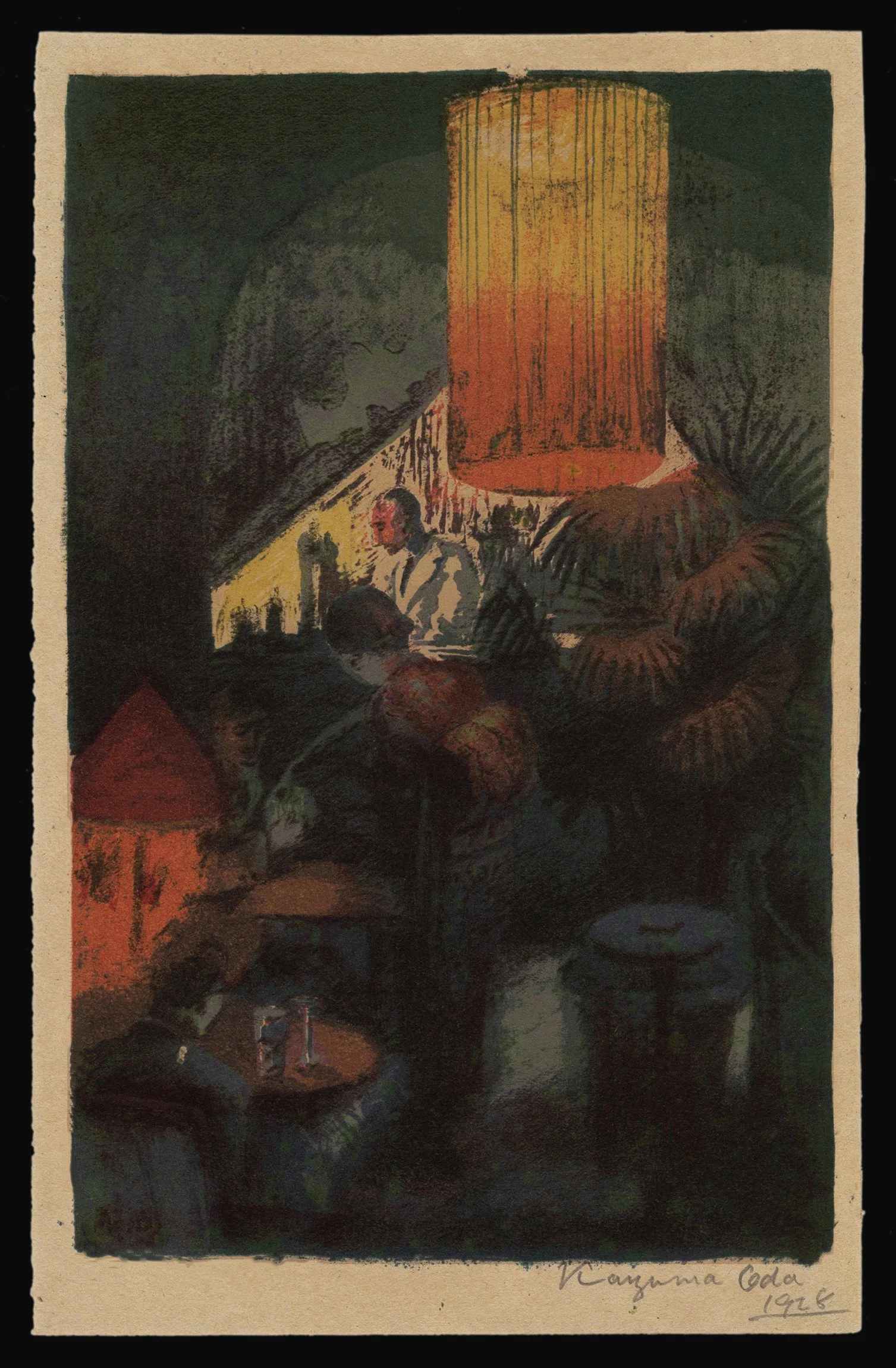
Kazuma Oda’s Bar Fledermaus offers a remarkably intimate glimpse into Tokyo’s emerging café and cocktail culture during the late 1920s. The composition is immersed in shadow and subdued electric light, centering upon the warm glow of an oversized lantern that descends dramatically from above like a modern chandelier. Beneath its amber illumination, patrons sit quietly among small tables and lush decorative palms while a bartender tends to bottles arranged behind a softly lit counter. Rather than depicting animated social exchange, Oda creates an atmosphere of hushed urban sophistication, where silence itself becomes part of the scene.
The lithograph demonstrates Oda’s exceptional sensitivity to tonal layering and modern interior space. Forms dissolve into darkness through soft gradations of color, allowing figures and furnishings to emerge almost dreamlike from the surrounding gloom. The work reflects the influence of European café culture and Art Deco interiors that increasingly shaped fashionable districts such as Ginza during the period. Yet despite these cosmopolitan references, the composition retains a distinctly restrained emotional atmosphere. Oda evokes a mood of quiet introspection and fleeting urban melancholy, where artificial light softens the edges of modern life and transforms the bar into a suspended world apart from the city outside.
Connoisseur's Note
Kazuma Oda occupies a singular position within twentieth-century Japanese printmaking, standing between the parallel developments of Shin Hanga and Sosaku Hanga while never fully confined to either movement. Although trained within more traditional systems of print production, the majority of his mature works—particularly his lithographs—were self-produced in accordance with the creative independence championed by Sosaku Hanga artists. His embrace of lithography allowed for extraordinary atmospheric subtlety, giving his urban scenes a painterly softness distinct from the sharper carving associated with woodblock printmaking.
The present work is especially significant within Oda’s broader engagement with modern Tokyo life. During the 1920s, Ginza emerged as the symbolic center of cosmopolitan culture, where jazz cafés, bars, dance halls, and avant-garde interiors reshaped the rhythms of urban experience. Such spaces became closely associated with the moga—the “modern girl”—and the new social freedoms, anxieties, and performances of identity unfolding within the rapidly changing metropolis. Oda’s achievement lies not in documenting nightlife as spectacle, but in conveying its emotional atmosphere: the solitude within crowds, the softness of artificial light, and the quiet theatricality of modern leisure itself.
More prints by Kazuma Oda:
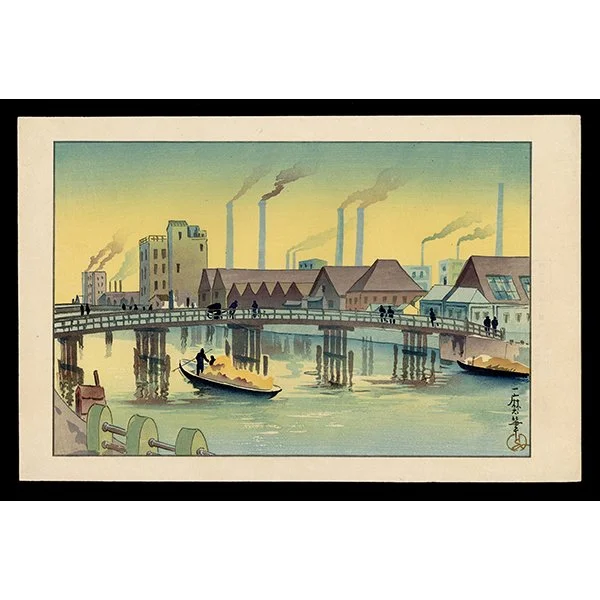
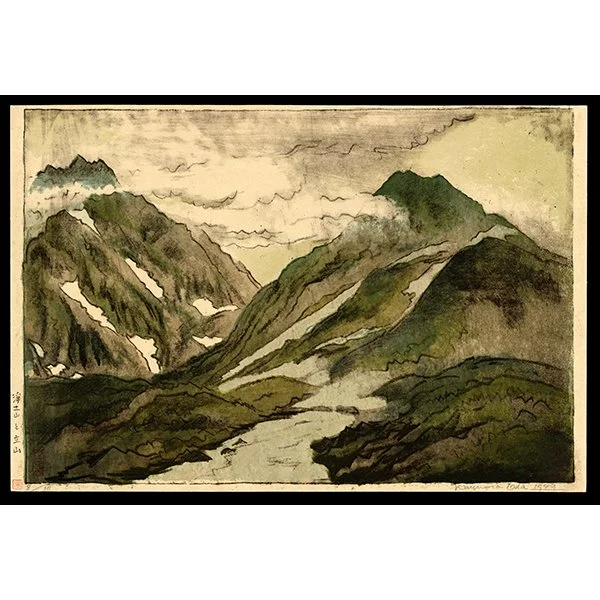

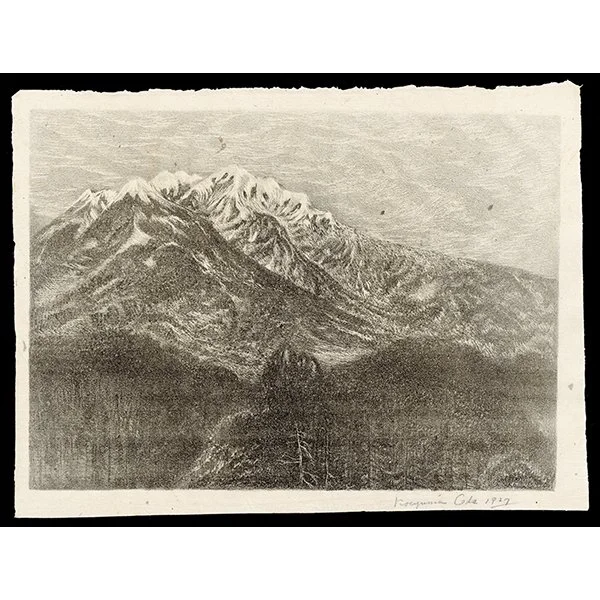
1929-30
RESERVED
Twilight at Ginza
Kazuma Oda (1882-1956)
SERIES: Print Collection of Great Tokyo
MEDIUM: Woodblock print
DATE: 1929-30
DIMENSIONS: 9 3/8 x 12 7/8 inches
CONDITION: Excellent, no problems to note
NOTE: This impression is a rare color variant with a lighter and brighter palate
LITERATURE: Machida City Museum of Graphic Arts, Kazuma Oda, pl.102
$4,500.00 <RESERVED>