

 Image 1 of 2
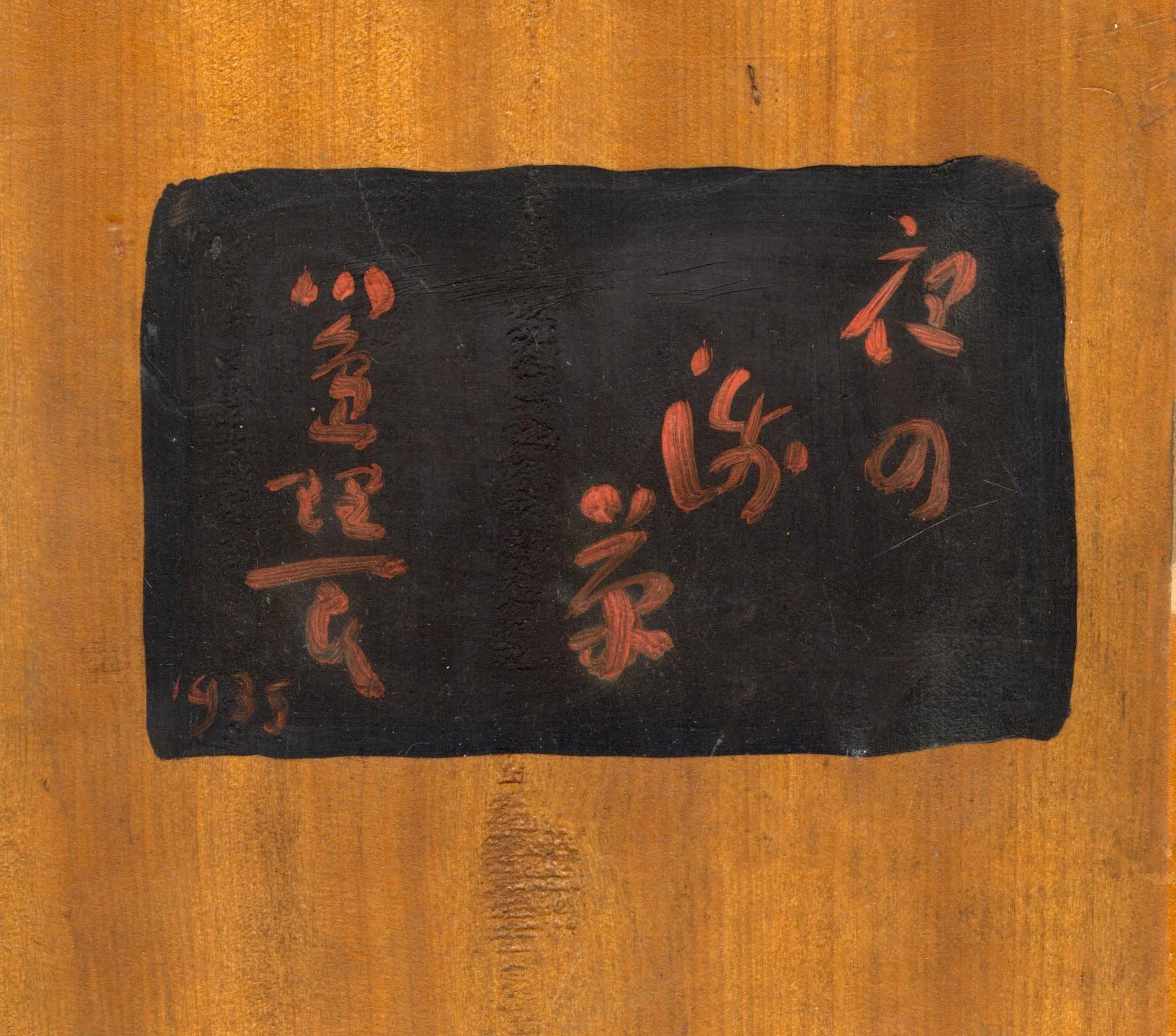 Image 2 of 2
Details
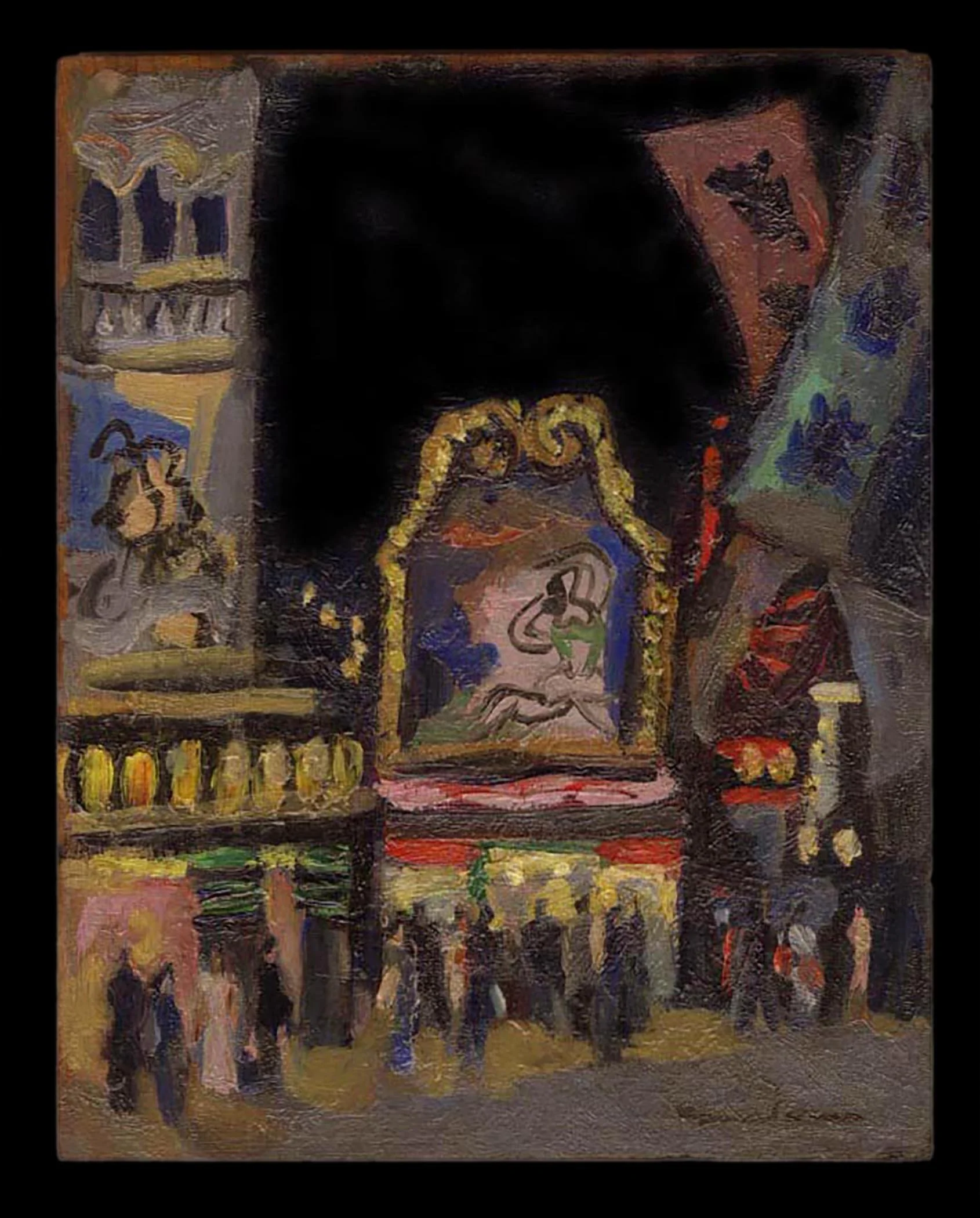
This compact yet highly evocative painting depicts the illuminated streets of Akasaka at night, animated by theater façades, glowing signage, and crowds moving beneath the electric lights of the entertainment quarter. Kawashima compresses the scene into a dense arrangement of luminous architectural fragments and darkened passages, allowing advertisements, marquees, and decorative façades to emerge from the surrounding shadows with flickering intensity. The streets below are populated by loosely rendered figures drifting between cafés, restaurants, and performance venues, their silhouettes softened into fleeting impressions by the artist’s energetic handling of paint.
By the mid-1930s, Akasaka had become one of Tokyo’s most fashionable nightlife districts, known for its cafés, cabarets, theaters, and increasingly cosmopolitan social atmosphere. Unlike the more frenetic modernity often associated with Ginza or Asakusa, Akasaka cultivated a somewhat more refined urban glamour tied to political elites, journalists, performers, and affluent café culture. Kawashima captures this atmosphere not through detailed description, but through sensation: glowing lanterns, illuminated entrances, and crowded sidewalks dissolve into layers of shifting color and shadow that evoke the visual experience of moving through the city after dark.
The painting’s composition reflects the growing fascination among Japanese artists with modern urban illumination during the interwar years. Electric signage and theatrical lighting transformed the nighttime city into a new kind of visual environment, where architecture became fragmented by reflected light and commercial imagery. Kawashima embraces this instability fully, allowing outlines to blur and forms to merge into a pulsating nocturnal surface. The result is less a topographical record of Akasaka than an atmospheric meditation on the rhythms of urban nightlife during early Shōwa Tokyo.
Connoisseur's Note
Kawashima’s handling of paint reveals the profound influence of European modernism on Japanese urban painting during the early twentieth century. Having studied Western-style oil painting during a period when many Japanese artists looked toward Parisian modernity for inspiration, he adopts a painterly language rooted in immediacy and sensation rather than precise realism. Thick, abbreviated brushstrokes construct the city through patches of luminous color, while dark tonal masses anchor the composition with remarkable compositional confidence. The painting oscillates between representation and near abstraction, particularly in the treatment of the crowds and illuminated façades.
Equally compelling is the way the artist transforms commercial spectacle into painterly subject matter. The brightly lit theater signs and decorative advertisements become central compositional devices, functioning almost like floating planes of color suspended against the darkness of the street. This emphasis on illuminated signage reflects the broader emergence of consumer visual culture in interwar Japan, when cafés, cinemas, dance halls, and theaters competed for attention through increasingly elaborate electric displays. Kawashima does not isolate these modern commercial elements critically or nostalgically; instead, he absorbs them into the visual pulse of the city itself.
Small urban nocturnes such as this occupy an especially important place within the history of early Shōwa painting because they preserve fleeting aspects of Tokyo’s prewar entertainment culture that would soon vanish amid wartime transformation and postwar reconstruction. Akasaka’s neon-lit avenues, café interiors, and theatrical streetscapes became enduring symbols of metropolitan sophistication during the 1930s, and Kawashima captures this environment with unusual intimacy. The modest scale of the panel enhances its immediacy, giving the impression of a rapidly observed impression painted directly from lived experience within the city’s nocturnal flow.
More prints by Riichirō Kawashima:
1935
$2,500
Akasaka at Night
Riichirō Kawashima (1886–1971)
MEDIUM: Oil on panel
DATE: 1935
DIMENSIONS: 10 ¾ x 8 ½ inches
CONDITION: Excellent, no problems to note
NOTE: Titled and dated on reverse
$2,500.00