

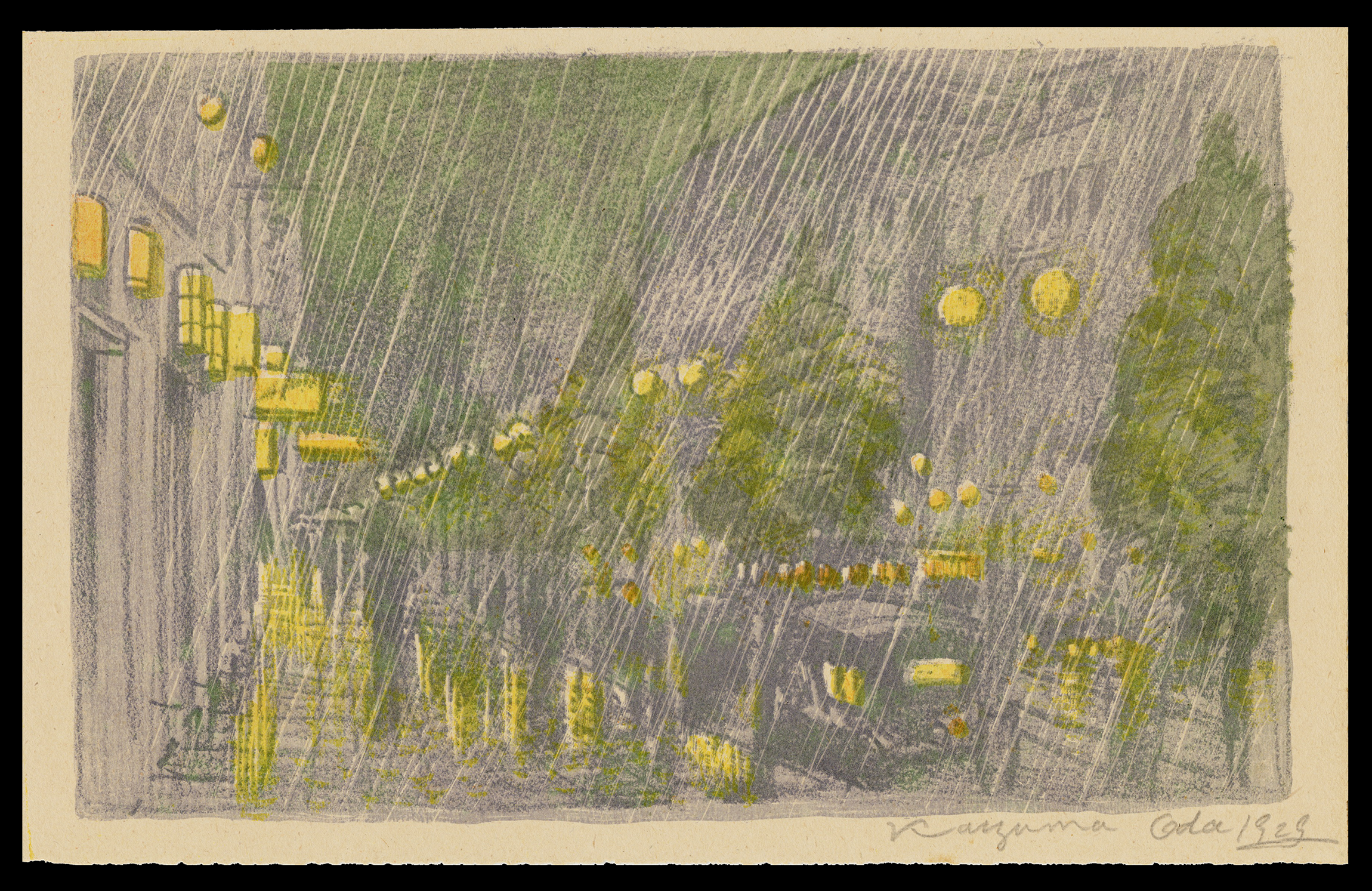
 Image 1 of 2
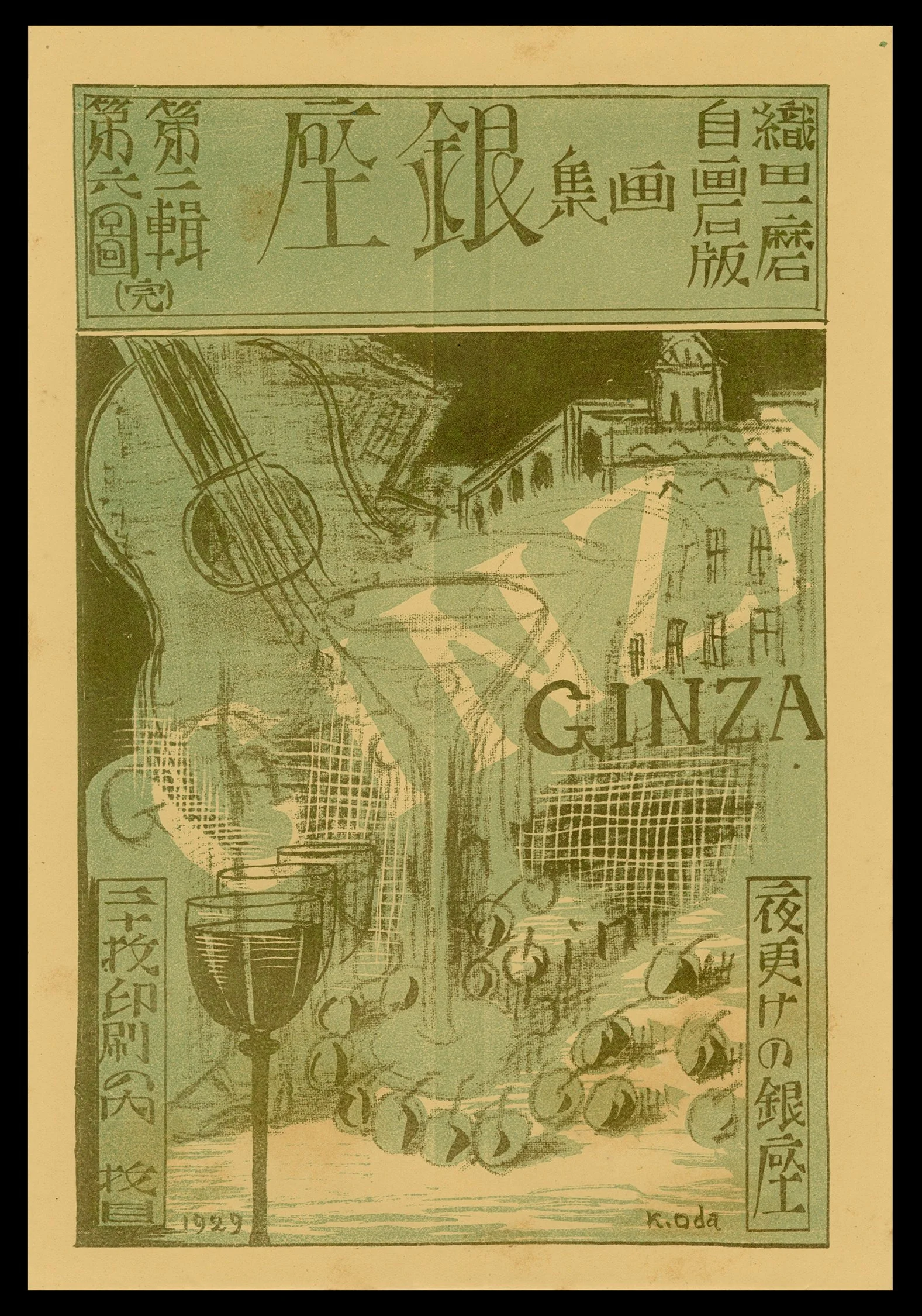 Image 2 of 2
Details
In Ginza at Midnight, Kazuma Oda captures the restless atmosphere of Tokyo after dark through a remarkably restrained yet evocative lithographic composition. Sheets of diagonal rain sweep across the image, dissolving architecture, automobiles, and figures into shimmering tonal veils. Streetlights glow softly through the storm, their yellow illumination refracting against wet pavement and reflecting across the surfaces of passing cars. The composition is almost cinematic in its treatment of light and weather, transforming the famous commercial district into a vision of fleeting movement and nocturnal energy.
Rather than depicting Ginza as a place of clarity and spectacle, Oda embraces obscurity and atmosphere. Buildings recede into mist-like shadows while the rain itself becomes the dominant structural force within the composition. The district, long associated with cafés, bars, theaters, and fashionable urban culture, appears here suspended between visibility and disappearance. The lithographic medium allows Oda to achieve extraordinary softness in tonal transitions, producing a surface that feels almost vaporous. The resulting image conveys not only the physical experience of a rainy Tokyo evening but also the emotional texture of metropolitan modernity during the late 1920s.
The original presentation folder accompanying the print bears an equally compelling lithographic design. Here Oda constructs a montage of urban nightlife imagery: cocktail glasses, a guitar, decorative patterns, and silhouettes of Ginza architecture layered into a dynamic graphic arrangement. The imagery evokes the sophisticated leisure culture that defined the district during the early Shōwa era, when jazz cafés, dance halls, and modern restaurants flourished alongside department stores and commercial arcades. The folder functions as more than packaging; it serves as a visual overture to the atmosphere of the series itself, uniting music, nightlife, design, and cosmopolitan identity within a distinctly modern graphic language.
Connoisseur's Note
Among Japanese artists working in lithography during the interwar period, Kazuma Oda remains one of the most innovative and aesthetically refined. While many contemporaries pursued traditional woodblock production, Oda recognized lithography’s unique ability to convey tonal subtlety, atmospheric instability, and modern urban sensation. His works occupy a distinctive position between fine art printmaking and avant-garde graphic experimentation, revealing the influence of European modernism while remaining deeply rooted in the lived experience of Tokyo’s transforming cityscape.
Examples retaining their original folders are of particular importance to collectors and institutions because they preserve the complete visual conception of the publication. Oda treated these folders not as incidental wrappers but as integrated components of the artistic presentation. Their designs reveal the close relationship between modern Japanese printmaking and contemporary developments in advertising, magazine illustration, typography, and commercial graphic arts. In many cases, such ephemera disappeared through use or neglect, making intact survivals increasingly rare. The preservation of both print and folder offers an unusually complete document of how sophisticated audiences in late 1920s Tokyo encountered, purchased, and experienced modern prints within the broader culture of urban consumerism and artistic experimentation.
More prints by Kazuma Oda:
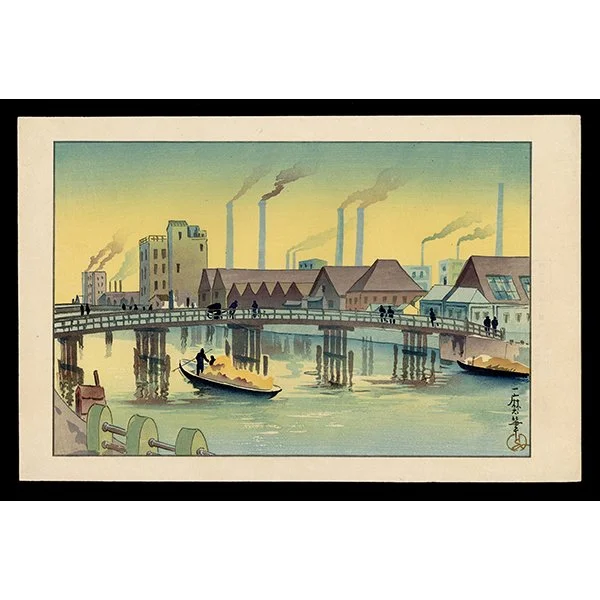
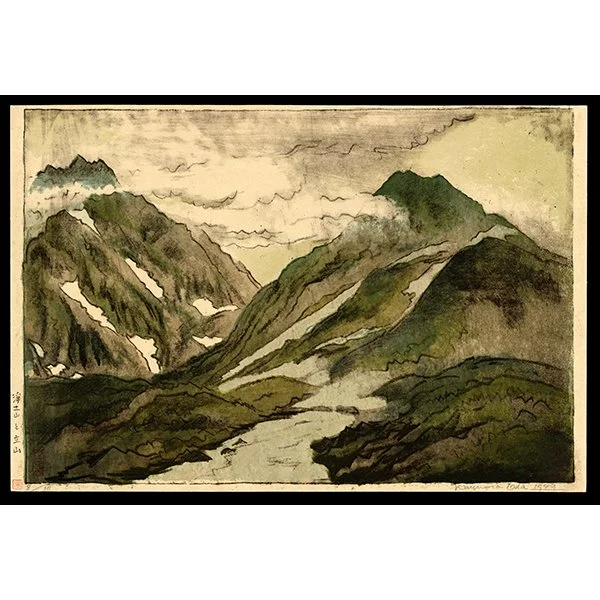

1929-30
RESERVED
Twilight at Ginza
Kazuma Oda (1882-1956)
SERIES: Print Collection of Great Tokyo
MEDIUM: Woodblock print
DATE: 1929-30
DIMENSIONS: 9 3/8 x 12 7/8 inches
CONDITION: Excellent, no problems to note
NOTE: This impression is a rare color variant with a lighter and brighter palate
LITERATURE: Machida City Museum of Graphic Arts, Kazuma Oda, pl.102
$4,500.00 <RESERVED>