

 Image 1 of 1
Details
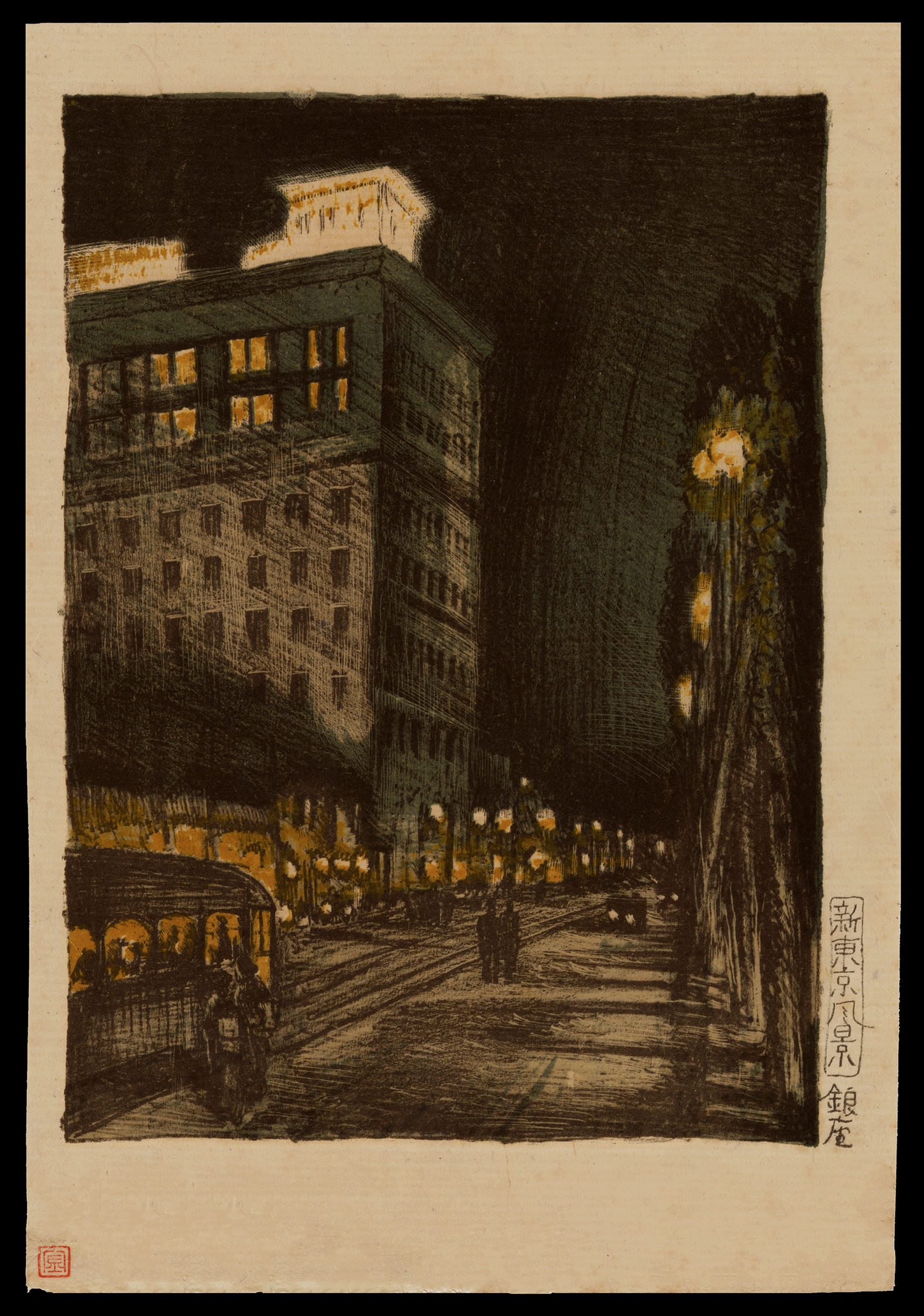
In Ginza, June, Kazuma Oda transforms one of Tokyo’s most celebrated commercial boulevards into a vision of nocturnal modernity illuminated by electric light and rain-darkened atmosphere. Towering buildings rise against an enveloping black sky while streetlamps scatter glowing reflections across the avenue below. A tram picks up passengers in the foreground as pedestrians move beneath rows of illuminated storefronts, their figures partially dissolved into shadow and movement. The composition possesses a distinctly cinematic quality, balancing monumental architecture with fleeting urban life.
The print captures Ginza at a pivotal historical moment. Following the devastation of the 1923 Great Kantō Earthquake, the district rapidly emerged as a symbol of reconstruction and cosmopolitan sophistication. Broad avenues, modern department stores, cafés, and electric infrastructure transformed the area into one of the most visibly international quarters of the rebuilt capital. Oda emphasizes this transformation through dramatic verticality and light. The large illuminated building dominating the left side of the composition conveys the growing scale of commercial architecture in Tokyo, while the street itself remains animated by transit systems and evening crowds that suggest the accelerating rhythms of metropolitan life.
Unlike earlier ukiyo-e depictions of urban pleasure quarters, Oda’s lithograph embraces the psychological atmosphere of the modern city. Darkness becomes an active compositional force, interrupted only by glowing windows, tram lights, and streetlamps that punctuate the avenue like fragments of human presence within the expanding metropolis. The result is both intimate and monumental: a portrait of Ginza as a living organism of commerce, leisure, and motion during the early Shōwa era.
Connoisseur's Note
Kazuma Oda occupies a singular position within twentieth-century Japanese printmaking. Though associated with both the shin hanga and sōsaku hanga movements, his most innovative achievements emerged through self-produced lithographs that combined European print techniques with distinctly Japanese approaches to atmosphere and composition. His urban views from the 1920s remain among the most sophisticated visual records of Tokyo’s transformation into a modern international capital.
Particularly remarkable in Ginza, June is Oda’s command of lithographic texture. The surface is built from layered tonal grain and vigorous linear passages that evoke rain, electric haze, and architectural mass without relying upon rigid detail. This approach allows the city to feel simultaneously constructed and ephemeral, reflecting the unstable energy of Tokyo during its reconstruction years. Oda’s modernity is not triumphant or mechanical alone; it is atmospheric, sensory, and deeply human. In works such as this, the rebuilt capital appears less as a fixed environment than as a shifting experience of light, movement, and memory unfolding after dark.
More prints by Kazuma Oda:
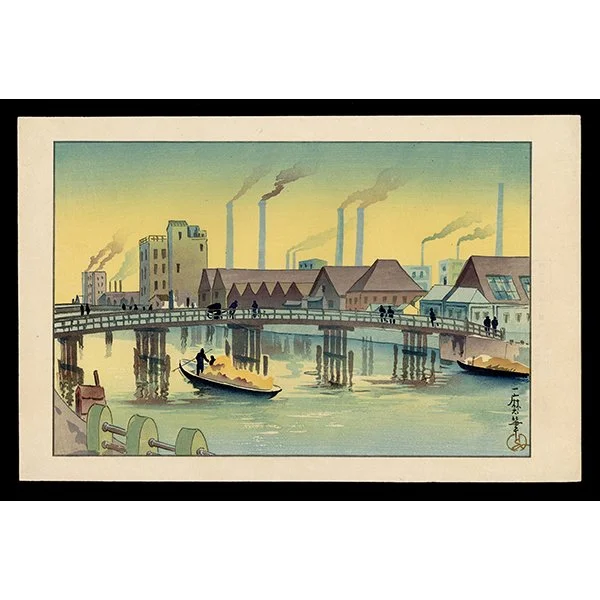
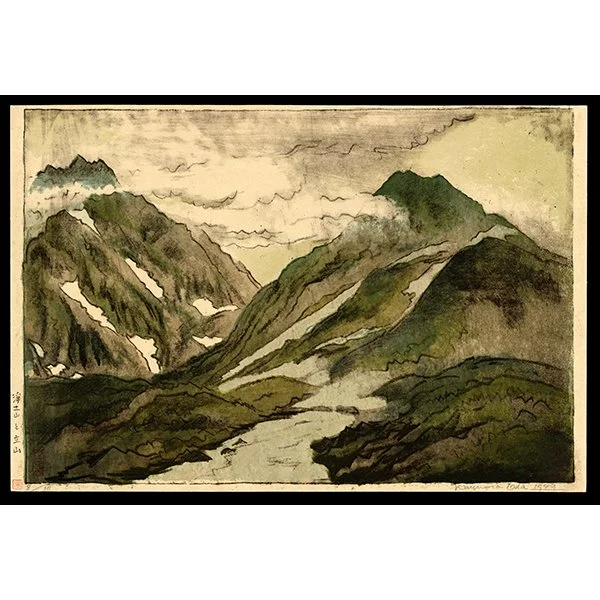

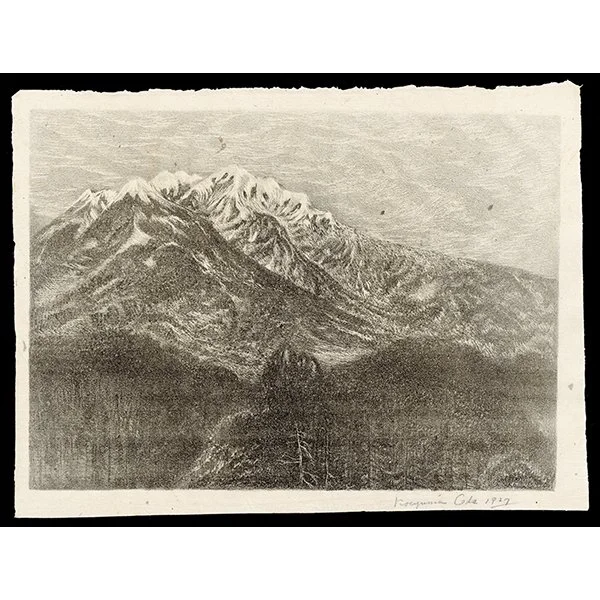
1929-30
RESERVED
Twilight at Ginza
Kazuma Oda (1882-1956)
SERIES: Print Collection of Great Tokyo
MEDIUM: Woodblock print
DATE: 1929-30
DIMENSIONS: 9 3/8 x 12 7/8 inches
CONDITION: Excellent, no problems to note
NOTE: This impression is a rare color variant with a lighter and brighter palate
LITERATURE: Machida City Museum of Graphic Arts, Kazuma Oda, pl.102
$4,500.00 <RESERVED>