

 Image 1 of 2
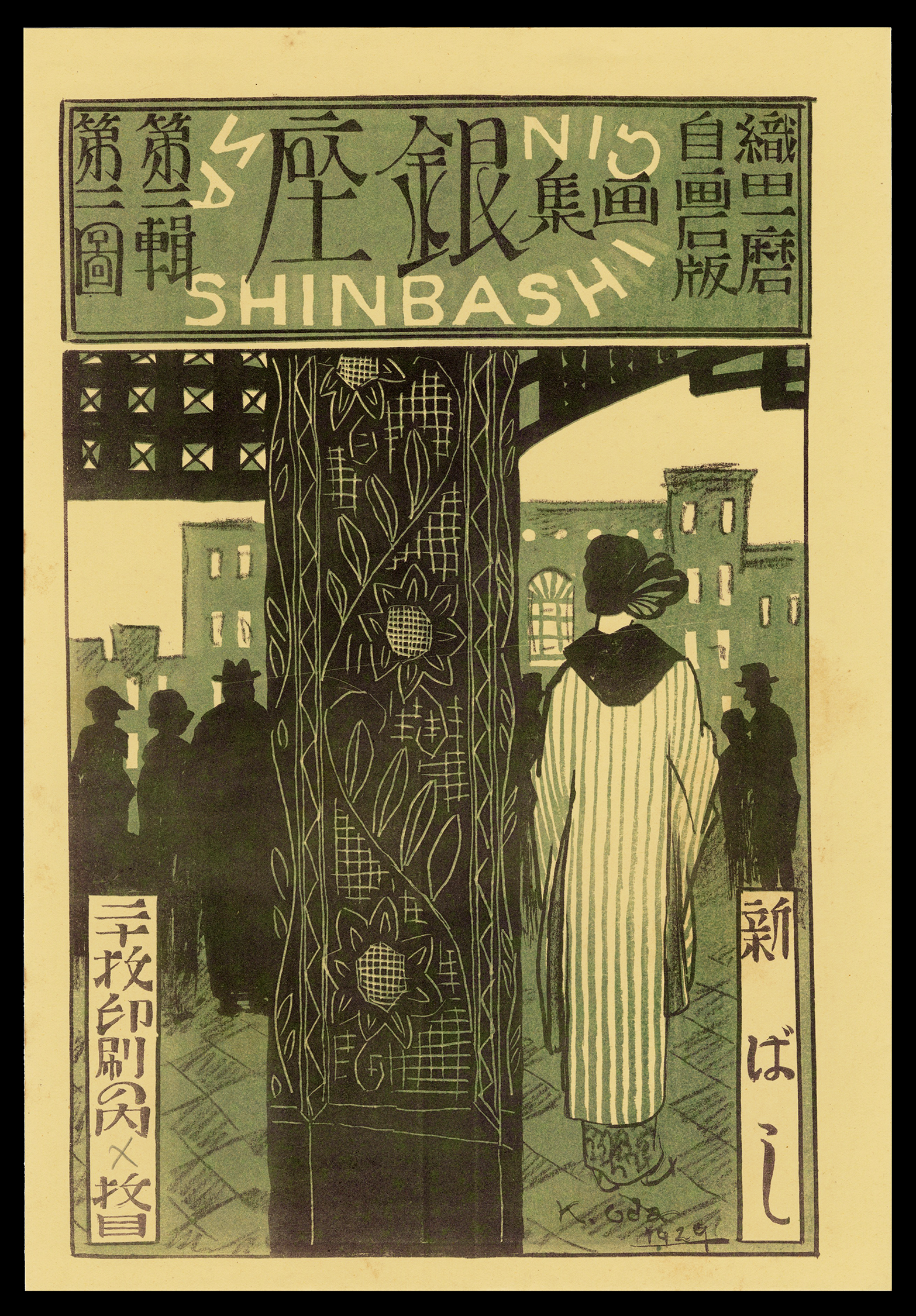 Image 2 of 2
Details
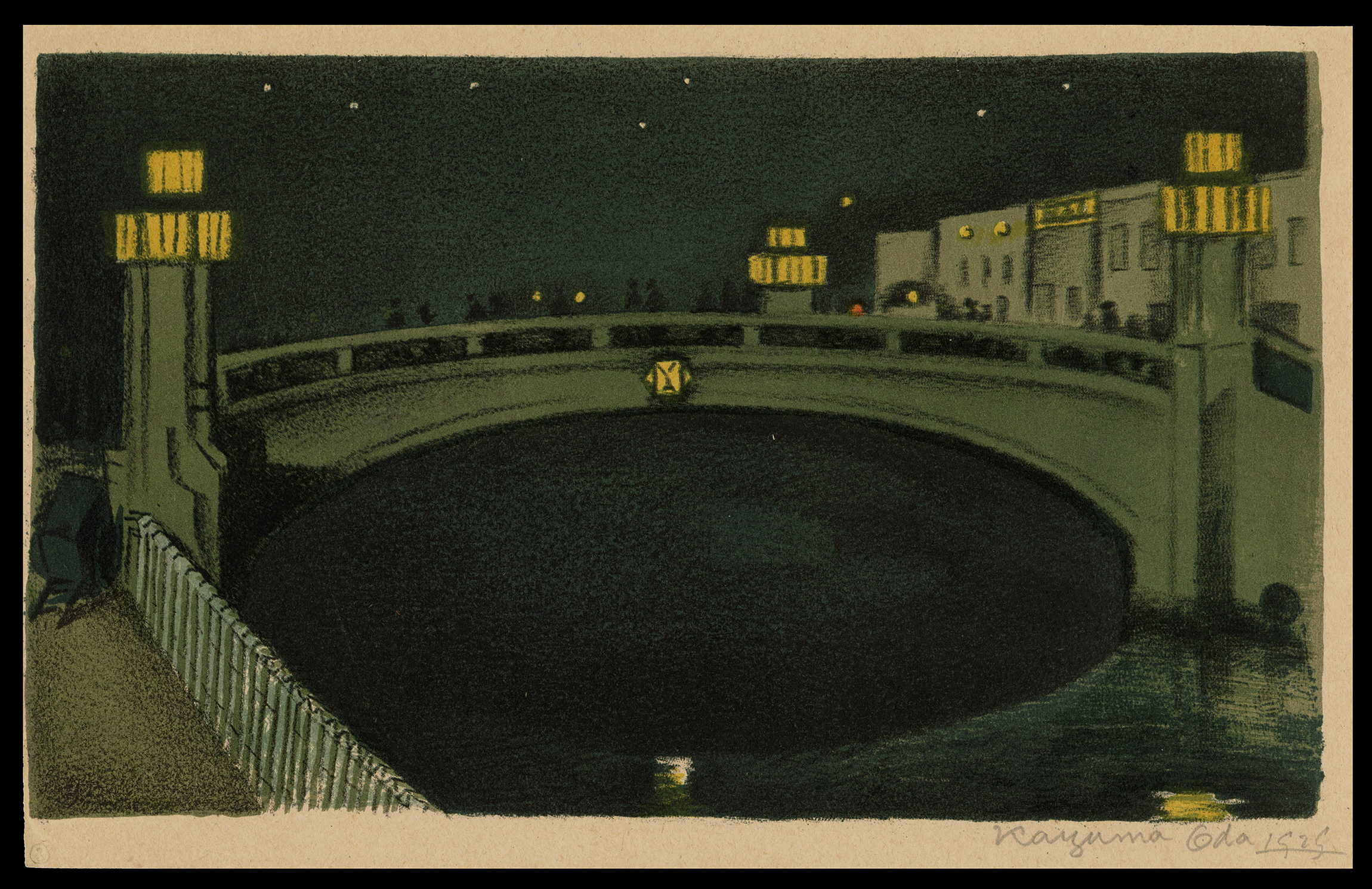
In Shinbashi at Night, Kazuma Oda transforms one of Tokyo’s busiest modern districts into a scene of quiet radiance and restrained atmosphere. The sweeping bridge arches gracefully across a dark canal beneath a sky punctuated by scattered electric lights and faint stars. Tall illuminated lamp standards cast reflections onto the water below, creating a rhythmic interplay between geometry and shadow. Rather than emphasizing crowds or traffic, Oda reduces the composition to its essential architectural forms, allowing the bridge itself to emerge as the principal protagonist within the nocturnal cityscape.
The district of Shinbashi occupied a central place in Tokyo’s modern imagination during the late Taishō and early Shōwa years. As a major transportation hub connected to rail travel, cafés, bars, theaters, and commercial life, it symbolized movement, velocity, and the cosmopolitan identity of the rebuilt capital. Oda captures this spirit not through overt spectacle but through atmosphere: the stillness of late evening, the glow of newly electrified streets, and the sensation of the city lingering after its daytime intensity has receded. His lithographic technique is particularly effective here, allowing subtle tonal transitions and velvety darkness to envelop the scene in a mood both modern and contemplative.
Especially remarkable is the survival of the original presentation folder accompanying the print. The folder bears its own striking lithographic design depicting elegantly dressed moga and sharply silhouetted mobo figures emerging from Shinbashi Station beneath decorative architectural ornament. The composition functions not merely as packaging but as an extension of the print’s urban narrative. The fashionable figures, reduced almost to theatrical silhouettes, embody the new social identities and urban sophistication associated with Ginza and Shinbashi during the late 1920s. The contrast between the folder’s animated human presence and the quiet stillness of the bridge scene creates a compelling dialogue between public spectacle and private reflection within modern Tokyo life.
Connoisseur's Note
Kazuma Oda occupies an important yet often understated position within modern Japanese printmaking. Though associated with both Shin Hanga and Sosaku Hanga circles, his independently produced lithographs reveal a deeply personal approach to urban modernity. Unlike many contemporaries who favored highly finished or commercially polished imagery, Oda embraced the expressive possibilities of lithography to create works defined by atmosphere, tonal softness, and emotional subtlety. His prints frequently dissolve rigid outlines into fields of shadow and light, giving even architectural subjects a distinctly human resonance.
Prints retaining their original folders are exceptionally uncommon. Ephemeral materials such as wrappers and presentation cases were often discarded, making intact examples particularly desirable to collectors and institutions today. In this instance, the folder substantially enriches the historical importance of the work by preserving the broader visual culture surrounding modern print distribution and exhibition. The pairing demonstrates how artists and publishers increasingly conceived prints not as isolated images but as integrated aesthetic experiences shaped by design, typography, and consumer presentation. Together, the print and folder provide a remarkably vivid document of Tokyo’s rapidly evolving urban visual culture at the height of its modern transformation.
More prints by Kazuma Oda:

1929-30
RESERVED
Twilight at Ginza
Kazuma Oda (1882-1956)
SERIES: Print Collection of Great Tokyo
MEDIUM: Woodblock print
DATE: 1929-30
DIMENSIONS: 9 3/8 x 12 7/8 inches
CONDITION: Excellent, no problems to note
NOTE: This impression is a rare color variant with a lighter and brighter palate
LITERATURE: Machida City Museum of Graphic Arts, Kazuma Oda, pl.102
$4,500.00 <RESERVED>