

 Image 1 of 1
Details
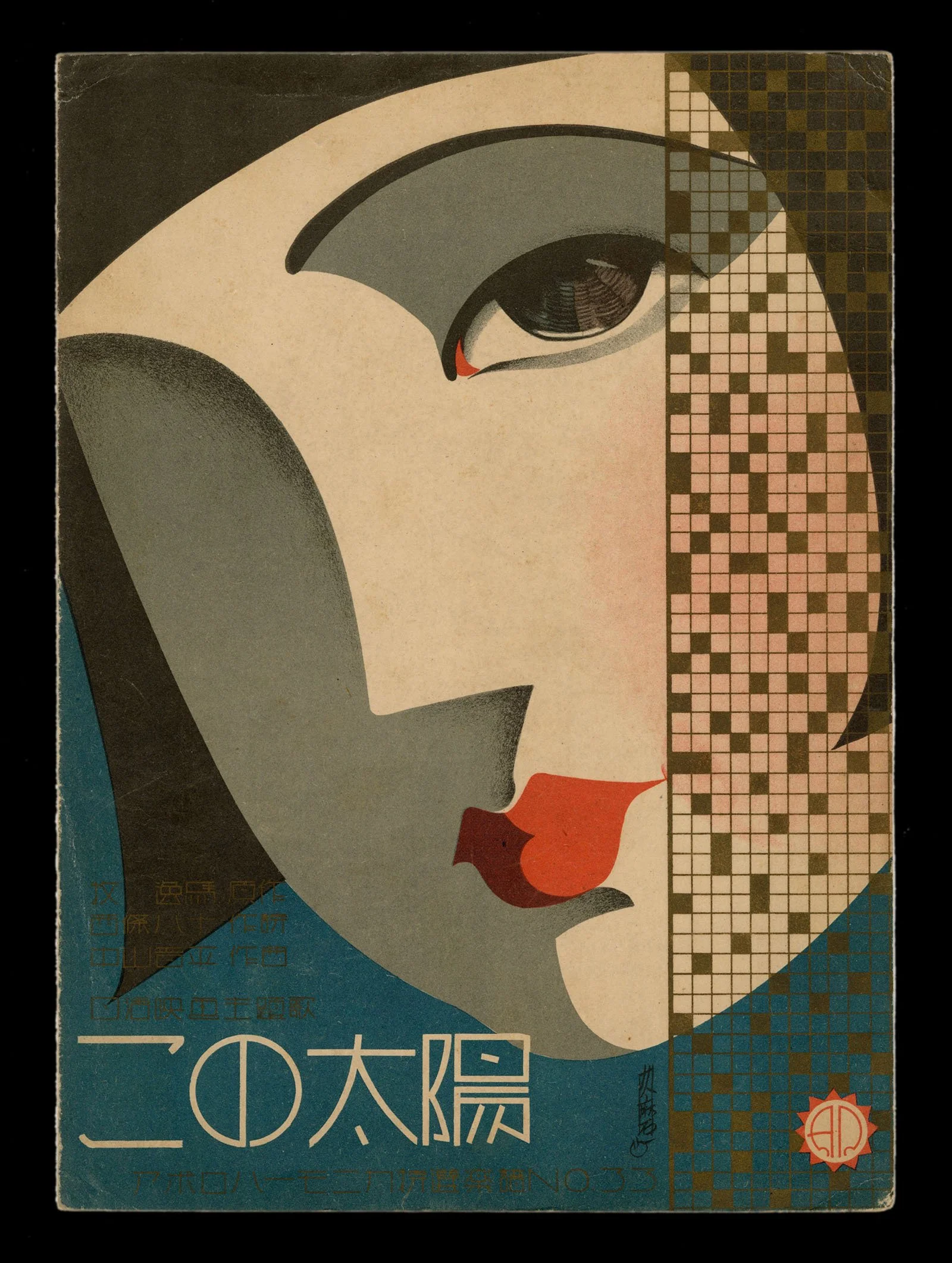
Dominated by an enormous stylized female face, this cover exemplifies the increasingly experimental direction of Japanese commercial design during the early 1930s. The figure is fragmented into geometric sections, including a mosaic-like field that introduces an almost architectural rhythm to the composition. Cool blues, soft pinks, and dramatic black accents create a sophisticated palette that balances elegance with modernity.
Produced in conjunction with a motion picture, the design reflects the growing influence of cinema on visual culture. The woman's enigmatic expression evokes the glamour associated with contemporary film stars, while the abstraction of her features reveals the influence of international design trends. The image transforms the song into a visual spectacle, reinforcing the increasingly close relationship between music, movies, and commercial art.
Connoisseur's Note
By the early Shōwa period, cinema had become one of the most important influences on popular visual culture. Sheet music publishers frequently collaborated with film studios, commissioning covers that echoed the glamour and excitement of contemporary movies. This design demonstrates how effectively graphic artists translated cinematic appeal into printed form.
Japan's extraordinarily high music literacy allowed such imagery to reach an immense audience. Sheet music functioned as both entertainment and visual communication, bringing modern styles, personalities, and cultural ideals into homes across the country. As surviving artifacts, these covers provide an invaluable record of the interconnected worlds of film, music, and design.