

 Image 1 of 1
Details
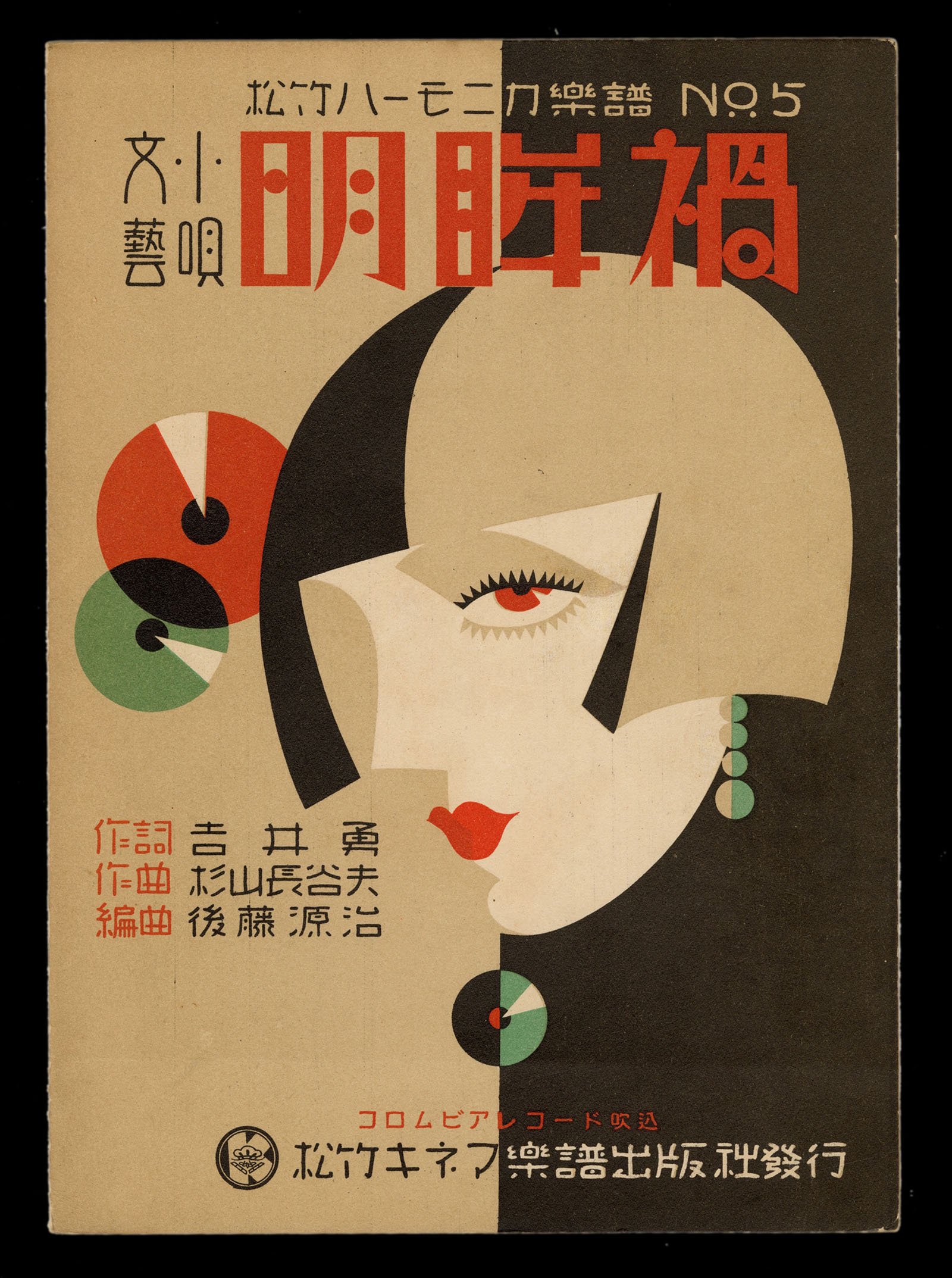
Among the most visually daring covers in the exhibition, this composition reduces the female face to an arrangement of circles, crescents, and angular planes. The striking asymmetry and dramatic contrast between black and cream create a sense of tension that is heightened by the vivid crimson eye. Rather than pursuing naturalistic representation, the artist embraces abstraction to convey mood, mystery, and psychological intensity.
The title's suggestion of beauty as a source of enchantment and danger is echoed in the cover's enigmatic imagery. The woman's gaze becomes the focal point of the entire design, transforming a simple portrait into a symbol of desire and fascination. The work demonstrates how Japanese commercial artists absorbed international modernist ideas while adapting them to themes rooted in contemporary literature and popular culture.
Connoisseur's Note
By the early Shōwa period, cinema had become one of the most important influences on popular visual culture. Sheet music publishers frequently collaborated with film studios, commissioning covers that echoed the glamour and excitement of contemporary movies. This design demonstrates how effectively graphic artists translated cinematic appeal into printed form.
Japan's extraordinarily high music literacy allowed such imagery to reach an immense audience. Sheet music functioned as both entertainment and visual communication, bringing modern styles, personalities, and cultural ideals into homes across the country. As surviving artifacts, these covers provide an invaluable record of the interconnected worlds of film, music, and design.